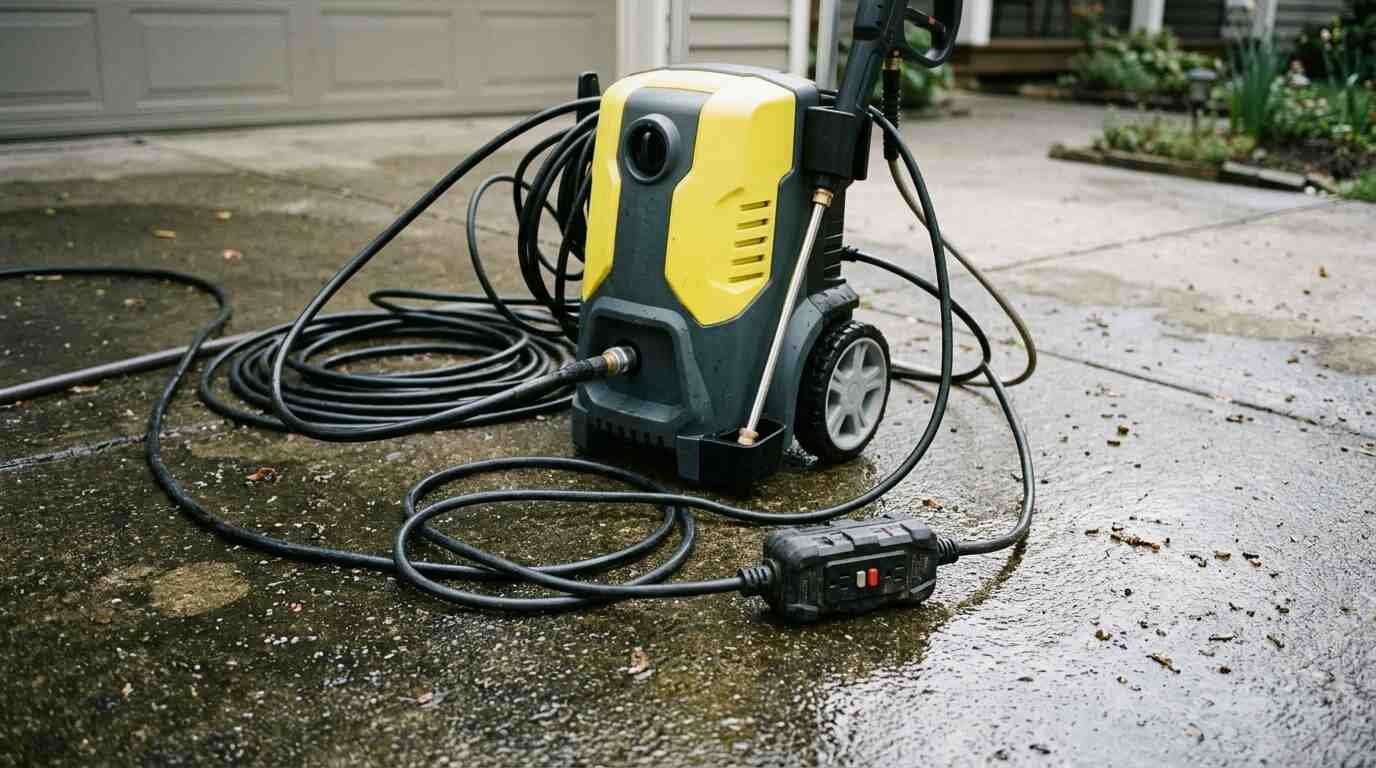
Why a pressure washer GFCI matters: CPSC warned on FOTING units Sept 24 and recalled LANCHEZ Sept 17. Models, numbers, how a GFCI trips and what to do.
Two September 2026 actions from the US Consumer Product Safety Commission point at the same missing part: a pressure washer GFCI, the ground-fault circuit interrupter that is supposed to sit on or near the power plug. On September 17 the agency announced a recall of LANCHEZ pressure washers. A week later, on September 24, it issued a warning to stop using FOTING pressure washers, because the maker had not agreed to an acceptable recall.
Both notices describe the same two defects, no integral GFCI and a power cord that is too short, and both involve inexpensive units sold through online marketplaces. This post lays out the confirmed facts from the CPSC pages, explains in plain terms how a GFCI decides to trip, works through what the numbers imply, and separates what the agency has said from what is still unknown.
What CPSC announced
The LANCHEZ action is a formal recall, CPSC number 26-779, dated September 17, 2026. It covers 329 units of model KLC-BULL135C, sold in blue and black or red and black for between $88 and $266 on Amazon.com and Walmart.com from February through June 2026. The model number is on a label on top of the unit near the handle. CPSC says it knows of one report of a missing GFCI and no injuries.
The FOTING action is a warning, CPSC Warning 26-795, dated September 24, 2026. It covers models KLC-PRO150C, KLC-T3 and KLC-T2, sold for $85 to $266 through Amazon, Walmart, TikTok, Temu, Wayfair and eBay. The number of units is not stated. The agency lists one report of a missing GFCI and six reports of the cord being too short, with no injuries. The importer or maker is named as Success Way Ltd. of China, which has not agreed to an acceptable recall.
Recall versus warning
The difference matters to an owner. A recall comes with a remedy. For the LANCHEZ units, the remedy is a full refund: unplug the washer, cut the power cord in half, email a photo showing the model number to the address given in the notice, and then dispose of it.
A warning means the company has not agreed to fix or refund anything. CPSC’s instruction for FOTING owners is to stop using the product immediately, unplug it, cut the cord, dispose of it, and not sell or give it away. No refund path is described in the notice, so refunds depend on the marketplace where it was bought. I could not confirm whether any of those retailers is offering one.
The LANCHEZ remedy has a built-in proof step. Asking owners to cut the cord and photograph the model number keeps a refunded washer from being resold, and it also gives the company a record of how many units came back. The notice lists 329 units, a small number next to the FOTING listings spread across six marketplaces, though CPSC has not given a FOTING count to compare it with.
How a GFCI works
A GFCI compares the current flowing out on the hot conductor with the current returning on the neutral. In a healthy appliance those are equal. If some current leaves by another route, for example through a person standing on wet ground, the two no longer match, and the device senses the difference using a transformer that surrounds both conductors.
According to Wikipedia’s article on residual-current devices, a US GFCI approved for shock protection trips at 5 milliamps within 25 milliseconds, while equipment-protection versions may trip at up to 30 milliamps. Those are general figures, not CPSC numbers, and the notices do not state the trip rating the washers would have needed.
The key idea is that the device is looking for an imbalance, not an overload. An ordinary breaker will not react to a leak of a few milliamps.
Working through the numbers
A typical household branch circuit is protected by a 15 or 20 amp breaker, which is a general assumption, not something stated in the notices. A GFCI trip point of 5 mA is 0.005 A. Divide 15 by 0.005 and you get 3,000. In other words, a fault current 3,000 times smaller than the breaker rating is enough to trip the GFCI, and a breaker would not notice a current of that size at all.
A pressure washer is a good example of why that gap matters. The user stands on wet concrete, holds a metal wand, and sprays water within a meter or two of an electric motor and a cord. Moisture getting into a connection or a damaged cord jacket creates exactly the small leakage path a GFCI is designed to catch. The notices state the hazard as shock and electrocution without giving a mechanism for individual incidents.
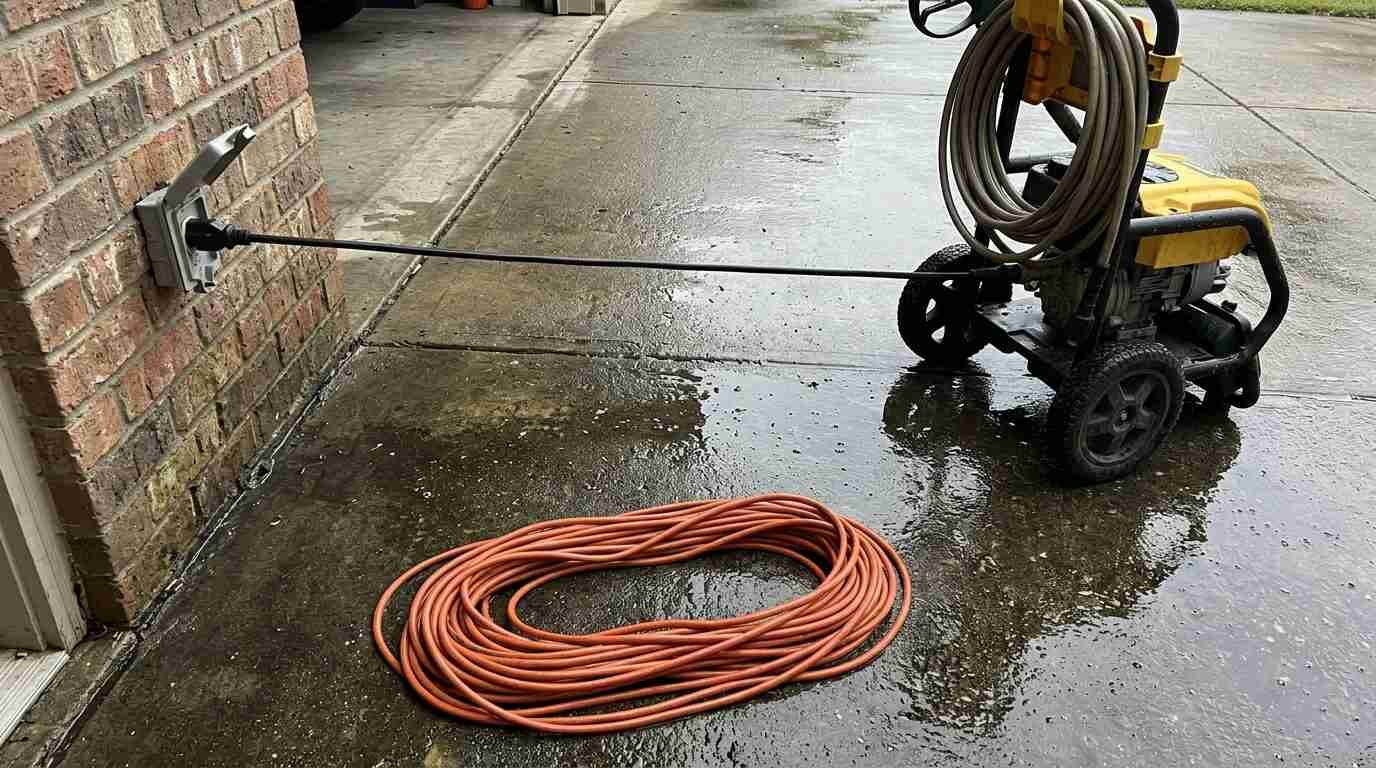
The cord problem compounds this. CPSC says a cord that is too short may encourage use of an extension cord. Extension cords add connections that sit on wet ground, and with no GFCI at the plug the only protection left is whichever outlet the user plugged into. The notices do not state the actual cord length of either brand, nor the required length.
The pattern behind the model numbers
Both notices list models whose names begin KLC. That could be a coincidence of naming, or a sign of a shared design sold under different brands. The CPSC pages do not say they are related, so this is an observation, not a finding. What the pages do say is that the FOTING product comes from China and the LANCHEZ recall notice gives an email at a pumps domain.
Earlier in 2026, Power Tools Insider reported that CPSC had issued recalls for several no-name electric pressure washers sold through Amazon for missing GFCI protection, naming brands such as Fengrong Tool, Le Hao Tool, Agiiman, Sweetcrispy and BAYOTAK USA. That article, dated April 22 and updated April 29, 2026, does not give model numbers. The recurrence suggests a broader category problem among low-price marketplace listings, though neither CPSC page makes that claim.
What to check on any electric pressure washer
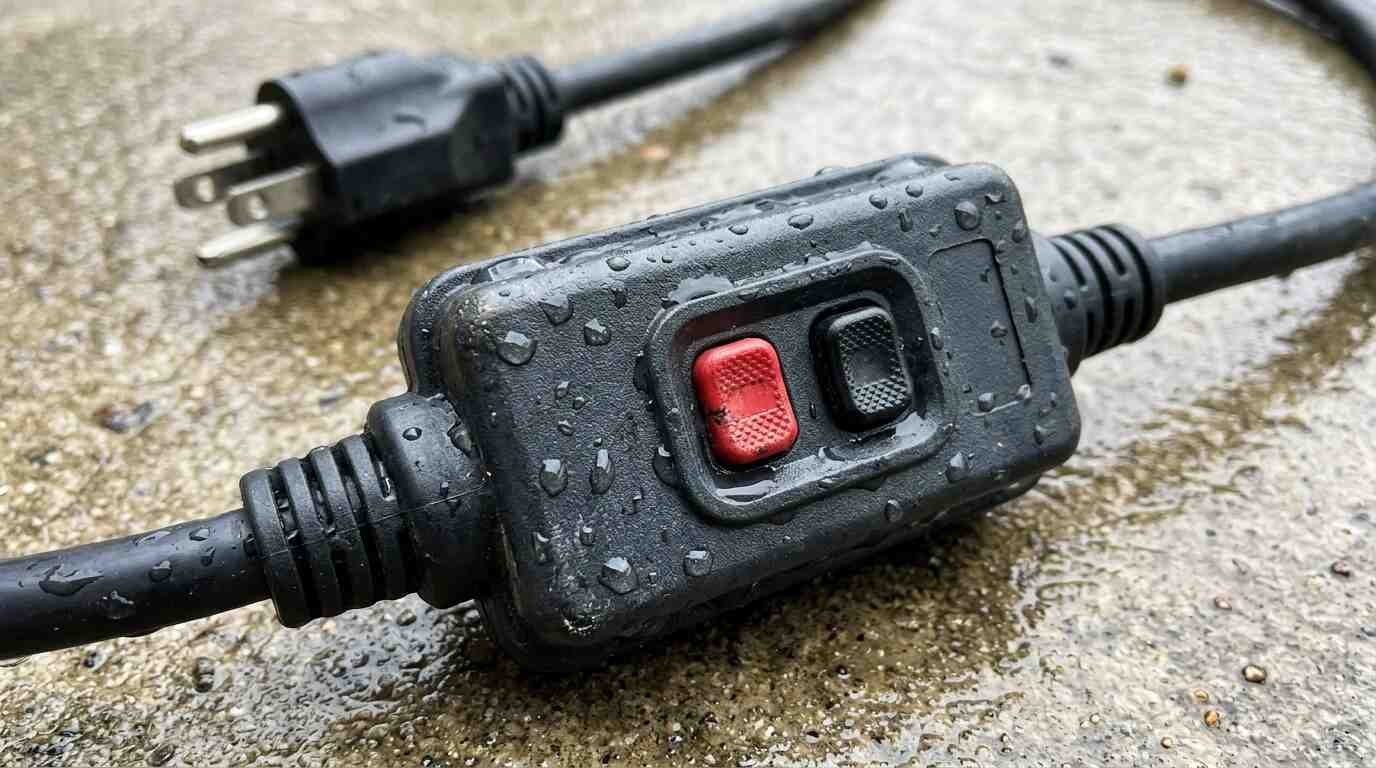
A few checks take under a minute. Look at the plug end of the power cord for a block with test and reset buttons, because a GFCI built into the cord is the protection CPSC says these units lack. Look for the model number on the label near the handle. And search the CPSC recalls database for the brand and model before use.
- Plug-mounted GFCI with test and reset buttons present.
- Model number not listed in current CPSC recalls or warnings.
- The outlet itself is GFCI protected if you also use extension cords; the Power Tools Insider article suggests checking for a test/reset button on outdoor outlets.
- Press the test button, check that power cuts, then reset, before every session.
What remains unknown
The FOTING unit count is not given. The sources do not say how many LANCHEZ or FOTING washers are still in use, whether the two brands share a factory, or what the shortfall in cord length is. CPSC lists no injuries for either action. That is reassuring for the incident record, but a missing GFCI is a latent hazard: it matters only on the day something goes wrong.

If you own one of the listed models, CPSC’s FOTING notice also asks owners to report any injury or product defect at SaferProducts.gov. And note where these were sold: the FOTING list includes TikTok, Temu, Wayfair and eBay alongside Amazon and Walmart, so a washer bought as a third-party listing may not show up under a familiar brand name. Matching the model number on the label to the notice is more reliable than matching the brand.
Frequently asked questions
Which pressure washers did CPSC warn about in September 2026?
FOTING models KLC-PRO150C, KLC-T3 and KLC-T2 (Warning 26-795, September 24) and LANCHEZ model KLC-BULL135C (recall 26-779, September 17).
What is wrong with them?
CPSC says they lack an integral GFCI on or near the plug and have a power cord that is too short, creating shock and electrocution risk.
Can I get a refund?
LANCHEZ offers a full refund after you cut the cord and email a photo of the model number. For FOTING, the manufacturer has not agreed to an acceptable recall, and the notice describes no refund.
Were there injuries?
CPSC says no injuries have been reported for either product.
A GFCI costs very little compared with the rest of a pressure washer, which is why its absence reads as a deliberate saving rather than a design limit. The September notices do not prove harm; they document a missing safeguard in cheap units sold through marketplaces where the buyer rarely checks the plug. The practical lesson is dull and useful. Before first use, find the test button on the cord, press it, and see the power drop. If the plug has no such block, the unit has no protection between the wall and your wet hands, and you should not treat a low price as a reason to accept that.
Sources