Starship Flight 14 reached orbit for the first time and deployed 26 Starlink V3 satellites, then came home about seven hours early. Six numbers explain what happened and what remains unconfirmed.
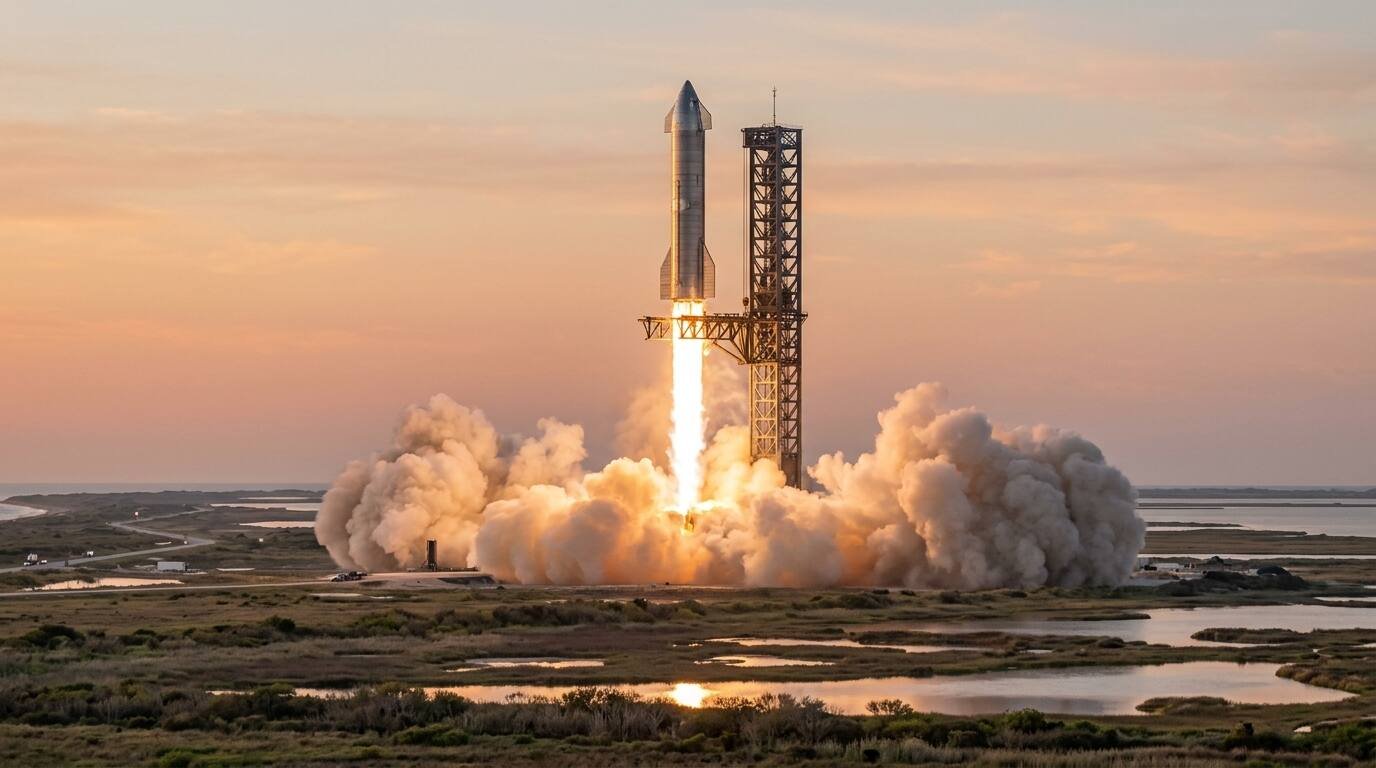
At about 8:48 a.m. Eastern on Monday, September 28, a stainless-steel stack about 407 feet tall left Starbase, Texas. Three hours and eight minutes later, its upper stage was floating in the northern Pacific, intact for a moment, then tipping over in a fireball. In between, Starship did something it had never done: it reached orbit, and it put real Starlink satellites there.
That was Flight 14, the third flight of the Version 3 vehicle and the first aimed at an orbital trajectory. It was also SpaceX’s first revenue-generating Starship mission. The plan called for about six orbits and a splashdown off Chile nearly ten hours after liftoff. Controllers cut roughly seven of those hours.
The headlines split between “first orbit” and “ends early,” and both are accurate. To keep the details straight, this breakdown follows six numbers through the flight, from the booster’s 33 engines to the zero catches attempted.
33: The Booster’s Opening Act
Every one of the Super Heavy booster’s 33 Raptor 3 engines lit at liftoff, producing more than 18 million pounds of thrust, according to Starlust. Max Q, the point of peak aerodynamic stress, arrived just under a minute in. Main engine cutoff followed at 2 minutes 22 seconds, then hot staging, where the upper stage’s engines ignite while still attached and push the two stages apart.
The replay below is the YouTube link Space.com pointed to for the flight. If it fails to load, the same link is youtu.be/CxHNK4UeVP4.
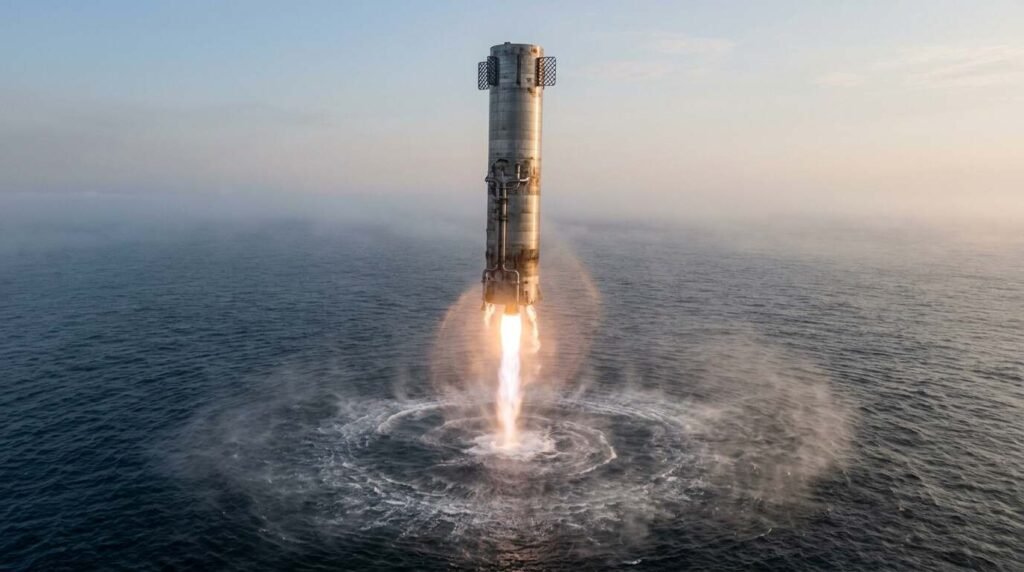
The booster then flew its return. Starlust reports a boostback burn on 31 engines and a landing burn on 11, ending on a single engine as it settled into the Gulf of Mexico about seven minutes after liftoff. Several engines shut down along the way, but Space.com says none were serious enough to affect the landing. No tower catch was attempted. SpaceX has caught Super Heavy on three earlier test flights.
The contrast with July is useful. On Flight 13, per SpaceQ, a partial engine ignition failure in the final landing sequence produced a hard splashdown. This time the booster’s ending was clean.
1: The Engine That Went Quiet
The ship carries six Raptor engines, and one of them stopped early. Accounts agree on that much and disagree on almost everything around it. Space.com placed the loss during liftoff and said SpaceX spokesperson Dan Huot first announced the orbit attempt was off, then reversed: “We are not giving up yet.”
Here is how the reporting lines up, with the open questions flagged:
| Detail | What outlets reported | Status |
|---|---|---|
| Engines on the ship | One of six went out | Consistent across sources |
| Which engine type | Science Times says a vacuum-optimized Raptor; others do not specify | Single source |
| When it happened | “During liftoff” (Space.com) vs. “during ascent” (Science Times) | Wording differs |
| Effect on reaching orbit | ABC News says it was not needed to reach orbit | Orbit reached |
| Link to the early end | Science Times ties it to reduced propulsion margin; ABC says SpaceX did not give a reason | Unconfirmed |
That final row matters most, and nobody outside SpaceX has settled it.
25: Minutes to a Burn That Made It Orbital
About 25 minutes after liftoff, the ship fired a single Raptor to finish the insertion burn. Mission control confirmed that Starship was orbital, and Elon Musk posted his own verdict on X, embedded here. If it does not render, it lives at x.com/elonmusk.
ABC News gives the working numbers: roughly 17,500 miles per hour at more than 170 miles up, and Starlust also puts the altitude at about 170 miles.
One check we ran ourselves, which is our own arithmetic and not a SpaceX figure: at that altitude, a lap takes roughly 90 minutes. Six laps is about nine hours, which squares with the planned flight of just under ten hours once you add launch and deployment. It also means the 3-hour flight covered fewer than two orbits’ worth of time.
26: Starlinks That Were Built to Stay Up
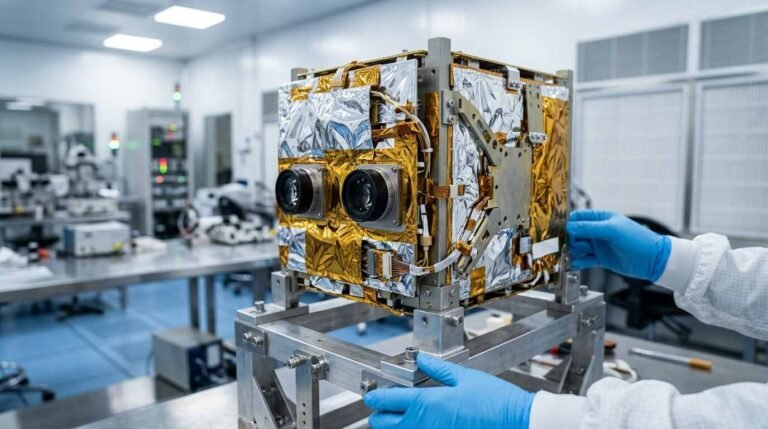
The payload was 26 Starlink V3 satellites, deployed over about 30 minutes starting around T+34 minutes. Three carried cameras pointed back at the ship to help engineers study its heat shield. ABC News calls this the first time Starlink satellites reached an orbit for ongoing use, not simulators or satellites doomed to burn up.

Flight 13 had deployed 20 V3 satellites on a suborbital path, so they came back down within about 20 minutes. SpaceQ’s account of that flight describes about 1 terabit per second of downlink per satellite and optical lasers for a mesh network, and it quotes SpaceX’s Dan Hewitt calling the intact ship “a dream scenario” for heat shield data. The three camera-carrying satellites on Flight 14 continue that hunt from orbit.
For the business, the point is simpler. A rocket that carries paying cargo to a usable orbit is a different product from a test article, and Flight 14 is the first Starship flight that could be described that way.
3:08: Why the Clock Ran Out Early
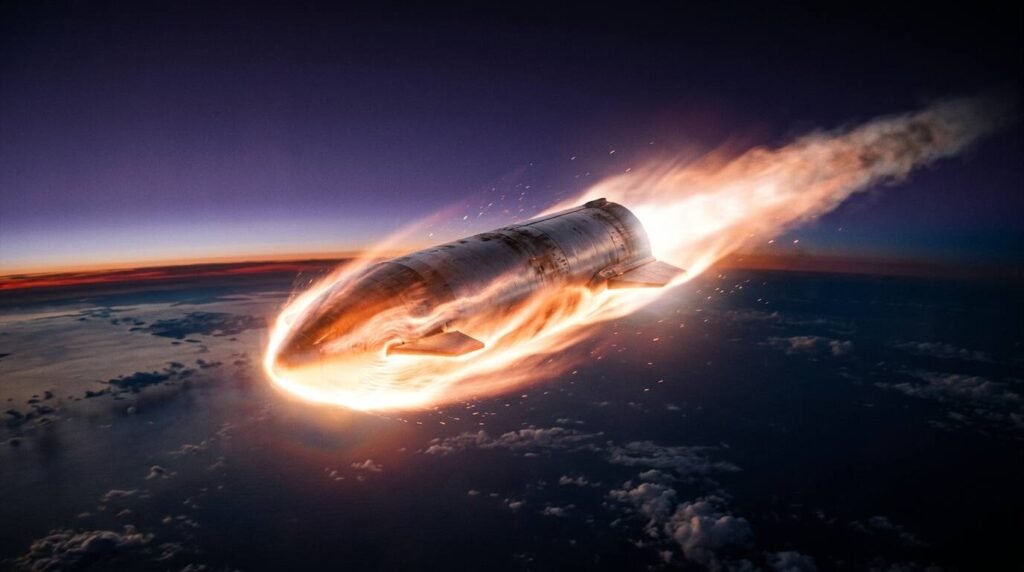
Splashdown came three hours and eight minutes after liftoff, in the northern Pacific north of Hawaii, not off Chile as planned. Reentry began about 2 hours 40 minutes in, per Space.com, and the ship went subsonic roughly 26 minutes later. ABC News says it returned at the first scheduled checkpoint after the Starlink release, and that the deorbit burn used a single sea-level Raptor. Footage came from SpaceX buoys connected through Starlink, according to Starlust.
Why return so soon? SpaceX has not said, and ABC does not connect the decision to the engine loss. Science Times does, reporting that the loss left less margin for a long coast. Starlust is blunter about the result, saying the test “did not go fully according to plan” without naming the cause. Until SpaceX publishes an explanation, the engine theory is plausible and unproven.
0: Catches Attempted, and What Remains Unproven
After touching the water, the ship toppled and exploded. Science Times says it “tipped over and broke apart in a fireball,” and Space.com describes the same ending. No catch was attempted for either stage.
Two milestones remain open, both flagged by Space.com: catching the ship itself with the launch tower, and refueling in orbit. The second is the one that matters for the Moon. NASA chose Starship as the first crewed lander for Artemis, and SpaceX’s plan, as Space.com summarizes it, has Ship flying on Artemis III in mid-2027 and landing astronauts near the lunar south pole a year later on Artemis IV. NASA also selected Blue Origin for crewed landers, and it is unclear which vehicle will fly Artemis IV.
What We Still Don’t Know
- Whether the engine loss forced the early return, or the plan always called for the first checkpoint.
- The exact orbital parameters. Sources give an approximate altitude of 170 miles, not an inclination.
- What caused the post-splashdown explosion, which outlets describe differently.
- Flight 15’s date and whether the next test attempts a ship catch.
One outlet called Starship the largest rocket ever to reach orbit without citing a source, while Space.com describes it as the largest rocket ever built. Treat the “to reach orbit” superlative as unverified.
Sources: Space.com, ABC News, Starlust, Science Times, SpaceQ, and Elon Musk on X.