






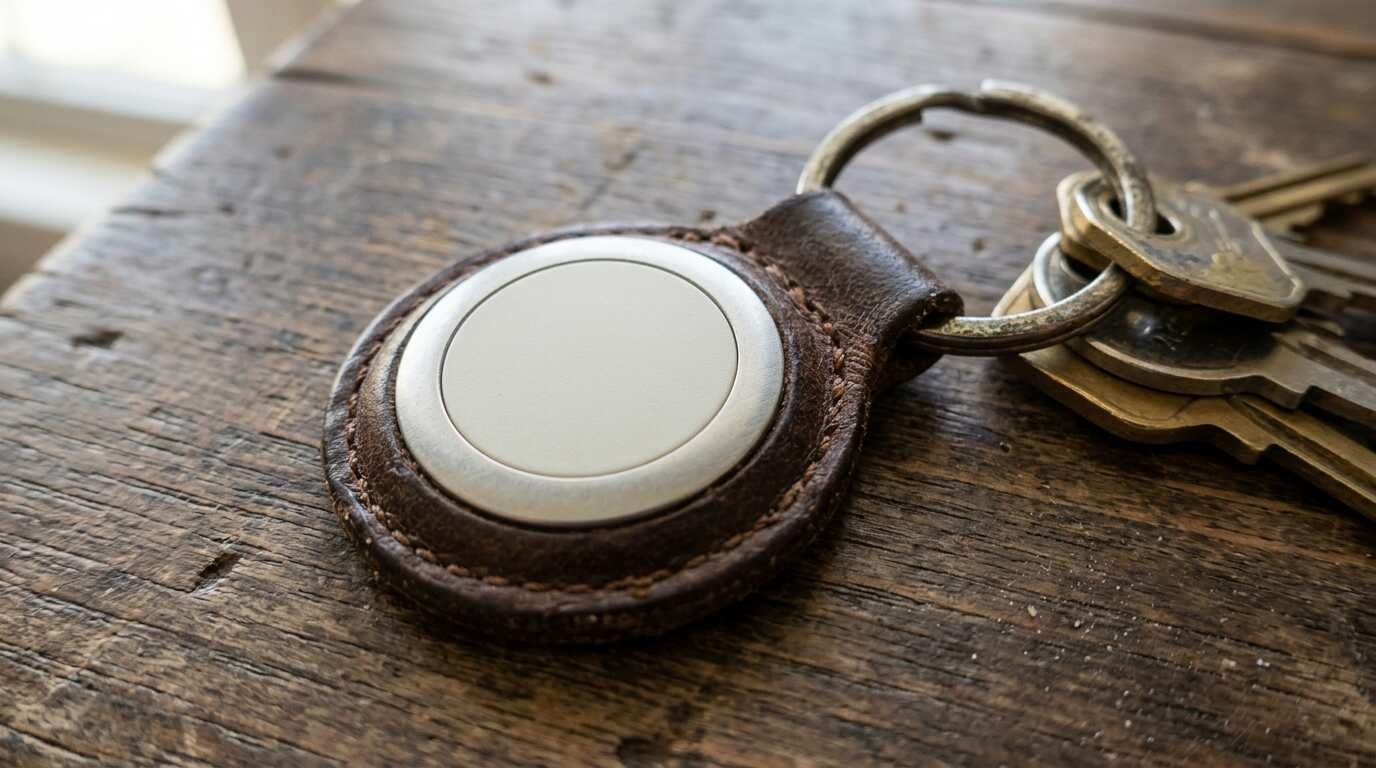
The new AirTag keeps the $29 price and the old shape, and adds a better Ultra Wideband chip. Reviewers and shoppers on what improved, what did not, and who should skip it.
As an Amazon Associate I earn from qualifying purchases. A commission may be earned if you buy through this link, at no extra cost to you.
This Apple AirTag 2nd generation review has to begin with an awkward fact: the new tracker looks almost exactly like the old one. Apple announced it on January 26, 2026 and put it on sale January 30, keeping the single-unit price unchanged while swapping in a second-generation Ultra Wideband chip. The gains are in how far away you can find it and how loudly it chirps. I haven’t tested this unit; this review is based on published tests and shopper feedback. Whether that is enough to matter depends on which iPhone you carry and on any AirTag you already own.
What the 2nd-generation AirTag is, and who it is for
An AirTag is a coin-sized tag that works with Apple’s Find My network. You attach it to keys, a bag or luggage, and your iPhone shows where it was last seen. If the tag is close, Precision Finding points you toward it. The new model keeps that formula and tweaks the hardware.
| Spec | Detail |
| Ultra Wideband | Second-generation chip |
| Battery | User-replaceable CR2032, about a year |
| Water and dust | IP67 |
| Size / weight | 31.9 mm across, 8 mm thick, 11.8 g |
| Speaker | Louder; Macworld measured about 85 dB against about 66 dB for the original |
| Software | iOS or iPadOS 26.2.1 or later; full range needs iPhone 15 or later, except the 16e |
| Colour | White only, no keyring hole |
Apple sells a single tag and a four-pack. Macworld found street prices at Amazon, Best Buy, Walmart and B&H running below Apple’s own, so check the current price on Amazon before you buy.
Apple Watch owners get a small extra. Precision Finding works from an Apple Watch Series 9 or Ultra 2 or later, which gives the tag a second way to be found.
The target buyer is an iPhone owner picking a first tracker, or someone with older AirTags who found the find range too short. The reviews I used all assume an iPhone, and I did not verify Android compatibility, so Android users should look elsewhere.
What Amazon shoppers say
Shoppers call it better than the first generation, with accurate tracking, easy setup and a loud speaker. Precision Finding gets particular praise. One buyer claims it uses half as much battery as the original, which I could not confirm from any review, so treat that as a single owner’s impression. On value, Amazon’s summary is split. A few buyers also say it would not pair with their iPhone, and battery comments are mixed.
The pairing complaints fit with the software requirements above: the tag needs a recent version of iOS. Check your phone before you buy. I did not check a Google or Google Shopping rating for this post, and shoppers can compare it themselves.
What independent reviewers found
Tom’s Guide gave it an Editor’s Choice badge and called it the most findable tracker it has tested, thanks to the new Ultra Wideband chip. In its test, Precision Finding reached about 74 feet, against about 50 feet for the original. The main drawback, it said, is the disposable battery.
Macworld also awarded Editors’ Choice. It measured the range as about 40 percent wider and the speaker at roughly 85 decibels versus 66. The reviewer called the tracker affordable and louder, but regretted the missed chance on design, meaning there is still no keyring hole. A separate Macworld opinion piece went further and argued Apple kept the hardware and passed up form-factor changes buyers wanted.
Expert Reviews gave a Best Buy badge and a strong recommendation, despite the price compared with rivals and unchanged battery life. In informal tests it saw range more than double.
The most guarded review came from iPhone in Canada. It judged the tracker better for new buyers but a refinement for existing ones, and said the louder speaker was barely noticeable. Owners of the original have little reason to switch, in its view. None of the outlets gave a numeric score.
Note the disagreement on range and volume. Tom’s Guide, Macworld and Expert Reviews each reported a different size of improvement, and two outlets heard little change in loudness. Gains clearly exist, but the amount varies with the room, the phone and the listener.
Why would anyone feel strongly about a keyring hole? Because a tracker you cannot attach to anything is a tracker that stays in a drawer. Macworld’s opinion piece makes the point that Apple kept the hardware and passed up form-factor changes buyers wanted, such as a built-in hole and variants. Other reviewers shrugged, since a silicone loop costs little. Both views are fair. It comes down to how the accessory strikes you, as a nuisance or a rounding error. For my part, I would budget a few extra dollars for a holder at the outset and treat the question as settled.
A word on the battery, since it will decide some purchases. A CR2032 lasts about a year per Tom’s Guide and Macworld, and Expert Reviews noted that battery life is unchanged from before. For an item in a coat pocket or a suitcase, a yearly swap is no great chore. For a tag buried inside luggage you rarely open, a rechargeable rival might suit you better.
What it does well
- Range. Reviewers who measured Precision Finding found it reached further than before.
- Price. It costs the same as the original at Apple, and Macworld found it often cheaper at retailers.
- Battery access. A standard CR2032 coin cell that you can swap yourself, lasting about a year.
- Ecosystem. The Find My network is large, and Tom’s Guide called this the most findable tracker it has tried.
- Setup. Shoppers describe it as easy, and Apple devices handle the pairing.
For a first-time buyer, that adds up to a simple proposition: pay a small sum and gain a decent chance of getting lost things back.
Where it falls short
The missing keyring hole is the most repeated complaint. Macworld and Yahoo Tech both note you still need a holder accessory, which adds cost and bulk. Pebblebee’s Clip 5 solves this with a built-in clip.
The battery is not rechargeable. A coin cell is cheap and easy to swap, but some people prefer to plug in a tracker, and Macworld counts it as a weakness.
Looks cause confusion as well. Macworld and iPhone in Canada both point out that the new tag is nearly impossible to tell from the old one by sight, so if you mix generations in a drawer, you may need to label them.
It also locks you into Apple’s world. Full range needs an iPhone 15 or later, aside from the 16e, and iOS 26.2.1 or newer is required. And compared with the Pebblebee Clip 5, Yahoo Tech notes the AirTag has no two-way phone finding and no SOS button.
Video reviews
Here are three independent video reviews. I haven’t confirmed their makers or watched them end to end, so use them for extra viewpoints rather than as sources.
How it compares
Pebblebee Clip 5, which costs somewhat more, is the rival Yahoo Tech raises. It recharges, clips onto things, supports two-way finding and has an SOS function.
The decision is partly one of ecosystems. The AirTag draws its strength from the number of Apple devices that can relay its position, and its weakness from the same dependence. If everyone in your household uses iPhones, the pairing is natural. If half the family uses Android, a tracker built around Apple’s network will only serve part of the group.
Chipolo One Spot is a cheaper Find My option, per Expert Reviews. I have no price for it and no test results beyond that mention.
The other competitor is Apple’s own original AirTag. iPhone in Canada found the original four-pack cheaper per tag when discounted. If you only need basic tracking and do not care about extra range, the old tag at a discount is a fair buy, though availability and current prices are worth checking.
Who should buy it, and the verdict
Buy it if you use an iPhone, have never owned a tracker, or want better finding range around a big home. Skip it if you use Android, want a rechargeable cell or a built-in loop, or already own original AirTags that work for you.
My take is that the second-generation tag is a quiet improvement, and a good first tracker. Reviewers lean positive, three of the four outlets I drew on awarded a badge, and Amazon shoppers are broadly pleased. The criticisms are consistent: no hole, a disposable battery, a design that barely changed. None of them is new, and all are easy to plan around with a cheap holder. If you own a working original, leave it be.
- The Apple AirTag 2nd generation single tag adds Ultra Wideband range and a louder speaker for iPhone owners who want a first tracker. See it on Amazon (affiliate link)
As an Amazon Associate I earn from qualifying purchases. A commission may be earned if you buy through this link, at no extra cost to you.



