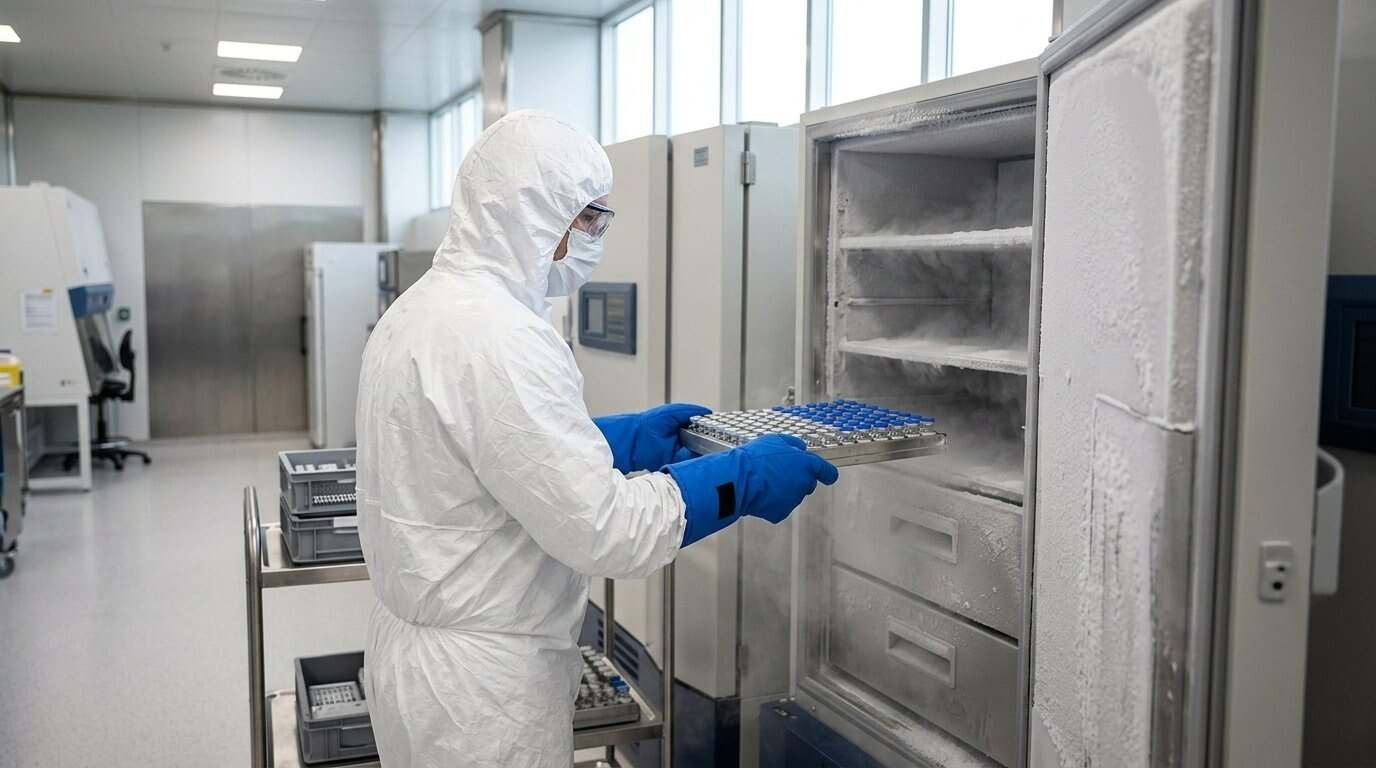
FDA approval for gene therapy runs through an IND, phased trials and a Biologics License Application. Here is each step, the expedited programs, and the draft guidance issued since 2025.
FDA approval for gene therapy follows a two-gate path. A sponsor first files an Investigational New Drug application so human trials can begin, then files a Biologics License Application showing the product is safe, pure and potent. The Center for Biologics Evaluation and Research, known as CBER, runs both reviews. Expedited programs can shorten the timeline, and several draft guidances issued between September 2025 and August 2026 point to more flexibility for rare diseases. This article covers US federal law and was checked on October 10, 2026.
Why gene therapy is regulated as a biologic
FDA describes gene therapy as a technique that modifies a person’s genes to treat or cure disease. It may replace a faulty gene with a working copy, switch off a gene that is misfiring, or add a new or modified gene. Products can be plasmid DNA, viral vectors, bacterial vectors, gene editing tools or patient-derived cells. Some are given directly into the body (in vivo); others change a patient’s cells in the lab and return them (ex vivo).
All of these are biological products under CBER. The agency’s page says human studies in the US need an IND before they start and that marketing requires a BLA. The legal anchor for the licence is section 351 of the Public Health Service Act, codified at 42 U.S.C. 262, which bars introducing a biological product into interstate commerce without a biologics licence and directs approval only when the applicant shows the product is “safe, pure, and potent” and the manufacturing facility meets standards to keep it so.
The path in six steps
- Lab and animal work. Developers build the vector or editing tool, test it in cells and animals, and prepare manufacturing and safety data.
- IND submission. Under 21 CFR 312.40, an IND takes effect 30 days after FDA receives it unless FDA places the study on clinical hold. FDA can also clear it sooner.
- Phase 1. The regulation describes this as the first introduction into humans, generally 20 to 80 participants, aimed at how the body handles the product and early side effects.
- Phase 2. Controlled studies in patients, usually no more than several hundred, to look at whether it works and what short-term risks appear.
- Phase 3, or an alternative. Larger trials, from several hundred to several thousand people, are the usual model. Many gene therapies treat conditions so rare that such trials are impossible, which is where the flexibilities discussed below come in.
- BLA review. The sponsor submits clinical, nonclinical and manufacturing data. FDA also inspects the facility. If the standard is met, FDA licences the product, often with commitments to continue collecting data after approval.
Phases usually run in order but can overlap, per the regulation.
Expedited programs that apply to gene therapy
FDA’s patient-facing page describes four general programs for serious conditions. Fast track helps develop and speeds review of drugs for serious conditions with unmet need. Breakthrough therapy targets drugs that may substantially improve on available treatment. Accelerated approval allows approval on a surrogate endpoint, a stand-in measure rather than a direct clinical outcome. Priority review sets an FDA goal of acting within six months.
Gene therapy has a fifth, specific route: regenerative medicine advanced therapy, or RMAT, designation. It was created by section 3033 of the 21st Century Cures Act, which added section 506(g) to the FD&C Act. To qualify, a product must be a regenerative medicine therapy, intended to treat a serious or life-threatening condition, and supported by preliminary clinical evidence that it could address an unmet need. FDA states that certain human gene therapies may meet the definition. A sponsor requests designation with an IND or as an IND amendment, and FDA’s tissues and advanced therapies office answers within 60 calendar days. FDA will not grant it while the IND is on clinical hold.
| Program | Core idea | Notes for gene therapy |
|---|---|---|
| Fast track | Faster development and review for serious conditions | Available when the criteria are met |
| Breakthrough therapy | Possible substantial improvement over existing options | Available when the criteria are met |
| Accelerated approval | Approval on a surrogate endpoint | FDA’s guidance covers how Cures Act provisions apply to RMAT products |
| Priority review | FDA goal of six months | Standard review length not covered on the page I read |
| RMAT | Regenerative medicine designation under the Cures Act | Request with an IND; 60-day FDA response |
What changed recently
FDA’s cellular and gene therapy guidance page shows a run of documents from the past year. All the draft items are marked non-binding and “not for implementation,” which means they signal direction but are not final rules. Here is the list as shown on the page I read on October 10, 2026.
- September 2025, draft: Expedited Programs for Regenerative Medicine Therapies for Serious Conditions. It updates guidance first issued in February 2019 and covers RMAT designation, accelerated approval under the Cures Act provisions, and sponsor interaction with CBER review staff.
- September 2025, draft: Postapproval Methods to Capture Safety and Efficacy Data for Cell and Gene Therapy Products. FDA explains the need: effects can last a long time and pre-approval trials usually enrol relatively few people.
- September 2025, draft: Innovative Designs for Clinical Trials of Cellular and Gene Therapy Products in Small Populations.
- February 2026, draft: Considerations for the Use of the Plausible Mechanism Framework, for individualized therapies targeting specific genetic conditions with a known biological cause.
- April and June 2026, drafts: safety assessment of genome editing using next-generation sequencing, and leveraging prior knowledge for genome-editing gene therapies.
- May 2026, final: Chemistry, Manufacturing, and Controls Flexibilities for Developing Human Cellular and Gene Therapy Products for a BLA.
The plausible mechanism framework is the item that most changes how people talk about approval. The draft covers individualized therapies and describes the nonclinical, clinical and manufacturing data FDA would look at to support approval or licensure for a specific indication. Both CBER and the drug center issued it. I did not find any text in the page I read that sets a new statutory pathway; it is guidance about evidence, and the legal standard of safe, pure and potent, or safe and effective for drugs, stays in the statute.
After approval: follow-up and the product list
Approval is not the end of the file. FDA’s 2020 final guidance on long-term follow-up after administration of human gene therapy says not all gene therapy products require long-term follow-up observations and tells sponsors to assess risk on listed factors, with post-licensure plans for products that pose long-term risks. The 2025 postapproval draft adds to that picture.
As of its September 17, 2026 update, FDA’s approved cellular and gene therapy products page lists 54 products in total, a count that includes cell therapies. Gene therapies on that list include Luxturna, Zolgensma, Hemgenix and Casgevy, among others.
Why manufacturing sits at the centre of the file
With a small pill, the chemistry is the easy part to describe. With a gene therapy, the product is a living or biologically derived system, and small changes in how a vector is grown, purified or filled can change how it behaves in the body. That is why the licence standard in the statute pairs the product with the facility, and why FDA’s May 2026 final guidance on chemistry, manufacturing and controls flexibilities for BLA-stage products matters to sponsors. A clinical hold on an IND can also stop the work cold: FDA will not grant RMAT designation while a hold is in place, and an IND does not take effect on the 30-day default if FDA has imposed one.
What patients and families can take from this
The pathway is long on purpose. An IND opens the door to testing in people, and a licence follows only after FDA concludes the evidence and manufacturing support it. If you are considering a trial, ClinicalTrials.gov and the treating specialist are better guides than press announcements about “approval is coming.” Routes to unapproved therapies outside trials, such as expanded access, are a separate legal track.
Related questions
Does every gene therapy need a Phase 3 trial?
Not necessarily. FDA’s 2025 draft on trial designs for small populations signals openness to alternatives where large trials are not feasible, but the draft is non-binding and the BLA standard still applies.
Is a gene therapy approved forever once licensed?
A licence stays in effect subject to FDA’s authority to suspend or revoke it and to order recalls for imminent or substantial hazards under 42 U.S.C. 262. Sponsors also face post-licensure follow-up obligations when risks warrant.
Who pays?
Coverage is a separate question from approval and not addressed by the sources I read. This is general information, not legal or medical advice.
Sources
- FDA, What is Gene Therapy?
- FDA, Approved Cellular and Gene Therapy Products
- FDA, Cellular and Gene Therapy Guidances
- FDA, Regenerative Medicine Advanced Therapy Designation
- FDA, Fast Track, Breakthrough Therapy, Accelerated Approval, Priority Review
- FDA, Expedited Programs for Regenerative Medicine Therapies (draft, 2025)
- FDA, Postapproval Methods to Capture Safety and Efficacy Data (draft, 2025)
- FDA, Innovative Designs for Clinical Trials in Small Populations (draft, 2025)
- FDA, Plausible Mechanism Framework (draft, 2026)
- FDA, CMC Flexibilities for BLA-Stage Cellular and Gene Therapy Products (final, 2026)
- FDA, Long Term Follow-Up After Administration of Human Gene Therapy Products
- Cornell LII, 42 U.S.C. 262 (regulation of biological products)
- Cornell LII, 21 CFR 312.40
- Cornell LII, 21 CFR 312.21