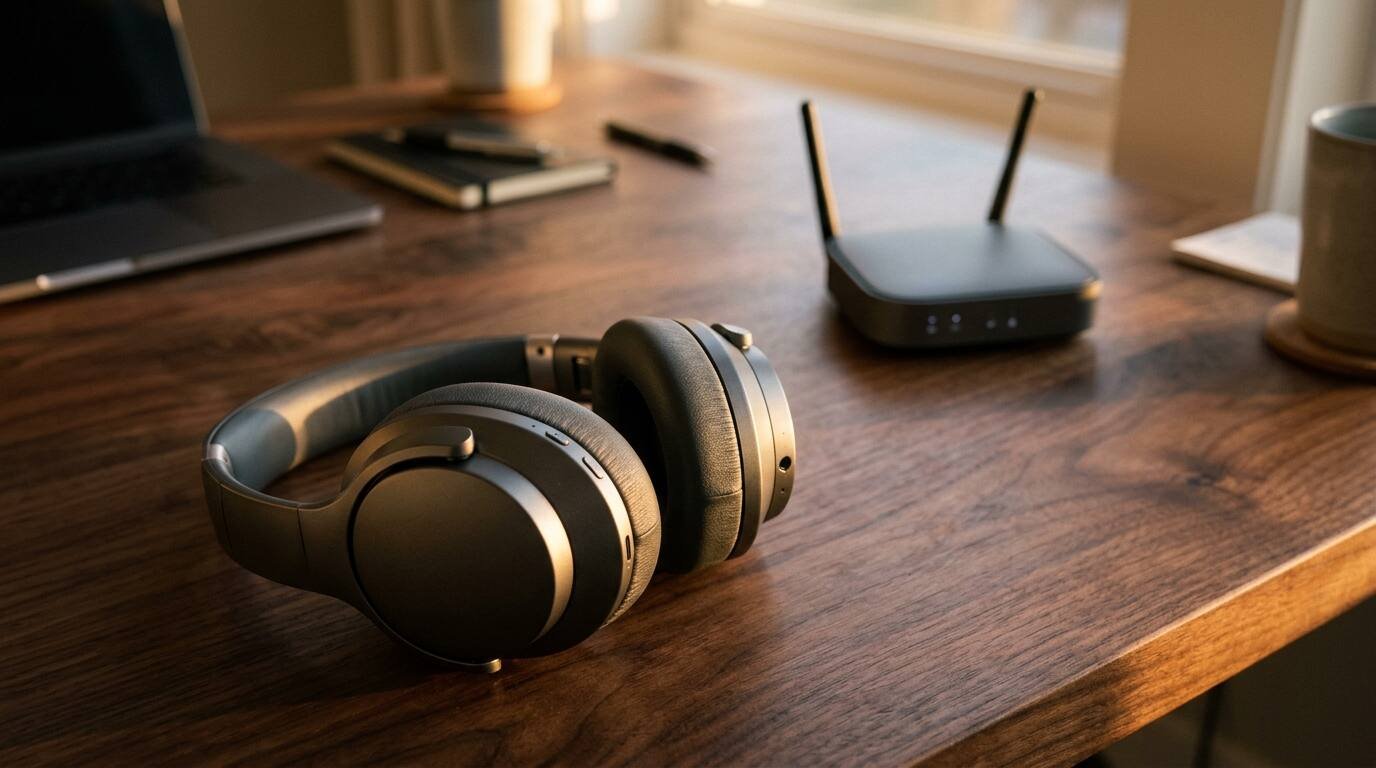
Sonos Ace Ultra analysis: 40 mm drivers, 10-mic ANC, a 35-hour battery and a Wi-Fi speaker link, weighed against professional reviews and rivals at $449.
The Sonos Ace Ultra costs $449 in the U.S. (£399 in the UK), and Sonos scheduled the headphones to ship on September 29. They keep the look of the original Ace but add new 40 mm drivers, two more microphones, a bigger battery and a Wi-Fi link that lets them take over audio from a Sonos speaker or soundbar.
What Hi-Fi? published its verdict on September 22 and gave sub-scores of 4 for sound, 4 for build and 5 for features. The headline from that review is blunt: a clear step up from the first Ace, but not the best-sounding option at its price.
How this was written. Nobody at x9m8 has listened to these headphones. This is an analysis of Sonos’s published specifications as relayed by Engadget and Notebookcheck, plus What Hi-Fi?’s review. Where those three disagree, I say so. My arithmetic is labeled.
Specs at a glance
| Item | Sonos Ace Ultra |
|---|---|
| Price | $449 US, £399 UK, €449, AU$699 |
| Drivers | New Sonos-designed 40 mm dynamic drivers with a dual-ring magnet structure (What Hi-Fi?) |
| Bluetooth | Version 6.0 |
| Codecs | SBC, AAC and aptX; sources disagree on the lossless naming (see below) |
| Microphones | 10, up from 8 on the original Ace |
| Noise cancelling | Adaptive ANC plus Aware Mode |
| Battery | 35 hours with ANC on, about 3 hours from a 3-minute quick charge |
| Weight | 322 g |
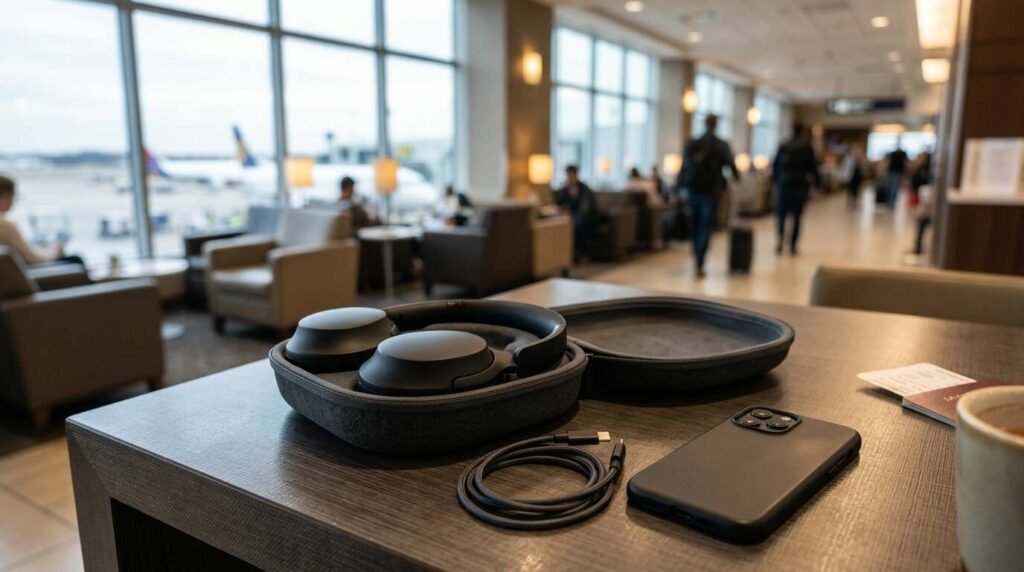
| Wired | USB-C to USB-C and USB-C to 3.5 mm cables included |
| Extras | Dolby Atmos with head tracking, 8-band EQ, headphone linking, wear detection |
The Wi-Fi link and what Headphone Engine 2 does
The headline feature is a direct link between the headphones and a Sonos speaker. Engadget describes a new Headphone Engine 2 with redesigned Wi-Fi hardware. With one button press, whatever is playing on a Sonos speaker or soundbar moves to the headphones, whether it is TV audio, a local music library, a turntable or a streaming app, and a second press sends it back.
The original Ace could take audio only from select soundbars. The Ultra broadens that to Sonos speakers in general. For a household that already runs Sonos, the practical effect is a late-night TV mode that does not depend on Bluetooth lag.
One caveat comes from Engadget’s September 1 report: headphone linking was described as an opt-in Early Access feature still in development. I could not confirm whether it has since left that stage, so a buyer should check the current status before counting on it.
What Hi-Fi? also lists TrueCinema room tuning for Dolby Atmos content, and notes that head-tracked Atmos on Tidal, Amazon Music and Apple Music has no app toggle to turn it on or off.
Noise cancelling and microphones
The original Ace carried eight microphones, and the Ultra carries ten. Sonos says the added hardware gives up to twice the noise cancelling of the original. That is the company’s pledge; the What Hi-Fi? reviewer did not measure it.
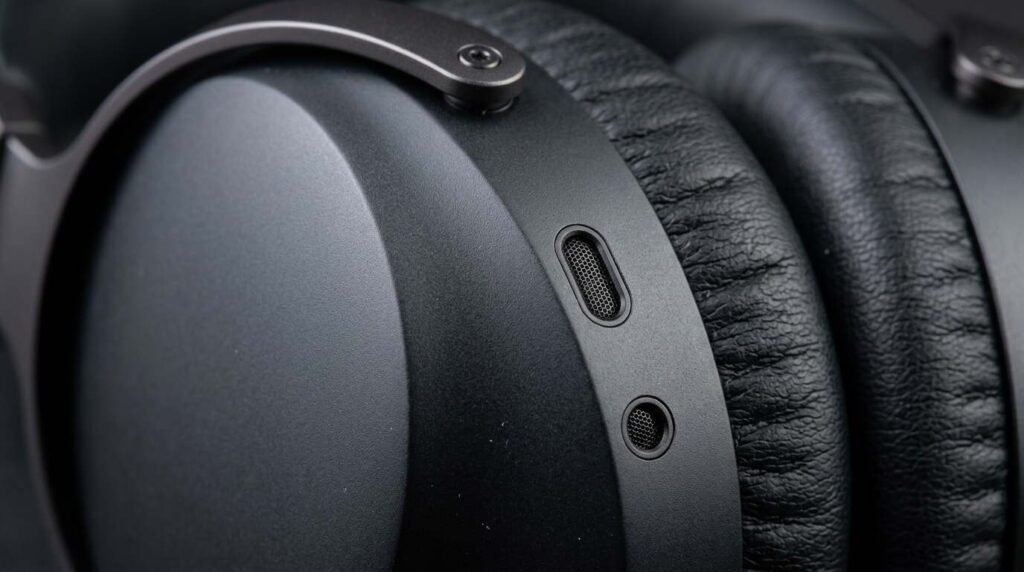
The reviewer’s own conclusion is more modest. Noise cancelling has improved and narrows the gap to Sony and Bose, but it is not a clear lead. Phone calls let in more background noise than on the Sony WH-1000XM6, and call quality is not described as class-leading.
Engadget adds that new ear pads should improve passive isolation, which does some of the work before any electronics get involved. Adaptive ANC and an Aware Mode carry over from the first model.
Sound and codecs
Sonos redesigned the drivers, which are 40 mm dynamic units. What Hi-Fi? describes the sound as powerful, rich and weighty, with reasonable detail and controlled bass. The same review says the headphones trail the class leaders in rhythmic precision, detail and dynamic expressiveness, and that better-sounding alternatives exist at this price.
On codecs, the sources split. What Hi-Fi? lists SBC, AAC and aptX Lossless, with lossless audio up to 16-bit and 44.1 kHz over Bluetooth and 16-bit and 48 kHz over wired USB. Engadget describes lossless over Bluetooth using aptX Adaptive, and Notebookcheck lists SBC, AAC and aptX without the lossless label. These are different codec names, and I cannot tell from the published material which one Sonos actually ships.
Whichever it is, the ceiling is worth understanding. 16-bit audio at 44.1 kHz matches CD resolution, and the wired USB mode only edges that up to 48 kHz. Buyers looking for high-resolution playback beyond that will not find it here, though most listeners will struggle to hear the difference at this level.
Battery, charging and repairability
Sonos rates the battery at 35 hours with ANC on. Engadget calls that about five hours more than the original, and Notebookcheck says 30 hours before. A three-minute quick charge adds about three hours, by What Hi-Fi?’s reading, which works out to roughly an hour of listening for each minute on the charger (my division).
The battery is user-replaceable. Notebookcheck says replacement needs a special Sonos kit, so it is a repair rather than an everyday swap. Ear pads are magnetic and replaceable at about £40 or $40 a pair.
At 322 g, the headphones are slightly heavier than the original. What Hi-Fi? found the design attractive and comfortable, while noting that the headband does not fold away completely.
Price context
The launch price is $449, £399 and AU$699. What Hi-Fi? places the Ultra against the Sony WH-1000XM6 at £400, $450 and AU$699 and the Sennheiser HDB 630 at £400, $500 and AU$1,000.
The original Ace’s price is another point of disagreement. What Hi-Fi? says the original has dropped to £299, $299 and AU$449 and will stay on sale. Engadget says the Ultra costs $50 more than the original, which implies $399. Notebookcheck says the Ultra is $50 below the original’s launch price, a statement that contradicts its own $449 figure and looks like an error. If What Hi-Fi?’s number is right, the Ultra’s premium over the discounted original is $150 (my subtraction).
Finish names also vary across reports. Engadget lists black, white, Sand and Agave, while What Hi-Fi? lists Black, Soft White, Agave and Sand, and Notebookcheck lists white, blue, beige and black.
How the three options line up
The comparison most buyers will make is between the Ace Ultra, the original Ace and the Sony model that What Hi-Fi? names as its price rival. The sources cover those three unevenly, so the gaps are marked rather than filled in.
| Item | Sonos Ace Ultra | Original Sonos Ace | Sony WH-1000XM6 |
|---|---|---|---|
| Price | $449 / £399 | $299 per What Hi-Fi?; about $399 going by Engadget’s wording | $450 / £400 |
| Microphones | 10 | 8 | Not covered in the sources I read |
| Battery with ANC on | 35 hours | About 30 hours (Notebookcheck) | Not covered in the sources I read |
| Wi-Fi link to Sonos gear | Yes, via Headphone Engine 2 | Select soundbars only | Not applicable, since it is not a Sonos product |
| Call quality, per What Hi-Fi? | Lets in more background noise than the Sony | Not covered | Better than the Ace Ultra on calls |
Read across the rows and a pattern appears. The Ultra’s advantages over the original are concrete and mostly about hardware: two more microphones, five more hours of battery and a broader Wi-Fi link. Its disadvantage against the Sony is about execution, with call quality and rhythmic precision the two places the reviewer marks it down. Neither headphone wins every row, which is the real point of the table. The choice comes down to which weakness matters more to a particular listener.
Who should buy them
The strongest case is a household that already owns a Sonos soundbar or speakers. The direct link turns the headphones into an extension of the system, and the user-replaceable battery and pads make the purchase easier to keep running over the years.
Buyers who live outside the Sonos world get a weaker argument. The reviewer concludes that sound alone is not the reason to choose them, and rivals at the same price sound better. For commuting and calls, the Sony WH-1000XM6 listed beside them at $450 is a stronger fit on the published evidence. Both views are opinions drawn from one professional review, and a second set of listening notes would add confidence.
Anyone weighing the original Ace should think about price first. If it is available near $299, the Ultra’s upgrades have to justify a $150 gap, and that depends on how much a household values the Wi-Fi link and ANC gains.
Questions buyers ask
Do they work with non-Sonos gear? Yes, over Bluetooth 6.0 or by wire. The cables for USB-C and 3.5 mm are in the box, per What Hi-Fi?.
Can I replace the battery? Yes, though Notebookcheck says it requires a special Sonos replacement kit.
Is the lossless Bluetooth really lossless? The sources do not agree on the codec, so the naming is unresolved. The wired USB connection is the more clearly specified lossless path.
What could not be verified
- Whether the headphones are in stock and shipping, since I have only the September 29 ship date from launch coverage.
- Whether headphone linking is still labeled Early Access.
- The codec name for lossless Bluetooth, and the original Ace’s current price.
- Independent measurements of the noise cancelling, which would test Sonos’s claim of up to twice the original’s performance.
- Real-world battery life, which is Sonos’s rating and not a test result.
Sources