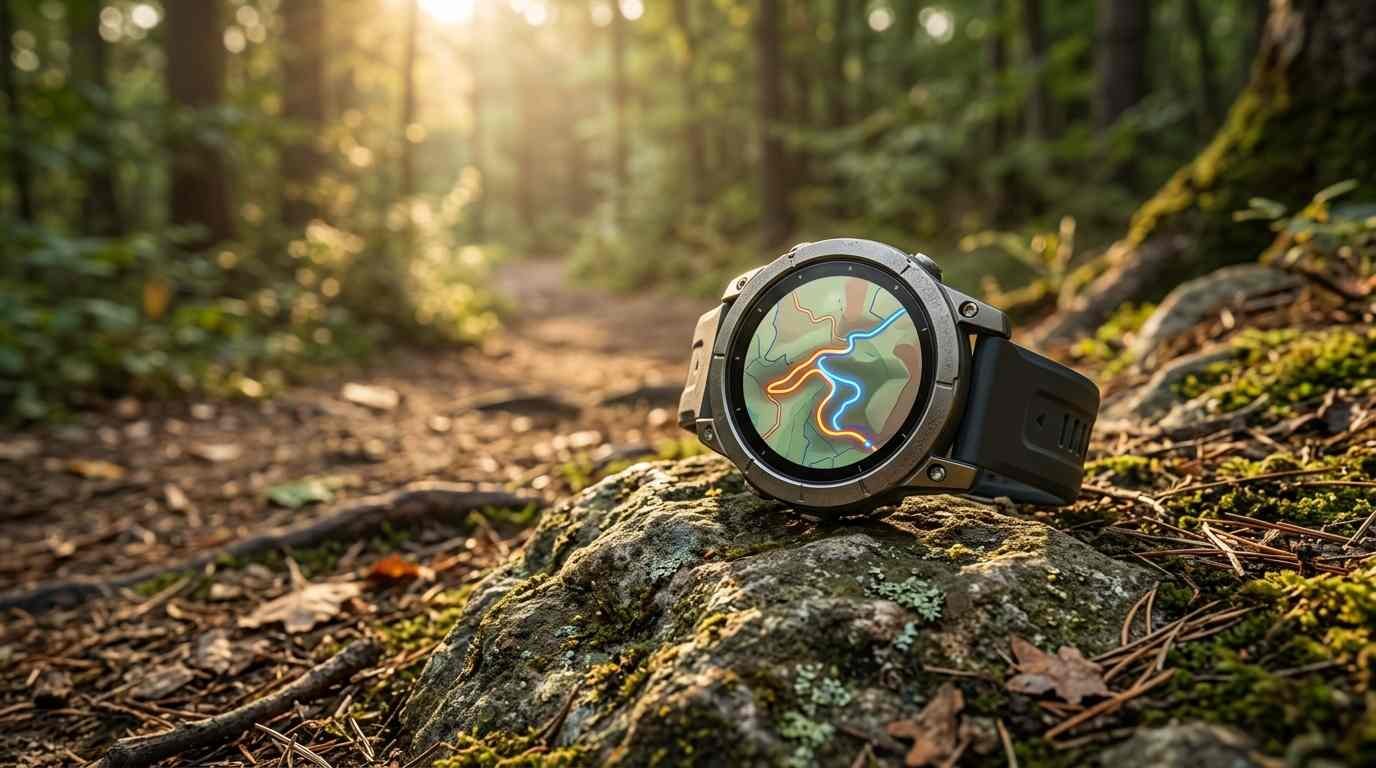
The Coros Pace 4 Pro launched September 22 with a titanium bezel, 1.47-inch AMOLED and 60-hour GPS. Specs, price, source conflicts and unknowns.
The Coros Pace 4 Pro was announced on September 22, 2026 at $449, and it changes a lot less than the name suggests while changing the things that matter most on a sports watch: the screen, the battery and the memory.
Coros already sells the Pace 4. The Pro sits above it with a titanium bezel, a panel 22.5 percent larger by diagonal, double the RAM and a manufacturer rating of up to 60 hours of GPS tracking. It also costs $200 more than the standard model’s launch price. Whether the extra money buys something useful depends on reading the numbers carefully, and on noticing where launch coverage disagrees with itself.
Everything below comes from the launch reports and spec listings I could open. Coros’s own product page would not load, so the battery and weight figures are manufacturer claims relayed by third parties, not independent measurements.
The announcement in short
Coros introduced the watch on September 22, 2026 and opened orders the same day, in black and white finishes. The US price is $449. Wareable lists £449 and €449; The 5K Runner and BikeRadar list £389 and €449, so the UK price is one of the points where sources conflict.
The standard Pace 4 launched at $249, £229 and €269 according to The 5K Runner’s spec page. That makes the Pro roughly 1.8 times the dollar price of the model below it. BikeRadar puts the watch against Garmin’s Forerunner 970 (from $650) and Fenix 9 AMOLED (from $1,000), a comparison it frames as the author’s judgment, not a formal benchmark.
- Display: 1.47-inch AMOLED, 466 x 466 pixels, 3,500 nits peak, sapphire lens
- Case: titanium bezel, 11.8 mm thick, 5 ATM water rating
- Weight: 43 g with nylon band (51 g with silicone band per The 5K Runner)
- GNSS: all-satellite, dual-frequency (GPS, GLONASS, Galileo, BeiDou, QZSS)
- Sensors: multi-channel optical heart rate, ECG, pulse oximeter, barometric altimeter, accelerometer, gyroscope, 3D compass, thermometer
- Battery claims: up to 21 days smartwatch use, up to 60 hours GPS, about 1.5 hours to charge
- Price: $449, announced September 22, 2026
Working through the battery numbers
Coros publishes battery figures in several modes, and the comparison with the Pace 4 is where the Pro’s argument lives. For the Pace 4, The 5K Runner’s page lists 41 hours in its high-accuracy, all-systems GPS mode, 31 hours with dual-frequency enabled at maximum, and 19 days of daily use. The Pro’s figures from the same site are 60 hours, 40 hours and 21 days.

Divide the numbers and the pattern is clear. GPS tracking improves by a factor of 1.46, which matches Wareable’s phrase of roughly 50 percent better. Dual-frequency tracking improves by 1.29. Ordinary smartwatch use improves by only 1.11, from 19 to 21 days. With the always-on display active the gap widens, from 30 hours to roughly 45 or 46 hours, depending on the source, a factor of about 1.5.
The uneven gains hint at where the extra energy goes. The Pro is only 11 g heavier, but a heavier case with a larger screen also holds a larger cell, and daily-use battery life depends mostly on what the display and the idle processor consume. A bigger panel should drain faster, yet daily life still rose a little. That suggests a battery capacity increase, though Coros has not published the capacity in any source I could open, so this is inference.
The charging claims deserve skepticism. BikeRadar reports 30 minutes of charging adds about 10 hours of GPS tracking, while a full charge takes about 1.5 hours. A linear charge curve would add a third of 60 hours, around 20 hours, in half an hour, so the two claims do not line up. Lithium cells usually charge fastest at the start, which makes 10 hours in the first half hour look low. Treat both as rounded marketing numbers until someone measures them.
What the screen upgrade means in pixels
Coros says the Pro’s panel is 1.47 inches, against 1.2 inches on the Pace 4. The ratio of the two diagonals is 1.225, which is where the 22.5 percent figure comes from. It is a measure of diagonal, not area. If both panels are circular, which the sources do not state but which the 466 x 466 and 390 x 390 resolutions suggest, the area grows by about 50 percent, which is the number that matters for how much text and map fits.
Pixel density barely moves. Spreading 466 pixels across 1.47 inches gives about 317 pixels per inch, while 390 pixels across 1.2 inches gives about 325. So the Pro’s screen is bigger, not sharper, and it should look equally crisp at arm’s length. BikeRadar says it can show up to 11 data fields, which is the practical benefit.
The peak brightness of 3,500 nits is a short-burst number for direct sunlight and is unlikely to be sustained in an activity view. Wareable and The 5K Runner both list the same figure. Adaptive refresh from 1 Hz to 60 Hz and an LTPO backplane are mentioned in The 5K Runner’s spec summary; LTPO lets the panel idle at very low refresh rates, which is a standard way of saving power on an always-on display.
Memory, storage and the source conflicts
Double the RAM is the least glamorous change and the most interesting. Wareable ties it to turn-by-turn global mapping, while The 5K Runner says offline maps carry over from the Pace 4. Those statements do not contradict each other, but they leave unclear whether the standard Pace 4 can do the same navigation.
Absolute numbers disagree. BikeRadar lists 64 MB of RAM and 64 GB of storage. The 5K Runner lists storage as 32 GB with room for about 1,200 hours of activity data, and gives RAM only as twice the Pace 4’s. The Pace 4’s page there lists 4 GB of storage and also about 1,200 hours of activity data. Taken together, the sources cannot all be right about storage, and a figure of 64 MB for RAM is small enough that a typo is plausible. Check the official specification before quoting any of these.
The hours-of-data figure is the same on both watches, so the extra storage, whichever is correct, appears to be reserved for maps and music, not for longer recordings.
Dual-frequency GNSS and the heart-rate sensor
Satellite navigation receivers track signals on one or two radio bands. Dual-frequency receivers use both and compare them, which helps cancel errors from the atmosphere and from signals bouncing off buildings. The practical difference shows up in tall city streets and under dense tree cover, where single-band GPS tracks can wander. The Pace 4 Pro carries over the dual-frequency GNSS of the standard Pace 4, so it is not a new capability, and tracking modes that enable it cost battery, as the 40-hour versus 60-hour split shows.
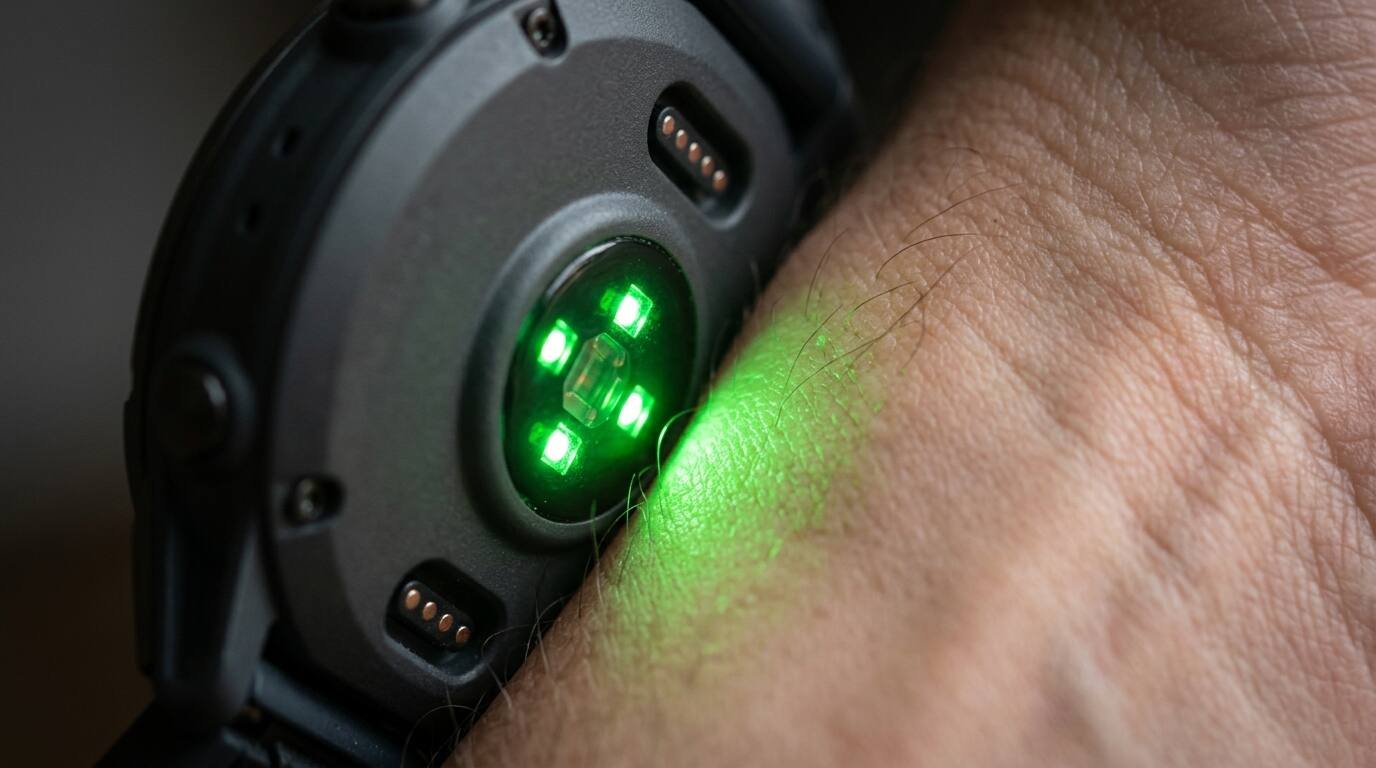
The Pro is said to add a new multi-channel optical heart-rate sensor. The 5K Runner hedges, saying that is what the notable new part “appears to be.” Optical heart-rate sensors shine green light into the skin and read how much returns, since blood absorbs green light and the amount changes with each pulse. More channels mean more light and detector pairs, which can help when the watch shifts on the wrist. Accuracy claims need testing against a chest strap, and none had been published when I checked.
The watch also includes ECG hardware, a pulse oximeter and a barometric altimeter. Coros has not made any medical claims in the material I opened, and these readings should be treated as fitness estimates.
Voice Pins and what is missing
The one new software feature is Voice Pins. Per Wareable, you record a short audio note during a workout and it is tagged to GPS coordinates and synced to the activity file in the Coros app. It suits trail runners who want to mark a washed-out section or a good water source.
There are gaps. The 5K Runner reports no NFC contactless payments and no music streaming, although the watch can store offline music, and it has battery-life entries for that mode: 17 hours in the high-accuracy mode and 15 hours in the maximum dual-frequency mode. A reader comment on that site claims a China-only version adds streaming and Alipay. That claim is unverified and is not used here.
Sports data syncs with Strava, Nike Run Club and TrainingPeaks per Wareable, and the watch tracks sleep, HRV, stress and resting heart rate.
Is it worth $200 over the Pace 4?
On paper the answer depends on how you use a watch. If you run ultras or long rides, 60 hours of GPS in a 43 g watch is a strong specification, and the larger screen helps with data fields and maps. If you run 10 kilometers four times a week, the standard Pace 4 at 41 hours already outlasts anything you do.
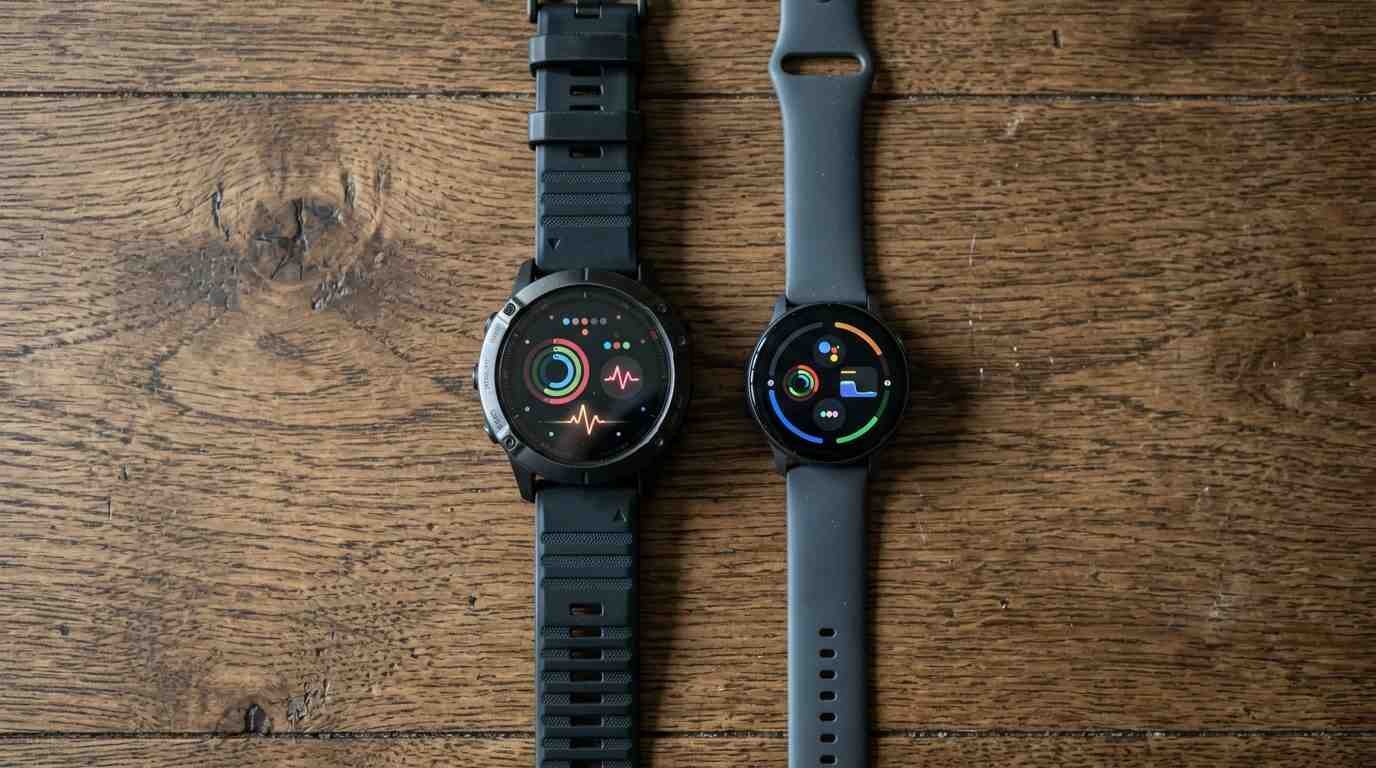
The awkward part is the lineup. The 5K Runner points out that the Pro takes the maps-and-AMOLED slot of an older Pace Pro, leaving three Pace watches with overlapping features and a harder buying decision. The same review argues that Coros trails Garmin on payments, app store and training depth, an opinion rather than a measurement. Real-world GPS accuracy and heart-rate accuracy remain unproven until independent tests land.
Frequently asked questions
How much does the Coros Pace 4 Pro cost?
The US price is $449. Launch coverage lists €449 in Europe, and the UK price is reported as either £389 or £449 depending on the source.
How long does the Coros Pace 4 Pro battery last?
Coros claims up to 21 days of smartwatch use and up to 60 hours of GPS tracking, with about 45 to 46 hours in GPS mode with the always-on display. These are manufacturer figures, not independent tests.
What is new compared with the standard Coros Pace 4?
A 1.47-inch AMOLED instead of 1.2 inches, a titanium bezel and sapphire lens, double the RAM, roughly 50 percent longer GPS battery life and Voice Pins. It is also about 11 g heavier.
Does the Coros Pace 4 Pro have contactless payments or music streaming?
According to The 5K Runner, it has neither NFC payments nor music streaming. Offline music storage is supported.
Coros has built a watch that is hard to fault on endurance and awkward on positioning. The Pace 4 Pro turns a mid-priced running watch into a long-haul tool, but the launch left key figures such as RAM, storage and UK pricing inconsistent across sources. Wait for the official spec sheet and a few GPS track comparisons, then decide whether 60 hours is a need or a number.
Sources
- Coros Pace 4 Pro launch analysis (The 5K Runner)
- Coros Pace 4 Pro specs (The 5K Runner)
- Coros Pace 4 specs (The 5K Runner)
- Coros Pace 4 Pro debuts with a titanium bezel, a bigger display, and more battery life (Wareable)
- New Coros Pace 4 Pro smartwatch will track your rides for up to 60 hours (BikeRadar)