The 2026 Fire TV Stick 4K costs $59.99 and runs Vega OS, a Linux-based system with no sideloading. Specs, speed claims, remote and open questions.
The new Fire TV Stick 4K looks like a routine hardware refresh, a slimmer stick with a faster processor at $59.99. The real change is in the software: it runs Vega OS, Amazon’s Linux-based replacement for the Android-derived Fire OS, and that has consequences for which apps run on it and how you install them.
Amazon launched the stick on September 30, 2026, and it began shipping at once in the US and a dozen other countries. It replaces the Fire TV Stick 4K Select and 4K Plus in Amazon’s lineup, according to Thurrott, and sits between the $39.99 Fire TV Stick HD and the $84.99 Fire TV Stick 4K Max.
What follows separates Amazon’s claims from the specifications, works through what the video numbers imply, and lists what the launch material did not say.
Specifications and price
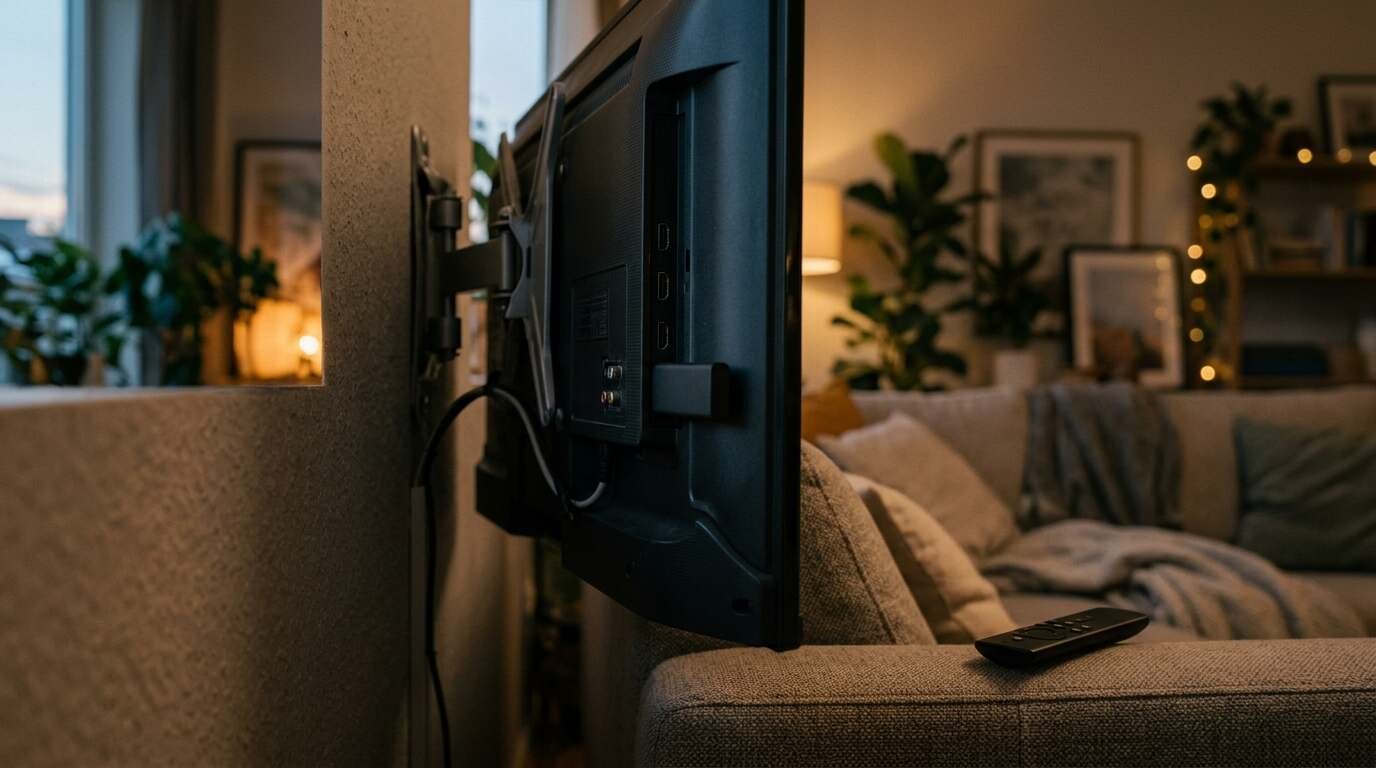
The 2026 stick costs $59.99. Amazon discounted it to $29.99 in the US for Prime Big Deal Days on October 6 and 7, and that sale has now ended, so check the current price before assuming the lower figure. The unit is slimmer than its predecessors, matching the design of the new Fire TV Stick HD, and supports what Amazon calls Direct Power, which lets it run from a TV’s USB port instead of a wall adapter.
- Processor: quad-core 1.7 GHz (chip not named in the coverage I read)
- Storage: 8 GB; RAM not stated
- Wireless: Wi-Fi 6, Bluetooth 5.3 and Bluetooth Low Energy
- Video: HDR10, HDR10+, HLG; H.265, H.264, VP9 and AV1 decoding; output up to 2160p at 60 fps
- Not supported: Dolby Vision, which Thurrott says the 4K Max does support
- Software: Vega OS with Alexa+ and Amazon’s new Fire TV interface
- Remote: redesigned, asymmetric shape, metal Home button, programmable star button; also sold separately at $14.99 for late-October shipping
- Price: $59.99 at launch
What Vega OS is, and why it matters more than the chip
Fire OS has been a fork of Android for the life of the Fire TV line. Vega OS drops that base. It’s FOSS, reporting on the first Vega device in October 2025, says Amazon built it on some Linux components and gave few technical details. Accedo, a company that builds streaming apps, states plainly that Vega is built on Linux instead of the modified Android base.
The first Vega device was the Fire TV Stick 4K Select, which had 1 GB of RAM. Amazon described the system as responsive with an efficient footprint. A leaner OS is a practical answer to cheap hardware: Android carries a large runtime and a layered set of services, and dropping them frees memory on low-cost hardware.
The cost is compatibility. According to Accedo, existing Android-based Fire TV apps do not run directly on Vega and must be adapted. Developers build with a React Native framework, with Vega Developer Tools supporting React Native 0.72, or reuse web code through a component called Vega WebView. Accedo adds that web-based apps often need performance tuning. Amazon also runs a Cloud App Program that streams Android versions of selected apps that have not been ported, though it is limited to apps Amazon chooses.
Amazon’s developer site, as quoted by Cordbusters, says that starting with the 4K Select all future Fire TV Sticks will run Vega. That report dates from April 2026. The Android-based Fire TV Stick 4K Plus and 4K Max were still on sale then; per Thurrott, the new 4K stick replaces the Select and Plus.
No sideloading: the practical difference
The most noticeable consequence for owners is that Vega devices install apps only from the Amazon Appstore. It’s FOSS reports that sideloading is not supported and that Amazon describes this as a security measure. Cordbusters says Amazon confirmed the same for all new Fire TV Sticks. On Android-based Fire TV models, people have long installed unlisted apps, custom launchers and some third-party clients through developer settings. That route is closed here.
For ordinary streaming it may not matter. Amazon says Vega has gained more than 2,000 new apps in the year since its first device, and names Netflix, Disney+, YouTube, Prime Video, Spotify, Xbox, VLC and several VPN apps. What the launch material does not tell you is which apps are missing. If you depend on a niche local-media client, a particular IPTV app or a regional broadcaster’s player, check the Appstore listing for the Vega platform before you buy.
There is a second reading of the policy. A closed store simplifies Amazon’s job of keeping the platform consistent, since every app has passed its review and was built against the same framework. It also puts Amazon in sole control of what appears. Both points are true, and which one weighs more depends on what you want from a streaming stick.
The video numbers, worked through
Output at 2160p and 60 frames per second is 3,840 by 2,160 pixels, or about 8.3 million pixels per frame. At 60 frames each second that is roughly 498 million pixels a second the decoder must handle, and the display chain must pass through. A 1.7 GHz quad-core CPU does not decode that by itself; the work falls to a hardware video block, and the support for AV1 matters most there. AV1 is a newer codec that streaming services use to cut bandwidth, and playback on a cheap device depends entirely on whether the silicon includes a hardware decoder. Amazon lists AV1 alongside H.265 and VP9, so the format is supported, though the coverage does not say whether it is decoded in dedicated hardware.
The list of HDR formats is HDR10, HDR10+ and HLG, with no Dolby Vision. Thurrott says plainly that the 4K Max supports it and this stick does not. Dolby Vision uses dynamic metadata, scene by scene, like HDR10+, and many TVs support one or the other or both. If your TV is a Dolby Vision-only set, an HDR10 stream will still play, but without the scene-level adjustments.
Wi-Fi 6 helps on crowded networks more than on bandwidth. A single 4K stream rarely needs more than a small fraction of what even older Wi-Fi 5 links can carry, but Wi-Fi 6 handles many clients better through scheduling improvements. Whether that shows up for you depends on how many devices share your router.
Amazon’s speed claims, and how to read them
Amazon says apps launch more than 35 percent faster and content begins playing nearly 20 percent faster, against a baseline the coverage does not specify. Amazon’s headline claim, repeated by Thurrott and Android Authority, is that the stick gets from power-on to playing content 20 to 40 percent faster than a similarly priced 4K stick from another brand. Amazon does not name the competitor in the coverage I opened.
Percentages of this kind depend on the baseline. As a hypothetical, a boot time that falls from 40 seconds to 30 is a 25 percent improvement and still a noticeable wait. The only way to turn those claims into something you can use is a stopwatch comparison, and reviewers had not published one when I checked. Until they do, the speed claims are best treated as directional.
Power is the other quiet change. USB 2.0 ports are specified at 500 milliamps at 5 volts, which is 2.5 watts. Many TVs provide only that. Amazon has not published a power draw for the stick, so there is no confirmation that every TV port will supply enough; the included cable and adapter presumably cover the cases where it does not, but that is not stated in the coverage I opened.
The remote and other changes
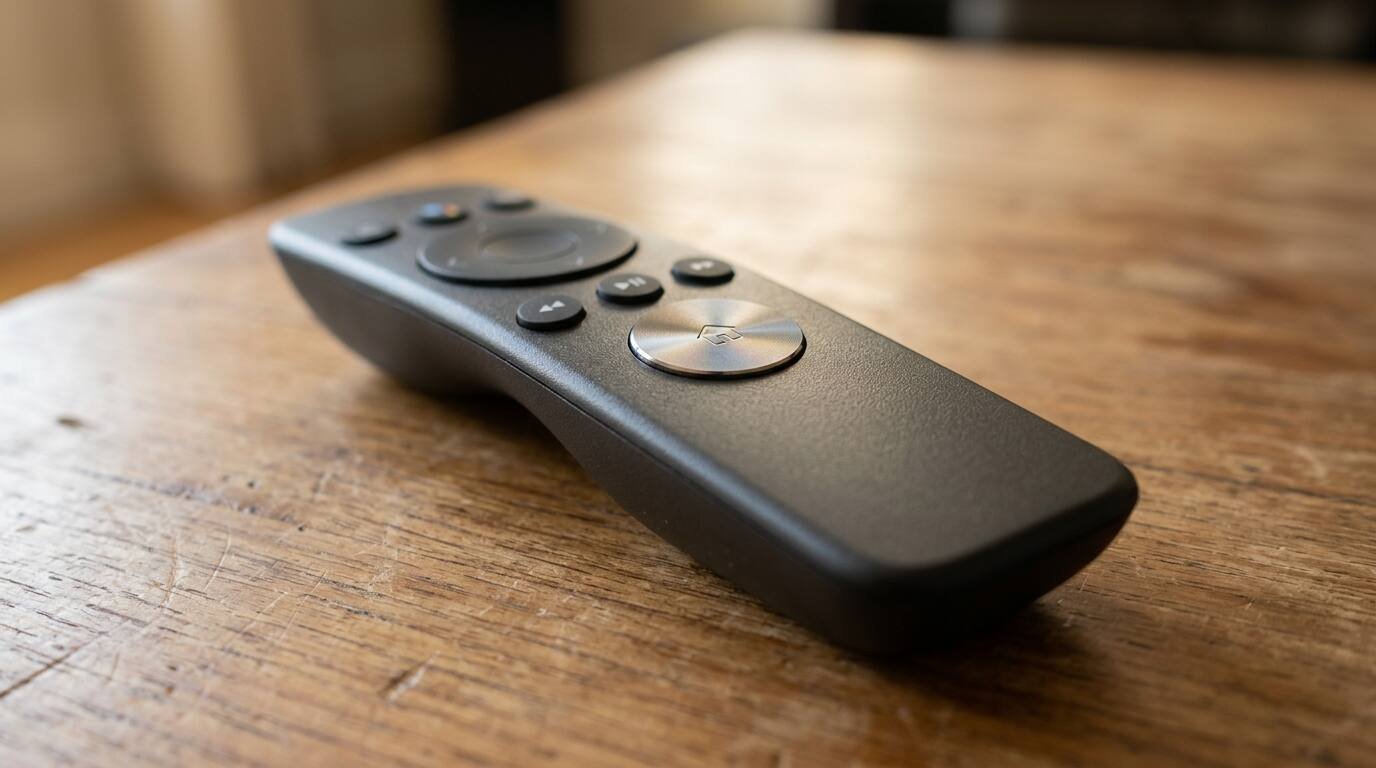
The new remote is asymmetric, with a flat top and a curved, weighted bottom that lets you tell its orientation by feel. It has a metal Home button, indented buttons, and a customizable star button previously reserved for the Alexa Remote Pro. The star button can open a favorite app or toggle closed captions or Screen Magnifier. Android Authority adds dedicated power, volume and mute controls for compatible TVs, soundbars and receivers.
A further remote, the Fire TV Remote Plus, is announced for early 2027 per Android Authority, with an aluminum body, backlit buttons and an Alexa-triggered find-my-remote feature. Thurrott adds that an Alexa+ hub with personalized suggestions arrives in November, and that Alexa+ conversational search comes to the Fire TV mobile app later this year. Both are Amazon plans rather than shipped features.
What is not yet known
Several things are unconfirmed in the sources I could open. RAM is not stated, and neither is the chip. Whether the stick uses a dedicated hardware AV1 decoder is not stated. Thurrott’s country list omits Ireland and New Zealand, which Android Authority includes, and Amazon says more countries follow in late October.
There is also the matter of long-term support. Amazon says it will keep supporting Fire OS alongside Vega, which means two software tracks for developers, with the unavoidable risk that one gets more attention than the other. Nothing in the launch material commits to an update period for the 2026 stick.
Frequently asked questions
How much is the new Fire TV Stick 4K?
It launched at $59.99. Amazon ran a $29.99 promotion in the US during Prime Big Deal Days on October 6 and 7, which has ended.
Does the 2026 Fire TV Stick 4K run Android apps or support sideloading?
No. It runs Vega OS, which is Linux-based, installs apps only from the Amazon Appstore, and does not run Android Fire OS apps without adaptation by developers.
Does the new Fire TV Stick 4K support Dolby Vision?
Thurrott says it does not, while the 4K Max does. It supports HDR10, HDR10+ and HLG.
Which Fire TV Stick does it replace?
Thurrott reports it replaces the Fire TV Stick 4K Select and Fire TV Stick 4K Plus. The HD model ($39.99) and 4K Max ($84.99) remain, along with the Fire TV Cube.
The hardware here is a modest step. The decision that deserves your attention is the platform: Vega is a bet that a lean Linux system and React Native apps can match what Android gave Fire TV, in exchange for control Amazon did not have before. For a household that streams the big services, that trade is invisible. For anyone who loaded their own apps on a Fire Stick, it is a hard stop, and it is better to know that before opening the box.
Sources
- Amazon just refreshed its Fire TV Stick 4K (Android Central)
- Amazon Launches New Fire TV Stick 4K With Redesigned Remote (Thurrott)
- Fire TV Stick 4K (2026) and remote (Android Authority)
- Amazon Ditches Android: Launches Linux-Based Vega OS for Fire TV (It’s FOSS)
- Amazon Confirms: No Sideloading on All New Fire TV Sticks (Cordbusters)
- Amazon Vega Fire TV Stick launch: Accedo’s experience with the new Vega OS (Accedo)