






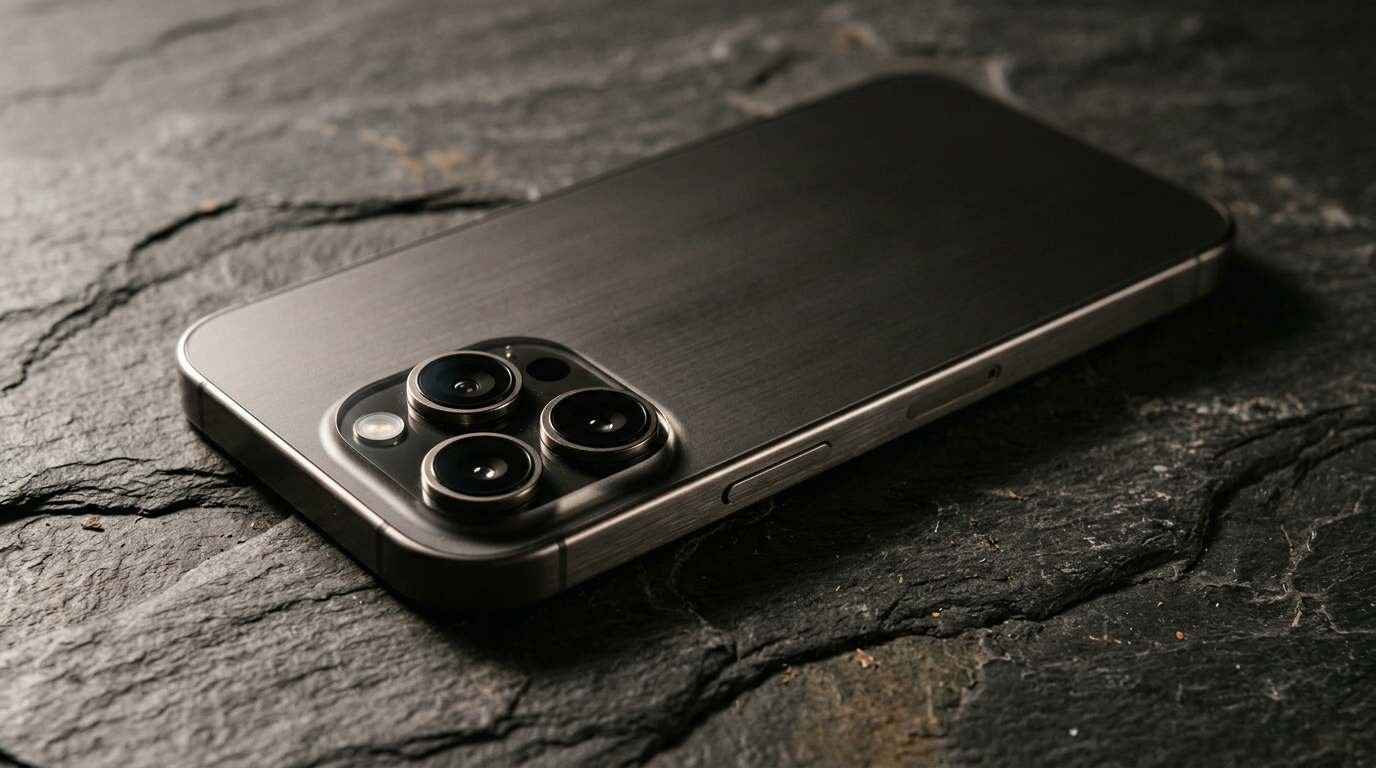
iPhone 18 Pro analysis: A20 Pro benchmarks, thermals, variable-aperture camera and battery results from two reviewers, plus the $1,199 starting price.
The iPhone 18 Pro starts at $1,199, which is $100 more than last year’s model, and the iPhone 18 Pro Max starts at $1,299. Apple announced both on September 9, opened pre-orders on September 12 and set sales for September 18. Two independent review teams have now published full test results, which makes this a good moment to see where their numbers agree and where they pull apart.
The short version is that both reviewers find the phones clearly faster than last year’s models and both describe the design as nearly unchanged. They split on how much the new variable-aperture camera matters and on how big the battery gains are.
How this was written. Nobody at x9m8 has tested these phones. This is an analysis of Tom’s Guide’s review (last updated September 20), Macworld’s review (September 24) and Apple’s announcement as reported by iPhone in Canada and MacTech. All benchmark figures below are theirs, and arithmetic that is mine is labeled.
What Apple announced
The A20 Pro is Apple’s first 2 nm chip. It has a six-core CPU, a seven-core GPU and two Neural Engines totaling 32 cores, and Apple claims up to 20% faster performance cores, 40% faster graphics, twice the Neural Engine compute and 50% more memory bandwidth. A next-generation vapor chamber connects directly to the chip for cooling.
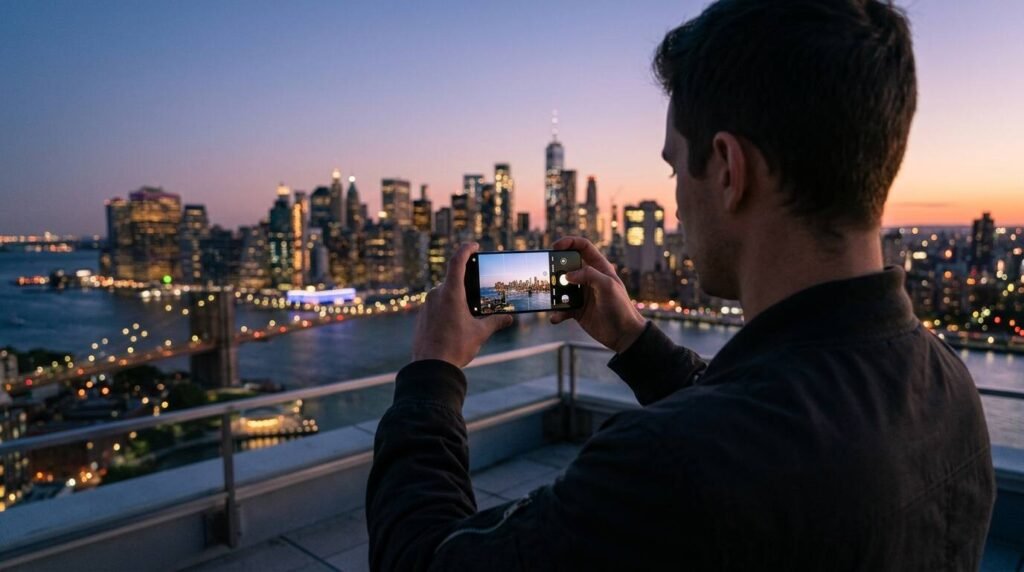
The main camera is a 48 MP Fusion unit whose aperture changes through six thin polymer-composite blades. Apple says it lets in about 50% more light in dark scenes and speeds up Night mode captures. The Dynamic Island is smaller, and the software is iOS 27 with Apple Intelligence and Siri AI.
Colors are black, silver, glacier and a new burgundy, per MacTech. The Pro adds a 2 TB option, and Tom’s Guide lists 256 GB, 512 GB, 1 TB and 2 TB for both models.
Core specs from the reviews
| Spec | iPhone 18 Pro | iPhone 18 Pro Max |
|---|---|---|
| Starting price | $1,199 (256 GB) | $1,299 (256 GB) |
| Display | 6.3-inch, 120 Hz, 3,000 nits peak | 6.9-inch, 120 Hz, 3,000 nits peak |
| Memory | 12 GB (Tom’s Guide) | 12 GB (Tom’s Guide) |
| Main camera | 48 MP, f/1.48 to f/4 | 48 MP, f/1.48 to f/4 |
| Other rear cameras | 48 MP ultrawide, 48 MP 4x telephoto | 48 MP ultrawide, 48 MP 4x telephoto |
| Video playback rating | Up to 36 hours | Up to 45 hours |
| Charging | 60 W wired, 35 W wireless | 60 W wired, 35 W wireless |
| Weight | 211 g | 249 g |
| Water resistance | IP68 | IP68 |
Performance: two reviewers, one direction
On raw speed, the independent tests line up well. Tom’s Guide reports a Geekbench 6 single-core score near 4,700, about 25% above the iPhone 17 Pro series, and multi-core near 12,800, roughly 28% higher. Macworld measures single-core up about 26% and multi-core up 28 to 30% depending on the Geekbench version, with GPU compute up about 46% on Geekbench 7.
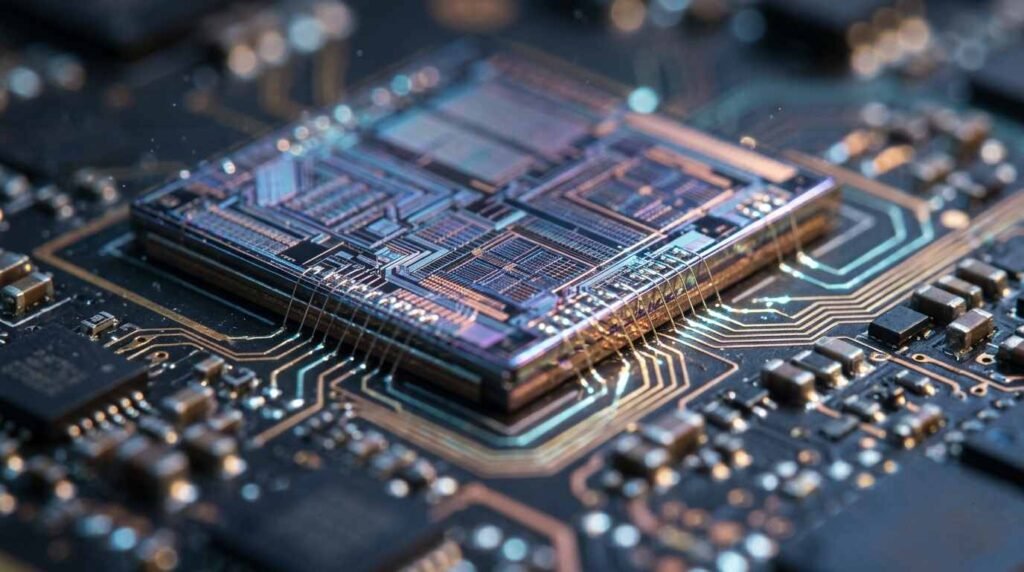
Graphics gains vary by test. Tom’s Guide gets 62 frames per second from the Pro and 67.9 from the Pro Max in 3DMark Solar Bay Unlimited, 33% and 45% ahead of their predecessors. Macworld sees 3DMark improvements of 53% to 93% across three tests. On Neural Engine work, Tom’s Guide measures about 69,200 and 72,000 in Geekbench AI, up 41% to 48%, and Macworld reports a gain of more than 40%.
Apple’s claim of up to 20% faster performance cores is lower than the 25% to 26% single-core gains both reviewers record. The two do not have to match. A benchmark suite exercises memory, caches and the surrounding system as well as the core itself, and Apple’s figure describes one component. That is my interpretation, not something either review states.
How to read these benchmark gains
Benchmark scores measure short, intense bursts of work. A 25% jump in a single-core test does not mean every app opens 25% faster, because everyday tasks spend much of their time waiting on storage, networks and the screen. The gains show up most clearly in sustained gaming, video editing and on-device AI work, which is where the stability and Neural Engine results in this analysis apply. That is a general point about benchmarks, not a finding of either review, and it helps explain why both reviewers call the practical difference incremental even while the charts look large.
Thermals and sustained performance
Tom’s Guide ran a stress test that reports how stable performance stays across repeated runs. The Pro scored 62.8%, the Pro Max 79.4% and Samsung’s Galaxy S26 Ultra 53.9%. The Pro Max improved about 25% over the 17 Pro Max, while the Pro gained only about 1.7% over the 17 Pro.
Macworld offers the engineering explanation: a larger vapor chamber, and RAM moved beside the chip. It reports noticeably less heat during gaming and extended video recording. The gap between the two models in Tom’s Guide’s figures suggests the bigger chassis gives the Pro Max more room to shed heat, though that reading is mine.
Battery: where the reviewers diverge
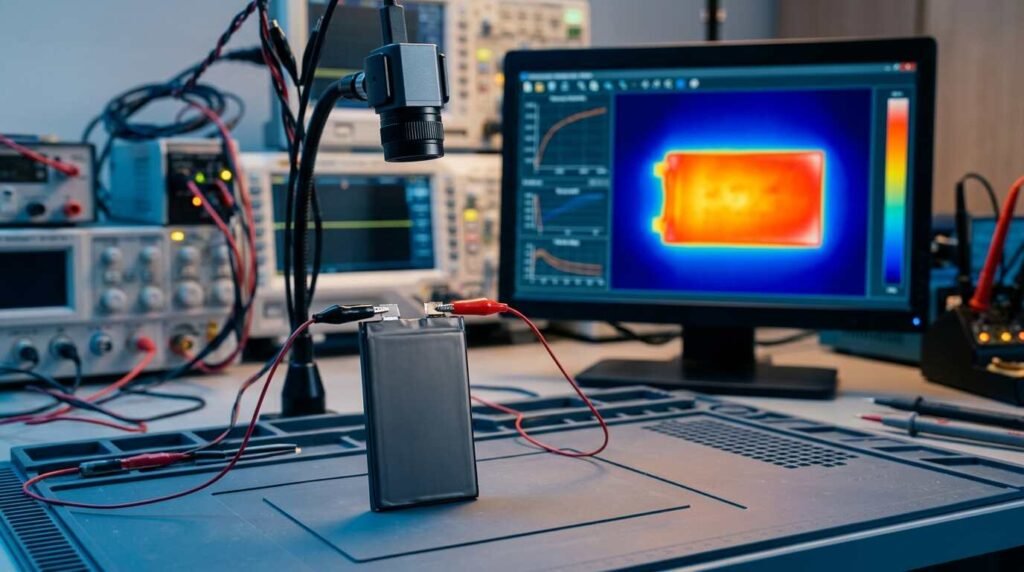
Battery is the most interesting disagreement. Tom’s Guide’s continuous web-browsing test on 5G at 150 nits gives the Pro Max 18 hours 27 minutes, against 17:54 for the 17 Pro Max, and the Pro 16:17, against 15:21. My arithmetic puts that at gains of about 3% and 6%. Macworld, using Geekbench’s battery test, finds the Pro lasting about 12% longer and the Pro Max about 25% longer.
Different workloads explain much of the gap. Web browsing at modest brightness leaves the chip idle for long stretches, so efficiency gains barely register. A compute-heavy loop keeps the processor busy and magnifies them. The reasoning is mine, and it does not settle everything: Macworld’s test shows the bigger gain on the Pro Max, while Tom’s Guide’s browsing test shows a bigger percentage gain on the Pro.
Charging improved modestly. Tom’s Guide measured the Pro reaching 53% in 15 minutes and 80% in 30, and the Pro Max 44% and 77%. Macworld puts the improvement at about 20 minutes faster to a full charge.
Apple claims the longest battery life it has ever offered in an iPhone but gives no capacity figures, so cell sizes remain unconfirmed.
The variable-aperture camera
The main lens has four stops: f/1.48, f/1.8, f/2.8 and f/4, with f/1.8 as the default, per Macworld. Light intake varies inversely with the square of the f-number, so my arithmetic gives f/1.48 about 48% more light than f/1.8, and f/4 about five times less than f/1.8. That first figure sits close to Apple’s claim of about 50% more light, though the coverage I read does not say what Apple compares against.
Reviewers weigh the benefit differently. Macworld found the effect modest on a sensor this small and criticized restricting the new manual Pro controls, which include aperture, shutter speed, focus, white balance and a histogram, to this model line. Tom’s Guide called the variable aperture versatile, and it rated zoom as competitive with the S26 Ultra at 4x and 10x, though the Samsung was sharper at 40x.
Video gains include Cinematic mode after recording, 4K timelapse in Dolby Vision HDR and manual video controls, per Tom’s Guide.
Display, design and software
The panels are 6.3-inch and 6.9-inch Super Retina XDR displays at 120 Hz with a 3,000-nit peak. Tom’s Guide found them identical to the 17 Pro series, with an anti-reflective coating. Macworld reports the Face ID infrared sensor moved beneath the screen, which allows the smaller Dynamic Island, and Tom’s Guide notes it can show up to three Live Activities.
Both phones are heavier than before, at 211 g and 249 g, and the camera plateau is slightly taller. Macworld notes that some existing cases fit poorly as a result.
On software, Tom’s Guide says Siri AI handles multi-step requests and personal context better, though it trails Gemini and ChatGPT Voice for live camera conversations and sometimes interrupts multi-part commands. Tools such as Reframe, background extension and a faster Clean Up were singled out.
Pro versus Pro Max in the numbers
| Measure | iPhone 18 Pro | iPhone 18 Pro Max |
|---|---|---|
| Starting price | $1,199 | $1,299 |
| Sustained performance stability (Tom’s Guide) | 62.8% | 79.4% |
| Web browsing battery test (Tom’s Guide) | 16:17 | 18:27 |
| Video playback rating | Up to 36 hours | Up to 45 hours |
| Weight | 211 g | 249 g |
The Max leads on every performance and battery line and weighs 38 g more (249 minus 211, my arithmetic). Tom’s Guide says it prefers the Pro Max for its larger screen and longer battery, and Macworld’s battery gain is larger for the Max, though Tom’s Guide’s browsing test shows a bigger percentage gain for the Pro.
Price and upgrade math
Both reviewers confirm the $100 increase. Macworld adds that the highest storage tiers rose by $300. The Pro Max sits $100 above the Pro and adds a larger screen, a longer battery rating and, in Tom’s Guide’s stress test, better sustained performance, which is the clearest value argument in the numbers.
Verdicts are broadly positive but restrained. Tom’s Guide gave the pair an Editor’s Choice award and says the improvement over the 17 Pro is real but not dramatic. Macworld calls it essentially the same phone as last year, faster, with a slightly better camera, and says that makes it the best Pro iPhone available.
My reading is that upgraders from an iPhone 17 Pro gain mostly speed and sustained performance, which few people use fully. Owners of older Pro models stand to see larger changes, though no source I read compared directly against them.
What could not be verified
- The cellular modem. Neither review nor the Apple coverage I read specifies it, and a second-generation C2 modem appeared only in pre-launch rumors.
- RAM, which is 12 GB per Tom’s Guide and not confirmed in the other sources.
- Battery capacities, since Apple did not publish them and the reviews report only test runtimes.
- A like-for-like battery comparison, since the two reviewers ran different tests.
- Whether either review’s benchmark runs were done under identical thermal and software conditions.
Sources



