General anesthesia does not simply switch the brain off. It changes its rhythms, and how it does so tells researchers a lot about consciousness.
What anesthesia does to the brain is both well described and strangely incomplete. Surgeons and anesthesiologists can put a person into a reversible state of unconsciousness safely, millions of times a year. Yet the precise chain of events that takes a mind from awake to absent is still being worked out. That gap makes anesthesia one of the most useful tools in consciousness research, because it lets scientists switch awareness off and on in a controlled way and watch what changes.
Below is what is known about how the drugs act, what the brain does under them, how rare it is for patients to stay aware, and what all of it suggests about the nature of consciousness. It is general information, not medical advice.
Is general anesthesia the same as sleep?
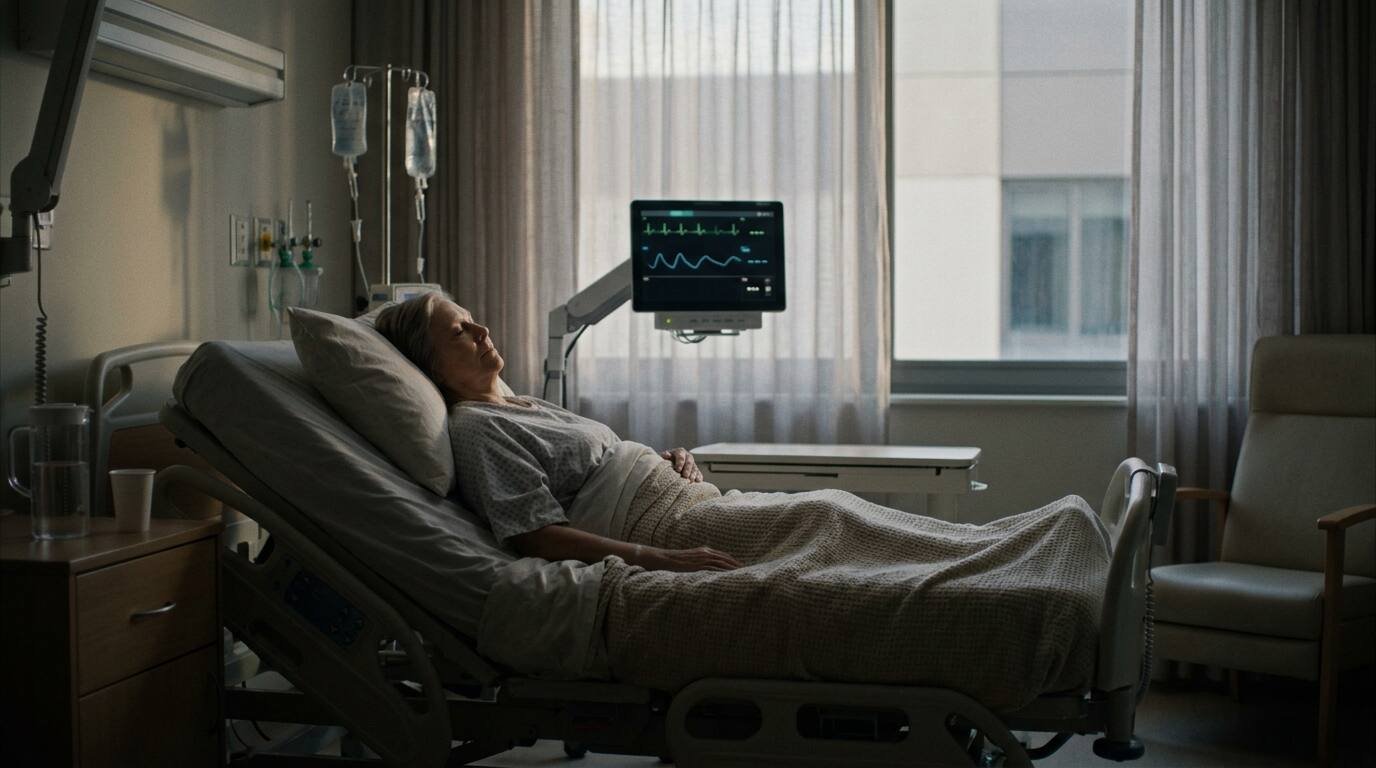
No, although the comparison is common. Natural sleep cycles on its own, and a sleeping person can be woken by a loud noise or a shake. Under general anesthesia a person does not respond to pain or surgery and does not form memories of it, and the state is held in place by drugs.
Some anesthetics may act on sleep-promoting regions of the brain, so the two states overlap in places. The overlap is only partial, and clinicians treat the two states as different things.
It also helps to separate anesthesia from other conditions of reduced awareness. Reference sources on the neural basis of consciousness group general anesthesia with coma and the vegetative state as conditions of little or no conscious experience, though the causes and the reversibility are very different.
How do anesthetic drugs work?
The honest summary is that nobody has the full mechanism. Several drugs and several targets are involved, and the biochemical story is described as not fully understood.
Two protein targets get the most attention. Many inhaled (volatile) anesthetics enhance the action of GABA-A receptors, which carry the brain’s main inhibitory signal, though the exact binding site on the receptor has not been identified. Ketamine works differently, by blocking NMDA receptors, which are involved in excitatory signalling. Older thinking summed up the effect as more inhibition, less excitation.
A 2020 study pointed in another direction. It reported that inhaled agents such as chloroform and isoflurane moved an enzyme called phospholipase D2 out of specialised patches of the cell membrane, which set off a chain of events that opened a type of potassium channel. Fruit flies lacking that enzyme were reported to resist anesthesia. This suggests the cell membrane may be part of the story, not just receptor proteins. It is a finding in need of replication and wider testing, not a settled account.
The gap between drug action at the cell level and a switched-off mind at the whole-person level is the real mystery. Knowing that a drug binds a receptor does not say why awareness disappears.
What happens in the brain when you go under?
Anesthetics alter activity in the cerebral cortex, the thalamus, the reticular activating system in the brainstem, and the spinal cord. Older descriptions, such as Guedel’s four stages, tracked changes in consciousness, breathing and reflexes, although no EEG pattern reliably predicts the move from one stage to the next.
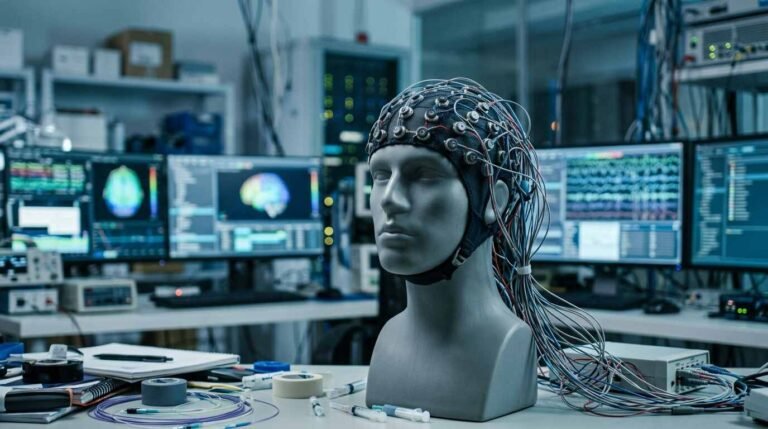
A good deal of recent evidence points away from the idea that the brain simply turns off. A 2021 study in the journal eLife, from the Picower Institute at MIT, recorded rhythms and cell firing at once in five regions, two near the front of the cortex, two toward the back, and the thalamus, in animal models given propofol. The brain stayed active but changed how it was active.
As unconsciousness set in, the thalamus and cortex locked into very slow rhythms, around one cycle per second. Awake brains normally coordinate across a wide band of frequencies, roughly 4 to 100 cycles per second. Cells that fired seven to ten times a second while awake dropped to once a second or less, in a pattern the team called a down state. Faster rhythms linked to processing new sensory input faded in the outer cortical layers, and the balance of alpha and beta activity shifted from the back of the cortex toward the front.
The researchers suggested that propofol may over-synchronise the loops connecting thalamus and cortex, leaving the cortex unable to communicate normally. They also reported that stimulating the thalamus with a 180-hertz current moved the animals toward a more awake-like state. That is an animal result and an interpretation, and it should not be read as a way of waking people.
Does the brain stop processing altogether?
Not entirely. The MIT recordings showed neurons still firing, only far more slowly and in lockstep, and the brain was not silent. That matters because it separates two ideas that are easy to blur: a brain that is active and a brain that is conscious.
A related idea from consciousness theory holds that quick feed-forward sweeps of information through sensory areas can produce complicated processing without awareness. Awareness, on this view, requires sustained, reverberating activity that spreads across frontal and parietal regions. Anesthesia seems to cut that long-range conversation while leaving more local activity intact.
That is one reading, not the only one. A competing family of theories ties consciousness to how rich and integrated the brain’s activity is, and also predicts that anesthesia would reduce it. Anesthesia helps in testing such theories, but it has not yet picked a winner.
Why does it matter for theories of consciousness?
Anesthesia gives researchers a before-and-after comparison inside the same brain, with the same anatomy and a changed state of awareness. That is rare in this field.
Several lines of evidence converge. Consciousness depends on a sufficient level of arousal, supplied by structures in the brainstem, thalamus and hypothalamus, and small bilateral lesions in certain thalamic nuclei can abolish awareness. Anesthesia targets some of the same circuitry. The MIT results fit that picture by pointing to the thalamo-cortical loop.
What anesthesia cannot do is explain why activity in these loops is accompanied by experience in the first place. That is the hard problem, and a drug that removes awareness is evidence about the conditions for it, not an explanation of what it is. Correlation, once more, is not explanation.
Can people be aware during surgery?
Occasionally, and it is taken seriously. Accidental awareness under general anesthesia happens when the dose is too low for a patient’s needs, and the typical estimate is around 0.2 to 0.4 percent of patients, though that figure is described as controversial because many reports are open to interpretation. One review of more than 200,000 patients found a much lower rate, about 0.007 percent, so numbers vary a lot with how awareness is defined and detected.
Risk is not spread evenly. It runs higher in cardiac surgery, caesarean section and trauma surgery, and with certain drug combinations, especially when muscle-paralysing drugs are used, because a paralysed patient cannot signal distress. Equipment faults and human error, such as an empty vaporiser, account for some cases. Undisclosed alcohol or drug use can also mean a patient needs more than a standard dose, which is why anesthesia teams ask about it.
Reports of experiences range from vague sounds or pressure to pain. The aftermath can include anxiety, nightmares and, in some people, post-traumatic stress. Only about a third of patients who experienced awareness mention it straight away; others describe it weeks or months later. Anyone with a worry about this should raise it with their anesthesia team before a procedure.
How do doctors know a patient is unconscious?
This is harder than it sounds, since an unresponsive patient could be deeply out or paralysed and aware. Teams watch vital signs and measure the concentration of anesthetic gas in the exhaled breath. Many also use processed EEG monitors such as the bispectral index to estimate depth.
The evidence for these monitors is mixed. A 2016 Cochrane meta-analysis found that depth monitors performed about as well as standard clinical monitoring for awareness risk, and monitors have limitations at the extremes of age and with some drugs. They are not meant to be used alone.
A research technique called the isolated forearm test offers a different approach. A blood-pressure cuff is inflated on one arm before paralysing drugs are given, leaving that hand able to move, and the patient is asked to squeeze on command. It is regarded as a reference standard for assessing consciousness in this setting, and it shows that some people who look unresponsive can still follow instructions. Brown and colleagues at MIT and Massachusetts General Hospital propose that rhythm signatures like those they found could improve monitoring in future.
Common questions
Do you dream under anesthesia?
The sources used here do not give a figure, and I could not confirm one. Reports vary from person to person, and since they rest on memory after waking, researchers treat them with caution.
Why does time seem to vanish?
Most patients describe going under and waking up with nothing in between. That fits the evidence that the brain is not simply paused: it is in a different dynamic state in which no experience is being formed or stored, so there is nothing to recall.
Does anesthesia work the same way in every drug?
No. Propofol, inhaled agents and ketamine act on different targets and produce different brain signatures. Ketamine in particular acts through NMDA receptors, and its effects differ from those of the GABA-boosting drugs. A full theory has to cover all of them.
Is the mechanism really unknown?
Parts are known: receptors, circuits and rhythm changes have been identified. What is missing is an account that ties them together into a complete explanation of why consciousness disappears, and that is the part described as unresolved.
When was general anesthesia first used?
The first recorded successful surgery under general anesthesia was performed by the Japanese surgeon Hanaoka Seishu on 14 November 1804, according to one history. Modern anesthesia took shape over the nineteenth century alongside advances in antisepsis and pharmacology.
What to remember
Anesthesia does not simply shut the brain off. It reshapes how the thalamus and cortex talk to each other, pushing them into slow, over-synchronised rhythms in which the brain stays busy but not aware. The drugs’ targets include GABA-A and NMDA receptors and possibly cell membranes, and the full mechanism is not yet understood.
For consciousness science, that makes anesthesia a valuable experimental lever: it shows which conditions awareness depends on, without saying what awareness is. Accidental awareness is rare but real, and monitoring is imperfect.
Further reading
Readable overview of consciousness science that touches on anesthesia and altered states. See it on Amazon (affiliate link)
As an Amazon Associate I earn from qualifying purchases. A commission may be earned if you buy through this link, at no extra cost to you.
Sources