PowerChina's 1 GW Qinghai plant uses molten salt solar storage and reached full grid connection Oct 1. How it works, the numbers, open questions.
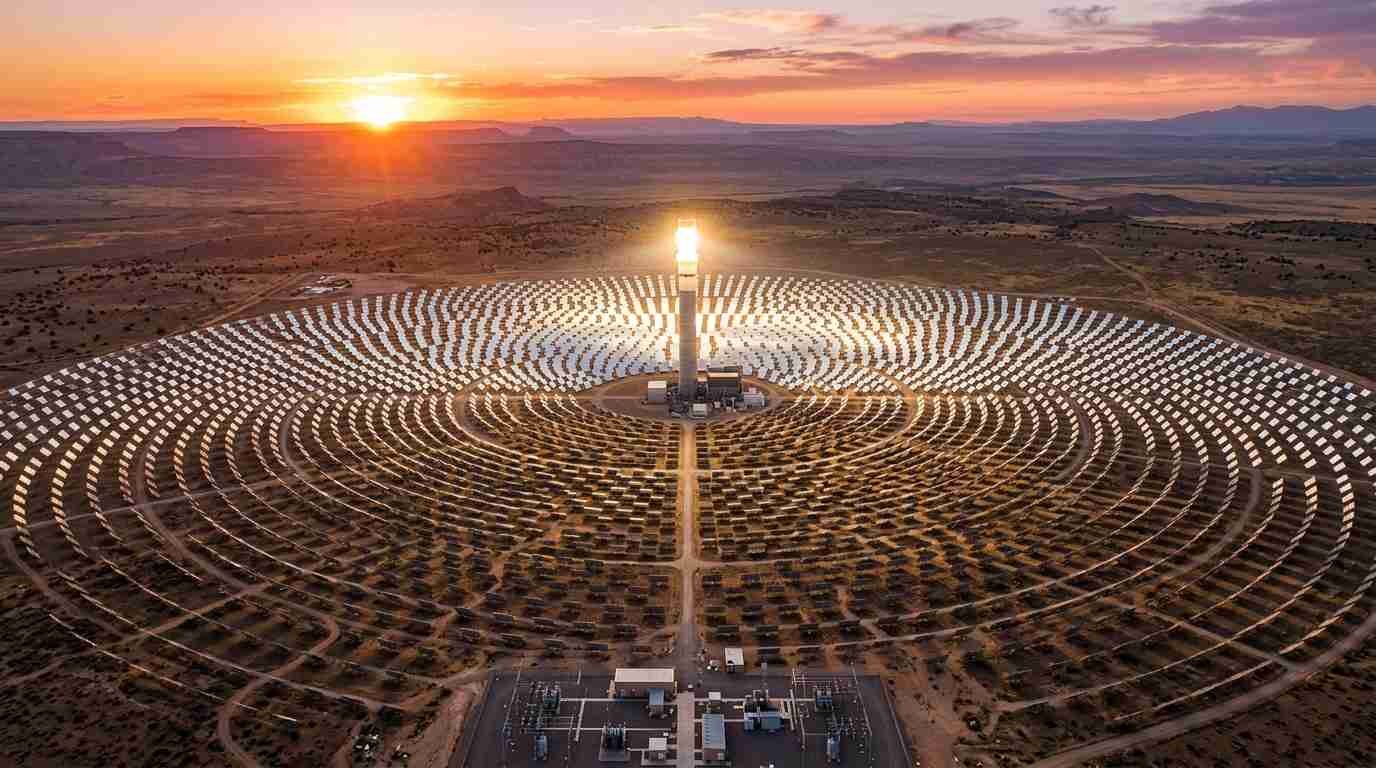
On October 1, 2026 a 1 GW solar complex on the Talatan plateau in Qinghai province, northwestern China, reached full-capacity grid connection. Most of it is ordinary photovoltaic panels. The unusual 100 MW is a molten salt solar tower, a field of mirrors that heats salt to store energy as heat, plus a 20 MW electric heater that can turn surplus panel output into stored heat as well.
The project is easy to describe as a giant battery alternative, and that framing hides the interesting engineering. This post explains how a molten salt tower works, goes through the numbers the plant’s owner has released, places the plant against China’s other concentrated solar projects, and lists what is still unknown, including cost.
What came online
pv magazine reported on October 9 that PowerChina New Energy, which developed, invested in and operates the project, reached full-capacity connection on October 1, with PowerChina Northwest Engineering Corp. as the EPC contractor. Chinese state media called it the country’s first gigawatt-scale project to combine solar PV, thermal storage and electric-to-thermal conversion.
The capacity splits as follows: 900 MW AC of photovoltaics (about 1.25 GW DC, from roughly 1.9 million modules), a 100 MW concentrated solar power (CSP) plant, and a 20 MW electric molten-salt heater. Expected annual generation is about 2.2 TWh, which the report says avoids about 690,000 metric tons of standard coal and about 2.07 million metric tons of carbon dioxide per year.
That “first” claim needs care. A comparable 1 GW hybrid in Hami, Xinjiang, was reported operating in 2025. The new plant’s distinguishing feature, per the reporting, is the combination with an electric heater and a tower receiver, not the headline gigawatt.
How a molten salt tower works
The CSP plant is a tower design. According to pv magazine it has a 219-meter receiver tower surrounded by 10,310 pentagonal heliostats with about 500,000 square meters of reflective area. Heliostats are flat mirrors on motorized mounts. Each one tracks the sun and aims its reflection at the receiver at the top of the tower.
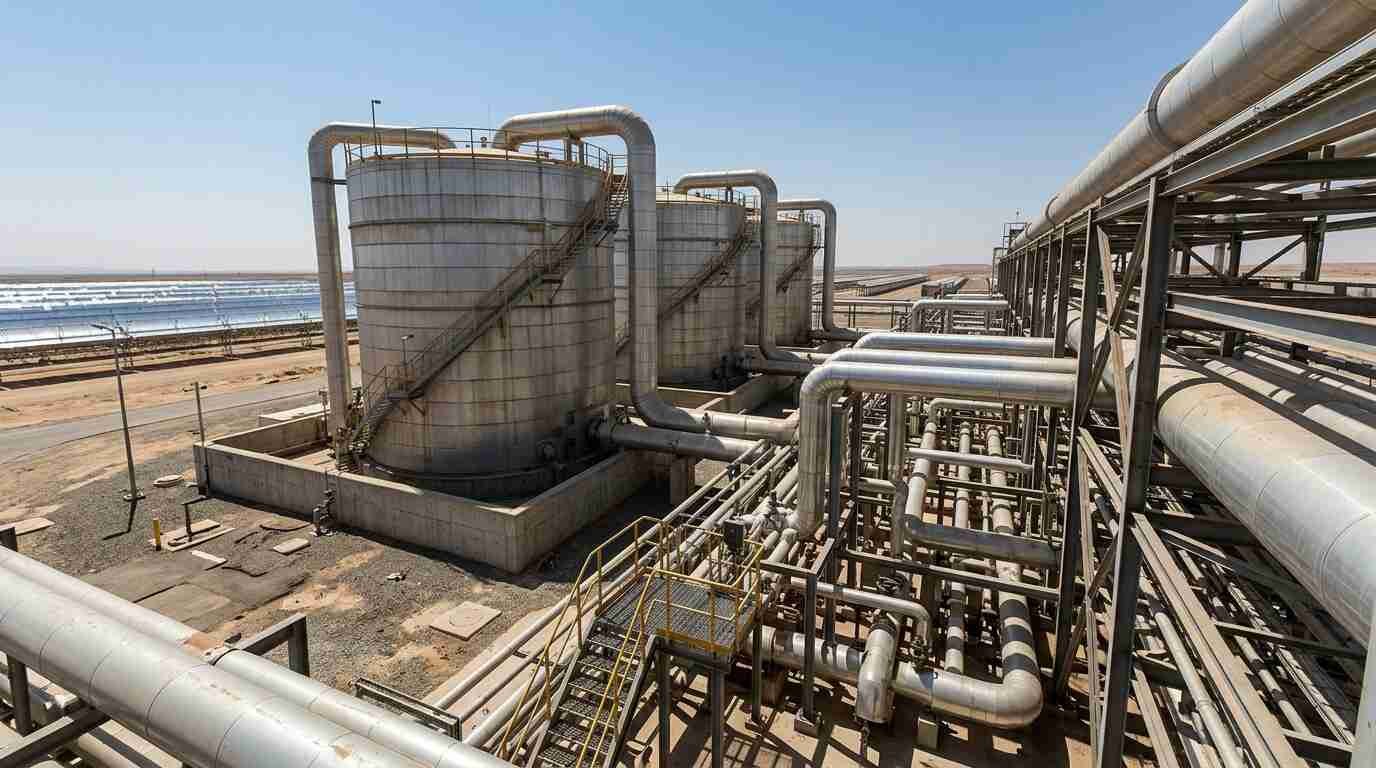
Inside the receiver, the concentrated light heats molten salt. The salt flows to a storage tank, and when power is wanted it passes through a heat exchanger that makes steam for a conventional turbine, here rated at 100 MW. The salt cools and returns to a cold tank to be heated again. The sources I retrieved give no temperatures for this plant. The Hami plant, which uses a different mirror layout, reportedly heats its salt to 550 degrees Celsius.
The trick is that heat stored in salt is far cheaper to hold than electricity. A tank of salt is steel, insulation and a commodity mineral, and the turbine can run at night or in a cloudy evening from stored heat. The storage here is 8 hours, and pv magazine is explicit that this applies only to the 100 MW CSP plant, not to the whole 1 GW facility.
Working through the numbers
Divide the reflective area by the mirror count and each heliostat averages about 48.5 square meters (500,000 / 10,310). That is my own division of the reported figures, and it is consistent with large-format heliostats.
Next, storage. If the 8 hours refers to running the 100 MW plant at full output, the tank holds enough heat for about 800 MWh of electricity. The report does not state that definition, so treat 800 MWh as an upper-end reading. The 20 MW heater, run for 8 hours, could add 160 MWh of heat to storage on a sunny day when the grid cannot take all the panel output.
Annual output gives a sanity check. 2.2 TWh spread over 8,760 hours is an average of about 251 MW, a capacity factor of roughly 25 percent against the 1 GW nameplate. Because the PV portion dominates the nameplate, that figure mainly reflects solar resource and panel capacity, and the CSP plant’s separate share was not reported. The Hami plant is rated at about 2.07 TWh from 1 GW in one report and 1.86 TWh in another from SolarPACES, so published output estimates for these projects vary by 10 percent or more.
- Mirror area per heliostat: roughly 48.5 square meters (calculated).
- Average power from 2.2 TWh a year: about 251 MW, or about 25 percent of 1 GW (calculated).
- Heater: 20 MW for 8 hours is at most 160 MWh of heat (calculated).
- Dispatch: stored heat runs the 100 MW turbine for evening peaks and low-sun periods.
Why add an electric heater
Solar-heavy grids often curtail output at midday, when supply exceeds demand. The 20 MW heater gives the plant a way to use that surplus. Instead of spilling panel electricity, it converts it to heat in the same salt inventory that the mirrors fill, to be sold later through the turbine.
The conversion is lossy. Turning electricity into heat is nearly lossless in principle, but turning that heat back into electricity through a steam cycle returns only a fraction. I could find no round-trip figure for this plant, and I would treat claims that it “solves curtailment” with suspicion until operating data exist. The report only says the arrangement may reduce curtailment. At 20 MW against 900 MW of panels, it can absorb a small slice of midday surplus.
Fresnel, tower, trough: China’s CSP mix
The new plant sits inside a fast-growing domestic industry. SolarPACES, summarizing a national blue book, reports that China had 1,738.2 MW of CSP across 27 plants and systems at the end of 2025, after adding 9 plants in that year. By capacity, towers accounted for 70.82 percent, linear Fresnel 14.50 percent and troughs 10.93 percent. Storage in 2025 projects ran from 6 to 16 hours.
Linear Fresnel, which uses long, nearly flat mirror strips and a fixed receiver tube, is cheaper to build and more wind-resistant, according to a SolarPACES report on the Hami plant, but a tower reaches higher temperatures for better steam-cycle efficiency. That second point is standard CSP engineering rather than something the cited articles state.
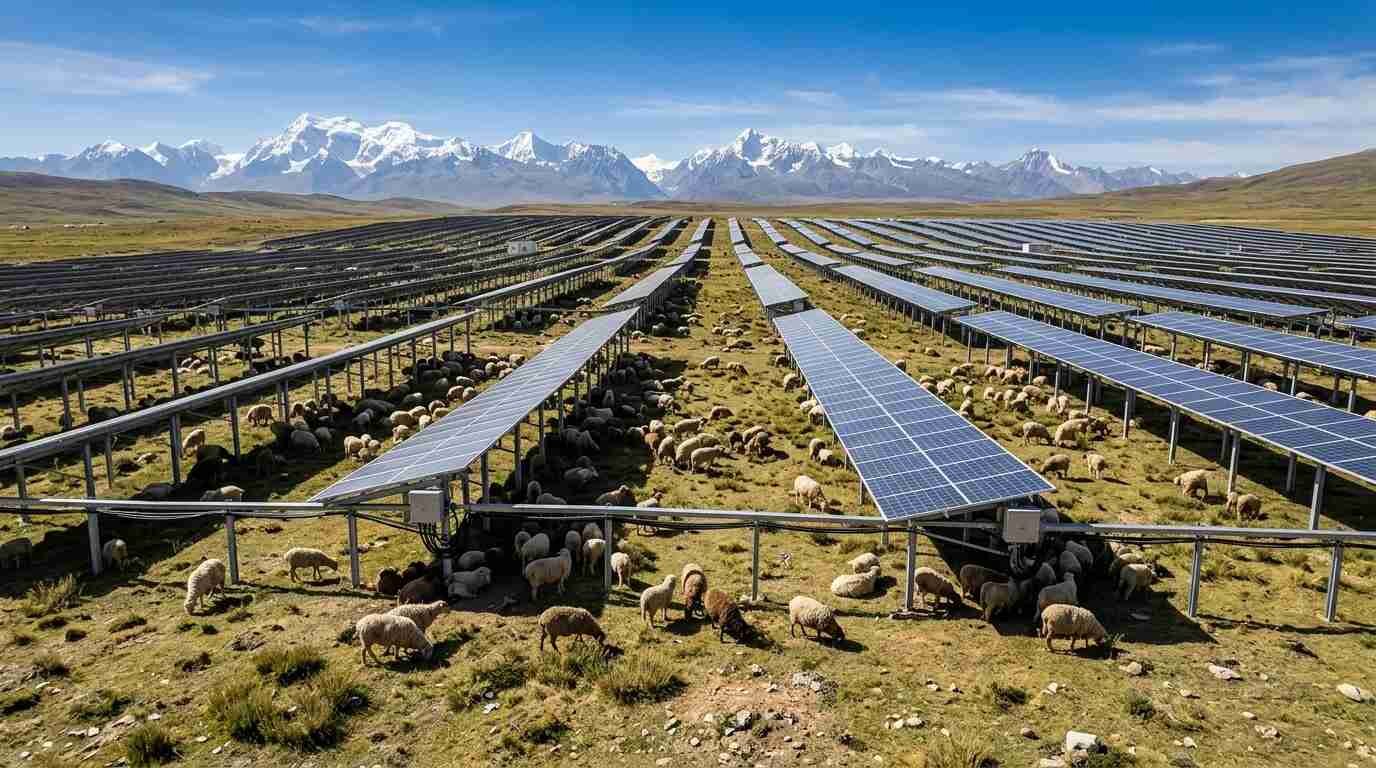
Qinghai is a major location. The blue book lists 510 MW cumulative there, behind Gansu at 621 MW, with Qinghai leading the 1,350 MW under construction. The Talatan plateau project is part of a three-tower cluster in Gonghe county, alongside separate 50 MW and 100 MW CSP projects that are not counted in this plant’s capacity.
The policy target behind it
pv magazine notes that guidelines from China’s NDRC and National Energy Administration, issued in December 2025, aim for about 15 GW of CSP by 2030 and for costs broadly in line with coal-fired power. SolarPACES counts about 25 projects totalling 3,000 MW under construction and around 31 more planned or pending at roughly 4,050 MW. SolarPACES estimates that reaching 15 GW still implies roughly 6,000 MW of additional projects beyond those under construction and planned, within five years.
That is an ambitious ramp, and the cost parity with coal is a goal, not an achievement. The plant announcement gives no capital cost, no electricity price and no performance guarantee.
What is unproven
Several things remain open. The salt temperatures and tonnage were not disclosed. No investment figure was released. Annual generation of 2.2 TWh is a projection, since the plant only reached full connection on October 1 and cannot have a year of data. Until a full year of operating data exists, every performance figure here is a design expectation.
The hybrid’s value also depends on the grid operator’s dispatch decisions. If the turbine is run for evening peaks, storage earns more than if it is asked to smooth midday output. Neither the developer nor the reports say which regime applies.
Frequently asked questions
What is molten salt solar storage?
Concentrated solar plants use mirrors to heat a salt mixture that is held in insulated tanks. The stored heat is later used to make steam for a turbine, so the plant can generate after sunset. In the Qinghai plant the storage lasts 8 hours.
How big is PowerChina’s new Qinghai plant?
1 GW total: 900 MW AC of solar panels, a 100 MW molten-salt tower CSP plant and a 20 MW electric molten-salt heater. Full-capacity grid connection was reported on October 1, 2026.
Does the whole 1 GW plant have 8 hours of storage?
No. pv magazine states the 8-hour thermal storage applies only to the 100 MW CSP plant, not to the full 1 GW facility.
Is molten salt cheaper than batteries?
The sources I retrieved give no cost figures for this plant or for batteries, so a comparison cannot be made from them. China’s policy target is for CSP costs broadly in line with coal power, which is a goal.
A gigawatt headline invites the wrong comparison. Only a tenth of this plant stores heat, and the heater that couples the panels to the salt is smaller still. What makes the Qinghai project worth watching is that it tests an arrangement: cheap panels do the bulk of the generating, a tower and a tank of salt shift a slice of that energy into the evening, and a heater lets the same tank soak up surplus. If the operating data show that blend working at a cost near the policy target, other grids with heavy solar and strong direct sunlight will have a model to copy. If they do not, it will be a large, expensive demonstration. The first full year of output will say which.
Sources