The Flashforge CJ270 prints full color with seven inkjet heads at $3,999. Specs, how multi-jet printing works and what the resin really costs.
The Flashforge CJ270 is a desktop full-color 3D printer that jets photopolymer resin from seven inkjet printheads and cures it with UV light, one layer at a time. Flashforge opened preorders on September 9, 2026 at $3,999, down from a $4,499 list price, with the first 100 units due to ship by air on October 15.
The hardware is interesting, but with this class of machine the bigger number is the running cost. Resin is proprietary, a third of each pack is support material, and no independent review exists because no customer units have shipped. This post explains the mechanism, works through the resin math, flags the points where Flashforge’s marketing outruns its evidence, and lists what remains unknown.
What Flashforge announced
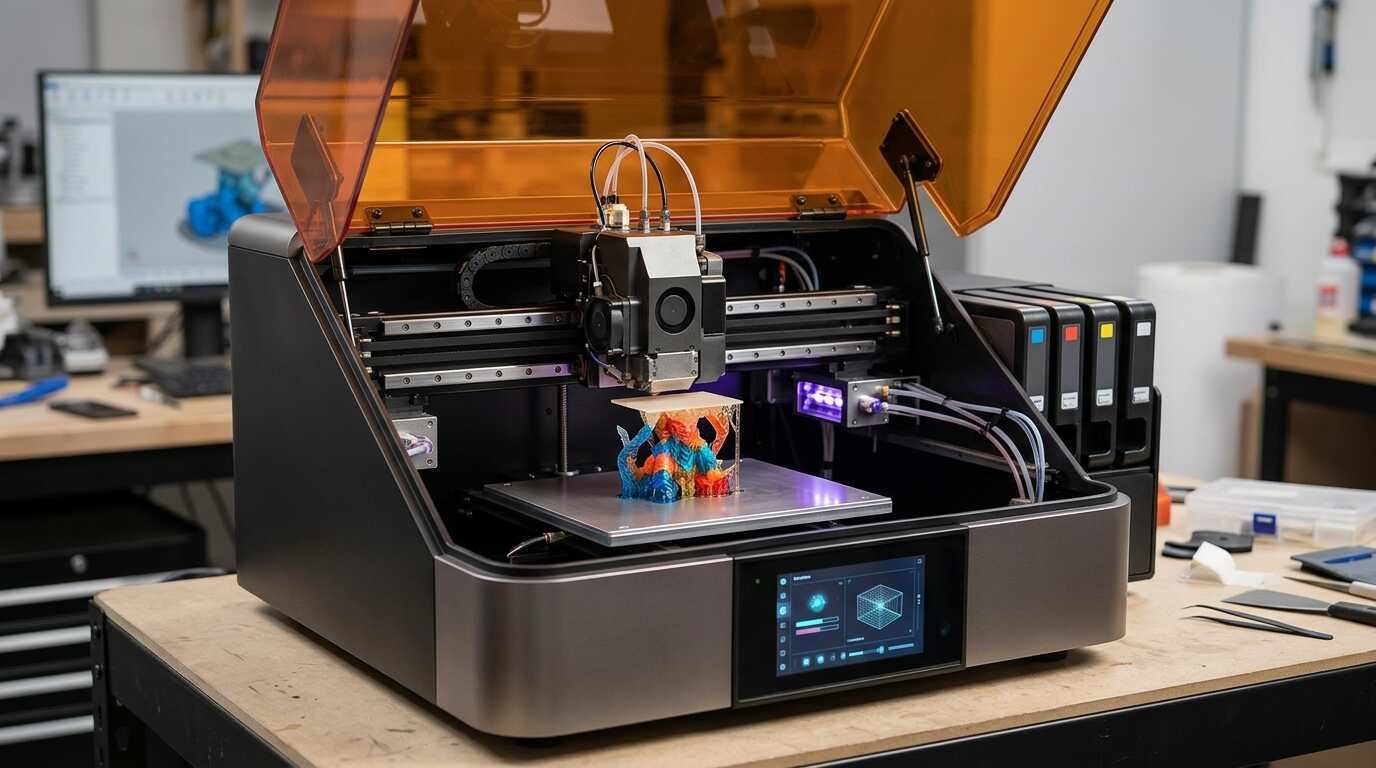
According to Flashforge’s product page, the CJ270 uses MJP, or Multi Jet Printing, with UV curing. It has seven industrial-grade inkjet printheads and a minimum layer thickness of 7 micrometers. Build volume is 180 by 120 by 100 mm. The machine measures 697 by 410 by 405 mm, weighs 33.5 kg, and runs at 55 dB or less, with an activated carbon filter built in. Software is Flashforge’s ColorPrint on Windows and macOS.
Connectivity at launch is LAN from a connected computer, or USB. Wi-Fi is not supported yet; Flashforge’s FAQ says it is planned for later this year. Flashforge also describes a $49 Early Bird Package, limited to 1,000 buyers, that adds one sample print from a submitted model and 24 kg of resin shipped at 2 kg per month for 12 months.
A minor conflict in Flashforge’s own material: the product page names ColorPrint as the software, while the company blog post of September 9 says files are prepared in Flash Studio Desktop, which it says evolved from Orca-Flashforge. They may be two names for different stages of the workflow, but neither page explains it. The blog also describes the intended use as small, detailed models such as figures, pet models and collectibles, which is consistent with a 180 by 120 by 100 mm build volume and visual-model resin.
Price and shipping, with a small discrepancy
The product page lists the sale price at $3,999 and says the first batch ships October 15. It also says orders placed now have estimated delivery by mid-November. Makers101, which checked the US store on September 29, reports that the preorder window closes October 15 Pacific Time, that later orders ship by air in order of purchase, and that Flashforge estimates about a week to US buyers and two weeks to European buyers after shipment.
One inconsistency worth knowing: the page’s comparison text says traditional full-color systems are about $150,000 against $3,000+ for the CJ270, while the actual price is $3,999. That is a marketing figure, not a price. A Reddit buyer reported a £3,499 UK early-bird offer, which Makers101 labels unofficial.
How multi-jet full-color printing works
Most hobby resin printers use a single light source to cure a whole layer of liquid in a vat. This design is different. Inkjet nozzles deposit tiny droplets of resin onto the build surface where they are wanted, and UV light cures the layer immediately before the next one goes down.
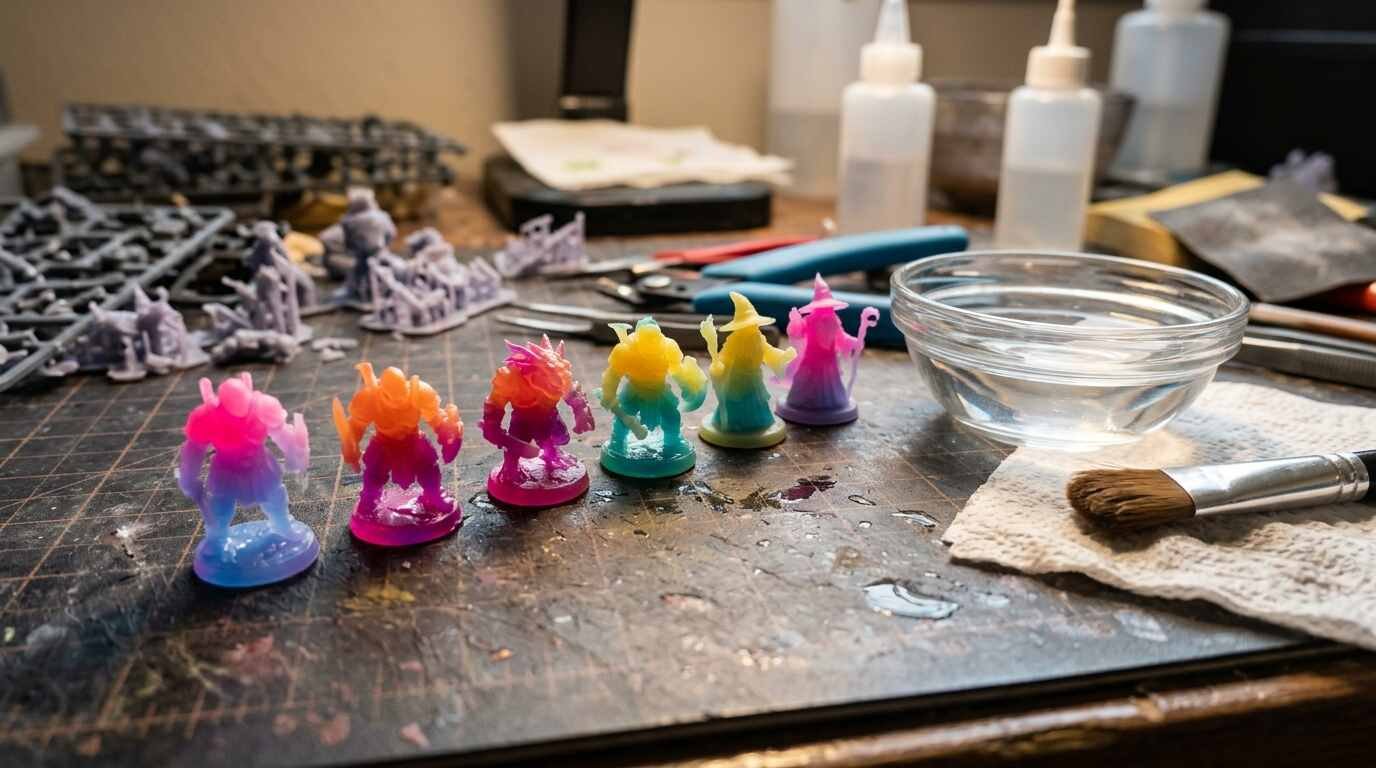
Because droplets are placed individually, a printer can use different resins at different points in the same layer. Flashforge says six base resins (cyan, magenta, yellow, black, white and clear) are mixed in the layer to produce colors, and a water-soluble support resin fills the voids. Color is part of the part, not painted afterward. Flashforge claims more than 10 million colors, which is a statement about mixing combinations rather than something a person can see.
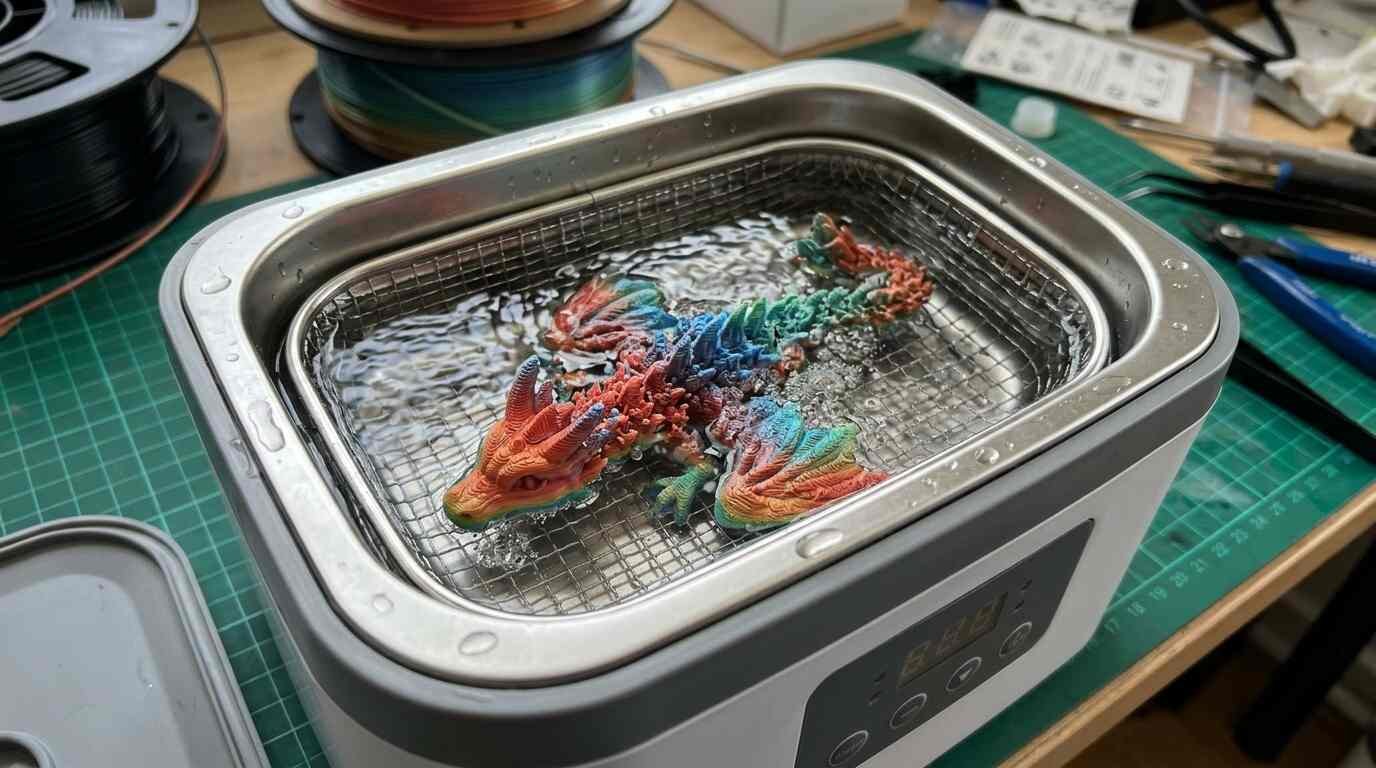
Support removal is a soak. Makers101 relays Flashforge’s figures of about 10 hours, or 1 to 2 hours with an optional ultrasonic cleaner.
Working through the layer numbers
Seven micrometers is 0.007 mm. Across the full 100 mm build height, that would mean up to roughly 14,300 layers if every layer were at the minimum thickness (100 divided by 0.007). Real prints may use thicker layers, and the sources do not say what the typical thickness is. The point is the order of magnitude: each layer needs a full pass of the heads and a cure step, which is why Flashforge’s own guidance in Makers101’s report is that models under 10 cm may take under 10 hours and a 15 cm model may take 25 hours or more. Those times come from Flashforge, not independent testing.
For comparison, Flashforge claims industrial full-color systems print at 20 to 30 micrometers. If true, the CJ270’s layers are three to four times thinner, which would reduce visible stepping on curved surfaces. Whether that translates into better looking parts depends on drop placement and color mixing, which only samples can show.
What the resin really costs
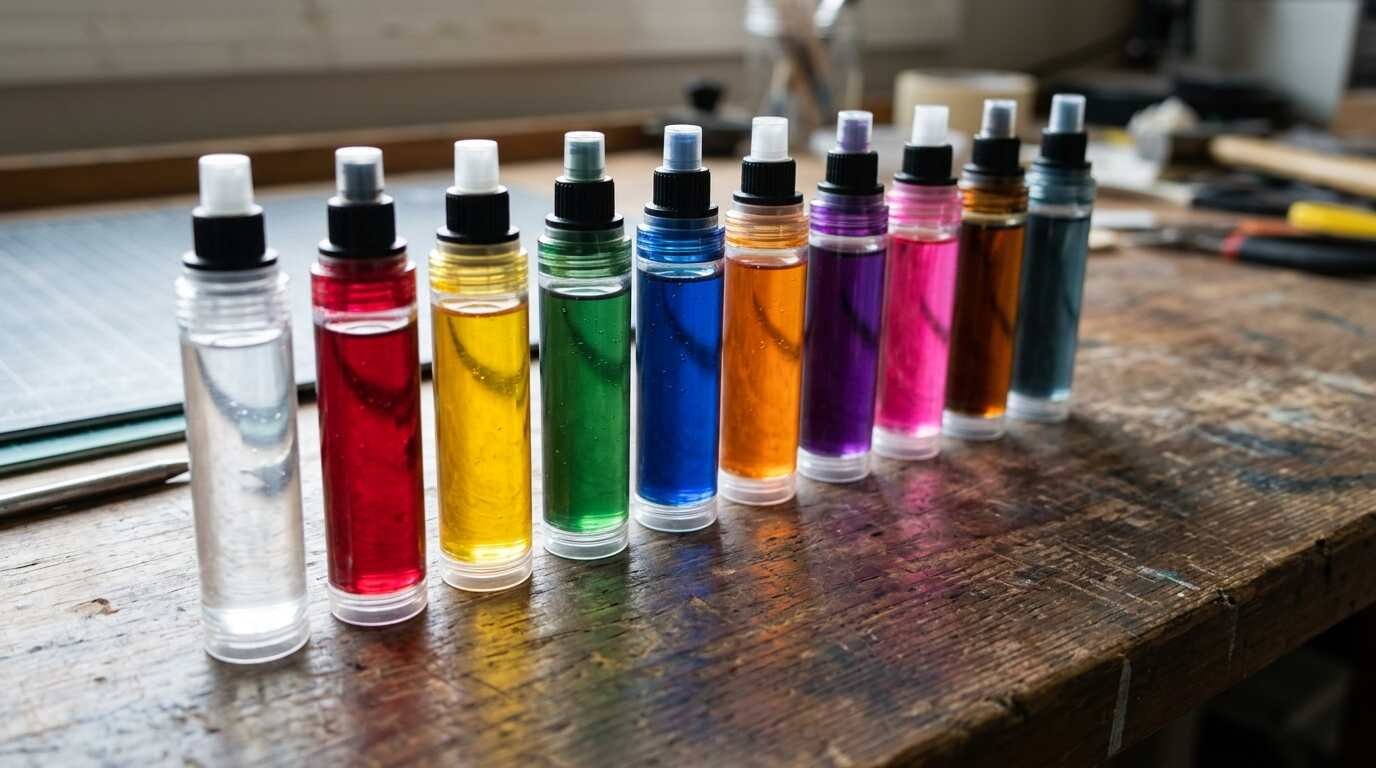
Makers101 lists single 1 kg packs at $69.90 and a 10 kg bulk pack at $499, or $49.90 per kg. A 1 kg pack contains ten 100 g cartridges: three support, two white, and one each of cyan, magenta, yellow, black and clear. So 30 percent of each pack by weight is support material that dissolves away, and another 20 percent is white.
That support share is the quiet cost. If a model needs far less support than 30 percent of its mass, the proportions are wrong for that print and leftover cartridges accumulate. If it needs more, support runs out first. Either way, the cost of the part itself is not simply the weight of the model times $69.90 per kg.
The Early Bird offer is worth checking against Flashforge’s own claim that the resin is worth over $1,500. Makers101 calculates 24 kg at single-pack prices as $1,677.60 and at bulk prices as $1,197.60. So the claim holds at single-pack prices and fails at bulk prices. Add the $49 fee and the $3,999 printer and you get $4,048 before shipping or tax. Flashforge says third-party resin may damage the printer and that only its own materials are supported. Opened cartridges should be used within two months, and unopened resin lasts 18 months, per Makers101.
A rough illustration shows the scale. Assume a 50 cubic centimeter model and a resin density of about 1.1 grams per cubic centimeter, an assumption since Flashforge does not publish density in the pages I opened. That is 55 g of model, or about $3.84 at $69.90 per kg, before support, purge and failed prints. Cheap per part, yes, but the figure ignores everything that makes inkjet resin expensive in practice.
Claims to treat with care
Flashforge calls the CJ270 the world’s first desktop full-color 3D printer. Makers101 notes that commenters dispute this, pointing to machines from HeyGears and eufyMake. I have not checked those machines, so I make no judgment here beyond noting that a ‘first’ claim is unusual enough to need support.
Flashforge also says the materials are designed primarily for high-quality visual models, not functional applications. Makers101 reports prints may break if dropped or stressed. And on the printhead, the product page gives a service life of up to 2,000 hours, with a 3-month warranty and individually replaceable heads. Replacement price is not published in the sources I opened. At a nominal 2,000 hours, the heads would last about 83 days of continuous printing, which is a long job but a finite one, so the replacement cost belongs in any cost-per-part estimate.
What is still unknown
Nothing here has been independently tested, because units had not shipped when the sources were written.
- Printhead replacement price and real-world head life.
- Actual color accuracy and surface quality on shipped units.
- Print times beyond Flashforge’s guidance.
- Wi-Fi availability and date.
- Whether the November Early Bird resin shipments stay on schedule.
- The warranty detail: the page states a 1-year limited warranty on printers, a 3-month warranty on extruder parts and a separate 3-month printhead warranty.
Frequently asked questions
How much does the Flashforge CJ270 cost?
$3,999 at the preorder price, down from $4,499, according to Flashforge’s product page. Resin is extra: Makers101 lists $69.90 per 1 kg pack and $499 per 10 kg.
When does the CJ270 ship?
Flashforge says the first 100 units ship by air on October 15, 2026, with later preorders shipping in order, and estimates mid-November delivery for orders placed now.
How many colors can it print?
Flashforge claims more than 10 million colors using cyan, magenta, yellow, black, white and clear resins. That is a marketing claim, not independently tested.
Can I use third-party resin?
Flashforge says it may damage the printer and that only its dedicated materials are supported.
Full color from a desktop machine is a real step. Seven heads depositing resin droplets in a single layer is a harder mechanical problem than the single-light vat printers most makers know, and a 7-micrometer layer is a bold number. But the ownership model is closer to a printer-and-ink business than to a normal 3D printer purchase: proprietary resin in cartridges, a consumable printhead, and a support share that never becomes part of your model. Wait for the first batch of owner prints, preferably with measured dimensions and a printhead replacement quote, before concluding that $3,999 is the price of admission. It is only the price of the first day.
Sources