Kindle 2026 review: the redesigned $150 base Kindle read through Amazon's specs and early verdicts, with the light bleed dispute and who should buy.
This Kindle 2026 review is a desk read of Amazon’s redesigned entry-level e-reader, not a hands-on test. x9m8 does not handle hardware, so everything below comes from Amazon’s spec sheet and from the few outlets that had published detailed impressions by October 10. Every number is attributed to the place it came from.
Amazon announced the new base Kindle on October 1, 2026, in a plastic version and an aluminum-backed version, together with updated Paperwhite and Colorsoft models. The base models went on sale that day. The Paperwhite and Colorsoft are later; gagadget reports an October 28 ship date, while Engadget describes them as open for preorder.
There is no new display technology here. The story is a flush front, a higher price and a handful of small hardware changes that matter more than the marketing implies. Whether they add up to an upgrade depends almost entirely on which Kindle is in your bag now.
What Amazon actually announced
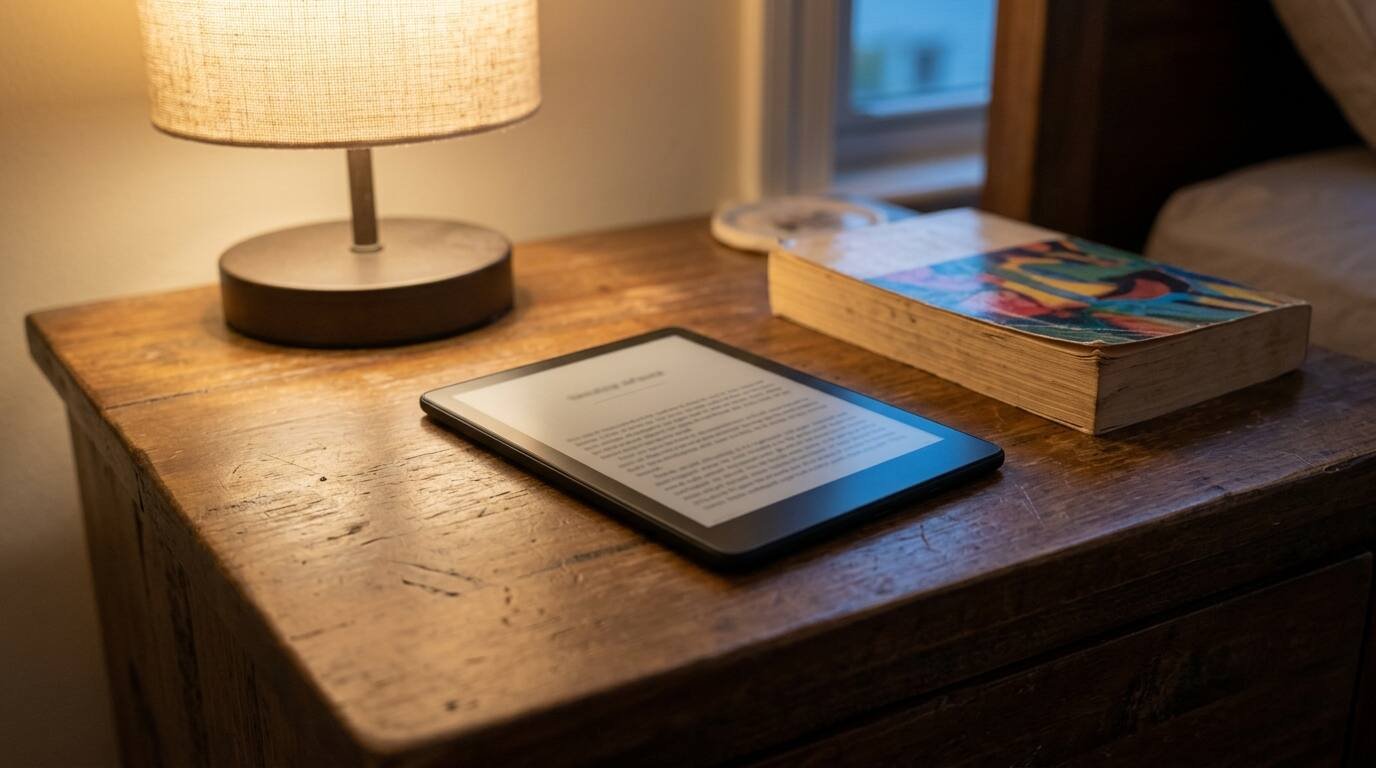
According to Engadget, the entry-level Kindle keeps a 6-inch screen but moves to a flush-front design, measures 6.8 mm thick (about 1 mm thinner than its predecessor) and weighs 140 grams. Amazon rates the battery at six weeks and says books open 30 percent faster than on the previous base model. Both figures are Amazon’s claims. I found no independent measurement of either one.
The plastic model has 16GB of storage and starts at $150 with lockscreen ads, in Ube and Graphite. The aluminum version doubles storage to 32GB, adds roughly 20 grams and comes in Alpine Sky and Seaglass Green. Good e-Reader’s listing puts the exact prices at $149.99 and $189.99, the panel at 300 ppi, and the body at 108.0 x 152.8 x 6.85 mm.
The price went up, and that is the real headline
gagadget reports that the base Kindle rose from $109.99 in 2024 to $149.99. The eBook Reader blog, which compared the two generations directly, describes it as $40 more than the 2024 model. The sources agree on the size of the jump, and none of them suggests a spec change that fully explains it.
That matters because the gap to the next tier has nearly closed. gagadget lists the Paperwhite at $199.99, and The eBook Reader puts it only about $10 above the aluminum base Kindle. At those prices, the base Kindle no longer sells on being the cheap option, so the comparison shifts to what each step up buys.
What the spec sheet changes, and what it does not
The panel resolution is not new. The eBook Reader notes that both the 2024 and 2026 base models use a 6-inch E Ink screen at 300 ppi, and that the software features are unchanged apart from faster navigation and a battery status screen in settings. So the sharpness story is flat.
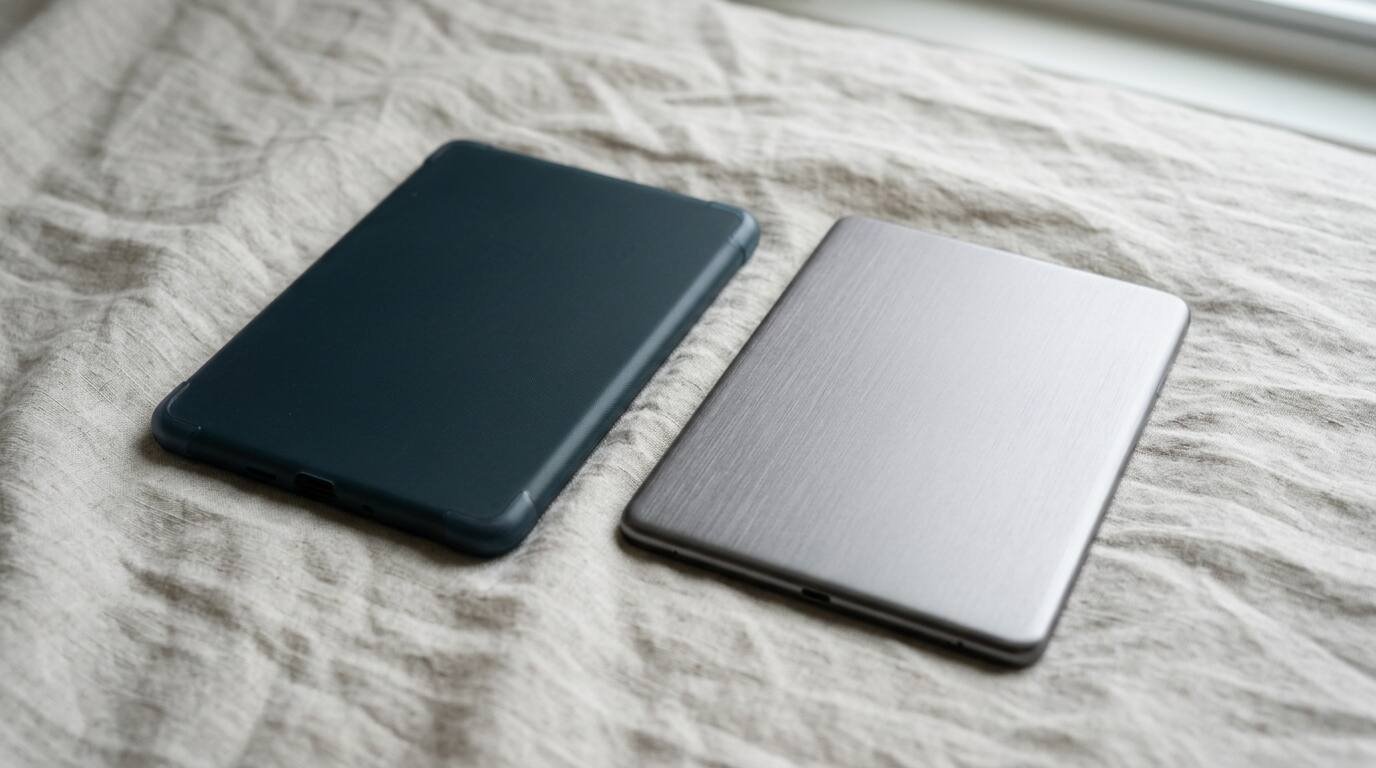
Weight is where the redesign shows up. The same source lists the 2026 plastic model at 140 g, the 2026 aluminum model at 162 g and the 2024 Kindle at 158 g. The plastic version is 18 g lighter than last time; the aluminum one is 4 g heavier. If you buy aluminum, you are paying for feel and for the extra storage, not for a lighter device.
One change is easy to miss. The eBook Reader reports that the 2026 models have a user-replaceable battery, reached by removing the back panel. For a device people keep for five years, that is arguably worth more than the 30 percent page-turn claim.
What the first detailed hands-on found
The most detailed comparison I could open was Nathan Groezinger’s video review at The eBook Reader, published October 10. It credits the flush layer and darker ink with better contrast and blacker-looking text outdoors. It also notes a slightly warmer, darker background, and says the screen may look marginally less sharp, a difference the author calls subtle.
The complaints are practical ones. The flush layer is less glossy and less prone to fingerprints than the Paperwhite’s, but basic models show a black line under the bezel that the Paperwhite lacks. There is no warm frontlight; the author saw no color-temperature difference from 2024 and found the light bluer at night with no ambient light. Unlike the Paperwhite, the basic Kindle cannot restrict touch input to page swipes, so accidental touches are an issue.
Treat this as one reviewer’s impressions in video form. It contains no lab measurements, and I did not find a lab-tested review of the new base model.
The light bleed argument
On October 8, Good e-Reader published a piece titled as a light bleed problem. It reports users seeing a faint dark or side-LED line along the bezel edges with the front light on, calls it a hardware defect and advises contacting Amazon for a replacement. It attributes the cause mainly to how the touchscreen and front-lit display are layered.
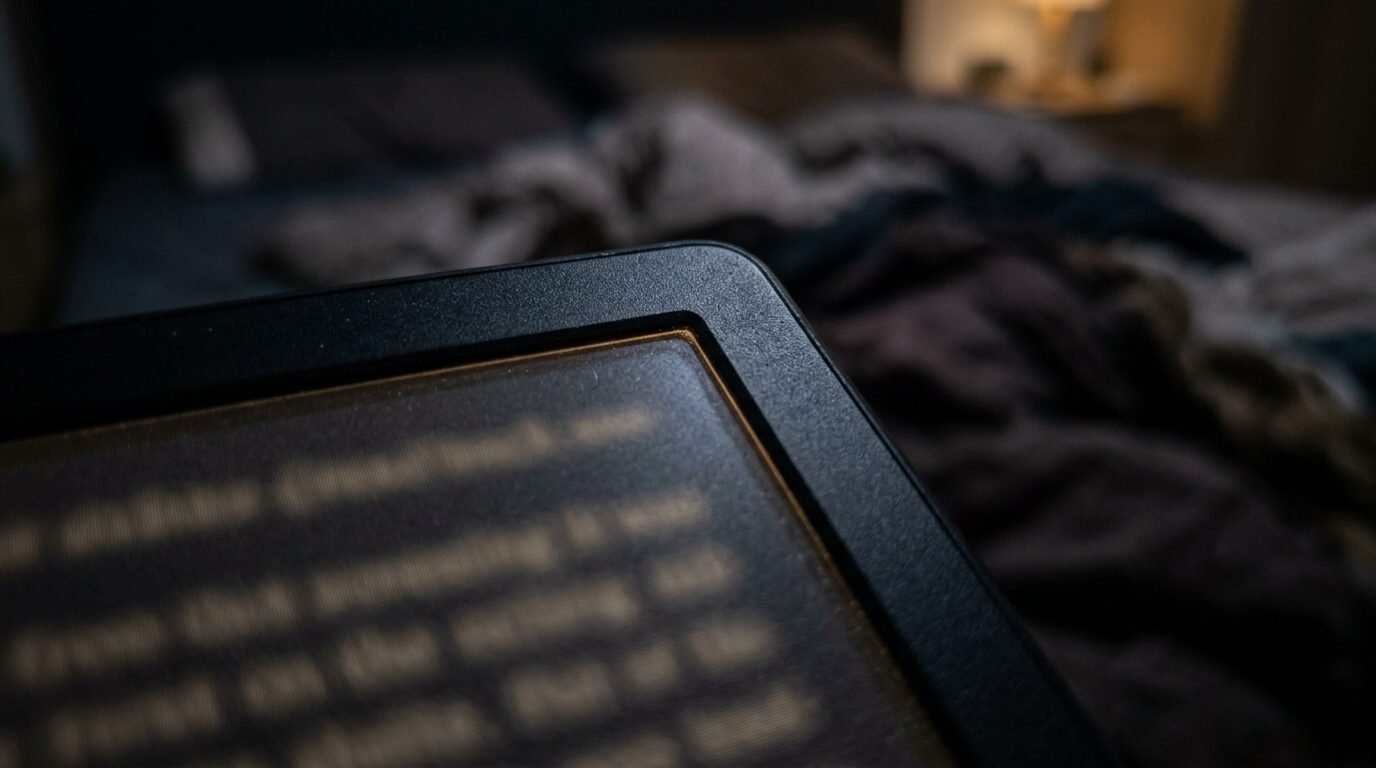
The article also relays Amazon’s position, which shifts during the piece. A first statement says prominent light bleeding, especially in dark mode, is often considered a defect and that affected users are typically advised to exchange the device. An update says the glow appears only in specific cases, such as dark mode at high brightness, is expected with a colored bezel, and can be reduced by lowering brightness.
Those two positions cannot both be fully right, and the sources disagree on whether this is a defect or a design trait. What they agree on is the symptom: The eBook Reader independently saw an illuminated line in dark mode, more visible at high brightness and on the aluminum version. If you read in dark mode at night, this is the item to watch.
Plastic, aluminum or Paperwhite
The eBook Reader’s verdict is the clearest on offer. The aluminum base Kindle is the best basic Kindle Amazon has made, the Paperwhite is a close alternative for about $10 more, and the plastic model is the best value at $149 if you can live with screensaver ads. It adds that the new design alone does not justify upgrading from the 2024 model; darker text and the replaceable battery are the main reasons.
The Paperwhite offers more for that extra money on paper. gagadget lists a 7-inch screen, IPX8 water resistance and up to 12 weeks of battery, and Engadget lists an adjustable warm light, 16GB and Amazon’s claim of the highest contrast ratio of any Paperwhite. A Signature Edition costs about $50 more according to Engadget, with a 32GB aluminum back, auto-adjusting lights and double-tap page turns.
On ads, the sources are inconsistent. Engadget says the $150 model has lockscreen ads. Good e-Reader’s aluminum listing says without lockscreen ads, while its text does not state it for the plastic model. Confirm at checkout rather than assuming.
Pros and cons from the published record
These points are drawn from the reviews and announcements cited above, not from use of the device.

- Pro: Flush-front redesign; plastic version weighs 140 g (Engadget, The eBook Reader).
- Pro: Darker ink gives better contrast and blacker outdoor text (The eBook Reader).
- Pro: User-replaceable battery behind the back panel (The eBook Reader).
- Pro: Aluminum option adds 32GB of storage and a firmer feel (Engadget, Good e-Reader).
- Con: Base price up about $40 over the 2024 model (gagadget, The eBook Reader).
- Con: No warm frontlight on the base model (The eBook Reader).
- Con: Bezel glow in dark mode, disputed between users and Amazon (Good e-Reader, The eBook Reader).
- Con: Touch input cannot be limited to page swipes, so accidental touches occur (The eBook Reader).
- Con: Plastic model carries lockscreen ads at $150 (Engadget).
Who should buy it
A first-time buyer who reads in daylight or with a lamp on, wants Amazon’s store and does not need waterproofing is the target. For that person the $149.99 plastic model is the sensible entry point, and the aluminum one is worth the extra $40 only if storage or build matters. None of the sources I read lists water resistance for the base model; the IPX8 rating belongs to the Paperwhite.
Skip it if you own the 2024 Kindle. The only published baseline is that model, and the verdict there is that the redesign alone does not justify the swap. Skip it too if you read in the dark, since the missing warm light and the bezel glow both land on that habit. Buyers who care about price above the Amazon library could compare the Kobo Clara Colour, which Tom’s Guide priced at $159 in a June review; that price may have moved.
Frequently asked questions
Is the new Kindle worth upgrading to from the 2024 model?
Probably not. The eBook Reader, the only side-by-side comparison I found, says the new design alone does not justify it and points to darker text and the replaceable battery as the real reasons. Both models share a 6-inch, 300 ppi screen.
Does the 2026 base Kindle have a warm light?
The eBook Reader reports that it does not and saw no color-temperature difference from the 2024 model. Engadget lists the adjustable warm light under the Paperwhite, not the base model.
How much does the new Kindle cost?
Good e-Reader lists $149.99 for the 16GB plastic model and $189.99 for the 32GB aluminum model. gagadget lists the Paperwhite at $199.99 and the Colorsoft at $289.99. Prices outside the US were not confirmed.
Is the Kindle light bleed a defect?
Sources disagree. Good e-Reader calls it a defect and cites an Amazon statement that prominent bleed is often treated as one. A later Amazon update, as relayed there, calls the dark-mode glow expected with a colored bezel at high brightness.
Amazon has made the base Kindle nicer to hold and more expensive to buy, and the early record says that trade is fine for newcomers and unconvincing for anyone already on the 2024 model. The open question is the bezel glow. If Amazon quietly fixes it in later batches, the aluminum version becomes the easy recommendation; if it persists, the Paperwhite’s extra $10 looks like cheap insurance. Wait for a lab-tested review with battery and contrast measurements before treating the six-week and 30 percent figures as settled, and buy from a seller with a straightforward return window.
Sources
- Engadget: Amazon introduces new Kindle Paperwhite, Colorsoft and entry-level models
- Good e-Reader: Amazon announces a new Kindle in plastic or aluminum
- gagadget: New Kindles are thinner and faster, but the base model now costs $150
- ProPakistani: Amazon gives its Kindle lineup a major 2026 refresh
- The eBook Reader: 2026 Kindles vs 2024 Kindle comparison review
- Good e-Reader: The Amazon Kindle 2026 has a light bleed problem
- Tom’s Guide: Kindle Colorsoft review (Kobo Clara Colour price reference)