






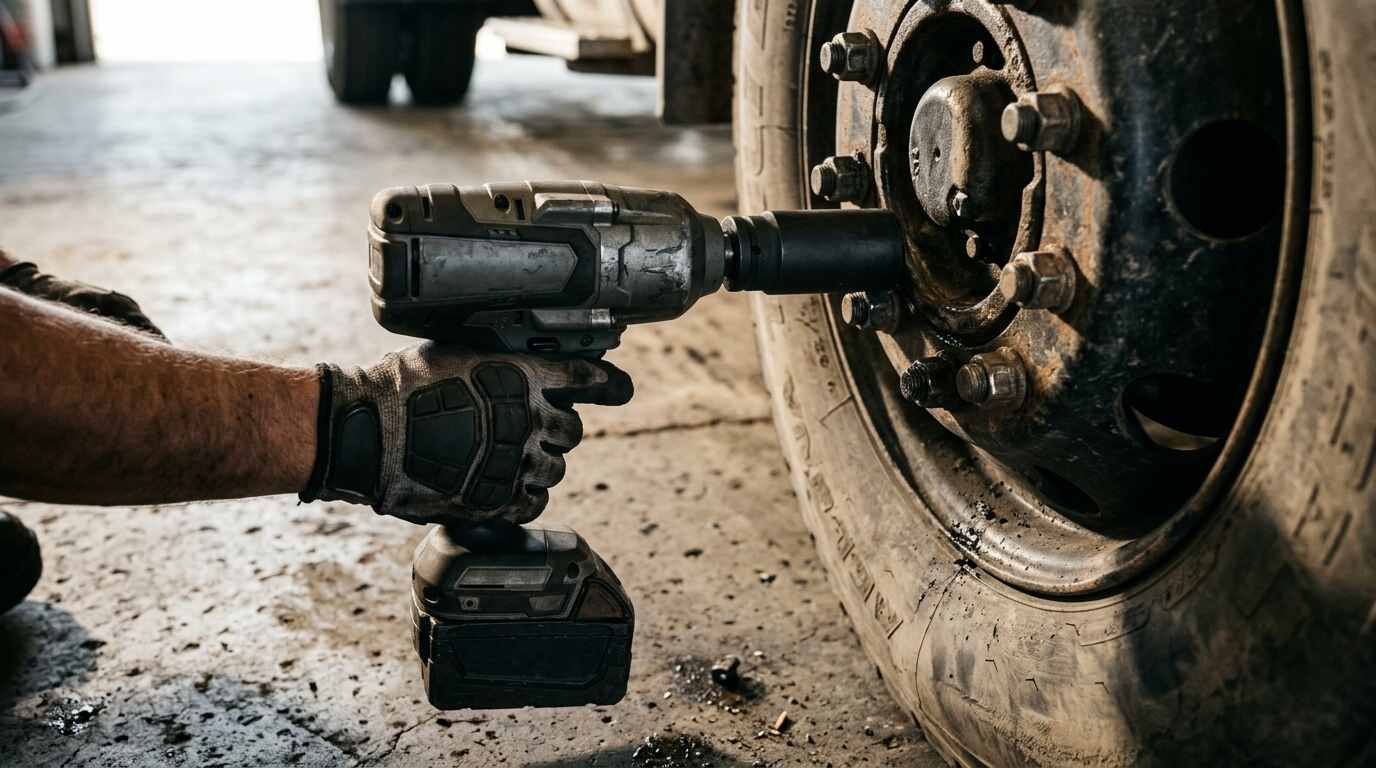
Milwaukee's M18 FUEL 2964 claims 2,000 ft-lb of nut-busting torque and 1,800 ft-lb of fastening torque. Here is what those ratings measure, how the modes work and why a torque wrench still matters.
Impact wrench torque is the most quoted and least standardized number on a cordless tool box. Milwaukee’s new M18 FUEL 3/4-inch models, the 2964 and 2969, claim up to 2,000 ft-lb of nut-busting torque and 1,800 ft-lb of fastening torque, which makes them a useful case study in what such numbers do and do not tell you.
The two figures answer different questions, and the gap between them says more about a tool than either number alone. This post explains how an impact mechanism works, what the competing torque ratings measure, how Milwaukee’s modes change the picture and why a torque wrench still has a job. Every tool figure here is a manufacturer claim. I found no independent torque testing of the 2964 or 2969.
- Milwaukee 2964: Up to 2,000 ft-lb nut-busting, 1,800 ft-lb fastening, 2,000 rpm, 2,100 impacts per minute and 8.1 lb, per Milwaukee and Pro Tool Reviews.
- Price: 2964-20 at $499 bare and 2964-22 kit at $849; 2969-20 at $599 bare and 2969-22 kit at $949. Kits include two 8.0Ah batteries.
- Standards: ISO 5393, the general test method for rotary threaded-fastener tools, excludes impact and impulse wrenches.
- Availability: Pro Tool Reviews said late 2026. A retailer page showed the 2964-22 with an add-to-cart button, but I could not confirm stock.
What an impact wrench does to a bolt
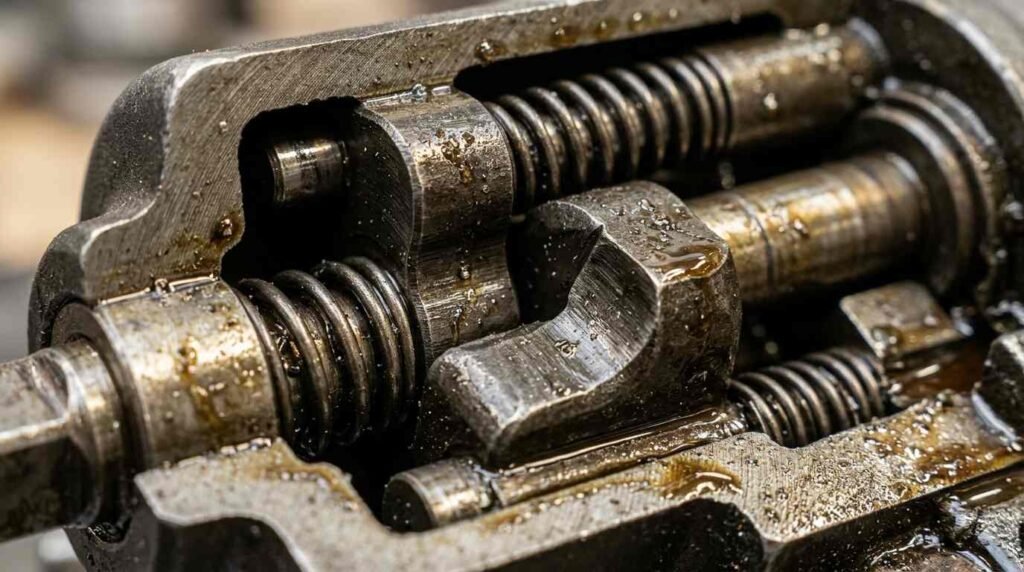
An impact wrench stores angular momentum in a spinning hammer and releases it suddenly against the anvil, the shaft that carries the socket. Between blows the hammer spins freely, so the only reaction the operator feels is the motor spinning the hammer back up. That is why a tool producing thousands of foot-pounds at the socket can be held in one hand.
Designs differ. In the ball-and-cam type the hammer rides on a spring-loaded ramp and typically strikes twice per revolution. A pin clutch fixes the hammer to the input shaft and lets two pins strike the anvil, giving the hammer a full revolution to build speed. A rocking-dog design uses a pivoting weight that strikes once per revolution. Milwaukee does not publish which mechanism the 2964 uses.
One physical point explains most of what follows. Each blow carries a fixed amount of angular momentum, not a fixed torque. The torque the bolt actually feels depends on how long the pulse lasts, and that depends on how stiff the joint is. A soft or springy joint absorbs the impulse and passes along little torque, while a rigid joint returns a sharp, high peak.
Three torque numbers, none of them standardized
Impact wrench torque gets quoted three ways. Maximum torque is the instantaneous peak with the anvil locked against a solid object, the figure manufacturers cite most often. Working torque is a more realistic number for driving a stiff fastener continuously, typically measured on a Skidmore-Wilhelm device over five to ten seconds. Nut-busting torque describes what the wrench can use to loosen a nut that was tightened to a specified torque within a specified time.
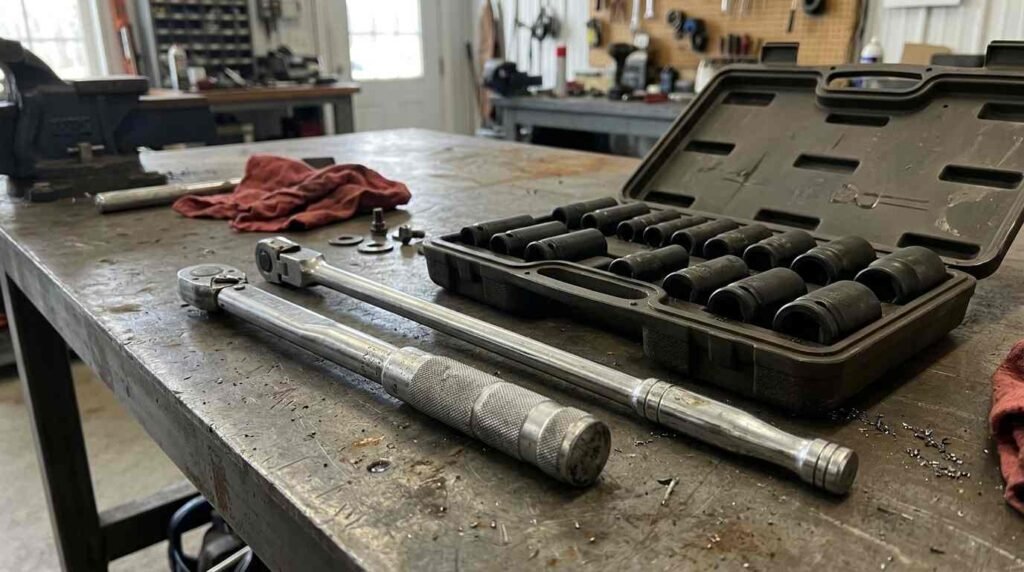
No consistent standard sits behind them. ISO 5393, the general performance test method for rotary tools that drive threaded fasteners, covers tools that apply torque in a generally continuous manner and expressly excludes impact and impulse wrenches, according to the listing for its 2017 edition. I could not find a public standard that defines “nut-busting” or “fastening” torque for impact tools, so each maker’s figures reflect its own test method.
Milwaukee 2964 and 2969, line by line
| Spec | 2964 | 2969 |
|---|---|---|
| Anvil | 3/4 in. standard | 6 in. extended |
| Nut-busting / fastening torque | 2,000 / 1,800 ft-lb | Same |
| Max speed, impact rate | 2,000 rpm, 2,100 IPM | Same |
| Weight | 8.1 lb | 9.3 lb bare, per The Crafty Catsman |
| Mode 4 | Auto Shut-Off; forward fastening limited to 75 ft-lb | Lug Nut Snug Mode; torque capped at 450 ft-lb |
| Bare tool price | $499 (2964-20) | $599 (2969-20) |
| Kit price (two 8.0Ah batteries, charger) | $849 (2964-22) | $949 (2969-22) |
| Battery claim | Up to 120 1-1/4 in. bolts per 8.0Ah battery | Up to 10 tires (100 lug nuts) per battery |
| Warranty | 3 years | 3 years |
Milwaukee also claims removal speed up to 40% faster than cordless and pneumatic competitors, a comparison without a published baseline. Pro Tool Reviews describes the 2964 as the first Milwaukee model marketed to fully replace pneumatic wrenches. That describes Milwaukee’s positioning, not a tested result.
What the modes reveal
Mode design says as much as the torque figures. In reverse, Milwaukee’s Bolt Removal Mode runs at full speed and full impact rate until the nut breaks free, then drops to 750 rpm, presumably to keep a freed nut from spinning off. In forward, Mode 4 on the 2964 limits fastening torque to 75 ft-lb and adds an automatic shut-off, which suits small fasteners. The 2969’s Lug Nut Snug Mode caps torque at 450 ft-lb.
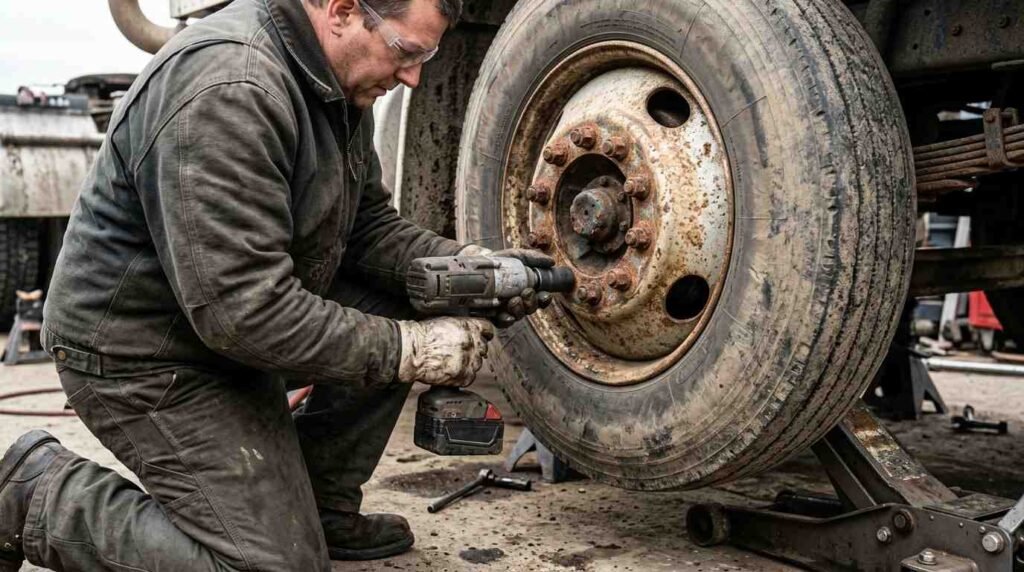
1,800 ft-lb = 2,440 N·m
450 ft-lb = 610 N·m
75 ft-lb = 102 N·m
Conversion: 1 ft-lb = 1.3558 N·m
In my reading, the 450 ft-lb cap is revealing. A tool rated at 1,800 ft-lb offers a lug-nut mode that stops at a quarter of that, and the word in its name is snug. Final tightening is left to a torque wrench.
Fastening divided by nut-busting: a ratio test
The gap between breakaway and fastening torque hints at how a maker rates its tool. Divide one by the other and a high ratio means the tool claims it can keep tightening nearly as hard as it can break a stuck bolt. A low ratio means more of the headline number applies only to loosening. The ratio is my construct, not an industry metric.
| Model | Breakaway (ft-lb) | Fastening (ft-lb) | Fastening ÷ breakaway | Bare price |
|---|---|---|---|---|
| Milwaukee 2964 | 2,000 | 1,800 | 90% | $499 |
| Makita GWT01 | 1,510 | 1,330 | 88% | $484 |
| DeWalt DCF964 | 1,900 | 1,420 | 75% | $399 |
| Kobalt KHTIW 1424AT2 (24V kit) | 1,500 | 1,100 | 73% | Kit with battery and charger; price not listed |
| Ingersoll Rand W8171 | 2,000 | Not specified | — | $427 |
Competitor figures come from Pro Tool Reviews’ August 19 comparison table. The Kobalt row comes from 731 Woodworks’ October 10 roundup of Lowe’s listings, since Lowe’s own page was not accessible to me, and that roundup does not state a drive size. Kobalt’s 24V line is the same one covered in our earlier piece on its recall and relaunch. All of the numbers are claims, and each maker’s test method differs. The table still shows why “up to 1,500 ft-lb” and “up to 1,800 ft-lb of fastening torque” are different promises.
Why the same tool tightens differently every time
Because torque depends on pulse length, several variables change the result with the same wrench and battery. Joint stiffness is the biggest. Extensions and universal joints weaken impacts by absorbing energy. Torque sticks use that effect on purpose: they are made of spring steel and act as torsion springs, flexing at their rating so that they limit the torque reaching the fastener. Battery state matters too, though the sources I read do not quantify it.
For fasteners with a specified torque, standard practice is to use the impact wrench only to snug the fastener, then finish with a calibrated torque wrench. Pulse tools, which use oil to transfer momentum, can shut off at a set torque and are not classed as impact wrenches. An auto shut-off mode can narrow the spread, but narrowing the spread is not the same as calibration.
A buyer’s checklist
- Look at fastening first. For tightening and driving it is the number that applies. Breakaway is for stuck hardware.
- Ask which battery and mode produced the figure. Claims depend on both, and Milwaukee’s kits ship with two 8.0Ah packs.
- Check impacts per minute and weight. The 2964 lists 2,100 IPM and 8.1 lb, while the DeWalt, Makita and Ingersoll Rand comparison tools run 7.4 to 9.15 lb.
- Match the anvil to the job. The 2969’s 6-inch extended anvil is aimed at deep commercial wheel hubs.
- Compare kit and bare prices. The $849 kit includes two batteries and a charger, and the $499 bare tool only pays off if you already own M18 batteries.
My take: Fastening torque, not the larger breakaway figure, is the number to compare when the job is tightening, and even then it describes a laboratory ceiling. Treat any cordless impact wrench’s rating as a way to sort tools into classes, not to predict what a given bolt will see. A calibrated torque wrench stays in the kit for anything with a specification. That is an opinion drawn from the sources above, not a test result.
Frequently asked questions
What is the difference between nut-busting and fastening torque?
Nut-busting torque is the most the wrench can apply to loosen a stuck or over-tightened nut. Fastening torque is the sustained torque available for driving a fastener tight. Makers measure both by their own methods, and I found no standard that defines either for impact wrenches.
Can I tighten lug nuts to spec with an impact wrench?
Use it to run the nuts down, then finish with a calibrated torque wrench. Impact torque varies with joint stiffness, extensions and battery state, so the tool alone cannot guarantee a specified value. Milwaukee’s 2969 includes a Lug Nut Snug Mode that stops at 450 ft-lb.
What does IPM mean?
Impacts per minute, the number of hammer blows the tool delivers each minute. The 2964 lists 2,100 IPM at a maximum of 2,000 rpm, according to Pro Tool Reviews.
How do I convert ft-lb to N·m?
Multiply foot-pounds by 1.3558. For example, 1,800 ft-lb is about 2,440 N·m.
Is the Milwaukee 2964 available now?
Pro Tool Reviews reported a late-2026 release, and the 2969’s product page said coming soon in late August. A retailer page showed the 2964-22 with an add-to-cart button, but I could not confirm stock. Check an authorized seller.
Sources



One thought on “Nut-Busting vs. Fastening Torque: How to Read the Spec Sheet on Milwaukee’s New 2,000 ft-lb Impact Wrench”