






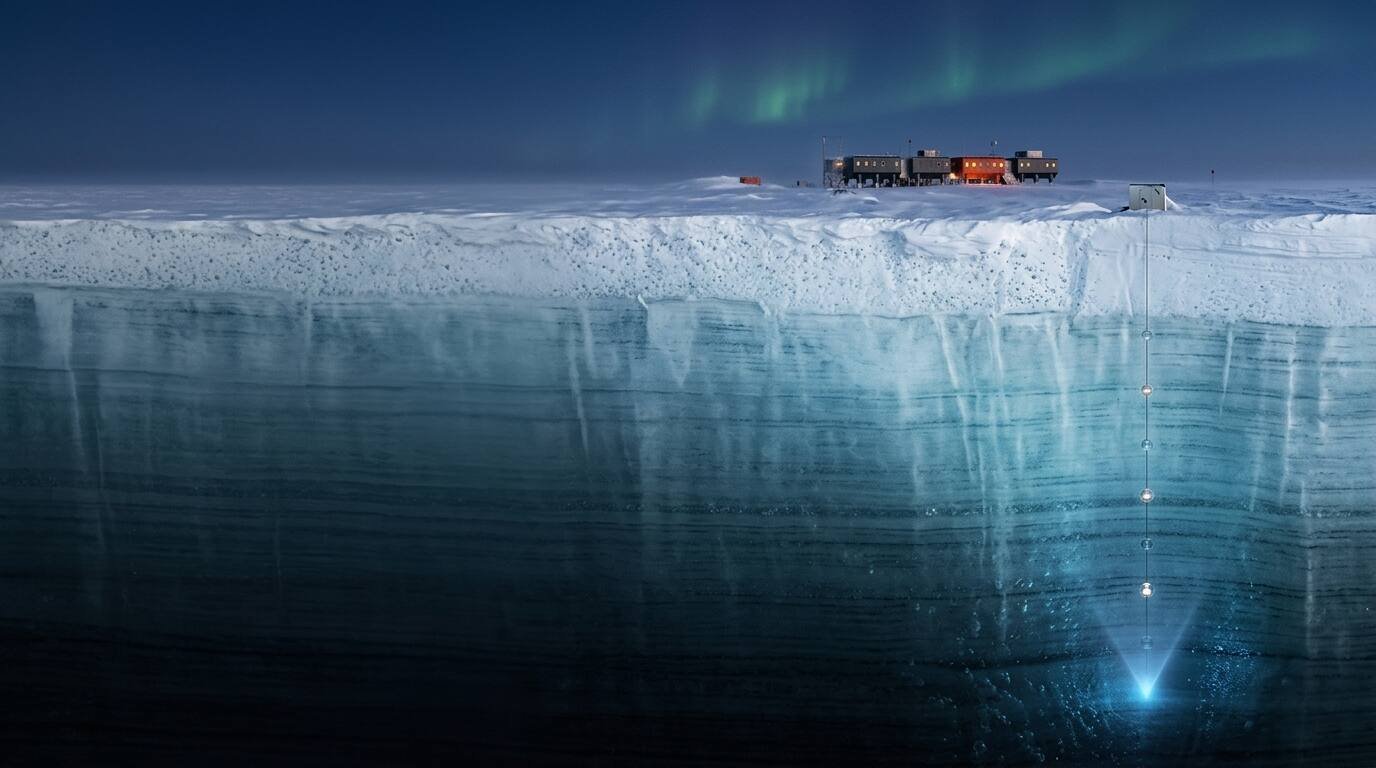
Francis Halzen won the 2026 Nobel Prize in Physics for IceCube, a detector buried in Antarctic ice. Here is how a cute idea opened a new way to see the universe.
Francis Halzen was in Italy, at his desk, working on a grant proposal. The phone rang. Stockholm was on the line.
Halzen is 82, Belgian by birth, and has taught physics at the University of Wisconsin–Madison since 1972. He told the Nobel Physics Committee, according to the Associated Press, “It was a great surprise, and I obviously didn’t expect it.” The news felt strange, he said. Then he did what working scientists do when the world interrupts them: he joked that he hopes the prize helps get his proposal approved.
The Royal Swedish Academy of Sciences announced the 2026 Nobel Prize in Physics on Tuesday, October 6. It honors Halzen for his central role in building the IceCube Neutrino Observatory and for establishing that high-energy neutrinos reach Earth from astrophysical sources. The award carries 12 million Swedish kronor, roughly $1.2 million, and the medals will be handed out in Stockholm on December 10.
The Supernova That Set the Stage
The groundwork was laid in 1987, when a star blew apart about 165,000 light-years from Earth. A burst of neutrinos arrived ahead of the explosion’s light, and the Kamiokande II detector in Japan caught 12 of them, a tally Siegel recounts in his Big Think piece.
Twelve particles sounds like a rounding error. To physicists it was a landmark, because it showed that these ghostly travelers could carry news from a distant catastrophe straight to a laboratory on Earth. One year later, Halzen floated his ice idea.
A Cute Idea That Would Never Work
Neutrinos are the universe’s most evasive particles. They carry no electric charge, their mass is almost nothing, and they slip through planets, stars and people as if none of us were there. Trillions pass through your body every second. Nearly all of them leave no trace at all.
Catching one is a matter of patience and volume. Older detectors were enormous tanks of water or liquid ringed with light sensors, and their reach was capped by the size of the tank. Around 1988, Halzen proposed something that sounded almost like cheating: skip the tank and use a naturally clear block of Antarctic ice instead.
Colleagues were not convinced. Halzen later recalled that people “always thought this was a cute idea, right, but it would never work,” as reported by Spectrum News.
Building a Telescope Out of the South Pole
The physics behind the idea is elegant. When a neutrino does collide with something inside the ice, it produces secondary particles that travel faster than light can in that medium. They throw off a faint blue flash called Cherenkov light, and sensors buried in the ice record it. From the timing and pattern of those flashes, researchers reconstruct where the neutrino came from and how much energy it carried.
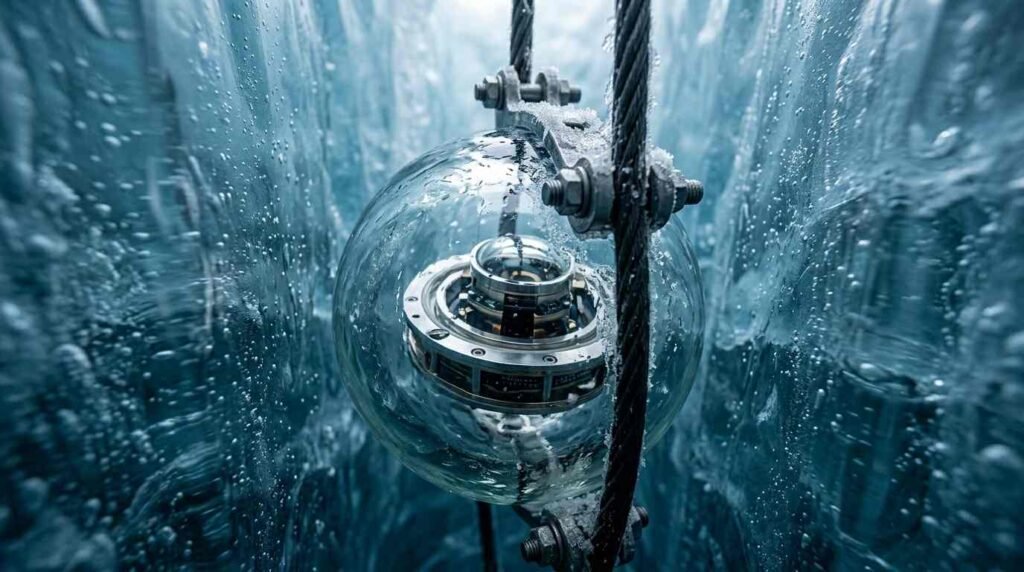
IceCube sits near the Amundsen-Scott South Pole Station. According to Ethan Siegel’s account at Big Think, the array strings more than 5,000 sensors along 86 cables frozen into the ice, and a cubic kilometer of ice gives it an estimated 20,000 times the detection volume of Japan’s Super-Kamiokande. The sensors sit between 1.5 and 2.5 kilometers down, where the overlying ice screens out most cosmic rays and background radiation.
It did not happen overnight. An earlier, smaller experiment called AMANDA ran from 1996 to 2005 to prove the concept. IceCube itself was launched as a project in 1999, and construction wrapped up in December 2010, ahead of schedule.
The Road to Stockholm
| When | What happened |
|---|---|
| 1987 | A supernova explodes about 165,000 light-years away; the Kamiokande II detector catches 12 of its neutrinos |
| 1988 | Halzen proposes using clear Antarctic ice as a neutrino detector |
| 1996–2005 | AMANDA, the prototype array, collects data at the South Pole |
| 1999 | IceCube is officially launched |
| December 2010 | The full detector is complete |
| 2013 | IceCube reports its first PeV-energy neutrinos, including events nicknamed Bert and Ernie |
| 2018 | The blazar TXS 0506+056 is identified as a neutrino source |
| 2022 | Neutrinos are traced to the active galaxy NGC 1068 |
| October 6, 2026 | Halzen wins the Nobel Prize in Physics |
What the Ice Heard
The first big surprise came with the 2013 events, neutrinos carrying energies far beyond anything an accelerator on Earth can produce. Their nicknames stuck. Bert and Ernie were followed by Big Bird, and the pattern in the data made it clear that something out in the cosmos was firing them at us.

Finding the something took longer. In 2018, researchers tied a single high-energy neutrino to the blazar TXS 0506+056, a source about 3.7 billion light-years away. Gamma-ray telescopes had watched the same object flare at the same time, and The Conversation described it as the first identified high-energy neutrino emitter.
Then came NGC 1068, a nearby active galaxy roughly 47 million light-years from us. About 80 neutrinos pointed back at it. The twist is that the galaxy’s own dust smothers its gamma rays, so ordinary telescopes see little. Neutrinos walk straight out of the murk. IceCube has since also picked up a diffuse glow of neutrinos from the plane of our own Milky Way.
Eva Lindroth of the Nobel Committee put the appeal plainly to Al Jazeera: “The nice thing with neutrinos is that they come straight at us.” Light bends, scatters and gets absorbed on its way across the universe. Neutrinos largely do not. Yale physicist Reina Maruyama, an IceCube member, said it this way: “We now have a whole new way to look at the universe.”
Watch the Announcement
The Nobel Prize’s official channel posted the full announcement from Stockholm.
One Laureate, Hundreds of Colleagues
Nobel rules cap a physics prize at three people, and the physics community has always argued over what that does to team science. IceCube is about as team-based as physics gets. More than 450 researchers at 58 institutions in 14 countries work on it, with the National Science Foundation backing the project and UW–Madison running it.
Coverage names Halzen as the sole laureate. Richard Fitzgerald, editor-in-chief of Physics Today, told Al Jazeera that the project began with one person even though hundreds built it. Halzen himself gave a good share of the credit to his home university, saying it is hard to imagine the experiment succeeding anywhere else. He is the 23rd Nobel honoree connected to UW–Madison and the sixth physicist among them. In Brussels, Belgian Prime Minister Bart De Wever noted that he is the country’s eleventh laureate.
For a sense of the man and the machine in his own words, Halzen gave a full colloquium on the first decade of IceCube at the Instituto de Física Corpuscular in Spain.
What Comes Next
The work is far from finished. Most of the neutrinos IceCube has caught still cannot be pinned to a single source, and the catalog of confirmed emitters is short. A proposed successor, IceCube-Gen2, would use a larger optical array, which Siegel describes as roughly eight times as powerful as the original.
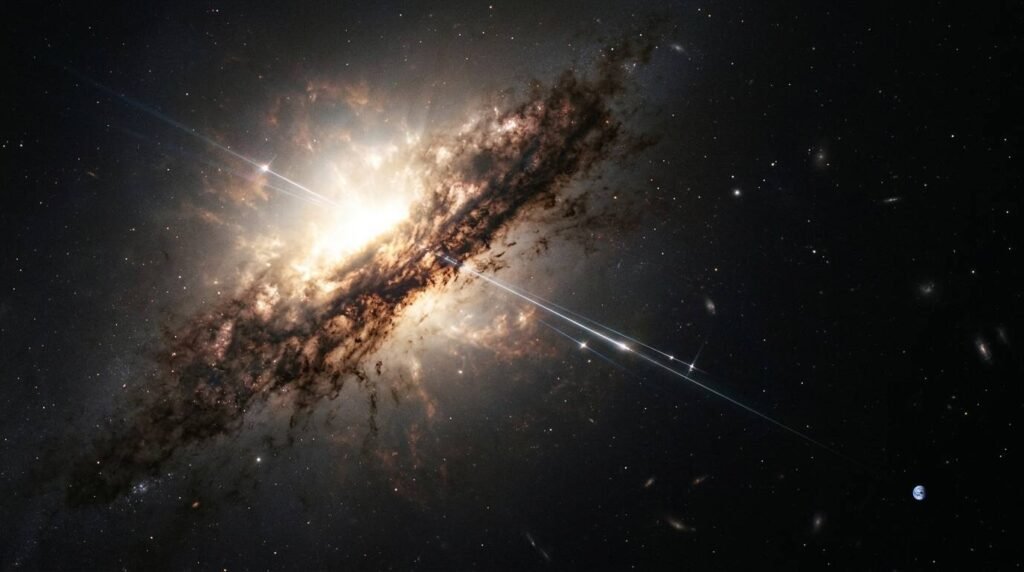
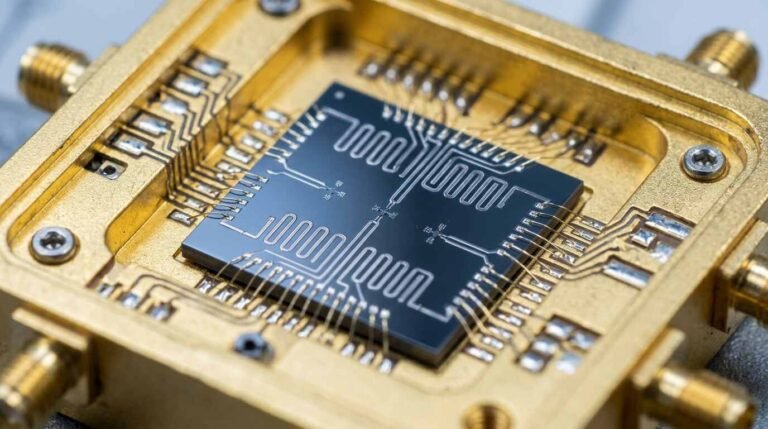
Contrast it with last year. The 2025 physics prize went to John Clarke, Michel Devoret and John Martinis for experiments showing quantum behavior in a circuit you can hold. This year’s prize points the opposite way, outward, toward black holes and galactic cores. Both ends of the scale got their moment, and the 2026 winner did it with a block of ice.
Frequently Asked Questions
Who is Francis Halzen?
Halzen is an 82-year-old Belgian-born particle physicist who has been at the University of Wisconsin–Madison since 1972. He is the principal investigator of IceCube and oversaw its design.
What is Cherenkov light?
It is a blue glow produced when a charged particle moves faster than light does in a given material, such as ice. IceCube’s buried sensors detect that glow to track neutrino collisions.
What is a neutrino?
A neutrino is a subatomic particle with no electric charge and a very small mass. It interacts so weakly with matter that trillions pass through your body each second without effect.
Why build the detector in Antarctica?
The ice beneath the South Pole is exceptionally clear and thick, which lets one cubic kilometer act as a single detector. Buried 1.5 to 2.5 kilometers down, the sensors are also shielded from most cosmic rays and background radiation.
Did anyone share the prize with Halzen?
Reports from the AP and other outlets list Halzen as the only winner of the 2026 Nobel Prize in Physics, though the IceCube collaboration itself includes hundreds of scientists.
How much is the Nobel Prize worth?
The 2026 prize is 12 million Swedish kronor, about $1.2 million, and it is divided among laureates when there is more than one.
What does neutrino astronomy tell us that light cannot?
Neutrinos travel nearly unimpeded from dense, dusty or violent regions where light is absorbed or scattered. They can reveal how cosmic accelerators such as active galaxies produce high-energy particles, as with NGC 1068.
Sources
- Wisconsin Scientist Who Hunts Mysterious Ghost Particles in the Antarctic Ice Wins Nobel Prize for Physics (AP via WTTW)
- Francis Halzen wins Nobel Prize in Physics for work on ‘ghost particles’ (Al Jazeera)
- UW professor Nobel Prize physics (Spectrum News 1)
- A Yale physicist, and IceCube member, salutes this year’s Nobel Prize winner (Yale News)
- IceCube, high-energy neutrinos, and Francis Halzen win 2026’s Physics Nobel (Big Think)
- An Antarctic neutrino telescope has detected a signal from the heart of a nearby active galaxy (The Conversation)
- Announcement of the 2026 Nobel Prize in Physics (Nobel Prize, YouTube)

3 Comments