
Why do humans go through menopause, when nearly every other animal keeps breeding until it dies or close to it? Women in most societies stop reproducing around fifty and can live decades longer, and on a naive reading of natural selection that looks like waste: a body that switches off reproduction while it still has years of life in it. Biologists have argued about this for more than half a century. The leading answer, the grandmother hypothesis, is famous enough to appear in textbooks, yet it has serious rivals, and the field has not converged on one explanation.
The puzzle is not only an academic one. On a science discussion forum a user asked in 2018 how menopause evolved and what advantage it gave, adding that no theory had been proven. That is a fair summary of where things stand. This article lays out what is solid, what each hypothesis predicts, where the evidence cuts, and then runs a small inclusive-fitness model to see under which conditions stopping reproduction actually pays.
What exactly needs explaining
Two separate facts tend to get blurred. One is that ovarian function ends early: human eggs are depleted and fertility falls to zero around midlife. The other is that women then keep living, often for a third of their adult lives. An explanation can target either fact, and many disputes in this literature turn out to be about which one is being explained.
Hawkes and colleagues framed the second fact bluntly in their 1998 paper in the Proceedings of the National Academy of Sciences (Hawkes et al. 1998):
“Long postmenopausal lifespans distinguish humans from all other primates.”
Hawkes, O’Connell, Blurton Jones, Alvarez and Charnov, 1998
Cant and Johnstone (Cant and Johnstone 2008) pressed on the first fact instead. Long survival after reproduction is one thing; stopping early, while younger women in the same group are still breeding, is another. A good theory has to account for both the timing of the stop and the length of what follows.
What is established
Several points are not seriously disputed, and they constrain every hypothesis that follows.
- The post-reproductive span is real in foragers, not a product of modern medicine. Levitis, Burger and Lackey (2013), as reported by Science News, pointed to Hadza and !Kung hunter-gatherers who spend close to half their adult lives after their last birth.
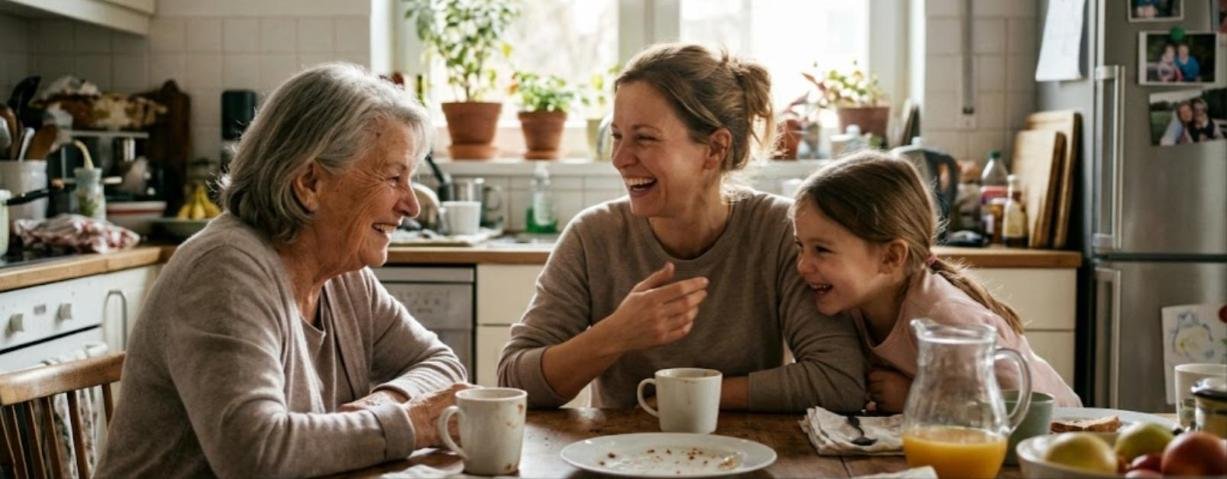
- Grandmothers can raise descendant numbers in historical populations. Using multigenerational records from pre-modern Finland and Canada, Lahdenperä et al. (2004) found that women who lived long after their last birth had more grandchildren, apparently because their children bred earlier, more often and more successfully.
- That benefit has an age ceiling. A follow-up on the Finnish data (Chapman et al. 2019) found maternal grandmothers aged roughly 50 to 75 improved grandchild survival after weaning, while co-residence with paternal grandmothers aged 75 or older was linked to lower grandchild survival.
- Humans are not entirely alone. Resident killer whales and a few other toothed whales have long post-reproductive lives, and in 2023 Wood et al. reported demographic and hormonal evidence of menopause in the wild Ngogo chimpanzees of Uganda.
What is missing from that list is any direct measurement of how much a grandmother’s help was worth across the deep past in which the trait actually evolved. Every empirical estimate comes from recent populations, captive or protected animals, or models. Keep that gap in mind; it is where most of the disagreement lives.
The grandmother hypothesis
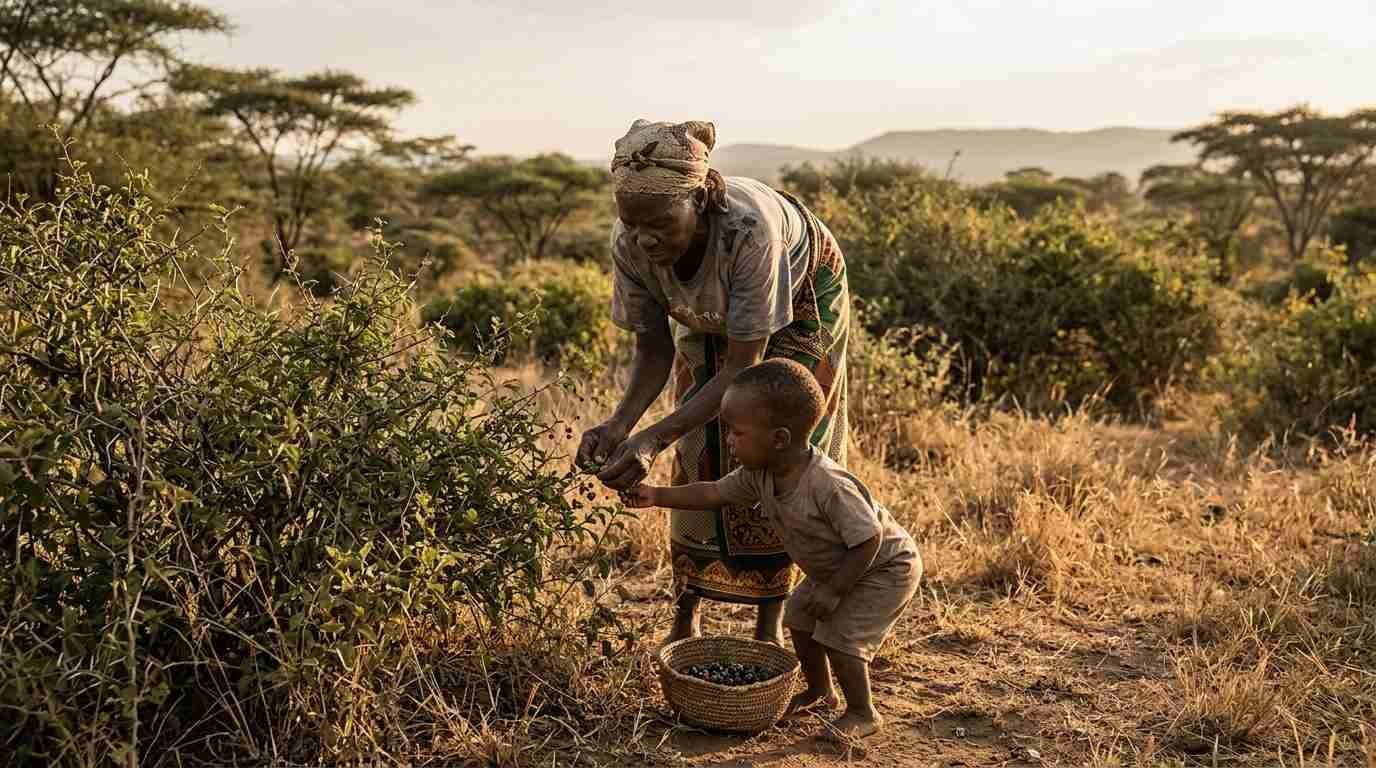
The steelman version runs like this. In a species whose children stay dependent for years and whose foods (tubers, nuts, game) are hard for youngsters to obtain, an older woman who stops having babies of her own and feeds her daughter’s weaned children lets the daughter have the next baby sooner. Hawkes et al. (1998) argued that this help increased the payoff to staying healthy longer, so selection pushed adult lifespan up while the age of last birth stayed roughly where it was in other apes. The idea grew out of fieldwork among Hadza foragers, and it ties a single behavior, food sharing by older women, to a whole suite of human life-history traits.
The historical demographic work adds support. Lahdenperä and colleagues summarized their own result plainly:
“women with a prolonged post-reproductive lifespan have more grandchildren, and hence greater fitness.”
Lahdenperä, Lummaa, Helle, Tremblay and Russell, 2004
Objections are of two kinds. The first is quantitative. Grandchildren carry a quarter of a woman’s genes, against a half for her own children, so a grandmother’s help has to be large to outweigh even modest continued fertility. The Finnish follow-up showed the benefit fading by the mid-seventies, which limits how much longevity it can buy (Chapman et al. 2019). The second objection is about direction: a theory of why women live long after menopause is not, by itself, a theory of why menopause arrives when it does. Cant and Johnstone made exactly that point. And in chimpanzees, where females usually leave their birth group and rarely live near their adult daughters, Wood et al. (2023) argued grandmothering is an unlikely explanation for the post-reproductive survival they observed.
Reproductive conflict and the killer whale test
The main rival starts from a demographic quirk. In many human societies, and plausibly in ancestral ones, young women moved into their partner’s group. A newcomer is unrelated to the other women there, while an older woman becomes increasingly related to the group’s children as her own sons and grandchildren accumulate. Cant and Johnstone’s model shows that this asymmetry favors the younger woman in any competition for shared resources, and that the older woman’s best response is to stop. Their comparative finding:
“humans exhibit an extraordinarily low degree of reproductive overlap between generations.”
Cant and Johnstone, 2008
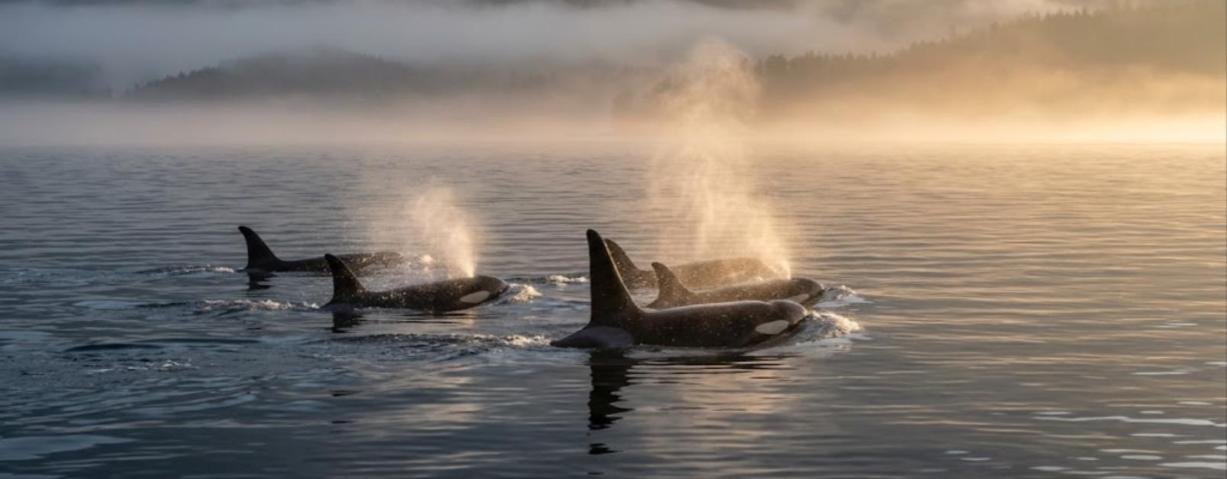
Killer whales provided an unusually sharp test, because the pattern of dispersal is different and the data run for decades. Analyzing 43 years of records on resident killer whales, Croft et al. (2017) found that “when mothers and daughters co-breed the mortality hazard of calves from older generation females is 1.7 times” higher than for calves of the younger generation. Older mothers lose these contests. Combined with the help older females provide to kin, the authors argued, this conflict may account for the longest post-reproductive lifespan of any non-human animal.
Weaknesses exist here too. The hypothesis depends on female-biased dispersal, and human residence patterns vary widely across societies and probably varied in the past. It also explains early cessation better than long survival; without some benefit from older women’s presence, there is no reason for them to persist once they stop. Its proponents generally present it as complementary to grandmothering rather than a replacement.
Other rivals: byproducts, mate choice and genomic conflict
Three further families of answers deserve a fair hearing.
Byproduct or extended-lifespan views. Perhaps nothing about menopause was selected at all. Egg supply is fixed early in life across mammals, and if human lifespan lengthened for other reasons, a long post-reproductive period would follow automatically. Úbeda et al. (2013) summarize versions of this idea that credit modern medicine and versions that credit steady selection against deaths before reproduction ends. The forager data undercut the modern-medicine version. A related observation, reported in Science News from Alberts et al. (2013), is that wild primates show declining fertility with age but no definitive end; that cuts both ways, since it suggests humans differ in degree rather than in kind.
The good-mother hypothesis. An older idea attributed to Williams (1957), in the summary by Úbeda et al., holds that late births carry rising risks to the mother, and a woman who dies in childbirth also endangers the dependent children she already has. Stopping protects that existing investment. This needs no grandchildren at all, and the model below gives it a dedicated parameter.
Mate choice. Morton, Stone and Singh (2013), as described by Science News, simulated a population in which men consistently preferred younger partners. Mutations harming late-life fertility then accumulate because selection on them is weak. Critics noted that the model assumes the preference rather than explaining it, and that the causal arrow could easily run the other way.
Intragenomic conflict. Úbeda et al. (2013) proposed that genes inherited from a woman’s father and those from her mother “disagree” about when to stop, because of how relatedness to group members differs by parental line under typical dispersal. That model aims at a detail the others mostly ignore: why the transition through perimenopause is so long and irregular. It is a hypothesis with few direct tests so far.
Readers interested in how age itself is measured biologically may find the discussion of epigenetic clocks and what they can show useful background; the same tools are now being applied to comparative aging across species, as in the dog epigenetic clock study.
A small inclusive-fitness model built for this article
To see where stopping pays, I wrote a deliberately simple simulation. It follows 200,000 hypothetical women from age 45 to 75. Each already has one dependent child born at 40. Under the continue strategy she attempts births at 45, 48 and 51, each succeeding with probability 0.7, and each birth carries a maternal death risk m. Under the stop strategy she has no further births. Background mortality rises with age on a Gompertz-style curve. Children survive to adulthood with probability 0.6, halved if the mother dies before they turn ten (the good-mother effect).
Every year she is alive she can help grandchildren, adding h surviving grandchildren per year, weighted at relatedness 0.25 against 0.5 for her own children. While she has late-born children of her own, that help is cut by a dilution factor K. Finally, a reproductive-conflict switch lets late-born children suffer a hazard ratio (HR) of 1.7 relative to the baseline, borrowing the size of the effect Croft et al. reported in killer whales and treating it, purely as an assumption, as if it applied to humans. Because fitness is linear in h, the model solves directly for the break-even value h*: the help per year at which stopping and continuing tie. Both strategies share the same random numbers (seed 21).
import numpy as np
N, A0, AEND, IND = 200_000, 45, 75, 10      # women, decision age, help ends, child independent at 10
S0, ORPHAN, VIAB = 0.6, 0.5, 0.7            # child survival, orphan multiplier, birth success
def hazard(a): return 0.015 * np.exp(0.08 * (a - A0))   # Gompertz-style background mortality
def run(strategy, m, conflict=1.0, K=0.5, seed=21):
    """Returns (own-child term, years of grandmother help) in relatedness-weighted units.
    Fitness = own + 0.25 * h * help, so stopping wins when h exceeds a break-even value."""
    rng = np.random.default_rng(seed)           # common random numbers for both strategies
    alive = np.ones(N, bool); death = np.full(N, 999.0)
    births = [np.full(N, 40.0)]                 # one dependent child already born at 40
    for a in range(A0, AEND):
        u1, u2, u3 = rng.random(N), rng.random(N), rng.random(N)
        if strategy == "continue" and a in (45, 48, 51):
            born = alive & (u1 < VIAB)
            births.append(np.where(born, float(a), np.nan))
            die = born & (u2 < m); death[die] = a; alive &= ~die   # maternal death at birth
        die = alive & (u3 < hazard(a)); death[die] = a; alive &= ~die
    own = np.zeros(N)
    for i, b in enumerate(births):
        s = S0 ** (conflict if i > 0 else 1.0)  # co-breeding penalty as hazard ratio: s**HR
        p = np.where(death < b + IND, s * ORPHAN, s)
        own += np.where(~np.isnan(b), 0.5 * p, 0.0)
    help_ = np.zeros(N)
    for a in range(A0, AEND):                   # help diluted by K while late-born kids depend on her
        dep = sum((b > 40) & (a < b + IND) for b in births[1:]) if len(births) > 1 else 0
        help_ += np.where(death > a, np.where(np.asarray(dep) > 0, 1 - K, 1.0), 0.0)
    return own.mean(), help_.mean()
print(f"{'m':>5} {'HR':>4} {'K':>4} | {'own(stop)':>9} {'own(cont)':>9} {'help(stop)':>10} {'help(cont)':>10} | h*")
for K in (0.5, 1.0):
    for conflict in (1.0, 1.7):
        for m in (0.01, 0.05, 0.10, 0.20):
            o_s, g_s = run("stop", m, conflict, K); o_c, g_c = run("continue", m, conflict, K)
            hstar = (o_c - o_s) / (0.25 * (g_s - g_c))   # grandkids/yr of help needed to break even
            print(f"{m:>5} {conflict:>4} {K:>4} | {o_s:9.3f} {o_c:9.3f} {g_s:10.2f} {g_c:10.2f} | {hstar:.3f}")
The run took about 15 seconds. Key results, where h* is surviving grandchildren per year of help that stopping requires to break even:
| Maternal death risk per birth (m) | Conflict HR | Help dilution K | Break-even h* |
|---|---|---|---|
| 0.01 | 1.0 | 0.5 | 0.327 |
| 0.10 | 1.0 | 0.5 | 0.214 |
| 0.20 | 1.0 | 0.5 | 0.144 |
| 0.01 | 1.7 | 0.5 | 0.228 |
| 0.10 | 1.7 | 0.5 | 0.147 |
| 0.20 | 1.7 | 0.5 | 0.096 |
| 0.01 | 1.0 | 1.0 | 0.168 |
| 0.20 | 1.0 | 1.0 | 0.101 |
| 0.01 | 1.7 | 1.0 | 0.117 |
| 0.20 | 1.7 | 1.0 | 0.068 |
A woman who stops gets about 18.3 expected years of help in this model, so the numbers can be converted into lifetime totals. With low maternal risk and no conflict, stopping only wins if her help adds roughly 0.33 surviving grandchildren every year, around six extra surviving grandchildren in total. That is a very large effect for one person to produce. Turn on every cost at once (a 20 percent death risk per late birth, which is an extreme value included to find the boundary, the 1.7 hazard ratio, and full dilution of help) and the requirement falls to 0.068 per year, a little over one extra surviving grandchild across her remaining life.
What this shows: in a model of this shape, grandmothering by itself is a weak reason to stop, while grandmothering combined with maternal risk, competition with the next generation and the cost of juggling one’s own toddlers can tip the balance at help levels that are not absurd. That echoes the pluralist conclusion several authors above have reached by other routes. What it does not show is anything about real human values. Every parameter is assumed, the model has no population structure or dispersal, it fixes the birth schedule instead of letting it evolve, and its “continue” option assumes fertility at 51 that real ovaries usually cannot deliver. It is a map of where the argument turns, not a measurement.
The author’s reading, and what would settle it
My reading, which is an opinion and not a finding, is that the grandmother hypothesis is best supported as an explanation for long post-reproductive survival, and that reproductive conflict is the stronger candidate for the timing of the stop. The two are not really rivals; they answer different halves of the question. The byproduct view remains plausible for the ovarian mechanism itself, since egg depletion is ancient and shared across mammals, but it struggles to explain why humans, and seemingly only a handful of social species, live so long afterward. The chimpanzee data from Ngogo complicate every simple story, because a species without strong grandmothering shows a measurable post-reproductive span under unusually favorable conditions.
Several studies could move the field. These are predictions, stated so that they can fail:
- Dispersal comparisons. If conflict drives timing, then across well-documented human populations, those with stronger female-biased residence should show earlier or more abrupt cessation relative to lifespan. A null result across many societies would weaken the conflict account.
- Co-breeding costs in humans. Parish and genealogical records could test whether children born to older mothers fare worse when a daughter-in-law in the same household is breeding at the same time, the human analogue of the killer whale result. No effect would cut against the conflict hypothesis.
- Ngogo over time. If the chimpanzee post-reproductive span reflects temporary good conditions, it should shrink as those conditions change. If it persists across generations, the byproduct view gains ground.
- Help that scales with age. The grandmother account predicts that fitness gains should be concentrated in the years when a grandmother is still physically productive. Further cohorts like the Finnish one, ideally from forager or horticultural populations, would test whether the 50-to-75 window generalizes.
- Perimenopause genetics. Úbeda’s intragenomic conflict model predicts parent-of-origin effects on genes influencing the timing of menopause. Such effects can be searched for in large biobanks.
Genetic history may help as well. Ancient-genome work has reshaped questions about human ancestry, as the article on Neanderthal DNA in modern humans describes, and the same data could eventually reveal when selection acted on genes tied to reproductive aging.
Common questions
Do any other animals go through menopause?
Yes, a few. Resident killer whales and some other toothed whales have long post-reproductive lives in the wild, and Wood et al. (2023) reported demographic and hormonal evidence for menopause in one wild chimpanzee community. Many animals show declining fertility with age, but a long, regular post-reproductive stage remains rare.
Is menopause just a result of people living longer today?
Probably not, at least not entirely. Hunter-gatherer data show women spending a large share of adult life after their last birth, which argues against a purely modern origin. The byproduct view survives in a different form, though: that egg depletion is an ancient constraint and long life evolved for other reasons.
Does the grandmother hypothesis mean grandmothers raise fitness today?
The historical Finnish and Canadian records suggest grandmothers did raise grandchild numbers in pre-modern settings. The hypothesis concerns the evolutionary past, and conditions in modern societies with low child mortality are very different, so present-day effects say little about why the trait evolved.
Which hypothesis do most researchers favor?
There is no consensus. Many researchers now treat grandmothering and reproductive conflict as complementary, with one explaining long survival and the other explaining early cessation, while others remain skeptical that either was strong enough in the deep past.
Further reading
- The Slow Moon Climbs: The Science, History, and Meaning of Menopause by Susan Mattern. A book-length history and science treatment of menopause that discusses the grandmother hypothesis at length. See it on Amazon (affiliate link)
As an Amazon Associate I earn from qualifying purchases. A commission may be earned if you buy through this link, at no extra cost to you.
References
- Hawkes K, O’Connell JF, Blurton Jones NG, Alvarez H, Charnov EL. 1998. Grandmothering, menopause, and the evolution of human life histories. Proceedings of the National Academy of Sciences USA 95: 1336–1339. University of New Mexico repository
- Lahdenperä M, Lummaa V, Helle S, Tremblay M, Russell AF. 2004. Fitness benefits of prolonged post-reproductive lifespan in women. Nature 428: 178–181. doi:10.1038/nature02367
- Cant MA, Johnstone RA. 2008. Reproductive conflict and the separation of reproductive generations in humans. Proceedings of the National Academy of Sciences USA 105(14): 5332–5336. doi:10.1073/pnas.0711911105. PMC2291103
- Úbeda F, Ohtsuki H, Gardner A, van Baalen M. 2014. Ecology drives intragenomic conflict over menopause. Ecology Letters 17(2): 165–174 (online 2013). doi:10.1111/ele.12208. PMC3912906
- Croft DP, Johnstone RA, Ellis S, Nattrass S, Franks DW, Brent LJN, Mazzi S, Balcomb KC, Ford JKB, Cant MA. 2017. Reproductive conflict and the evolution of menopause in killer whales. Current Biology. University of Exeter repository
- Chapman SN, Pettay JE, Lummaa V, Lahdenperä M. 2019. Limits to fitness benefits of prolonged post-reproductive lifespan in women. Current Biology 29(4). doi:10.1016/j.cub.2018.12.052. University of Turku repository
- Wood BM, Negrey JD, Brown JL, Deschner T, Emery Thompson M, Gunter S, Mitani JC, Watts DP, Langergraber KE. 2023. Demographic and hormonal evidence for menopause in wild chimpanzees. Science 382: eadd5473. doi:10.1126/science.add5473
- Wayman E. 2013. Killer whales, grandmas and what men want: Evolutionary biologists consider menopause. Science News, 19 August 2013 (secondary source for Levitis, Burger and Lackey 2013; Morton, Stone and Singh 2013; Alberts et al. 2013). sciencenews.org
- Itoero. 2018. “Menopause” (discussion thread). ScienceForums.net, 15 December 2018. scienceforums.net