






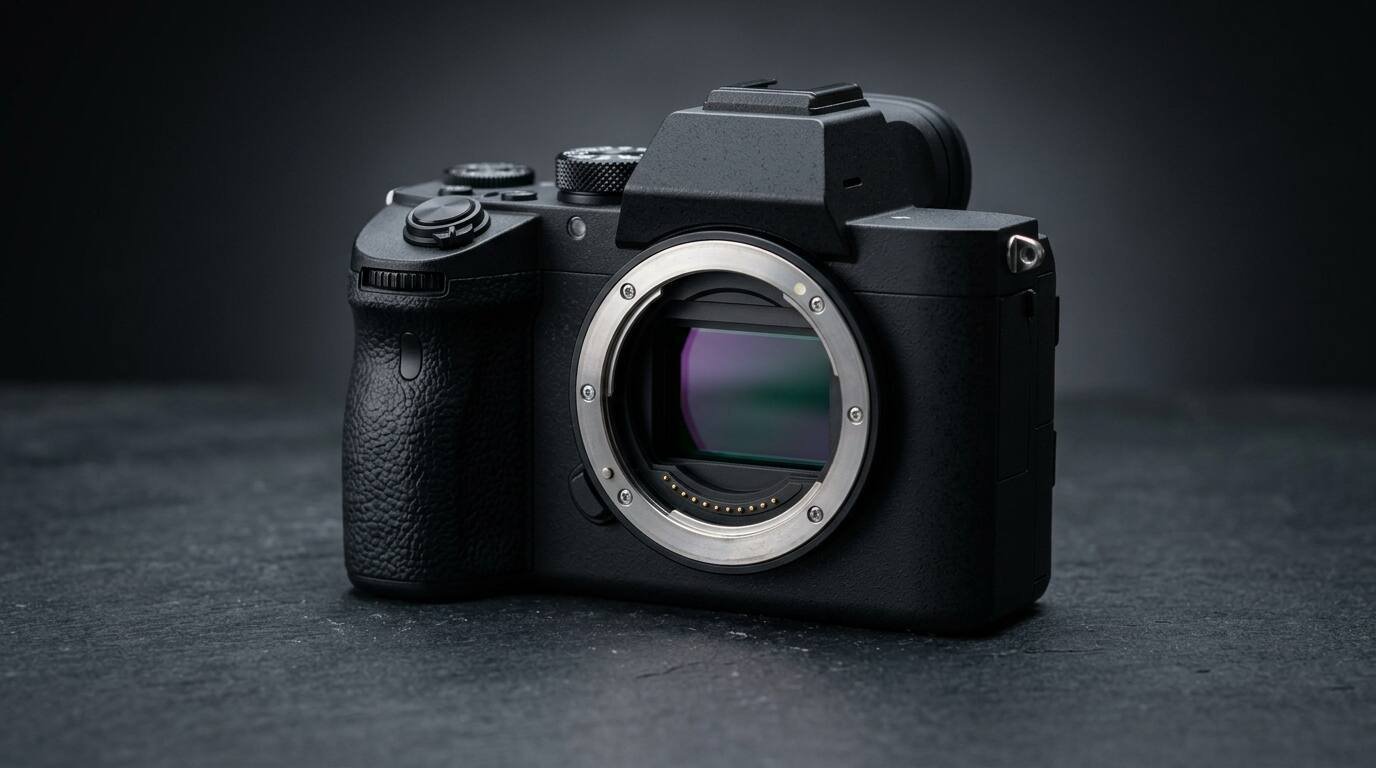
A fully stacked 66.8MP sensor is the headline of Sony’s a7R VI. Here is what independent testing confirms, what shrinks under measurement, and who should actually upgrade.
Sony let roughly three years pass between the a7R V and its successor, and the biggest change isn’t the pixel count. The a7R VI trades a 61MP back-illuminated sensor for a 66.8MP fully stacked Exmor RS chip, and nearly every notable gain on the spec sheet follows from one question: how fast can that sensor be read out?
That makes the camera a handy test case for anyone who buys on numbers. Some of Sony’s claims hold up almost intact under independent testing. Others shrink once a lab gets involved, and a few come with conditions the launch material skips. This article sorts the manufacturer’s claims from measured results, drawing on Sony’s announcement as reported by PetaPixel and the full lab review at DPReview.
Sony announced the camera in mid-May 2026 at $4,499, which DPReview notes is $600 above the a7R V’s launch price. Whether the extra money buys something you will actually use depends almost entirely on what you shoot.
The Sensor Change Behind Nearly Everything Else
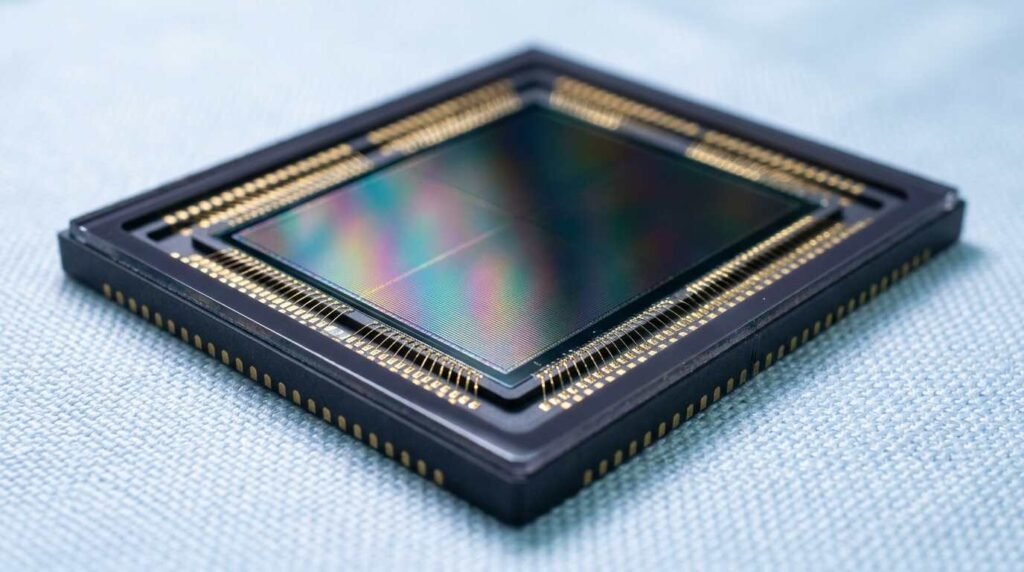
In a conventional back-illuminated sensor, the light-gathering pixels and the circuitry that reads them share a single layer of silicon. Stacked designs move that circuitry, and usually a layer of fast memory, underneath the pixel array. The payoff is speed. The chip can pull signals off many rows at once and hold them for the processor, which shortens the time needed to scan a frame.
Sony’s new part is a fully stacked Exmor RS at 66.8MP, up from 61MP in the a7R V. PetaPixel points out that it is the first new sensor in the R line since the a7R IV arrived in 2019, and Sony pairs it with the same Bionz XR2 processor that debuted in the a7 V.
Scan time matters because of rolling shutter, the skew that appears when a subject moves while the sensor is still reading rows from top to bottom. Here is how DPReview measured it for stills with the electronic shutter:
| Camera | Rolling shutter (stills, electronic shutter) |
|---|---|
| Sony a7R VI | 19.6 ms (14.0 ms in 12-bit or lossy raw) |
| Sony a7R V | 100.5 ms |
| Canon EOS R5 II | 6.3 ms |
| Nikon Z8 | 3.7 ms |
Sony claims roughly 5.6 times less rolling shutter than the a7R V. The review’s own figures land in the same neighborhood: 100.5 ms divided by 19.6 ms is about 5.1 in standard mode, and the 12-bit number stretches the ratio past 7. So the claim is fair, though it leans toward the best case. The more telling comparison runs sideways. Both the R5 II and the Z8 read out far faster, and DPReview names rolling shutter as the a7R VI’s main weakness, calling it the slowest of its type the team has tested.
For landscapes, studio work and most events, none of that will matter. For a pitcher’s windup or a spinning propeller, it will.
Resolution and Dynamic Range: Where the Claims Hold
Extra resolution is the least contested upgrade. At base ISO, DPReview found a modest gain in detail over the a7R V, with no visible noise penalty at ISO 100. Higher sensitivities showed no penalty either, even though the pixels are smaller and the readout is quicker. The reviewers place the 66MP files at the top of what is available short of medium format.
Dynamic range is where the story gets more careful. Sony says the new sensor reaches 16 stops, up from 15. In standard electronic-shutter mode, though, DPReview’s testing showed results that closely track the a7R V, and the second gain step now arrives one stop later, at ISO 640. The camera is also very ISO-invariant, meaning that raising ISO in camera yields almost no noise benefit compared with brightening the file afterward. The extra stop, then, is a manufacturer figure that the review does not demonstrate in everyday shooting.
Pixel Shift Multi mode pushes the ceiling higher, compositing up to 265.8MP from four or sixteen shifted raw frames. The catch, according to the review, is that these multi-shot files have to be combined off the camera, using Sony’s Imaging Edge Desktop software.
Burst Shooting: 30 fps and the Fine Print
The a7R VI shoots 30 fps with the electronic shutter and 10 fps with the mechanical one. Sony says the 30 fps mode keeps full-resolution 14-bit raw with no viewfinder blackout, and it adds a Pre-Capture mode that saves frames from before the shutter button is fully pressed. In Sony’s framing, that is triple the a7R V’s speed.
DPReview’s testing complicates the headline. The review reports that the fastest bursts require JPEG or lossy compressed raw, both of which switch the sensor to 12-bit readout. That reduces dynamic range and adds shadow noise. The upside is real, though: the 12-bit path cuts the rolling shutter time to 14.0 ms and lets autofocus run a full 60 calculations per second at 30 fps.
You are choosing, in other words, between peak speed and peak image quality. The previous model never posed that question because it was never this fast.
Video: 8K30, a New 4K120, and the Dual Gain Trade
The video specs read like a stronger camera, and DPReview agrees, calling the a7R VI a much more credible video body than its predecessor. 8K at 30p remains, taken from an 8.2K region with a 1.2x crop. A new 4K 120p mode adds slow motion with only a minor crop.

Sharpness is not uniform across modes, however. Sony says 4K is oversampled from 5K capture across the full sensor width. DPReview’s estimate is closer to 2:1 subsampling, and the footage looked distinctly softer than output from competing cameras. The 8K mode is comfortably the most detailed option.
| Video mode | Rolling shutter (DPReview) |
|---|---|
| 8K | 13.7 ms |
| Standard 4K/24 | 7.2 ms |
| 4K at 100 to 120p | 5.6 to 6.2 ms |
| 4K/24 with Dual Gain | 15.8 ms |
That last row shows the cost of Dual Gain, which blends the sensor’s low-gain and high-gain readouts for more dynamic range. It is limited to 4K at up to 30p, and by DPReview’s measurements it roughly doubles readout time. Cleaner shadows arrive at the price of extra skew on anything that moves.
Other additions include 32-bit float audio with Sony’s XLR-A4 handle (the review lists the adapter at $780) and dual USB-C ports, which allow powering the camera while recording to an external drive. There is no waveform display. Sony says the camera can record 8K for up to 120 minutes at 25°C with its temperature setting on High, but the review reports no heat testing, so treat that figure as an unverified claim.
Autofocus, Stabilization, and What Stayed the Same
Sony kept the 759-point autofocus layout and improved the recognition software behind it. The system detects humans, animals, birds, insects, cars, trains and airplanes, and Sony says it tracks partly hidden, distant or tiny subjects more reliably than before. DPReview was very impressed. Eye detection proved more consistent than on the a7R V despite the higher resolution, and animal eye detection kept working at ISO 12,800.
Stabilization is rated at up to 8.5 stops at the center of the frame and 7 at the edges, against 8 stops for the predecessor. That is Sony’s figure, and none of the sources I read measured it independently. The electronic viewfinder keeps its 9.44 million dots but gains a brighter panel, which Sony puts at three times the earlier brightness.
Battery, Ports, and Handling
A new NP-SA100 battery replaces the Z-series cell. DPReview cites a 27% capacity increase and CIPA ratings of 600 shots with the viewfinder and 710 with the rear screen. The reviewers add that real-world results often run about double the rated figure.

| Camera | CIPA shots (viewfinder / rear screen) |
|---|---|
| Sony a7R VI | 600 / 710 |
| Sony a7R V | 440 / 530 |
| Canon EOS R5 II | 250 / 540 |
| Nikon Z8 | 330 / 340 |
Smaller physical changes add up. Eight buttons light up, a first for an Alpha body, and a front tally lamp joins them. The MR3 position on the mode dial gives way to a star position that unlocks memory recall modes, ten of them and thirty recalls in all, according to PetaPixel.
DPReview’s complaints center on handling. The grip is more comfortable than the a7 V’s but a step below Sony’s pro bodies, there is no front custom button, and the menus are convoluted. The reviewers rank Sony’s interface as their least favorite among the major brands. Raw files cannot be reprocessed in camera, and HDR HEIF output requires turning raw capture off.
Who Should Buy It, and Who Should Wait
DPReview scored the a7R VI at 92% and gave it a Gold award, saying it produces the best image quality of any current full-frame camera. The advice splits by workload. Landscape and studio shooters who already own an a7R V probably shouldn’t rush to replace it, while event and video shooters will feel the benefits immediately. The reviewers also stress that this is not a cut-price a1 II, because its limits show as you approach the edge of its performance envelope.
My own reading, which is analysis rather than reporting: the a7R VI is a resolution camera that finally received a respectable speed bump, not a sports camera that gained megapixels. If fast subjects are the job, the rolling shutter figures for the Canon and Nikon bodies above matter more than 66.8MP. If detail is the job, the image-quality gap over the a7R V is modest enough that the $600 launch-price increase deserves a second look.
Claims Versus Measurements: A Quick Reference
| Spec | Sony claim | Independent finding |
|---|---|---|
| Rolling shutter | About 5.6x less than the a7R V | DPReview: 19.6 ms vs 100.5 ms (about 5.1x); 14.0 ms in 12-bit |
| Dynamic range | 16 stops, up from 15 | DPReview: closely matches the a7R V in standard electronic-shutter mode |
| Burst | 30 fps, 14-bit raw, no blackout | DPReview: the fastest bursts require 12-bit readout (JPEG or lossy raw) |
| Stabilization | Up to 8.5 stops (center) | Not independently measured in the sources reviewed |
| 8K recording | Up to 120 minutes at 25°C | No heat findings in the review |
| Battery | CIPA 600 / 710 shots | DPReview: real-world results often about double the rating |
Sources
- PetaPixel: Sony a7R VI has a stacked 66.8MP sensor and captures 30 fps bursts (announcement details, Sony claims)
- DPReview: Sony a7R VI review, image quality, dynamic range and readout (lab measurements, 92% Gold)
- DPReview: Sony a7R VI review, video, autofocus, ergonomics and verdict
- Wikipedia: Sony a7R VI (used only to cross-check; it lists the launch price as $4,498, while PetaPixel and DPReview state $4,499, the figure used here)



One thought on “Sony a7R VI: What a Stacked 66.8MP Sensor Buys You, and What It Doesn’t”