




A split FDA panel backed Galleri in September, yet the large NHS trial missed its main goal. Here is what the numbers say, and what remains unproven.
Multi-cancer early detection tests look for faint tumor signals in a blood sample and try to say where in the body they came from. The strongest dataset so far belongs to GRAIL’s Galleri, and it is mixed: the large English trial missed its main goal, a US study reported encouraging detection numbers, and on September 23, 2026 an FDA advisory panel voted in favor of the test by margins that were far from unanimous. As of this writing, the agency itself has not announced a decision that I could find.
This article sets out what the tests measure, what each study actually showed, and why reasonable experts read the same numbers differently. It is general information about the science, not medical advice.
What a multi-cancer blood test measures
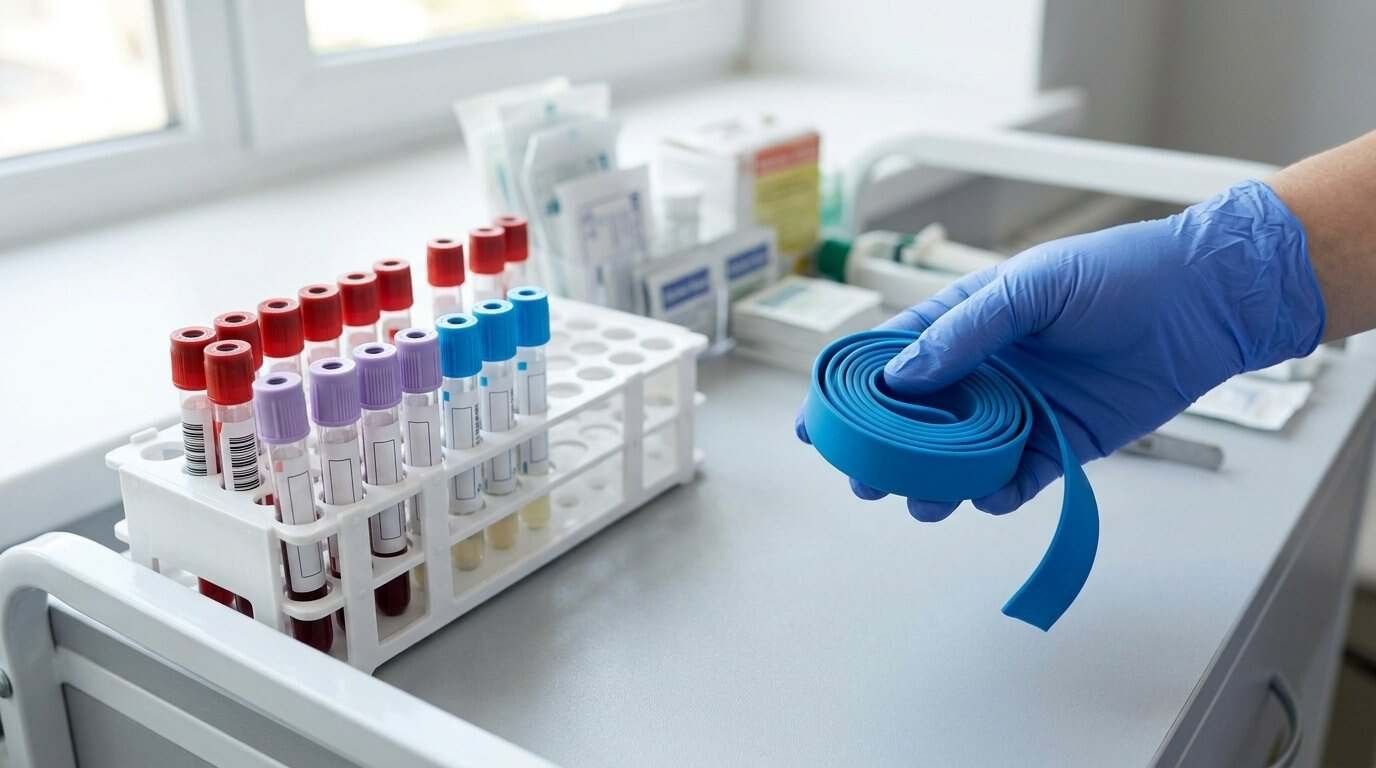
Tumors shed fragments of DNA into the bloodstream. Those fragments carry chemical tags, mainly methyl groups, in patterns that differ between cancer types and from healthy tissue. Galleri sequences cell-free DNA from a blood draw, reads those methylation patterns, and returns either “no cancer signal detected” or “cancer signal detected” plus a prediction of the likely organ, which GRAIL calls the cancer signal origin.
That design matters for how results should be read. A positive result is not a diagnosis. It starts a workup with imaging and other diagnostic procedures, and the FDA review materials describe that confirmation step as required. The test is also framed as an addition to existing screening such as mammography or colonoscopy, not a replacement.
NHS-Galleri: the largest trial, and a missed primary endpoint
NHS-Galleri randomized 142,250 people aged 50 to 77 in England to annual Galleri testing or usual care, over three annual rounds. According to GRAIL’s May 30, 2026 release of the ASCO presentation, the prespecified primary endpoint was a reduction in stage III and IV diagnoses across 12 cancer types. It was not met. The incidence rate ratio was 1.03 (95% confidence interval 0.92 to 1.14, p = 0.63), meaning no detectable drop, and nominally a slight rise. One outlet reporting on the FDA review gave the upper bound as 1.15, so treat the second decimal with care.
The company’s headline instead emphasized stage IV cancers, a secondary endpoint. Across all rounds the ratio was 0.86 (0.744 to 0.998), a 14 percent reduction that the release itself calls nominally significant. By round, the ratios were 0.91, 0.78 and 0.74, and only the third round’s interval stayed below 1. Because this was a secondary result, with no correction for multiple looks reported, it is best treated as a signal worth testing.
Other reported outcomes include a four-fold increase in screen-detected cancers, a 16 percent rise in stage I and II diagnoses for the 12 cancers, and a 25 percent reduction in emergency presentations. A post hoc analysis reported by CancerNetwork tied the overall null result partly to a higher stage III/IV rate in the first round (ratio 1.19, interval 0.98 to 1.43).
One caveat applies to everything above. These are conference and company numbers. I could not find a peer-reviewed publication of the full results, so details may shift when one appears.
Performance numbers, side by side
Two different studies feed the picture, and they measure different things. Sensitivity and predictive value are not interchangeable, and the figures depend on follow-up length and which cancers count.
| Measure | NHS-Galleri (GRAIL release) | PATHFINDER 2 (as reported from FDA panel materials) |
|---|---|---|
| Participants | 142,250 randomized | About 25,000 consented US adults |
| Positive predictive value | 52.0% | 60.3% |
| Specificity | 99.55% | 99.64% |
| Cancer detection rate | 0.48% | 0.54% |
| Episode sensitivity, all cancers | 30.7% | 39.3% |
| Episode sensitivity, 12 prespecified cancers | 54.7% | 69.8% |
Read the table for what it says about error. A specificity near 99.6 percent means roughly four in a thousand people without cancer get a false alarm. A positive predictive value of 52 to 60 percent means that, among people who test positive, a little over half turn out to have cancer. And a sensitivity of roughly 30 to 40 percent across all cancers means most cancers in a screened year were not flagged. A negative result does not rule cancer out, a point the FDA’s own summary repeats.
The FDA panel: what happened on September 23
GRAIL submitted its premarket approval application in early 2026 and said in its second-quarter report that the filing draws on PATHFINDER 2. The agency’s Molecular and Clinical Genetics Panel met on September 23, 2026. According to OncLive, safety passed unanimously, benefit-risk passed 7 to 2 with one abstention, and effectiveness passed 6 to 4.
That tells you where the doubt sat. Members were comfortable that a blood draw is safe. They were less settled on whether the test demonstrably helps people. An advisory vote is also only advice: the FDA can approve, request more data, or decline, and may attach labeling conditions. The proposed use described in the review materials is screening of adults 50 and older, with the origin prediction after a positive result.
Why experts read the same data differently
Supporters point to the detection numbers. If a test finds cancers that have no recommended screening at all, and does so with few false alarms, the argument runs, then even a modest stage shift is a gain. The reduction in stage IV cases in later rounds fits that story, as does the lower emergency presentation rate.
Skeptics start from the primary endpoint. Richard Houlston of the Institute of Cancer Research, commenting through the Science Media Centre on the February topline release, said secondary and subgroup findings should be treated as hypothesis-generating. He also noted that stage shift can be a misleading stand-in for patient benefit, because earlier detection can reflect overdiagnosis, the finding of cancers that would never have caused harm. The deeper issue is the endpoint nobody has yet: lower cancer mortality. Screening trials for single cancers needed years of follow-up to show that, and that follow-up is still running here.
What the Medicare law does and does not do
In the US, Congress passed the Nancy Gardner Sewell Medicare Multi-Cancer Early Detection Screening Coverage Act as part of a spending package signed on February 3, 2026, according to the Alliance for Cancer Prevention. It does not guarantee payment. It lets the Centers for Medicare & Medicaid Services begin an evidence-based coverage process once the FDA approves a test. No approval, no national coverage determination.
Five terms that decide how to read these results
Sensitivity is the share of people who have cancer that the test catches. Specificity is the share of cancer-free people who correctly get a negative. A test can score very high on one and poorly on the other, so a single headline figure rarely tells you enough.
Positive predictive value answers the question a patient actually asks after a positive result: how likely is it that I have cancer? It depends on how common cancer is in the people tested, which is why a test with the same chemistry can behave differently in a screened population than in a group already suspected of illness. Stage shift means diagnosing cancers earlier than they would otherwise be found. It is a means, not an end.
Overdiagnosis is the detection of real cancers that would never have caused symptoms or death in a person’s lifetime. Prostate and thyroid screening are the textbook examples. A test that finds more small tumors will raise the count of early-stage diagnoses whether or not anyone benefits, which is why mortality, not stage, is the endpoint regulators and clinicians keep returning to.
Who the test is and is not for
GRAIL’s own materials say the test has not been cleared or approved by the FDA as of the May release, and that it is not recommended for people who are pregnant, aged 21 or younger, or in active cancer treatment. GRAIL describes its laboratory as CLIA-certified and CAP-accredited, which governs lab quality, not clinical validity. The pending application, if granted, would change that status for Galleri specifically. It would not validate other companies’ blood tests, each of which needs its own evidence.
What to watch next
- The FDA decision on Galleri, including any labeling limits on age, use alongside standard screening, or required follow-up studies.
- A peer-reviewed paper on the full NHS-Galleri data, and longer follow-up for mortality.
- Results from other developers’ multi-cancer assays, which use different biology and should not be assumed to match Galleri’s numbers.
- Any CMS announcement on a coverage process if approval comes.
For now, the honest summary is narrow. A blood test can find some cancers that nothing else screens for, with a low false-positive rate. Whether finding them earlier saves lives is not yet shown. Anyone weighing a test should talk with a clinician about their own history and the established screenings already recommended for them.
Sources
- GRAIL, full NHS-Galleri results at ASCO 2026 (press release)
- Science Media Centre, expert reaction to the NHS-Galleri topline release
- GRAIL, second quarter 2026 financial results
- GRAIL, FDA advisory committee meeting announcement
- OncLive, FDA panel vote backs Galleri
- CancerNetwork, FDA panel votes in favor of Galleri
- Alliance for Cancer Prevention, MCED coverage and legislation