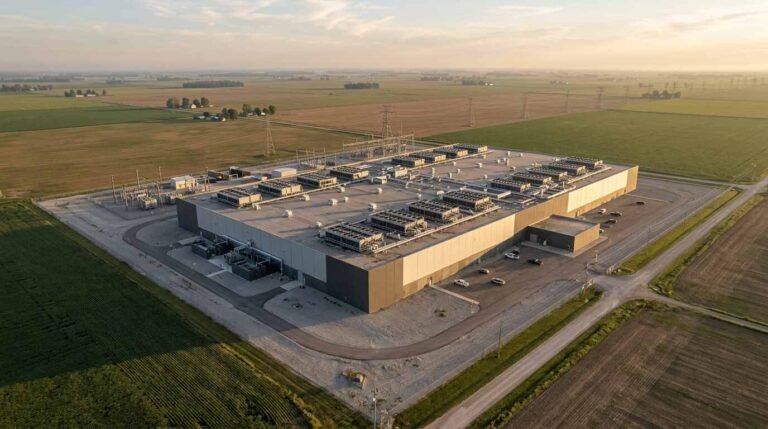





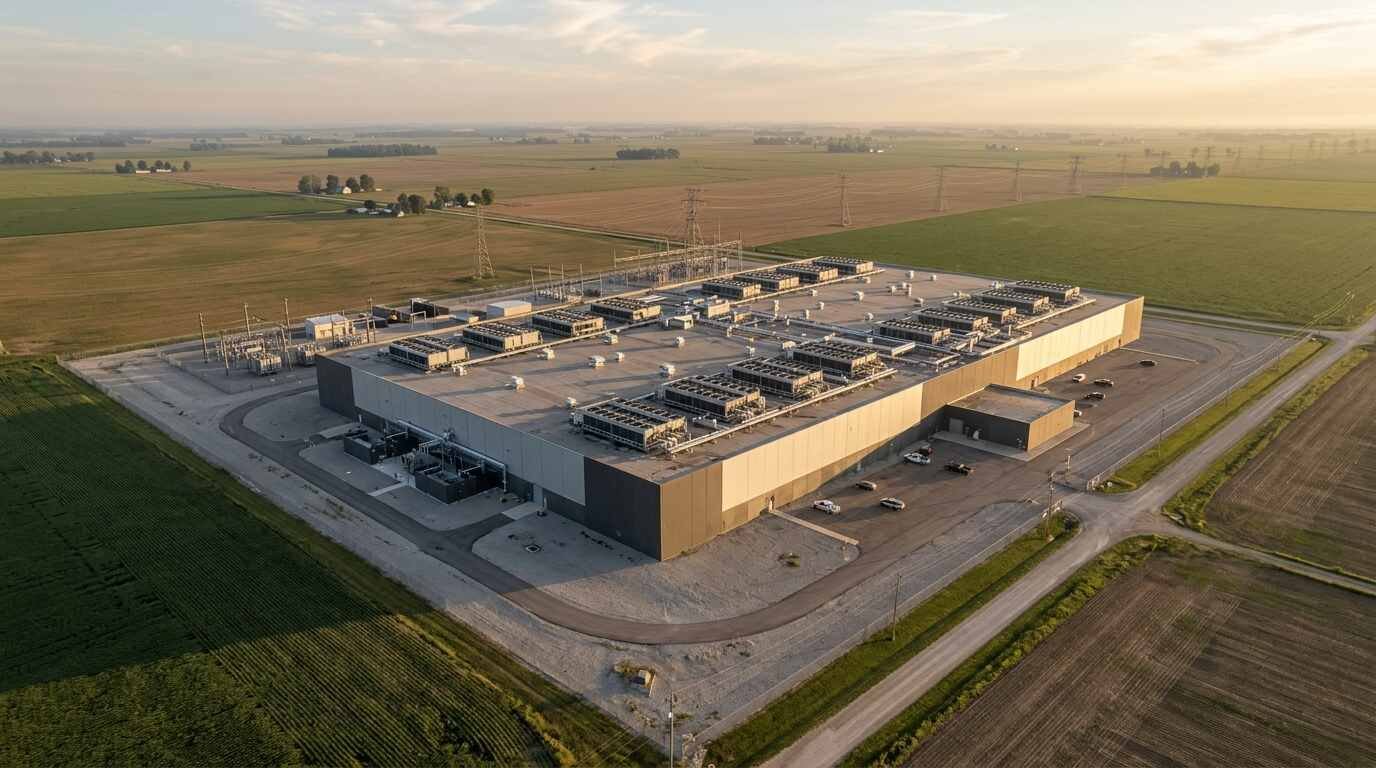
In the news: Digital Realty says it will give every household in De Soto, Kansas $1,000 in utility and property tax credits over 10 years as part of a data center plan, though CBS News reports the details are still being worked out.
Data center developers usually talk about jobs and tax revenue. One of them is now talking about cash for neighbors. Digital Realty said on Wednesday, October 14, that it will offer every household in De Soto, Kansas, $1,000 in utility and property tax credits over 10 years, according to a CBS News MoneyWatch report by Megan Cerullo, updated that evening. The company’s CEO, Andy Power, announced the offer in a statement.
The story matters beyond one Kansas town. AI and cloud demand are pushing companies to build enormous computing campuses, and those campuses have to go somewhere, which usually means a place where residents get a vote, formally or otherwise. How developers win local support is becoming part of the technology story. This post sticks to what CBS reported and flags what it did not.

The offer, as the company describes it
According to CBS, the credits are part of a $20 million community investment Digital Realty has pledged in De Soto. The company says it is working with the town to finalize how the $1,000 credits will be distributed, so the mechanics are not settled. The company framed the move as a matter of responsibility, saying it feels an obligation to help the communities that make this growth possible.
Because the plan is still being worked out, the headline figure carries real ambiguity. The CBS article does not say whether $1,000 is the total over the decade or a yearly amount, who qualifies, or when credits would begin. Anyone reading the number as a payout should wait for the town’s final terms.

The project behind it
Digital Realty plans a data center on an initial 280-acre site, and the project is expected to eventually cover 1,400 acres, per the company. At completion, it expects 250 permanent jobs for local suppliers and contractors, and it says the first phase will support thousands of construction jobs over time. It also points to recurring tax revenue for the community. CBS presents all of these as the company’s projections; they are not independently verified in the article.
Digital Realty is publicly traded, based in Austin, Texas, with a market value above $67 billion, CBS reports. Its customers include Amazon Web Services, Microsoft and Nvidia, which is a useful reminder of who ultimately drives demand for this kind of building: the companies training and running AI systems.
Why sweeteners are showing up
CBS cites a recent CBS News poll finding that more Americans oppose than favor a data center in their area. The concerns it lists are environmental harm, strain on local resources and higher utility costs. Data centers commonly draw large amounts of electricity and often need water for cooling, which is why those worries are not abstract for a rural town considering a campus on this scale.
Our reading, and it is an opinion rather than reporting: a direct household credit is a notable way to answer the utility-cost worry, because it speaks to a resident’s own bill rather than to a countywide tax base. Whether it persuades anyone depends on details nobody has published yet. CBS does not report any reaction from De Soto residents or local officials, so there is no evidence here about whether the offer eases opposition or deepens suspicion.
It is also worth separating two kinds of benefit. Tax revenue and jobs flow to the public and to a region’s workforce, and companies in this industry routinely cite both. A per-household credit is different: it is a visible, personal benefit that residents can count. Both can be real and both can be insufficient, depending on what a given community values and what it fears. That is why the open questions about eligibility and timing matter more than the round number in the headline, and why the company’s own projections should be read as promises still to be tested.
What to watch next
- The final terms: whether the $1,000 is a total or annual figure, how households qualify and how the credits are applied to utility and property tax bills.
- Local response: how De Soto residents and officials react once the details are public.
- Copycats: whether other developers offer direct household benefits in places where opposition is organized. The CBS report does not say whether any have.
- Delivery on jobs: the 250 permanent positions and construction hiring are company estimates, so actual hiring is the number to check later.
The money behind these buildings is also under scrutiny. Our earlier report on how CoreWeave’s debt scare turned AI financing into a market-wide test looks at how the buildout is paid for, which is the other half of the question of whether communities should welcome it. This post is a news summary, not investment advice.
Sources
- CBS News MoneyWatch (Megan Cerullo; edited by Alain Sherter): Data center developer offers residents of Kansas town $1,000 each for 10 years, updated October 14, 2026. Single-source: figures are company statements.