Desktop injection molding gets a hand-cranked 200 bar machine, the NOVA-60, built for 3D-printed mold inserts. Specs, price, the math and what is unstated.
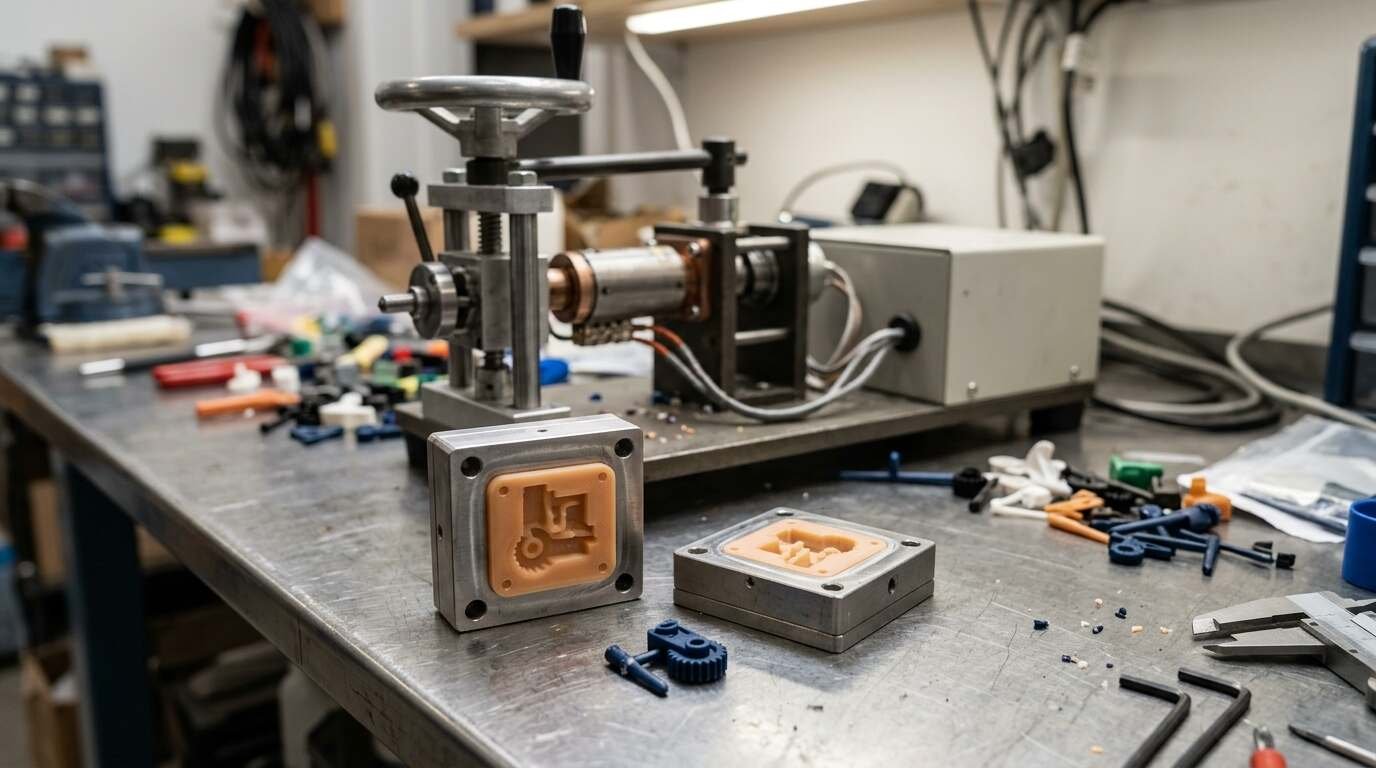
Desktop injection molding has mostly meant small electric presses or hand levers pushing plastic into aluminum molds. The NOVA-60, a benchtop machine from Austria’s Plasticpreneur sold under the Polyverse Solutions name, takes a different route: a manual handwheel with a rack-and-pinion drive builds up to 200 bar, and the mold is meant to be a 3D-printed insert.
Makers101 gives a September 15, 2026 launch date and covered the machine on September 20, and the Polyformnext site, which belongs to the Formnext trade show, describes it too. The pitch is fast, cheap prototype parts in the real production plastic. The limits are just as interesting, and the vendor is open about some of them. This post covers the confirmed specs, the pressure and clamp arithmetic, how a printed mold survives the process, and the gaps in the public information.
What the NOVA-60 is
The NOVA-60 is a benchtop injection molding machine for validating parts, not for production runs. Published specs put the maximum shot at 60 grams, injection pressure at up to 200 bar, and maximum processing temperature at 350 degrees Celsius. The footprint is about 58 by 40 by 100 centimeters and the weight about 50 kilograms.
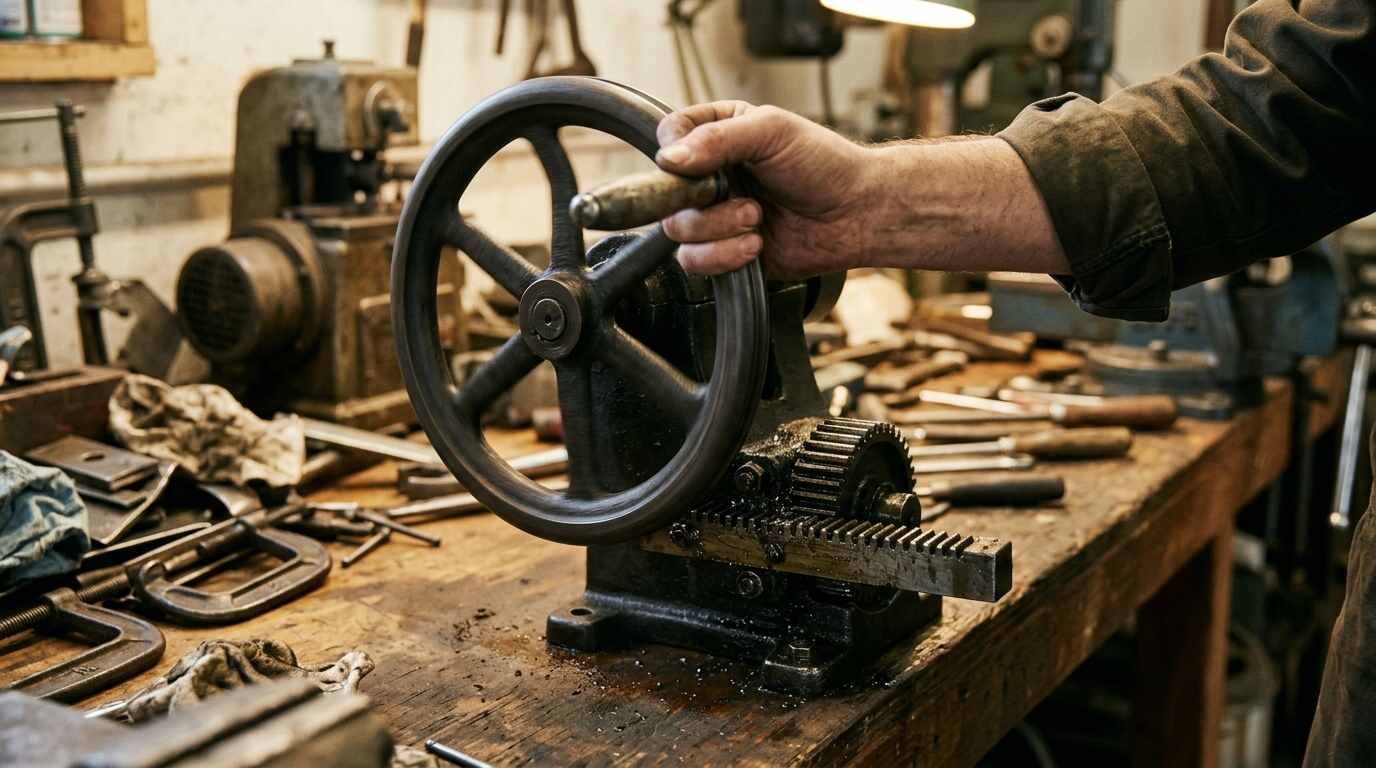
Pressure comes from a manual handwheel acting through a rack and pinion, so the machine needs no hydraulics or pressure pump. Heating is the electrical part. An integrated exhaust with multi-stage activated carbon and HEPA filtration captures vapors at the source, which matters because molten plastics at several hundred degrees give off volatile compounds.
Price and availability
Makers101 reports a list price of €6,990 excluding tax and shipping, citing Plasticpreneur’s spec sheet, and notes that All3DP lists roughly $8,150. The article treats the dollar figure as an All3DP estimate rather than an official price. It also reports leasing from €108 per month. The Polyformnext article does not state a price.
Per the company, Polyverse Solutions launched in fall 2025, shipments began in April 2026, and the machine is in use in more than seven European countries. Named early adopters include Prusa Research, plus corporate R&D departments and mid-sized manufacturers. All of that is company-supplied; neither source independently confirms the delivery numbers. Plasticpreneur also says it has delivered more than 1,000 machines of all types to over 110 countries, which is a statement about the company, not this model.
How a printed mold works
Injection molding forces molten polymer into a closed cavity, holds it under pressure while it cools, then opens the mold and ejects the part. Production molds are machined from steel or aluminum because the cavity must resist pressure and thermal cycling for thousands of shots.
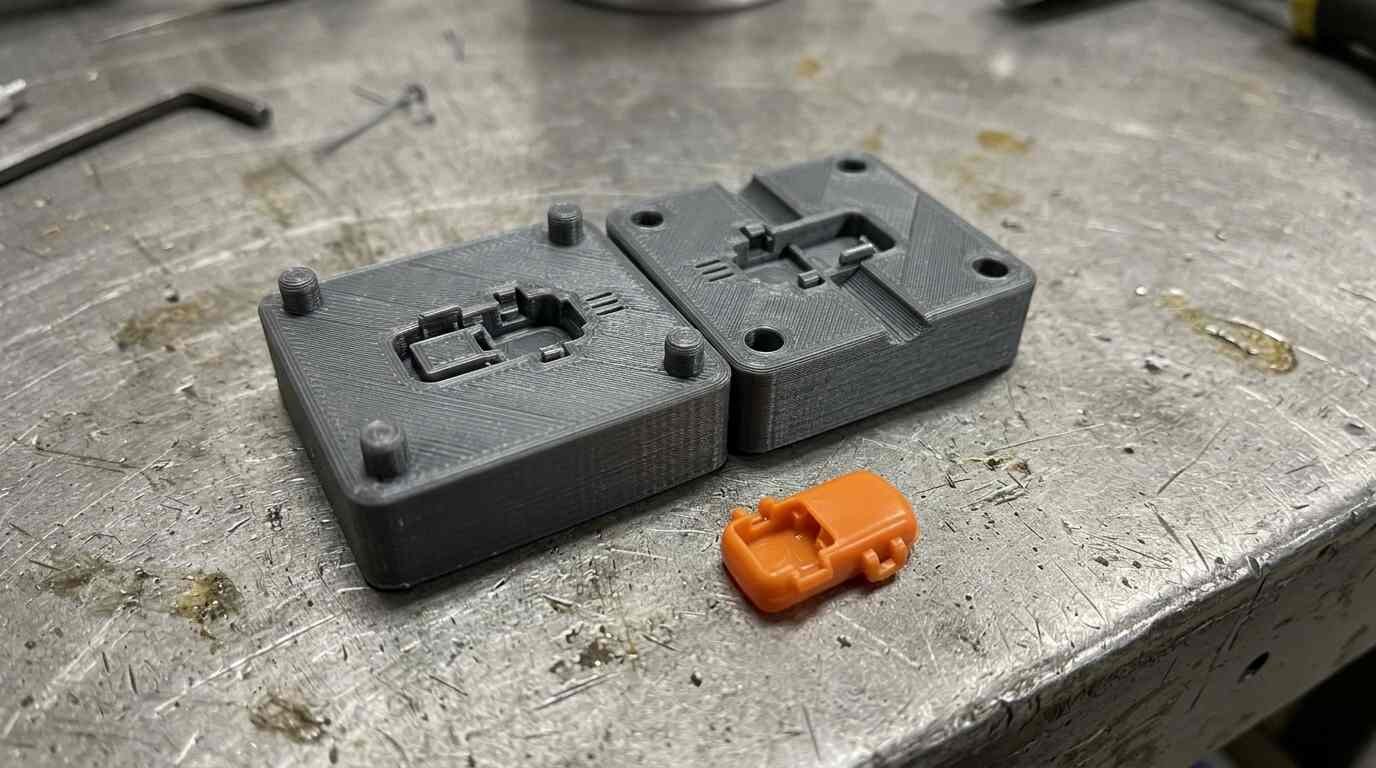
The NOVA-60 uses what the company calls a Universal Mold System. It accepts mold inserts made by high-resolution SLA or FDM printing, as well as machined aluminum inserts on the same platform. Polyformnext quotes the production time of a prototype mold as a few hours instead of several weeks, depending on the application. Plasticpreneur’s own caution, as relayed by Makers101, is that printed inserts suit validation rather than volume production.
The reason is thermal. A printed polymer insert is a poor conductor, so heat leaves the molten part slowly, and it softens as it heats. That is acceptable for a handful of shots and bad for hundreds. Neither source gives a shot life for printed inserts, so any figure you see elsewhere should be treated as unverified.
Working through the numbers
Start with pressure. 200 bar is 20 megapascals, which is 20 newtons per square millimeter. A mold half with a projected cavity area of 10 square centimeters, which is 1,000 square millimeters, would see a separating force of 20,000 newtons if the full 200 bar reached the cavity. That is about 2 tonnes of force, and it is why clamp force matters: the mold has to be held shut against it. The clamping force of the NOVA-60 is not stated in either source, so this is an illustration of scale, not a spec. Real cavity pressure is lower than injection pressure because of flow losses.
Next, throughput. The figures given are about 7 cycles per hour and roughly 0.5 kilograms per hour. Seven shots at the 60 gram maximum is 420 grams, so the 0.5 kg figure appears to be rounded up or based on a slightly different assumption; the sources do not explain it. 60 divided by 7 is about 8.6 minutes per cycle, which is slow by production standards but consistent with a hand-cranked prototyping tool.
Finally, lease versus buy. At €108 a month, the €6,990 price corresponds to roughly 65 months of payments if the lease had no interest or end value. Lease terms are not published in the sources I could open, so treat that as a rough comparison only.
Materials, and a gap in the record
The 350 degree ceiling matters because it decides which plastics are in reach. Polyformnext says the maximum suits engineering polymers. Makers101 notes that the compatible-material list is not given and that the article refers only to your target polymer. That omission is significant: the whole point of a validation machine is to mold the real material, and different polymers need different melt temperatures, mold temperatures and drying.
A tool temperature control unit is planned, with no firm timeline. Without one, mold temperature is whatever the insert and the ambient conditions give you, which affects shrinkage, surface finish and warpage. For a printed insert in particular, temperature control is a double problem, since the insert both limits heat transfer and tolerates little heat.
Safety is the other practical issue. At up to 350 degrees Celsius, polymers can release vapors, and the maker’s answer is the carbon and HEPA exhaust at the source. No capture efficiency or test data is given, so how well it works with a specific resin is unstated.
Who would use it
The stated use case is checking whether a design molds correctly before committing to a steel tool: wall thickness, gate location, ejection, shrinkage. Printed inserts make early iterations cheap. A designer can print a revised insert overnight and mold again in the morning.
It is a poor fit for anyone who wants parts to sell. Cycle time, shot size and insert durability all rule that out, and the vendor says so. Anyone hoping to regrind scrap in-house should note that a laboratory cutting mill for internal recycling is a planned add-on, not a shipping product.
A manual drive trades speed for simplicity. There is no hydraulic pump to maintain, and the only electrical load is heating. The cost is that the operator becomes a process variable: a person turning a wheel cannot hold identical pressure and hold time on every shot. The sources do not say whether the machine displays or limits injection pressure, so the repeatability of a hand-cranked cycle is an open question, and repeatability is what a validation tool is bought for.
What to check before relying on the claims
Four questions are open. What is the clamp force, and what projected area does it support? What shot life should you expect from a printed insert in a named material? Which polymers have actually been molded, and with what insert material? And what are the lease terms? The company is the source for the customer list and shipment counts, so those deserve the usual caution until a customer confirms them.
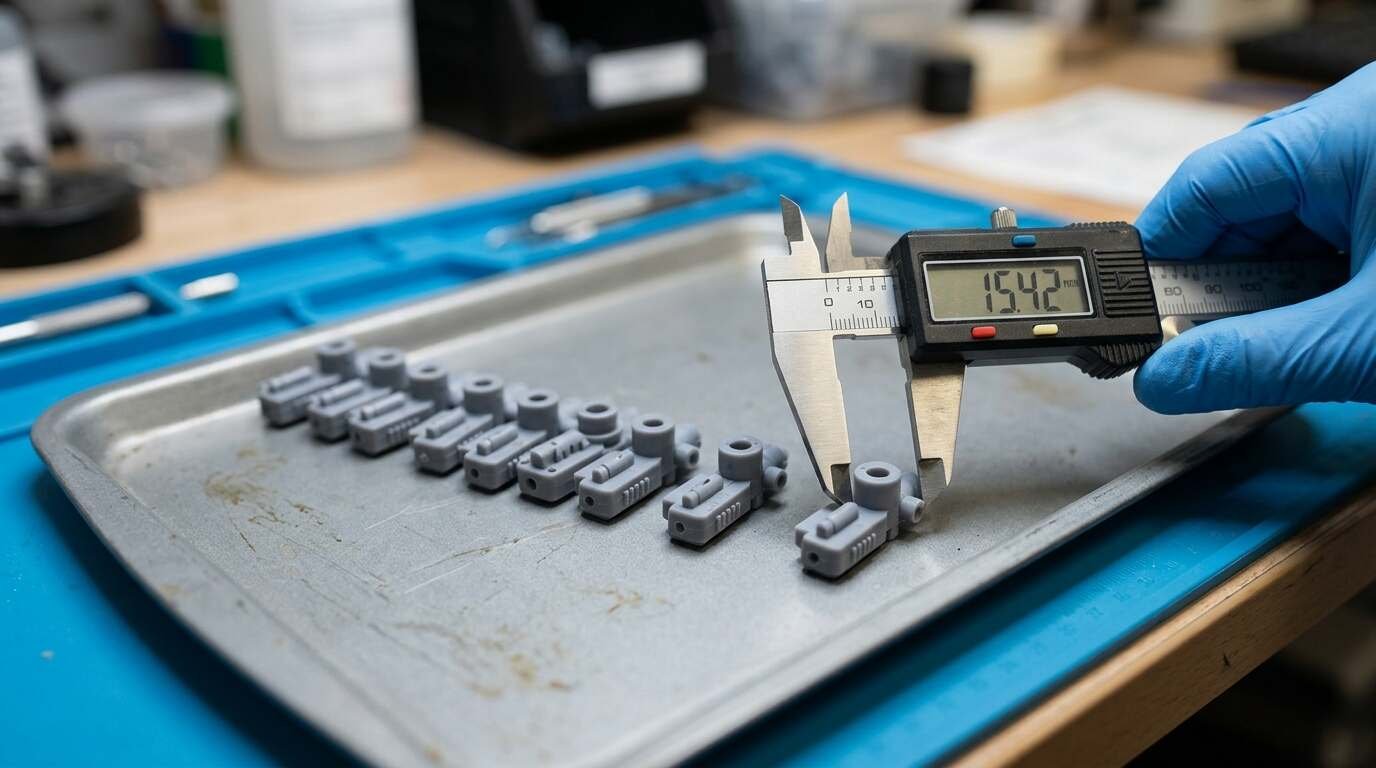
There are also no independent test reports in the sources I found. Part quality, dimensional repeatability and how well hand-cranked pressure holds during packing are all unmeasured in public.
Frequently asked questions
What is the NOVA-60?
A benchtop injection molding machine from Plasticpreneur, sold under the Polyverse Solutions brand, with a 60 g maximum shot, up to 200 bar injection pressure from a manual handwheel, and a 350 degree Celsius maximum temperature.
How much does the NOVA-60 cost?
Makers101 cites a list price of €6,990 excluding tax and shipping from Plasticpreneur’s spec sheet, and leasing from €108 per month. All3DP is reported to list about $8,150, which is not an official price.
Can you really mold plastic in a 3D-printed mold?
The vendor says yes, using SLA or FDM inserts, but advises that printed inserts suit validation, not volume production. No shot-life figure is published in the sources reviewed.
What is the clamp force of the NOVA-60?
Not stated in the sources I could open.
A machine like the NOVA-60 does not replace a molding shop; it replaces a week of waiting. The useful part is the loop it closes: print an insert, mold a real part, find the problem in the gate or the wall, reprint. Whether that loop works for your polymer depends on data that has not been published yet, namely clamp force, material list and insert life. If you are tempted, ask for those three numbers in writing first. If the answers are good, the €6,990 price looks modest next to even one quote for a prototype aluminum tool, but that comparison is yours to price, not something the sources supply.
Sources