Bose wired earbuds add active noise cancelling over USB-C with no battery. Price, specs, the 24-bit/48kHz limit, and what Bose has not said yet.
The new Bose wired earbuds do something that sounds contradictory: they cancel noise actively, yet they contain no battery and never pair with anything. Bose announced the Noise Cancelling Wired Earbuds on September 28, 2026, priced at $99, with shipping scheduled to begin October 15.
The trick is that the earbuds borrow everything from the device they plug into. Power comes over USB-C, audio travels as digital samples, and the noise cancelling runs on Bose electronics rather than on the phone. That design has consequences for audio quality, compatibility and cost, and not all of them are documented yet.
This post sticks to what Bose has published and what can be calculated from it. Where the company has been silent, such as driver size or measured noise reduction, the text says so instead of guessing.
What Bose actually announced
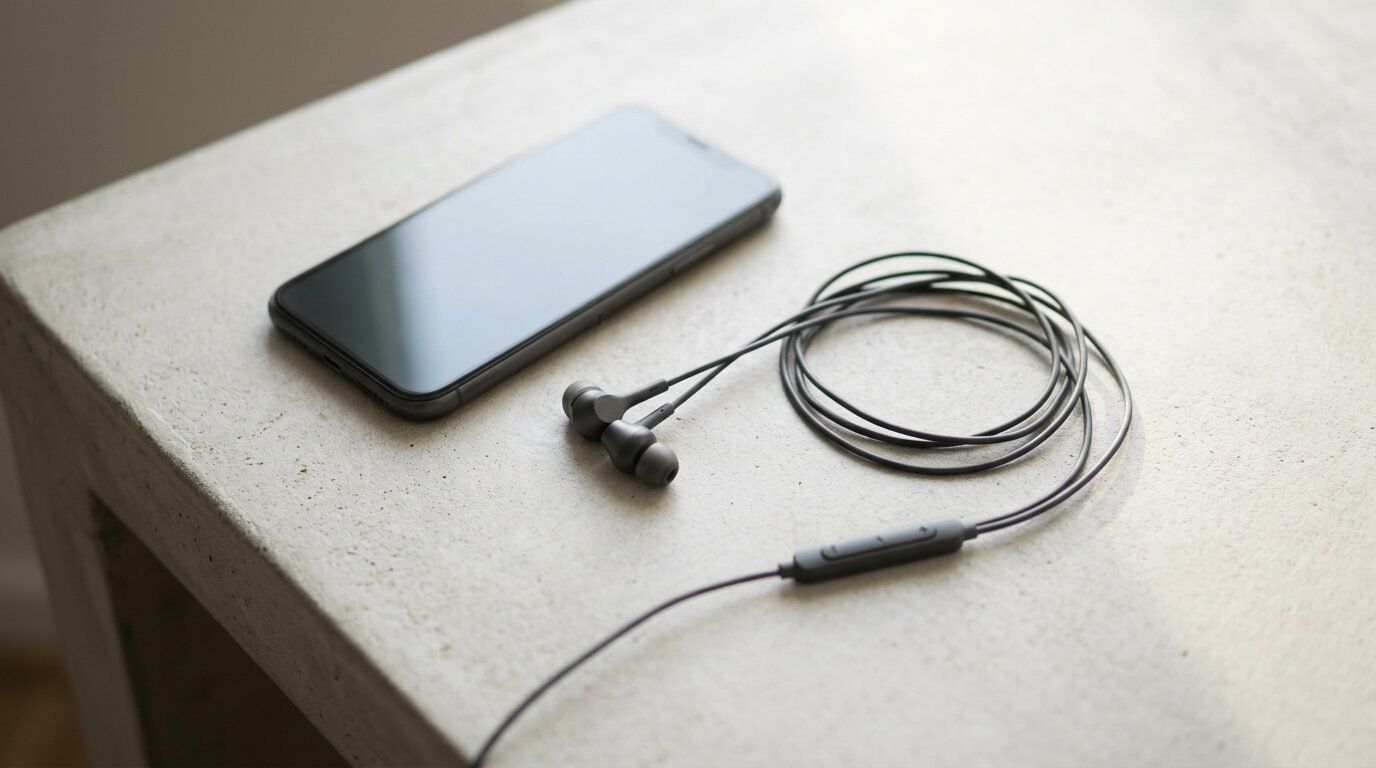
According to Bose’s press room, the earbuds connect to compatible phones, tablets and computers through USB-C. There is no Bluetooth radio, no pairing step and no companion app. The price is $99. Preorders opened September 28 for My Bose members at Bose.com and Best Buy, and shipments start October 15. Three colors are listed: Black, White Smoke, and a limited-edition Dewdrop Mint.
Gear Patrol, in a roundup of recent gear, describes them as the first new wired earbuds from Bose in more than a decade. That is the outlet’s framing rather than a statement from the company, so treat it as context, not as a verified product history.
- Price: $99 (US), preorder from September 28, shipping from October 15
- Connection: USB-C only; Bose says conventional non-USB adapters cannot be used
- Power: drawn from the host device, no internal battery, nothing to recharge
- Noise cancelling: Bose QuietControl, four microphones (two per earbud), modes called Quiet, Aware and ANC Off
- Audio path: Bose SoundDesign DSP, USB Audio Class 2, fixed 24-bit/48kHz output
- Cable and fit: 4.2 ft cable, small/medium/large silicone tips, optional medium and large stability wings
- Durability: IPX4 water resistance, zippered carry case included
- Controls: inline remote with tactile buttons for volume, playback, calls and noise-cancelling modes
Why a battery-free noise canceller is unusual
Noise-cancelling headphones are normally wireless because the electronics need power and Bluetooth needs a radio. Wired noise cancelling has existed for years on 3.5 mm headphones, but those designs carry a small battery in the cable or the cups, which is one more thing to charge and eventually replace.
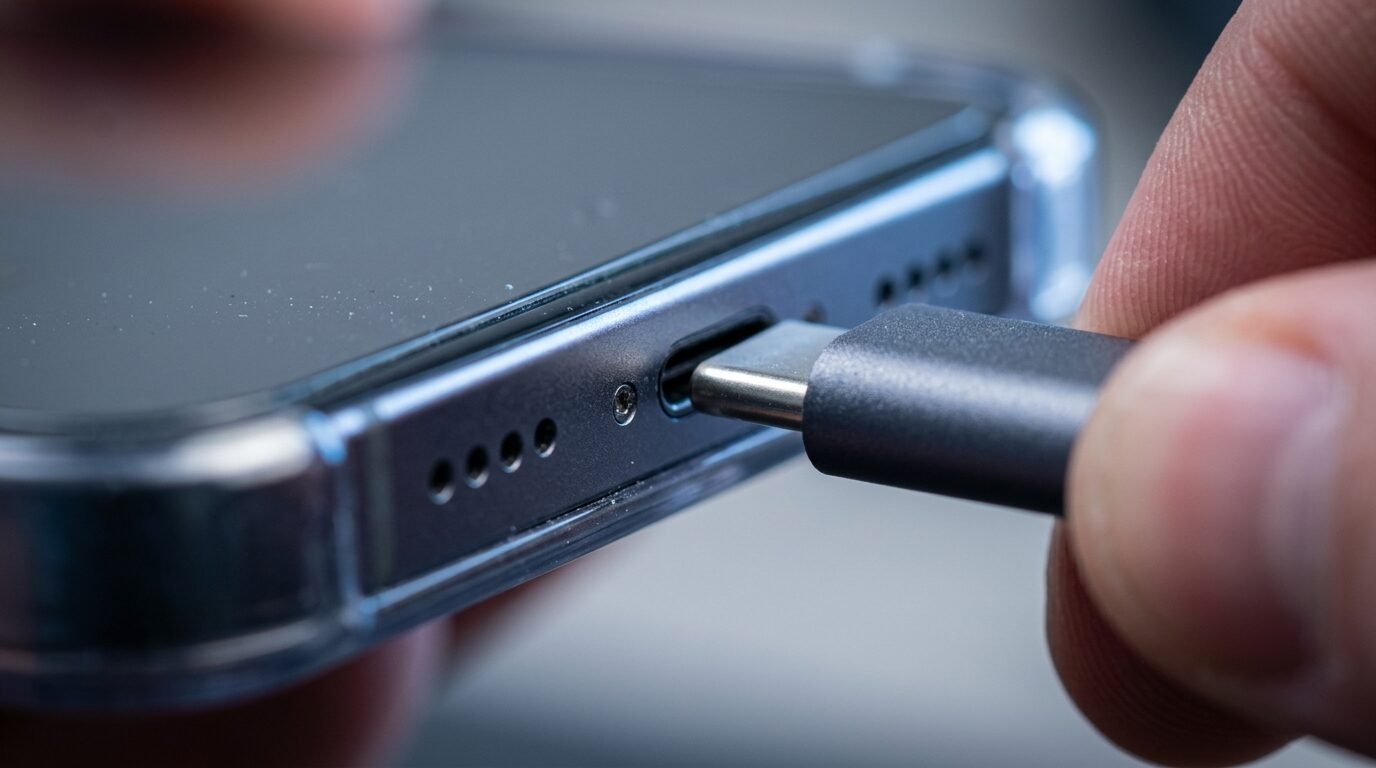
A USB-C port can supply 5 volts to an accessory, and the USB-C connector also carries digital audio, so a pair of earbuds can contain a tiny DAC, amplifier and signal processor and take their energy from the phone. Bose does not publish a current draw. The company does say the earbuds use no internal battery, including for the noise cancelling itself, which means the draw is small enough for a phone port to sustain.
The cost is that the earbuds become a USB audio device. They announce themselves to the host as a sound card, and the host sends samples to them instead of analog voltage. A phone with only a headphone jack, or an older laptop with USB-A ports and no adapter, is out. Bose goes further and states that ordinary non-USB adapters will not work, which presumably refers to passive 3.5 mm dongles and similar parts.
How the noise cancelling works with two microphones per side
Active noise cancelling plays an inverted copy of unwanted sound so that the two waves sum to something close to zero. Bose says each earbud carries two microphones that continuously monitor the surrounding sound. The company’s page and the coverage I read do not say where the microphones sit. In most designs one faces outward to hear noise before it reaches the ear (feedforward) and one faces the ear canal to measure what is left (feedback), but that arrangement is common practice, not a confirmed detail of this product.
The difficulty is timing. A tone at 1 kHz has a wavelength of about 34 cm and a period of 1 millisecond. If the processing and speaker path adds 50 microseconds of unwanted delay, the anti-noise signal is shifted by 18 degrees of phase. The residual after summing equal-amplitude waves with a phase error of that size is 2 sin(9 degrees), about 0.31 of the original, or roughly 10 dB of reduction. Cut the phase error to 5 degrees and the residual drops to about 0.087, or 21 dB. Cut it to 2 degrees and you get roughly 29 dB.
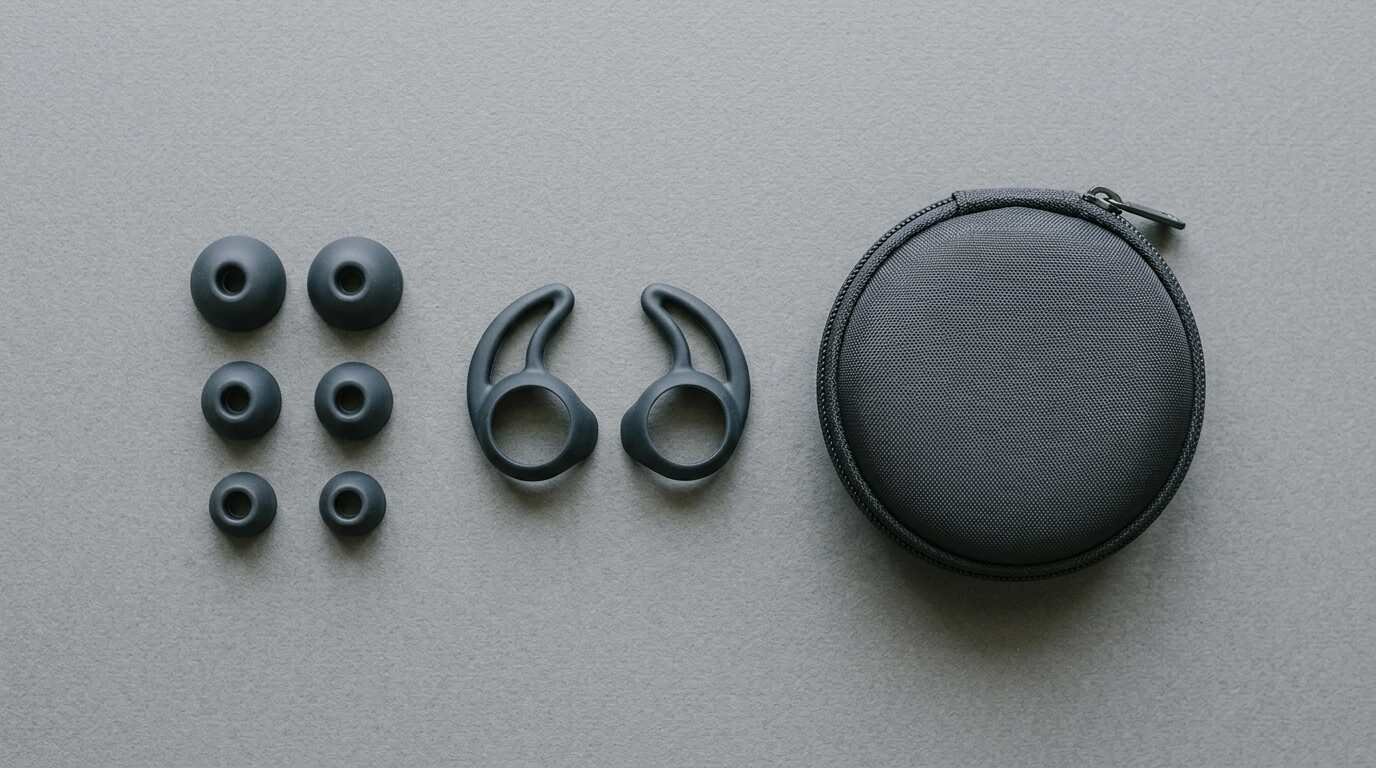
That arithmetic explains why cancelling works well on low, steady sounds such as engine rumble and poorly on sharp, high-pitched ones: the same delay is a larger phase error at higher frequencies. It also explains why a good seal matters. A leaky eartip lets low-frequency noise bypass the electronics, which is probably why Bose ships three eartip sizes and optional stability wings.
Bose offers three modes. Quiet engages the cancelling, Aware lets surrounding sound in so you can hear announcements or traffic, and ANC Off turns the earbuds into a plain wired pair. A dedicated call microphone sits on the back of the inline remote, placed to reduce the rustle of the remote against clothing.
The 24-bit/48kHz ceiling in numbers
The most technical line in Bose’s announcement is about audio format. The earbuds use USB Audio Class 2, which lets the host offer many sample rates and bit depths, and Bose says they accept any of them. Inside, however, playback is fixed at 24-bit/48kHz.
Stereo audio at 24 bits and 48,000 samples per second per channel works out to 2.304 megabits per second of raw data. CD audio at 16 bits and 44.1 kHz is 1.411 megabits per second. A 24-bit/96kHz file would need 4.608 megabits and a 24-bit/192kHz file 9.216 megabits. The fixed internal rate means anything above 48 kHz is converted down before it reaches the drivers, and CD-rate material must be resampled upward, because 48,000 divided by 44,100 is not an integer ratio (it reduces to 160/147).
In practical terms, Bose says the earbuds support lossless listening, and for 16-bit/44.1kHz music that holds, since 24/48 has more headroom than CD. For true hi-res files the extra resolution is discarded. Given the size of the earbud drivers and the noise floor of a train or a street, that is unlikely to matter to most listeners, but it is a limit, and anyone shopping on the strength of a hi-res label should know it exists.
The other gain is latency. A Bluetooth link must compress, buffer and transmit audio, and the delay is audible when lip-sync matters. Bose notes that the direct connection keeps video, gaming and recording in sync. It gives no millisecond figure.
What the $99 price tells you
At $99, the earbuds sit well below wireless noise-cancelling models, but the comparison is not clean. A wireless pair includes a battery, a charging case, a Bluetooth chip and often an app. Those parts are absent here, and the savings probably show up in the price. What is added is the cost of USB audio and ANC processing in a small inline module. Bose has not published a bill of materials, naturally, so this is reasoning from the architecture, not a known cost split.
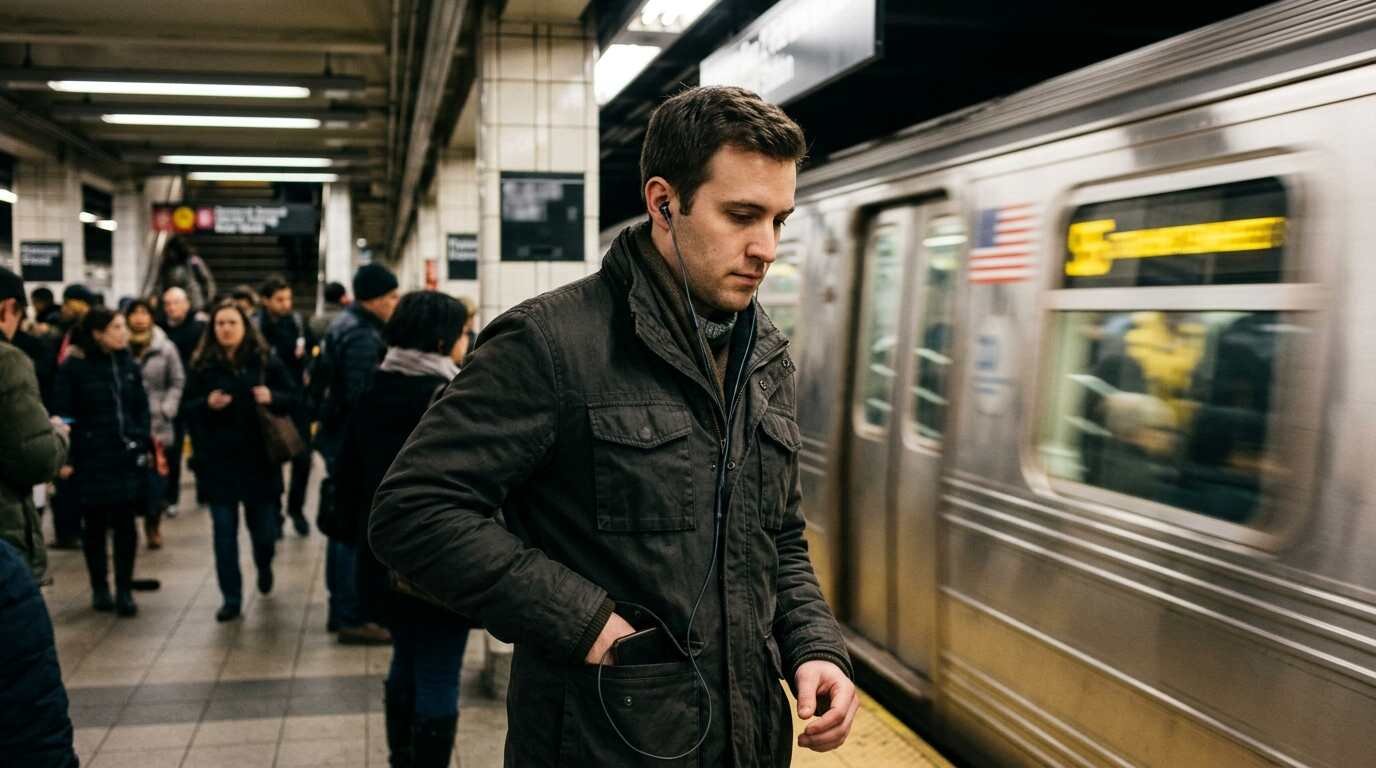
Android Central, which covered the announcement, notes that wired earbuds have usually lacked ANC, while wireless pairs offer it. The wired connection’s lower latency is the other half of the pitch. These are earbuds for the person who edits video on a laptop, takes calls on a phone, or flies with a tablet and does not want another battery to track.
What is still unknown
Several basic details were not on the pages I could open. Bose does not state driver size, frequency response, weight or any measured noise-reduction figure in decibels. Independent testing does not exist yet because shipments start October 15, so claims about ANC strength should be treated as unverified until reviewers measure it.
Compatibility is the larger open question. Bose says the earbuds work with USB-C phones, tablets and computers. Whether every USB-C source behaves the same way is untested: some devices limit accessory power, and operating systems differ in how they handle USB Audio Class 2 devices and in-line button signals. Android Central did not specify iPhone or Android support, and neither did the Bose announcement as summarized. Check the compatibility list on the product page before buying, particularly if you use an older USB-C laptop or a locked-down work device.
It is also unclear when sales open beyond My Bose members, and whether the limited-edition Dewdrop Mint color carries the same price.
Who should wait for reviews
The earbuds are an interesting bet because they remove the battery from a category where battery degradation is the most common reason a pair gets thrown away. If the ANC performs, they could be a durable commuter tool. If it does not, they are an in-line DSP bolted to ordinary wired earbuds.
Waiting a few weeks for measured noise-reduction curves and a compatibility report is the sensible course. Preorders are fine for people who already know their devices use USB-C and who value the latency benefit.
Frequently asked questions
Do the Bose wired earbuds need a battery or charging?
No. Bose says they have no internal battery, including for the noise cancelling, and draw power from the connected device over USB-C. There is nothing to charge or pair.
What audio quality do the Bose wired earbuds support?
They use USB Audio Class 2 and accept source material at any sample rate and bit depth, but playback is fixed at 24-bit/48kHz. Bose states that they support lossless listening, within that limit.
When can I buy the Bose Noise Cancelling Wired Earbuds?
They were announced September 28, 2026 at $99. Preorders opened that day for My Bose members at Bose.com and Best Buy, and shipments begin October 15.
Will they work with a 3.5 mm headphone jack?
Bose says they connect through USB-C and that conventional non-USB adapters cannot be used. A source with a headphone jack only will not work.
Battery-free noise cancelling is a small engineering bet with a real payoff: no charging, no pairing and no cell to wear out. Whether Bose delivered cancelling worth $99 is a question only measurements can answer, and those arrive after October 15. Until then, the earbuds are best read as a statement that USB-C has matured enough to carry power, audio and a processor down one thin cable.
Sources