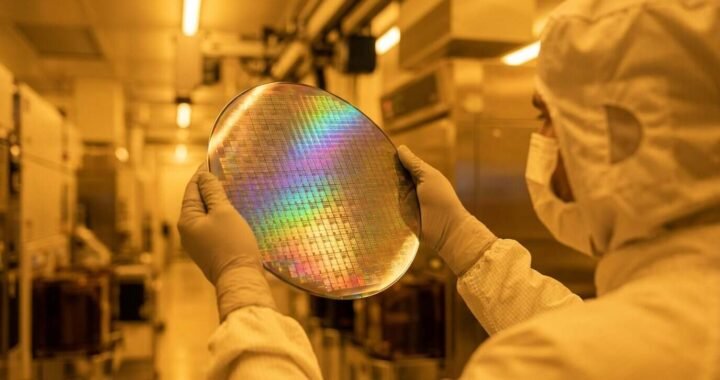

The Nemotron IMO result is notable less for the medal than for the paperwork around it. NVIDIA reports that a system built on its Nemotron 3 Ultra model scored 30 out of 42 at the 2026 International Mathematical Olympiad, one point above the gold threshold of 29, and it has released the specialist checkpoints, training data, code and submitted proofs.
A companion result covers the International Olympiad in Informatics (IOI). Both are described in an NVIDIA post on Hugging Face dated October 7, 2026, with an arXiv paper on the IMO side submitted September 9. This article explains the training and inference recipe, works through the numbers, and notes what the claims do not cover.
The headline results and their fine print
On the IMO, the system produced natural-language proofs that official IMO graders marked, according to the post. It earned full credit on four of the six problems. Four full-credit solutions are worth 28 points, so the remaining two points came from partial credit on the other two problems (my arithmetic; the post does not break this down). The total of 30 clears the gold line of 29 by one point.
On the IOI, a model called Nemotron-3-Ultra-CC scored 535.4 out of 600 against a gold threshold of 361.12, and the post says the top human score was 498.27. The caveat matters here: the run was live and prospective, under the same time, internet and submission limits as human contestants, but the authors call it an unofficial, unsupervised benchmark that was not included in the official IOI ranking. A score above the best human is therefore a comparison, not a placing.
A one-point margin on the IMO is thin. Marking is done by humans with a rubric, and a single partially credited problem could move the total. The result is best read as consistent with gold-level performance, not as a precise measurement of capability.
Two model sizes and what active parameters mean
The IOI work uses two sizes. Nemotron-3-Nano-CC has 30 billion total parameters with 3 billion active, and was trained with supervised fine-tuning (SFT) and reinforcement learning (RL). Nemotron-3-Ultra-CC is described as 550 billion total with 55 billion active and was trained with SFT only. Both ratios work out to 10 percent active.
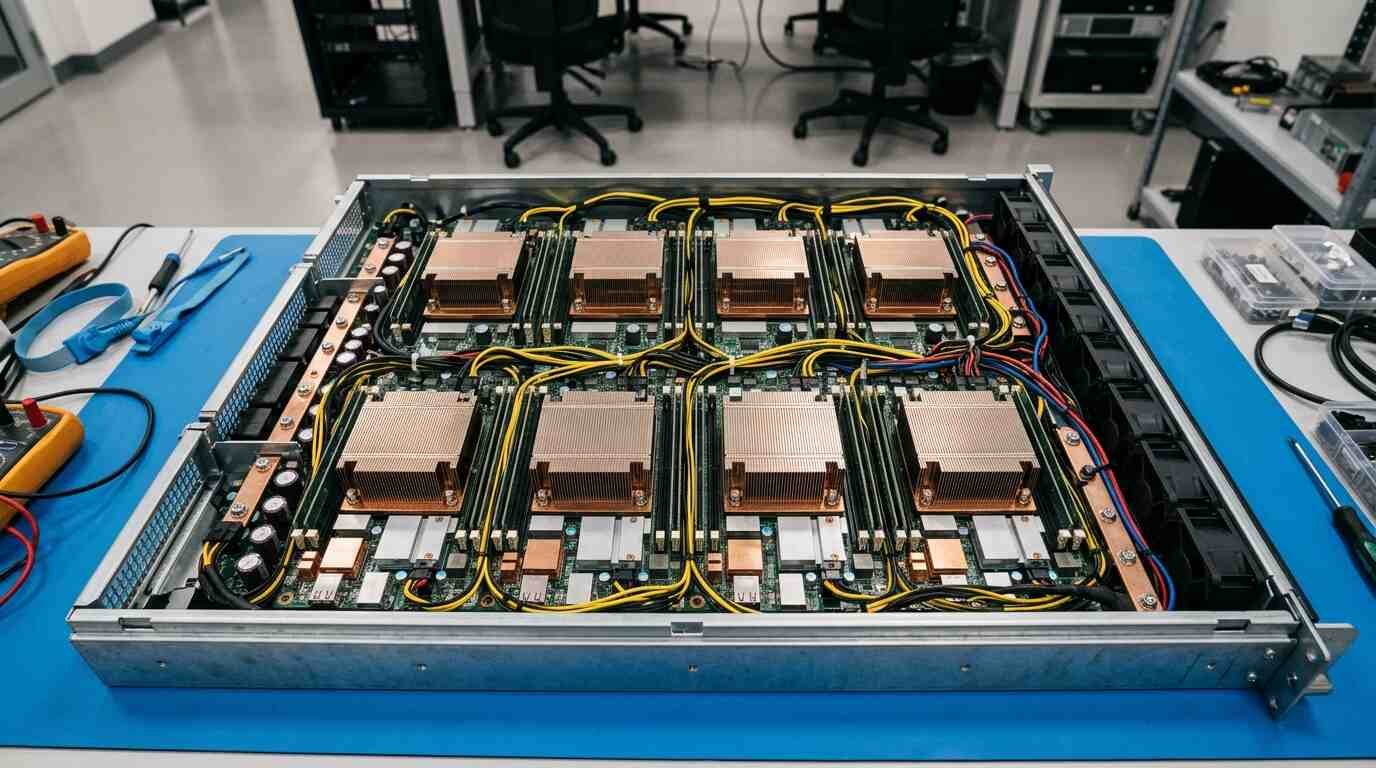
Total versus active parameters is the language of mixture-of-experts models, in which a router sends each token through a small subset of the network’s expert blocks. Memory must hold all the parameters, but the arithmetic per token touches only the active ones, so a 550B model can run closer to the compute cost of a 55B dense model. That explanation is general background about the architecture family; the post does not elaborate on it.
One discrepancy: the Hugging Face model card for the NVFP4 variant of Ultra-CC lists 335B parameters, while the article says 550B. The post does not explain it. A quantized variant might be a reason, but this is unconfirmed.
What the SFT data looked like
For the IMO, the authors started with Nemotron 3 Ultra and trained two specialists, one with SFT and one with RL. The SFT set had 414,890 quality-filtered examples across 15,818 unique proof problems, or roughly 26 examples per problem (my division). That ratio indicates many distinct solutions, critiques and revisions per problem, not one canonical answer.
The examples covered four skills: proof generation, refinement, verification and meta-verification. The last is the least familiar. A verifier reads a proof and reports flaws; a meta-verifier judges whether the verifier’s critique is itself correct. Training on all four teaches the model to build an argument, find gaps in it, respond to criticism and judge when a proof is complete. The same model is then used in each role at inference time.
For RL, the team selected 9,597 proof problems near the model’s capability frontier. That choice is standard practice and sensible: problems the model always solves give no learning signal, and problems it never solves give none either. Only those in between produce a gradient worth following.
The generate, verify, refine loop
Training is half the system. The inference pipeline runs entirely in natural language, with no formal prover, external tools or internet access. For each problem, models generate candidate proofs, score them, write critiques and refine the most promising attempts. Three Nemotron 3 Ultra checkpoints take part: the general-availability model, the SFT specialist and the RL specialist. A separate high-compute stage then chooses each final submission.
The authors report that combining the SFT and RL checkpoints helped more than drawing more samples from a single checkpoint. In their development runs, the SFT checkpoint was strongest in the first search round, while the RL checkpoint had the best single-checkpoint result overall. Diversity, in other words, bought more than volume.
This matters for cost. Test-time compute is not free, and the post notes that the IMO submission depended on that high-compute selection stage. It does not give a total compute figure in the text I read, so the cost of a gold-level answer is not stated.
Working through the IOI numbers
The IOI section offers a rare look at where gains come from, using IOI 2025 as a development set. The Nano model scored 130 points before post-training, 280 after SFT and 291 after RL. SFT supplied 150 of the 161 points gained from training, about 93 percent (my arithmetic), and RL added the remaining 11.

Then the inference strategy, which the authors call GenCorrect, an iterative generate-evaluate-refine procedure. With it, Nano reached 468, above that year’s gold threshold of 438.3. Relative to the 291 post-RL score, GenCorrect added 177 points, more than all of the training combined. Ultra-CC reached 502 on the same test with the same strategy.
Another finding changed their plan. One SFT epoch on Ultra beat the fully post-trained Nano across IOI, ICPC and LiveCodeBench Pro. The reasoning is that scale gave more than additional training did, which pushed them to put effort into a competition-specific Ultra-CC for IOI 2026. The data behind that model: 22,000 curated competitive-programming problems plus synthetic reasoning traces. On the live 2026 contest, with SFT plus GenCorrect, the Ultra-CC result was 535.4.
- Nano before post-training: 130 points (IOI 2025).
- After SFT: 280. After RL: 291.
- With GenCorrect: 468 against a gold threshold of 438.3.
- Ultra-CC with GenCorrect: 502 (IOI 2025), then 535.4 of 600 (IOI 2026, unofficial).
What is open and what is not
The release is more complete than most. The Nemotron Labs IMO 2026 collection contains the SFT and RL checkpoints and both training datasets, plus Nemotron-IMO-Bench, a set of 200 olympiad-level problems. Code lives in the NeMo-Skills repository, including the IMO inference pipeline, prompts and the submitted proofs, along with an IOI evaluation pipeline. An NVFP4 quantized version of Nemotron-3-Ultra-CC is on Hugging Face.
Open here means checkable. Anyone can read the submitted proofs and the prompts and see whether the loop is doing what the authors say. Whether the results reproduce on other hardware and budgets is a separate question, and the high-compute selection stage makes a full reproduction expensive.
How to read the claim
Three cautions apply. First, the authors report these results themselves; I found no independent audit. Second, the IMO number is a single contest with a one-point margin, and the IOI number is unofficial. Third, the authors argue that the medals came from co-designing the model, the data and the inference loop, not from fine-tuning or brute-force sampling alone. That is a reasonable reading of the ablations they describe, though a design where each piece has been tuned for contest-style problems may transfer less well to open-ended research mathematics.

The more durable lesson is about method. When a modest post-training budget and an iterative verifier can turn a general model into a competition-level specialist, the interesting variable is the verification loop. A system that can reliably tell a sound proof from a flawed one has a lever that pure scale does not give it.
Frequently asked questions
What score did Nemotron get at the 2026 IMO?
According to NVIDIA, 30 out of 42, with full credit on four of six problems. The gold threshold cited in the post is 29.
Is the IOI result official?
No. NVIDIA describes it as an unofficial, unsupervised benchmark run under contest-style limits, and it is not included in the official IOI ranking.
Can I download the models and data?
The post lists the SFT and RL checkpoints, both training datasets, a 200-problem benchmark and code in the NeMo-Skills repository as released, plus an NVFP4 version of Nemotron-3-Ultra-CC.
What does GenCorrect do?
It is an iterative test-time procedure that generates solutions, evaluates them and refines them over several feedback rounds. On IOI 2025, it lifted the Nano model from 291 to 468 points.
Medals are a convenient headline and a poor guide to what a model can do outside a contest. What stands out in this release is the decomposition: most of the training gain came from supervised data, a loop of generating and checking did more than the training did, and a mix of specialists beat more samples from one. If other groups reproduce that on their own problems, the field will have a cheap recipe for building domain specialists from open base models. If they cannot, the result will look like what it might be: a well-engineered system tuned for exactly two kinds of contest.
Sources