
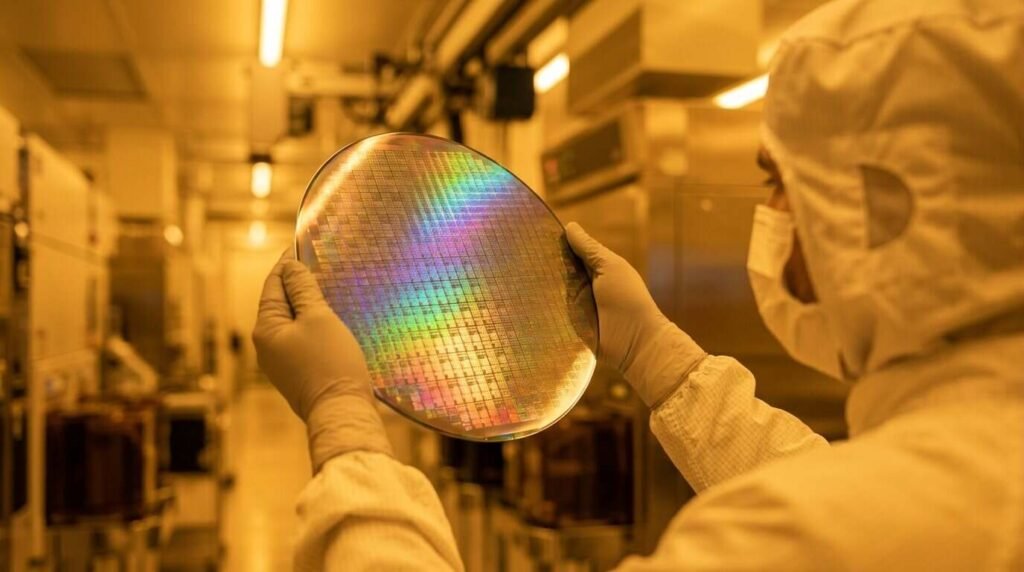
TSMC reported October revenue of NT$586.89 billion on Tuesday, a monthly record and a 59.7 percent increase from a year earlier, according to Seoul Economic Daily. A week before Nvidia reports quarterly results, the foundry that builds its processors has put a new ceiling on how much AI silicon the industry can ship in a month. Nvidia’s own management has said that ceiling, not demand, sets its sales.
Video: why TSMC’s CoWoS packaging limits Nvidia’s AI chip supply, from the Inside the Machine channel on YouTube. The revenue and guidance figures in this article come from the written sources listed below.
A record month at the foundry
October revenue rose 14.7 percent from September, which stood at NT$511.86 billion, per TipRanks. The figure passed the previous monthly high of NT$514.81 billion, set in August. Revenue for January through October reached NT$4.49 trillion, up 43.3 percent from NT$3.129 trillion a year earlier.
Market watchers quoted by Seoul Economic Daily attributed the gain to demand for chips on TSMC’s 2-nanometer process, the company’s most advanced. The September quarter had already beaten forecasts: revenue of $46.68 billion, up 41.1 percent, against an estimate of $45.67 billion, with earnings of $4.54 per share against an estimate of $4.46.
Currency affects how the record reads. TSMC reports in New Taiwan dollars, and outlets converted the October figure to between $17.88 billion and $18.4 billion depending on the exchange rate they used. The NT$586.89 billion figure and the percentage gains are the stable numbers, and the dollar conversions are approximations.
TSMC guided fourth-quarter revenue to $52.3 billion to $54.3 billion. The midpoint implies growth of 58 percent over a year earlier and 14 percent over the third quarter. October’s 59.7 percent year-over-year gain sits slightly above that midpoint pace, and the same report put analyst expectations for November and December at NT$538.1 billion to NT$569.9 billion a month.
That range is lower than October’s NT$586.89 billion. Monthly sales at a foundry move with shipment timing, so a high month followed by a lower one does not signal slowing demand by itself. It does show why a single month is a weak guide: the quarter, not the month, is the unit the guidance uses.
Nvidia’s side of the ledger
Nvidia’s most recent results, as summarized by Forbes, showed fiscal second-quarter 2027 revenue of $96.2 billion, up 105.9 percent from a year earlier, with data center revenue of $89 billion, up 18 percent from the prior quarter. Management guided the fiscal third quarter to $108 billion, plus or minus 2 percent. The next report is scheduled for November 17. The Compute & Networking segment supplied 89.6 percent of fiscal 2026 revenue.
Management expects roughly 70 percent revenue growth in fiscal 2028 and has said supply constraints limit that forecast. Supply, it said, is expected to remain a bottleneck at least through the end of fiscal 2028, which caps sales by manufacturing capacity rather than by orders.
The Rubin ramp, claim by claim
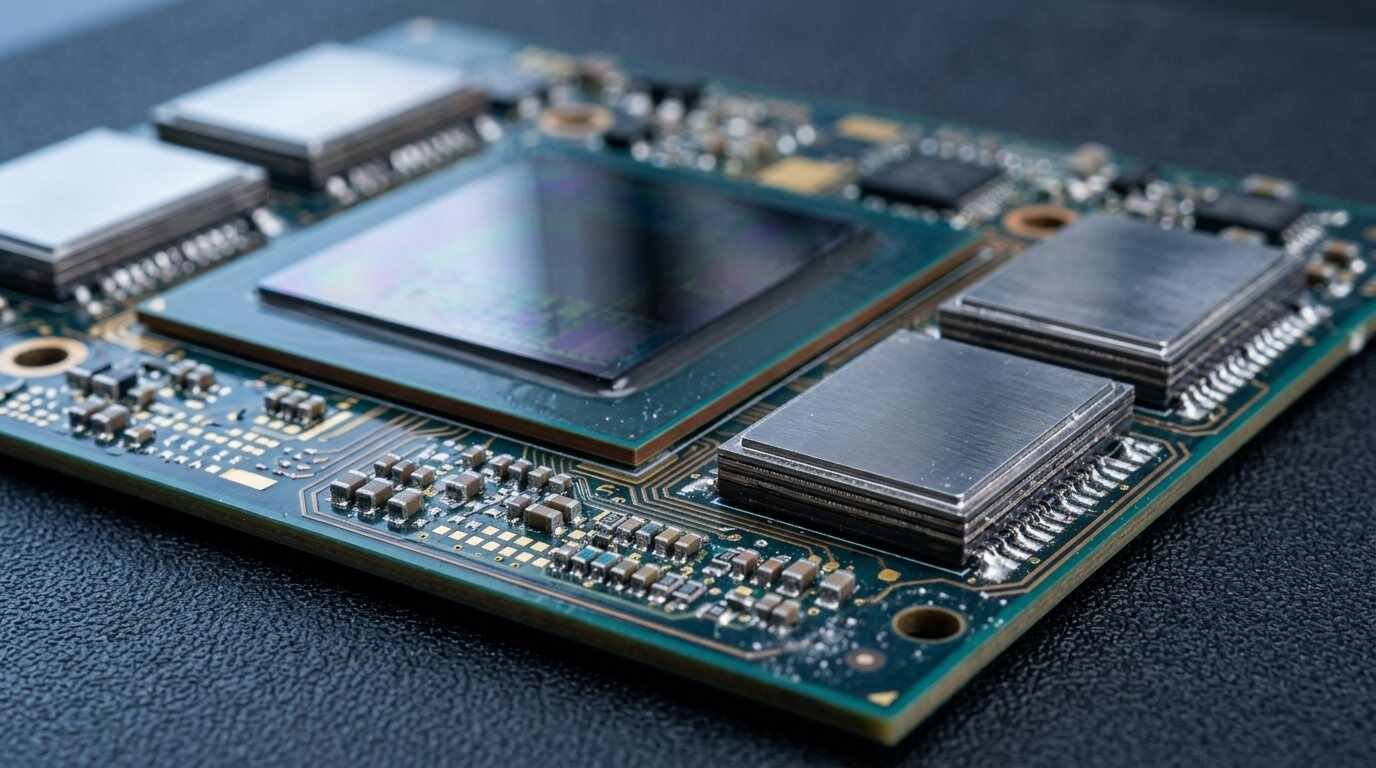
Vera Rubin is the platform driving the next stage. Nvidia’s May 31 release said it was ramping into full production, built from five rack types and supported by hundreds of supply chain partners across more than 350 factories in 30 countries. The company claims 10 times the agent throughput of the previous Grace Blackwell platform; the release marks this as a vendor claim, and independent measurements were not among the sources reviewed. It also described Spectrum-X Ethernet Photonics, co-packaged optics switches now in production, with CoreWeave, Lambda and Oracle Cloud Infrastructure named as early adopters.
The release said production shipments would begin “this fall.” According to Forbes, management later said they started in August, with purchase orders in hand from every major AI cloud, system maker and hyperscaler. Vera Rubin is expected to account for about 20 percent of data center revenue in fiscal third quarter, its first shipping quarter, and to be the fastest product ramp in company history. Forbes labels the last point a forecast, not a result.
Nvidia also put a figure on the economics: a $40 billion revenue opportunity per gigawatt of data center capacity built with Vera Rubin, against $25 billion for Blackwell. AWS plans to deploy an additional 2 million Nvidia GPUs from fiscal third quarter 2027 through fiscal second quarter 2029, along with Vera CPUs.

Packaging and memory set the ceiling
Packaging is where the physical limit is easiest to see. TipRanks reported in January, citing TrendForce and local media, that TSMC’s CoWoS packaging capacity could reach 125,000 to 130,000 wafers a month by the end of 2026. Morgan Stanley estimated that Nvidia had secured about 60 percent of 2026 capacity, roughly 700,000 wafers, mainly for Blackwell B200 and Rubin chips, with Broadcom at about 15 percent for Alphabet’s AI chips and AMD at about 11 percent.
TSMC’s chief financial officer, Wendell Huang, said on the fourth-quarter 2025 call that capital spending for 2026 would run $52 billion to $56 billion, with 10 to 20 percent going to packaging, testing and related work. Advanced packaging made up about 8 percent of 2025 revenue and was expected to exceed 10 percent in 2026. The allocation percentages are analyst estimates rather than company disclosures, and they date from January, so they indicate direction more than an audited split.
Management said memory prices have risen more than it expected. It guided gross margin to bottom at 71 to 72 percent in fiscal fourth quarter 2027, then settle at 72 to 73 percent in fiscal 2028 after announced price increases take effect. The reasons for the squeeze are laid out in x9m8’s earlier piece on the memory supercycle at Samsung and Micron.
TipRanks, citing The Information, reported that TSMC is considering entering advanced memory by making 3D DRAM at Nvidia’s request, weighing new plants or buying an existing site. That would put the foundry in competition with Samsung, SK Hynix and Micron. The report is unconfirmed by TSMC in the material reviewed, and it shows where the pressure lands when the existing suppliers cannot add capacity fast enough.

AMD’s quarter as a second reference point
The same capacity pool feeds Nvidia’s main rival. AMD’s release of November 3 reported third-quarter revenue of $13.4 billion, up 45 percent from a year earlier, with a record $8.5 billion from the data center segment, up 97 percent. The company credited demand for EPYC server processors and the launch of Instinct MI450 Series GPUs. GAAP gross margin was 54 percent.
AMD said Anthropic, Meta, Microsoft, OpenAI and Oracle Cloud Infrastructure are running models and workloads on the first Helios rack-scale systems, which pair MI450 GPUs with sixth-generation EPYC processors. Its fourth-quarter outlook is revenue of about $17 billion, plus or minus 3 percent, which implies about 66 percent growth at the midpoint, with non-GAAP gross margin near 55 percent.
The comparison is useful because the two companies buy from the same foundry. A foundry month like October’s record is the sum of both customers’ orders and Apple’s, Broadcom’s and others’, and each one’s guidance has to fit inside what TSMC can build and package.
What the share price and the financing debate add
Nvidia’s shares closed on November 3 13.6 percent below their highest close of the past year, reached October 6. The one-year return to that date was 2.3 percent, against 11.9 percent for the S&P 500, and the stock traded at 25.9 times trailing earnings against 22.8 for the index, per Forbes. Trailing twelve-month revenue growth was 83.4 percent.
Outside skeptics have asked whether vendor financing props up AI spending. Management rejected “circular financing” claims on its call, saying frontier labs are buying capacity to meet immediate training and inference demand. The Forbes summary gives no figures on Nvidia’s financing commitments, so the question stays open. A related market test appears in x9m8’s report on the CoreWeave debt scare.
Nvidia’s November 17 report will test several of these figures at once: whether revenue lands near the $108 billion guidance, whether Vera Rubin reaches the roughly 20 percent of data center revenue management projected, and whether the gross margin path of 71 to 72 percent at the low point holds as memory costs rise. TSMC’s own fourth-quarter guidance of $52.3 billion to $54.3 billion gives an independent read on the same period, because the foundry’s revenue follows the chips Nvidia, AMD and others have ordered. Agreement between the two would support the supply-limited reading; a gap would point to timing or inventory.
For informational purposes only — consult a licensed attorney or financial advisor.
Sources
- Seoul Economic Daily, TSMC October revenue jumps 60 percent to record high on AI, November 10, 2026
- TipRanks, TSMC’s October revenue jumps 60% on AI demand, November 10, 2026
- Forbes, Can NVDA stock jump from here?, November 4, 2026
- TipRanks, TSMC ramps up AI chip packaging while Nvidia controls most 2026 capacity (updated January 20, 2026)
- AMD third quarter 2026 results, November 3, 2026 (via Earnings Whispers)
- NVIDIA Investor Relations, Vera Rubin ramps into full production, May 31, 2026
- Inside the Machine on YouTube