YouTube A/B testing is moving past titles and thumbnails. At Made on YouTube on September 23, 2026, the company announced that creators will be able to upload up to three cuts of one video and see which opening holds viewers best, alongside dynamic thumbnails that choose among three images. The reports I read disagree on […]
YouTube A/B testing is moving past titles and thumbnails. At Made on YouTube on September 23, 2026, the company announced that creators will be able to upload up to three cuts of one video and see which opening holds viewers best, alongside dynamic thumbnails that choose among three images. The reports I read disagree on launch timing, so this post focuses on how the mechanisms work and what each one can and cannot tell you.
From packaging to content
The earlier tests compared packaging. A creator supplied alternative titles or thumbnails, YouTube split impressions among them, and the variant with the best watch time per impression won. PPC Land reports that those tests ran for up to two weeks, applied the winner automatically, and were cancelled if you edited a title or thumbnail mid-test. Shelly Palmer, citing YouTube, says creators have run more than 40 million title and thumbnail experiments.
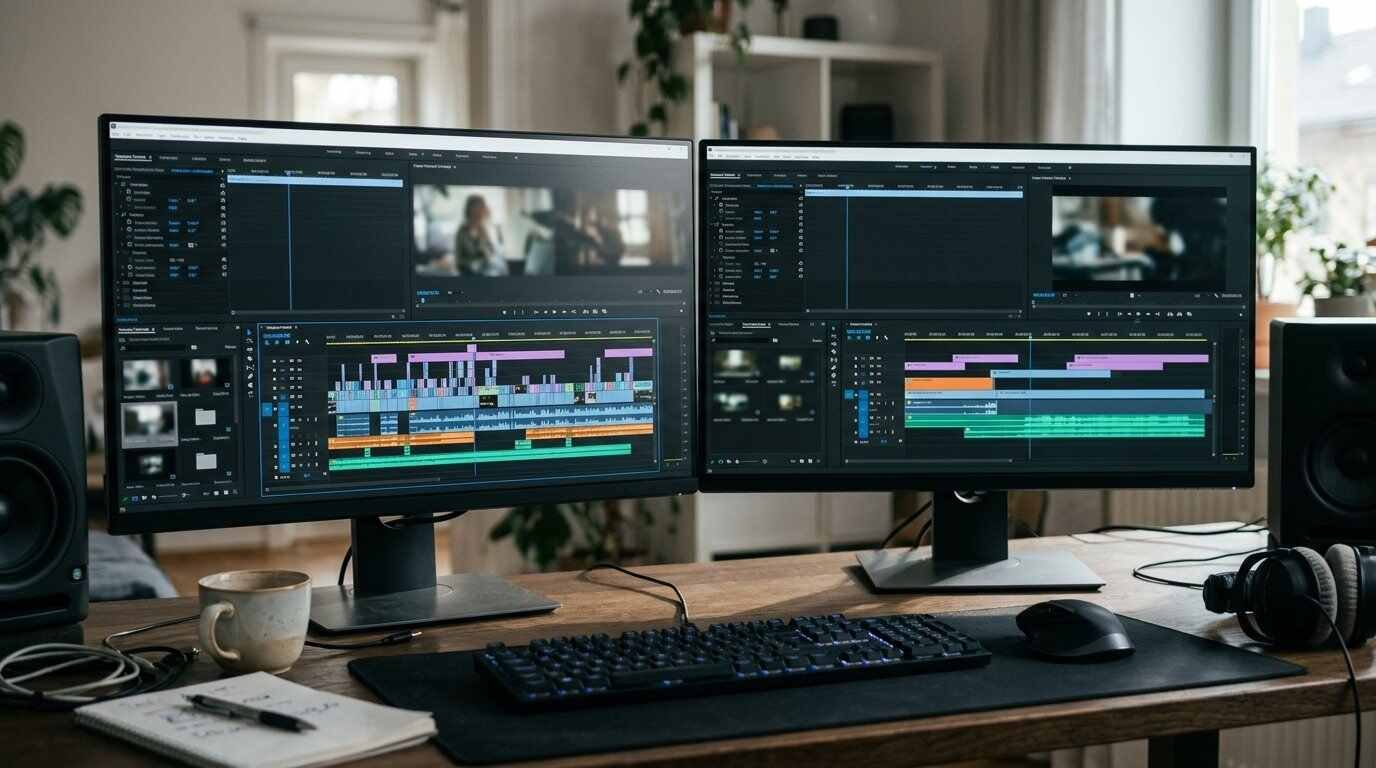
Cut testing changes the thing being varied. PPC Land describes a demo in a Creator Insider video from September 25 where two cuts differ only in how they begin, one with a dramatic reaction and the other with a question. The read-out is a retention curve for each cut. That is the right instrument for a hook, because a hook either holds the first thirty seconds or it does not, and the curve shows where viewers leave.
What each test can tell you
Thumbnail tests measure the click. Cut tests measure what happens after the click. A thumbnail that over-promises can win on clicks and lose on watch time, which is why YouTube’s thumbnail tests score watch time per impression instead of clicks alone. A cut test goes further and removes the packaging from the comparison, since every cut can sit behind the same title and thumbnail.
| Feature | What the sources say | Status reported |
|---|---|---|
| Title and thumbnail tests | Pick the variant with the highest watch time per impression and apply it automatically | Live; launch year differs by source |
| Video cut testing | Up to three cuts, compared on watch time share and retention curves | “Coming soon” (PPC Land) or 2027 (80.lv) |
| Dynamic thumbnails | Up to three thumbnails, the best shown to different audience segments | No rollout date given |
| Ask Studio background review | With permission, tests refreshed thumbnails on older uploads | Described as coming |
Dynamic thumbnails work differently from a test. A test ends and picks one winner. Per Shelly Palmer, dynamic thumbnails show the best of three options to different segments of the audience, which means no single winner is declared and the choice keeps adapting. Uppbeat words it as each viewer getting the thumbnail most likely to suit them. Those are not the same claim, and neither report explains how segments are defined. Treat the segment reading as the more conservative one.
To use a cut test well, change one thing. If cut A has a new opening and a new music bed and a tighter middle, a retention gap cannot be traced to any of them. Keep the body of the video identical, vary only the first stretch, and write down in advance what a win would look like. The retention curve is also easier to read when you overlay it on the script, so you can see which line or visual lost people.
Limits to plan around
Several basics are unpublished. PPC Land lists the unresolved items: test duration, how traffic is split between cuts, what happens to views and comments on the losing cuts, whether winners are applied automatically, and how sponsored videos and disclosure labels work across cuts. The last one matters. Shelly Palmer notes that auto-testing thumbnails on sponsored videos without brand approval could create contract problems, and the same logic applies to cut testing.
There is also a statistics issue that no announcement addresses. A small channel may not get enough impressions in a test window for a gap between two curves to mean anything. If one cut leads by a few points on a few hundred views, that can be noise. A sensible habit is to test only changes big enough to matter, such as a different first line or a cold open versus a title card, and to repeat a result before building a format around it.
Finally, the Shorts angle. 80.lv describes cut testing as available for Shorts, while PPC Land notes the narration mentioned both Shorts and long form and that Shorts custom thumbnails were excluded from earlier tests. Since most Shorts views come from the feed, where the hook matters more than the thumbnail, a hook test is a better fit there than a thumbnail test ever was.
If you want to prepare, write down two competing openings for your next video now, and record what you expect to happen. When the tool arrives you will have a hypothesis to check instead of a pile of curves.
Sources