


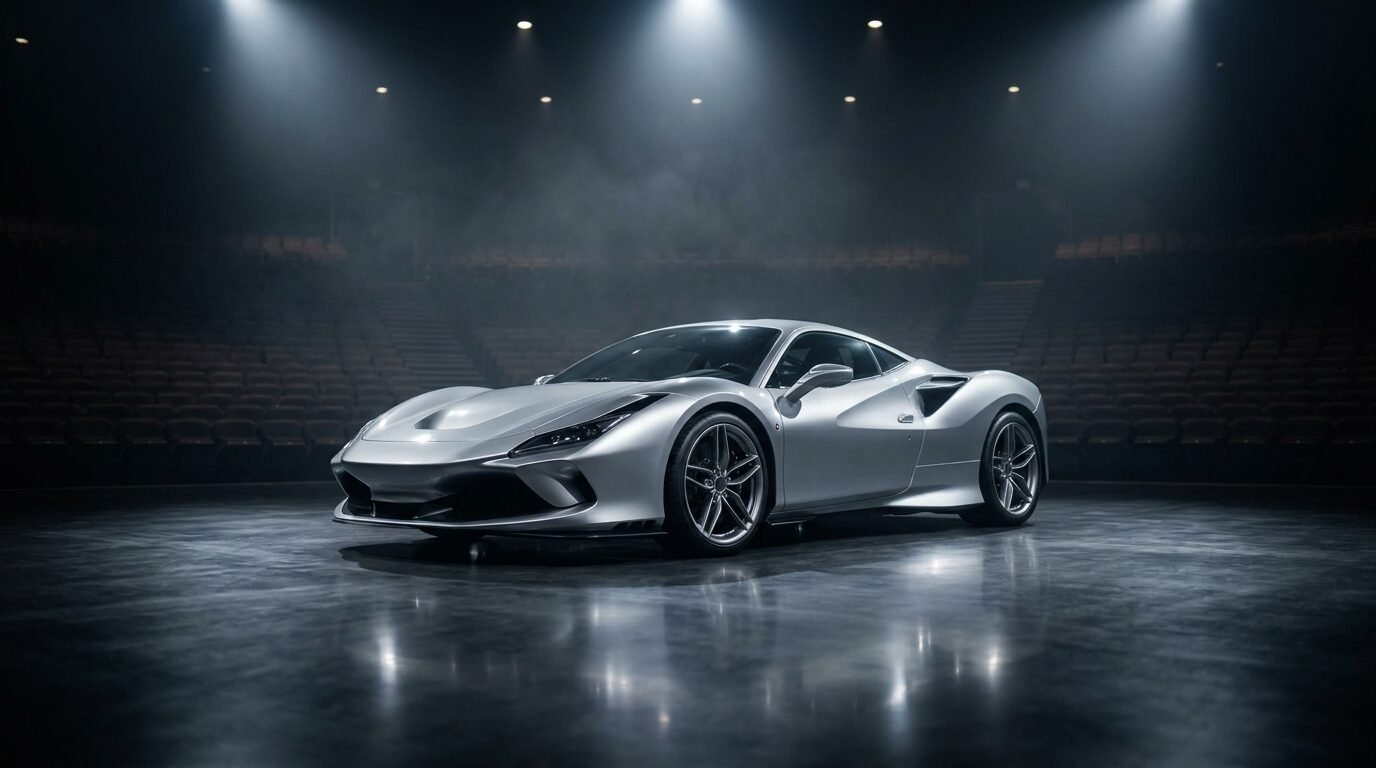
In the news: Tesla unveiled a second-generation Roadster with cold gas thrusters that can briefly lift and spin the car. Here is what was shown, what was not, and why no agency has clearly claimed oversight.
Tesla showed off a second-generation Roadster on Thursday at an event in Waco, Texas, and the part everyone is talking about is not the speed. The car has cold gas thrusters and what the company calls a multi-mode suction system, and together they can lift it briefly off the ground and spin it in mid-air, according to Associated Press reporting (AP via PBS NewsHour). Elon Musk posted on X that the future “does have flying cars,” and said consumer production will not begin until 2028.
That timeline, and a missing price, are the first reasons to keep the excitement in proportion. Tesla has not announced what the Roadster will cost, and AP’s account gives no range, battery or performance figures. The vehicle’s rocket-style feature is labeled “Not approved for public road use” on Tesla’s website. Tesla’s stock rose about 2% in morning trading on Friday after the unveiling.
What was shown, and what was not
A cold gas thruster is simple in principle: it releases pressurized gas through a nozzle to push in the opposite direction. The thrust lasts only as long as the gas supply does, which is why a short hop and a spin are a plausible demonstration while sustained flight is a different problem. According to AP, the lift-and-spin trick was demonstrated at the event, and the report does not independently verify how the system performs. In plain terms, viewers saw a feature in a controlled setting; nobody outside the company has published measurements.
The 2028 production date is Musk’s stated target rather than a confirmed commitment, and this project has a long history of slipping. AP notes that Tesla first revealed a next-generation Roadster nearly a decade ago. Readers who follow Tesla launches will recognize the pattern of a dramatic reveal followed by a long wait, which is a fact about timing, not a prediction about this car.
Who would regulate a car that leaves the ground?
CBS News, in a story updated Friday, put that question to federal agencies and found there is no tidy answer. The National Highway Traffic Safety Administration said the manufacturer must make sure a vehicle meets applicable federal motor vehicle safety standards and that drivers must follow local traffic laws; it added that it will keep monitoring the situation. The Federal Aviation Administration, which would be the natural authority over anything that flies, said the Tesla vehicle does not meet its definition of an aircraft. A senior Department of Transportation official acknowledged there is no clear answer on who would oversee the car’s safety and expressed skepticism that it could take off. CBS said Tesla had not responded when asked which agencies it is working with.
The gap is worth stating carefully. As reported, the road regulator expects the automaker to self-certify against car standards, and the aviation regulator says the vehicle is not an aircraft. That leaves a hovering, spinning feature that sits between two rulebooks. It does not mean the feature is banned or approved; it means the reporting so far shows no agency claiming it.
A useful way to read any reveal like this
Product unveilings blur three different claims, and it helps to separate them. The first is that something was demonstrated: a prototype did a thing on a stage. The second is that something was specified: there are published numbers someone can check, such as price, range, weight and thrust. The third is that something was approved: a regulator has agreed it may be sold and used. On Friday morning, the Roadster had cleared only the first of those, and AP and CBS both frame it that way. None of this makes the engineering uninteresting. A car that can hop and rotate on gas thrusters is a genuinely unusual piece of hardware, and the open questions are exactly what separates a headline from a product.
What to watch next
For anyone tracking this as a technology story rather than a car story, a handful of developments would turn a demonstration into something checkable:
- A published price and the first concrete specifications for range, power and weight.
- Written statements from NHTSA, the FAA or the Department of Transportation about how the thruster feature would be classified.
- Independent footage or measurements of the lift-and-spin maneuver, ideally from someone outside Tesla.
- Any change to the 2028 production target, which is currently only Musk’s stated goal.
- Whether the “Not approved for public road use” label on the rocket feature changes.
Until some of those arrive, the Roadster is best read as a demonstration plus a promise. The demonstration is real enough to have moved the stock and filled the news cycle; the promise depends on engineering results, a price and regulatory decisions that do not yet exist. The popularity of this story today is a judgment on our part based on how widely it was covered, not a guarantee.
Sources
- AP via PBS NewsHour, “Tesla’s new Roadster car can thrust itself in the air. Don’t expect to drive it anytime soon” (Oct. 16, 2026): pbs.org
- CBS News, “Questions about who would oversee the Tesla Roadster” (updated Oct. 16, 2026): cbsnews.com