






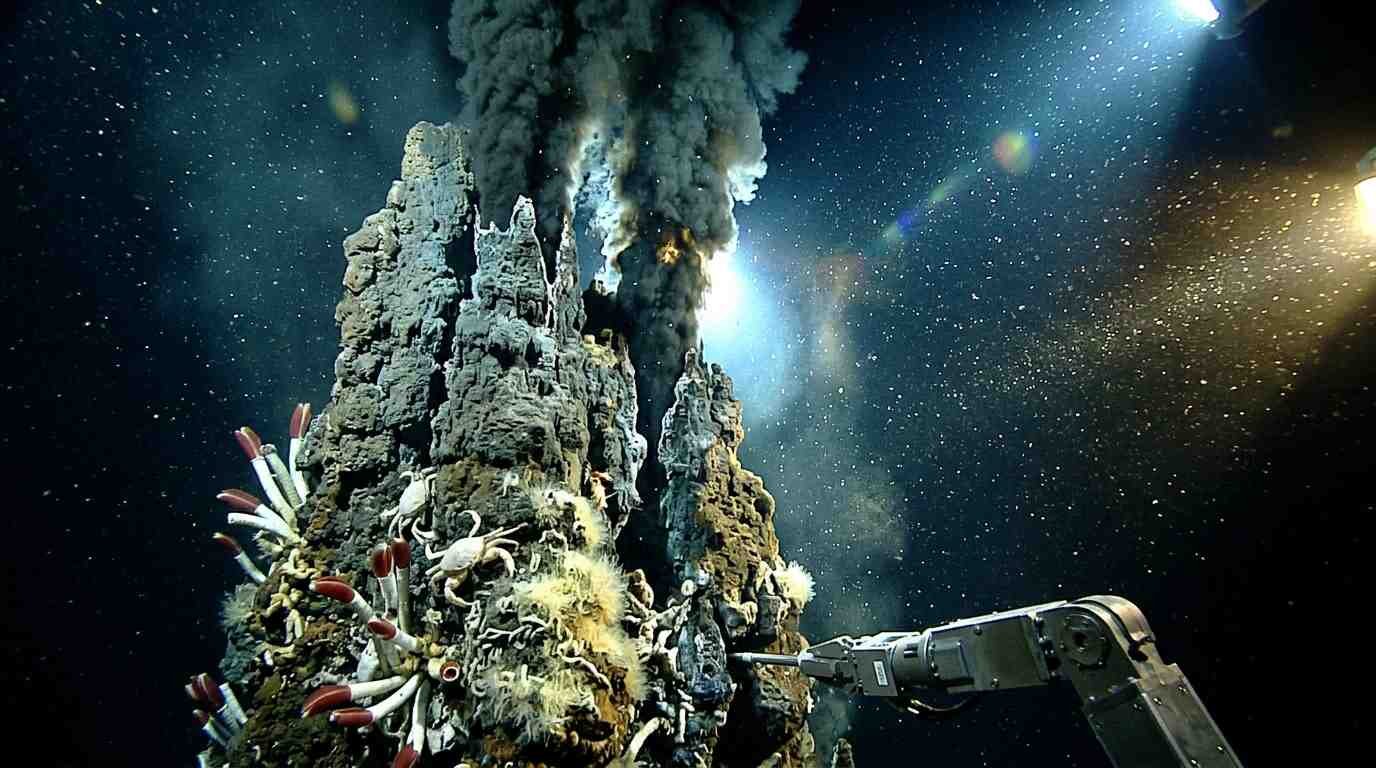
Crystal structures of a deep-sea archaeon's nitrogenase enzyme, stable to 92 C, show the simplest known version of nature's ammonia catalyst.
Every nitrogenase enzyme on Earth does the same hard thing: it breaks the triple bond in atmospheric nitrogen and turns it into ammonia, at ordinary temperatures, using ATP and electrons. The one in a deep-sea archaeon called Methanocaldococcus infernus does it in water just under the boiling point, and a paper published on September 8, 2026 in Nature Communications reports the first high-resolution structures of it.
The authors, led from the Max Planck Institute for Marine Microbiology in Bremen, grew the organism, purified the protein from its own cells and solved two crystal structures at 1.37 and 1.21 angstroms. They argue the enzyme is the simplest known nitrogenase scaffold and that it supports the idea that early nitrogenases looked like archaeal ones. Below is the method, the numbers I could confirm from the open-access paper, and the places where the authors themselves say the evidence stops.
This is a peer-reviewed, open-access paper. One caution about my reading: the version of the text I could retrieve left out the Methods section and cut off partway through the Discussion, so protocol details below are limited to what appears in the Results and figure legends.
Why nitrogenase is worth the trouble
Nitrogen makes up about 78 percent of air, and almost none of it is usable by most organisms until the N2 triple bond is broken. Biological fixation by nitrogenase supplies roughly half of the nitrogen used by living things, according to the paper’s introduction. The industrial alternative, the Haber-Bosch process, runs at about 200 bar and 400 to 500 degrees Celsius and accounts for 1 to 2 percent of global CO2 emissions.
Nitrogenase comes in three flavors, named for the metal at the heart of the active site: molybdenum (Nif), vanadium (Vnf) and iron-only (Anf). Almost everything textbooks say about the enzyme comes from one soil bacterium, Azotobacter vinelandii, which carries an unusually large set of nif genes. Distant relatives tend to get by on a minimal set, and that is why an archaeon at the base of the nitrogenase family tree is a useful comparison.
The organism and how it was grown
Methanocaldococcus infernus is a deep-sea methanogen. In the lab it grew on N2 as its sole nitrogen source with a doubling time of about two hours under full autotrophy. Its maximum growth temperature was 91.7 degrees Celsius; cells tolerated 93 but lost viability after 24 hours at that temperature.
Growth depended on a high partial pressure of nitrogen, with the optimum at 0.49 atmospheres. It needed molybdenum, with a minimum of about 100 nanomolar molybdate, and was not bothered by vanadium chloride, which supports the assignment of a molybdenum-type enzyme. Its tolerance of tungstate, a chemical imposter for molybdate, was up to 1,000 times higher than in A. vinelandii or the methanogen Methanococcus maripaludis. The authors read that as evidence of specialized metal handling and note that molybdenum may be scarce where the organism lives.
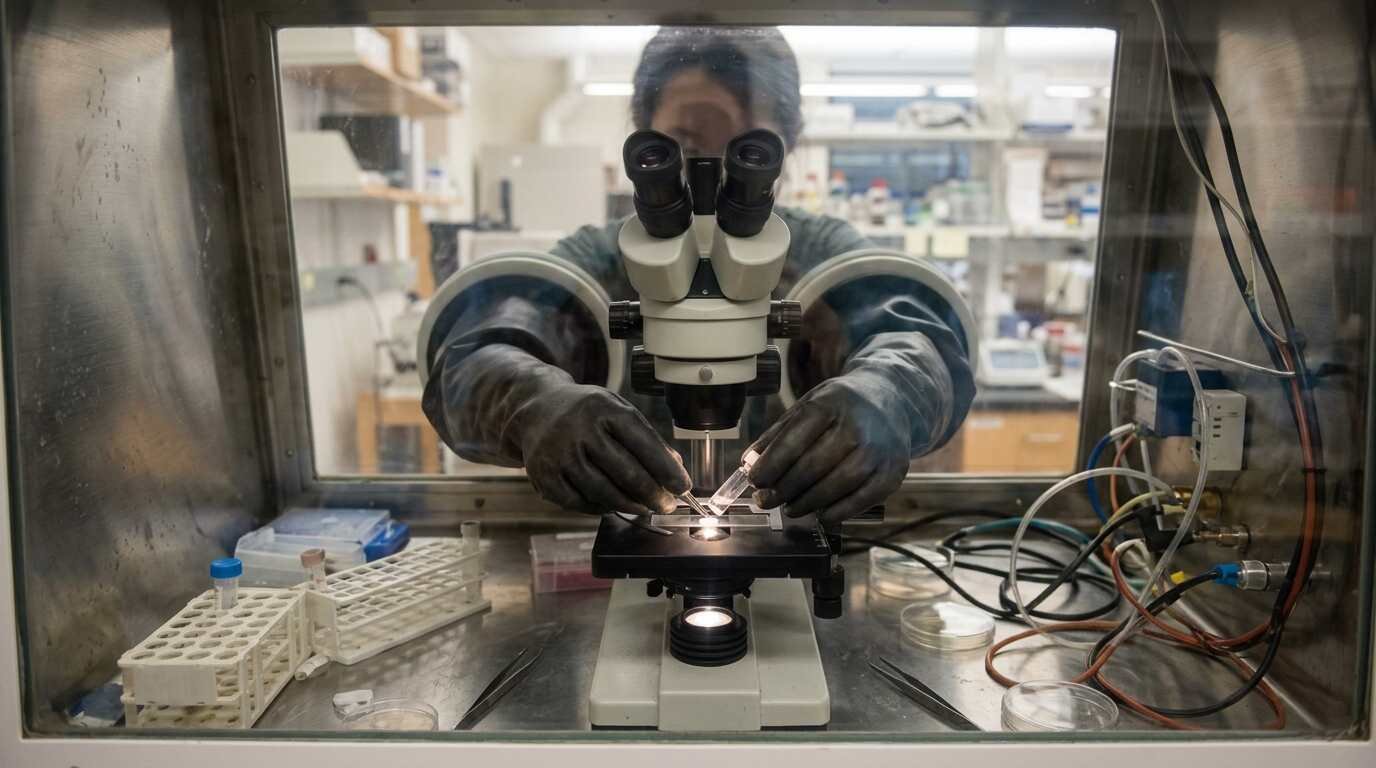
The researchers purified the NifDK protein, the catalytic component, straight from cells that had been grown on N2 and therefore make plenty of it. They worked in an oxygen-free glove box and used dithiothreitol as a mild reducing agent instead of the usual dithionite, which they say can be a non-innocent reductant that confuses the chemistry.
Working through the stability and activity numbers
The melting temperature is the headline. Measured with the same assay, the archaeal NifDK melted at 92.3 degrees Celsius against 60.1 for A. vinelandii NifDK, a gap of 32.2 degrees. The partner protein NifH, which delivers electrons, melted at 82.5.
Activity is where the picture needs care. Ammonia production was undetectable at room temperature. At 50 degrees Celsius and pH 7.0, in 100 percent N2 over 30 minutes, the specific activity was 280 plus or minus 18.2 nanomoles of NH3 per minute per milligram of protein. The authors extrapolated an Arrhenius curve to about 2,240 nanomoles at 80 degrees and compared that with roughly 500 to 900 for native A. vinelandii enzyme.
I did the arithmetic on that extrapolation. Going from 280 to 2,240 is an eightfold rise across 30 degrees (323 K to 353 K). Plugging that into the Arrhenius form, the implied activation energy comes to about 66 kilojoules per mole, a plausible value for an enzymatic step. That is my back-calculation from two points, not a number from the paper. The more important point is that nobody measured activity at 80 degrees. The 2,240 figure is a projection from data collected at 50, a temperature at which the enzyme is far from its natural operating range.
The energy bill is the textbook one: at least 16 ATP per N2 fixed. The paper does not claim to have lowered it.
The structures and what the metal clusters look like
The team obtained two crystal forms. Form A is monoclinic and diffracted to 1.37 angstroms; form B is triclinic at 1.21. They collected anomalous diffraction data at the molybdenum and iron K-edges to confirm which metal sits where, and found molybdenum in the iron-molybdenum cofactor, the site where N2 binds.
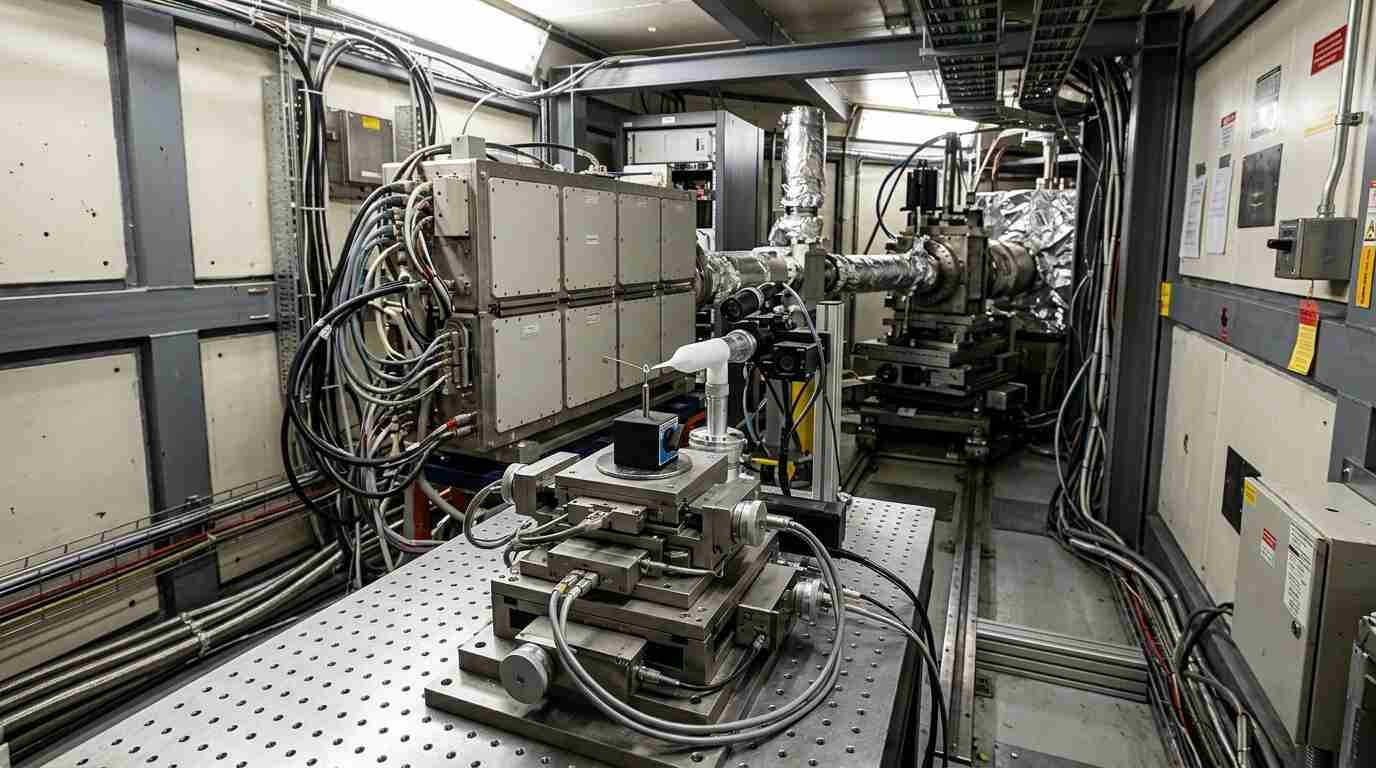
The overall architecture is the familiar NifD2K2 assembly, but trimmed. The authors describe it as the simplest known nitrogenase scaffold, comparable in size to the vanadium enzyme without its extra VnfG subunit. It shares features with all three isoforms, along with some C-terminal regions found only in this organism. Thermostability is attributed to salt bridges, hydrogen bonds and hydrophobic clusters at surface hot spots, two of which sit on a flexible domain called alpha-III.
The electron relay between the two clusters uses the same tyrosine and alanine pair as the molybdenum enzyme, not the arrangement seen in the vanadium and iron-only systems. That detail is one reason the authors call the archaeal enzyme a mixture of traits instead of a copy of any one type.
The oxidized cluster and the odd active site
The P-cluster, an iron-sulfur cluster that passes electrons toward the active site, differed between the two crystals. In form A the modeled mix was 60 percent in the P2+ state, 15 percent in the PN state and 25 percent in a second oxidized state that the authors tentatively propose could be P3+. In form B the cluster was in a one-electron-reduced P1+ form, split 70 to 30 between two conformers. The authors suggest form A was oxidized during slow crystallization, possibly by trace oxygen.
At the active site, form A showed the resting state, with a glutamine residue (Gln171) holding the homocitrate ligand. Form B was an even split, 50 to 50, between resting and a ‘turnover’ state. In that state a sulfur atom moves, a bridging ligand spans two iron atoms with a 1.76 angstrom distance to one of them, and the glutamine reorients. The turnover state had been reported in vanadium and iron-only nitrogenases, and this is its appearance in a molybdenum enzyme. The authors could not assign the identity of the bridging ligand.
Their conclusion is that these states unify mechanistic principles across the three isoforms. That is an argument from structures, and it sits on the weakest part of the data, as the next section explains.
What the study cannot show
The authors list several limits themselves. The turnover-like state is debated and may not correspond to a true intermediate of the accepted kinetic scheme. The P3+ assignment is a hypothesis that needs spectroscopy such as EPR. The difference in redox state between the two crystal forms is explained by slow crystallization and possible oxygen contamination, which they call speculative, and X-ray radiation damage could also play a part. The use of dithiothreitol instead of dithionite may influence which states appear, and it was not fully tested. All catalytic states are inferred from structures made under non-catalytic crystallization conditions, so no one watched the enzyme working.
There is also the evolutionary claim. That the archaeal enzyme resembles an ancestor is supported by its position on the tree and its mixed features, but it remains an inference. A modern enzyme in a modern organism has had as long to change as any other.
Finally, the biotechnology angle. The paper calls the system robust and attractive, with a four-gene structural operon and a handful of regulators. Still, an enzyme that makes no detectable ammonia at room temperature cannot be dropped into crops or a bioreactor as is. Statements about engineering nitrogen-fixing plants in the press coverage are the researchers’ speculation, not demonstrated results.
Frequently asked questions
Is this nitrogenase enzyme useful for making fertilizer?
Not directly. It produces ammonia only at high temperature, and the authors present its robustness as an attractive property for biotechnology, not as a working process.
Was the study peer reviewed?
Yes. It appeared in Nature Communications on September 8, 2026, and is open access.
Why does a 92 degree enzyme matter for early life?
Nitrogenase probably evolved long ago, and methanogenic archaea sit near the base of its family tree. The authors argue the archaeal enzyme resembles the ancestor, though this is an inference.
What temperature did the enzyme melt at?
The paper reports a melting temperature of 92.3 degrees Celsius, versus 60.1 for the Azotobacter vinelandii enzyme measured with the same assay.
The measured facts are solid and unusually well documented: a 32-degree stability gap, two structures at about an angstrom of resolution, and a minimal scaffold that carries features of all three nitrogenase types. What the structures cannot do is tell you how the enzyme behaves when it is working, and the paper is honest about that. The next experiments are spectroscopic and kinetic, not crystallographic: confirm the oxidized P-cluster with EPR, measure activity at the temperatures the organism actually lives at, and identify what the bridging ligand in the turnover state is. Those results will decide whether this enzyme is a good model for how nitrogenase works, or only a very tough one.
Sources



