Marinus Link, the Bass Strait HVDC cable linking Tasmania and Victoria, held its sod turn in October. Capacity, cost, how it works, and conflicts.
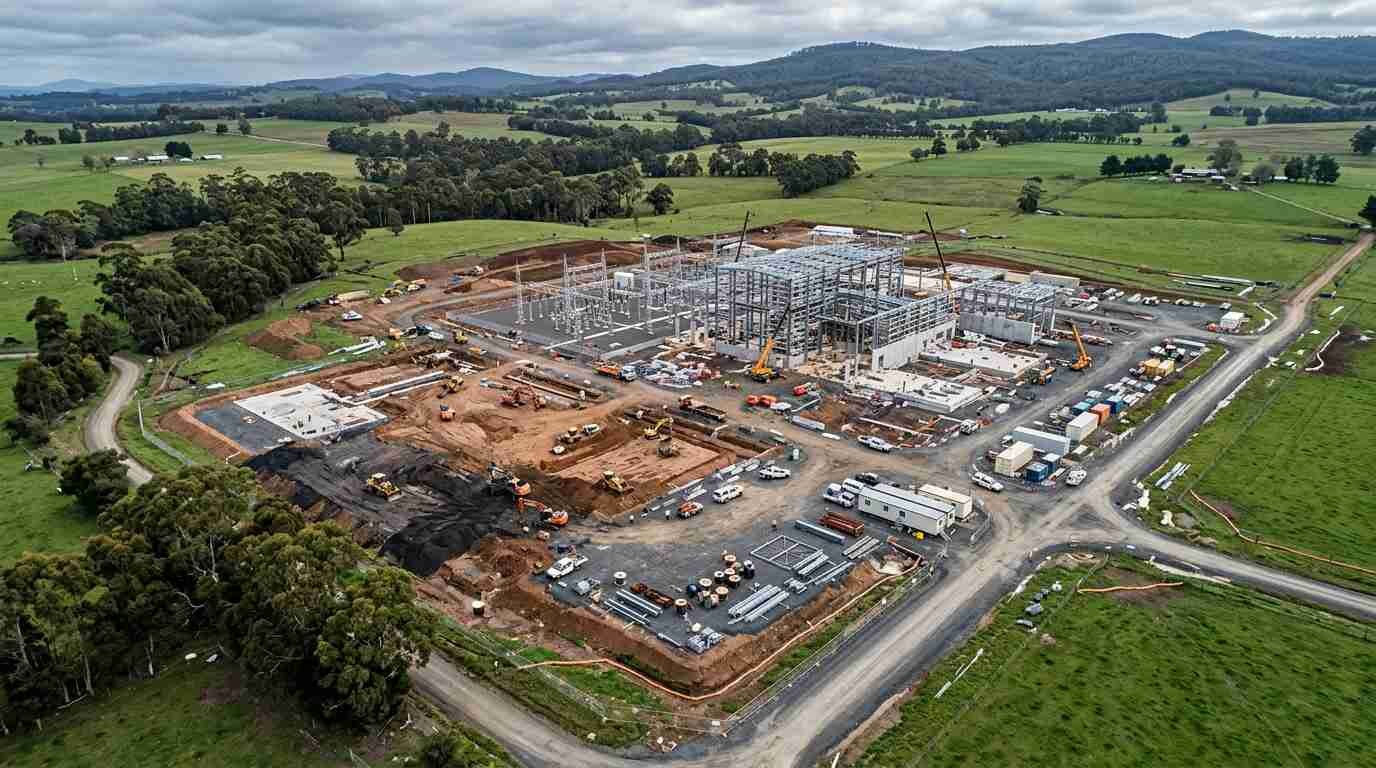
Marinus Link, the planned undersea power cable between Tasmania and the Australian mainland, held a ceremonial sod turn in early October 2026, marking the start of a construction ramp-up. The event took place at the converter station site at Heybridge in Tasmania’s north-west. Hitachi Energy dated its account of the ceremony October 2, and Renew Economy published on October 6 that the event had been held the previous Friday.
The cable will run 345 kilometers, part of it buried under Victorian farmland and most of it laid across the floor of Bass Strait. It will carry power in both directions, which is the whole point. Tasmania has hydro storage and wind. Victoria has demand and a growing amount of solar.
Coverage of the project disagrees on its capacity, and some of the numbers around cost and storage depend on how you read them. This post explains how the link works, works through the figures, and flags where the sources conflict.
What happened at Heybridge
Federal energy minister Chris Bowen, Tasmanian premier Jeremy Rockliff and Marinus Link chair Sandra Gamble attended the ceremony, according to Energy-Storage.News. A Victorian government representative, Tom McIntosh MP, was also listed by Hitachi Energy. The ceremony marks expanded construction, not the first work: on the Tasmanian side, TasNetworks has already started building the grid connection between Sheffield and Burnie, with access tracks, fencing, tower foundations and substation work.
Bowen conceded the project’s controversy, saying ‘Every project is controversial in some form.’ Renew Economy says the dispute covers the cost and benefit case, environmental effects of the transmission lines needed in Tasmania, and the new wind and solar farms planned to feed the link. It does not name specific opposition groups.
The project’s funding reached financial close in 2025. A final investment decision and federal environmental approval came in August 2025, according to Energy-Storage.News, and in September 2026 the project was granted Australia’s first transmission and infrastructure licence under the offshore electricity infrastructure regime, described as the last federal approval needed before construction.
How the link works
Alternating current is a poor fit for a long subsea cable. Cables behave like capacitors, and over long distances the charging current they draw consumes much of the cable’s capacity, so power engineers use high-voltage direct current instead. This explanation is general background, not from the project documents. An HVDC link converts AC to DC at one end, sends it through the cable, and converts it back at the other.
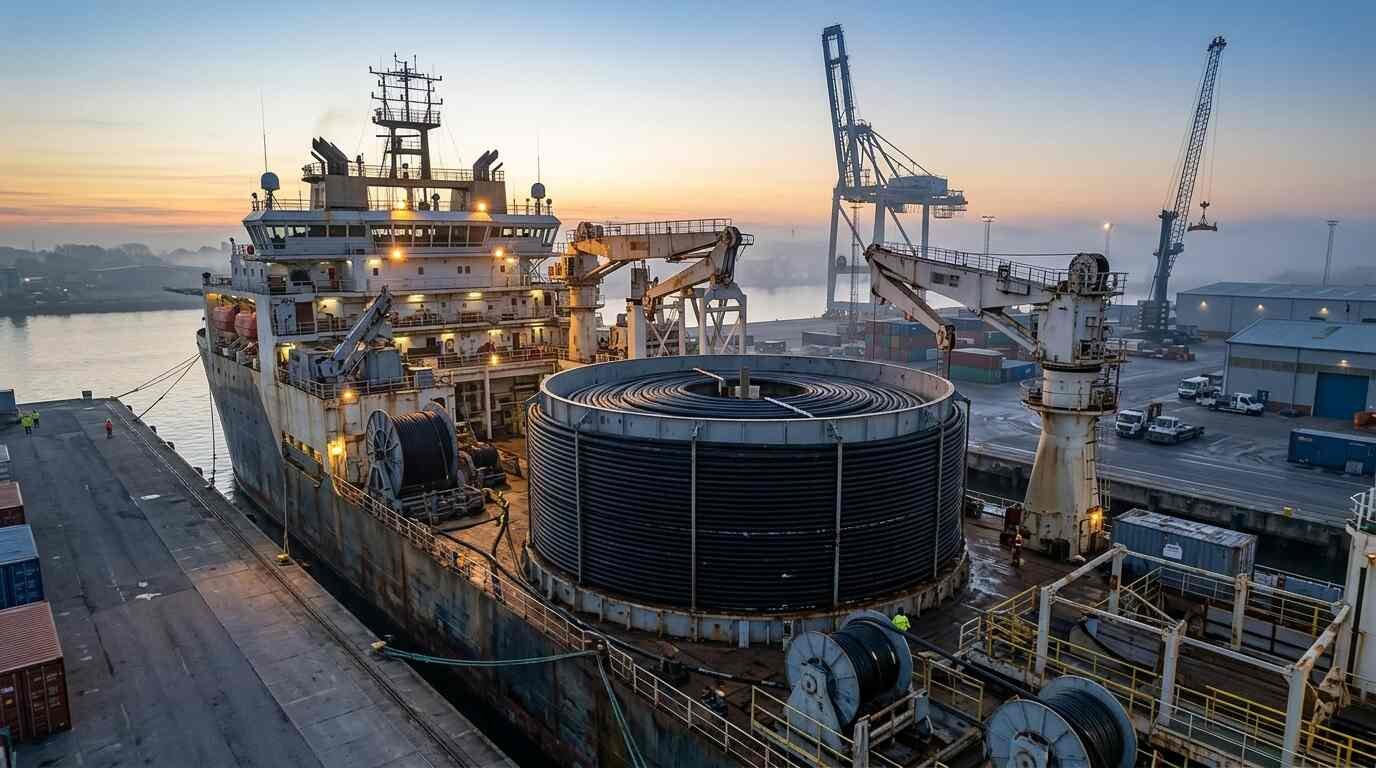
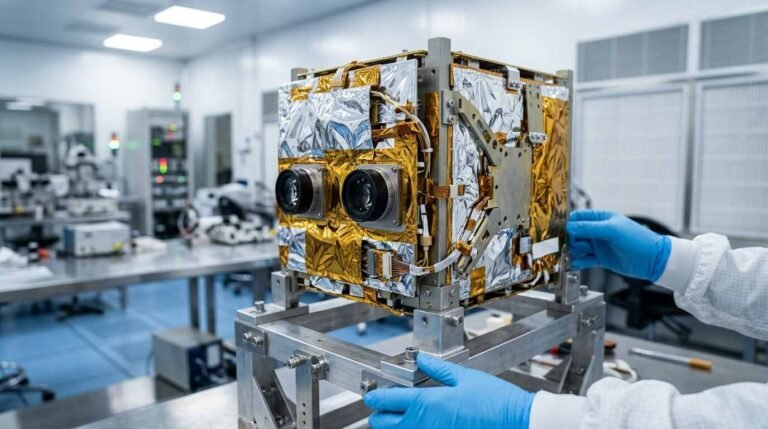
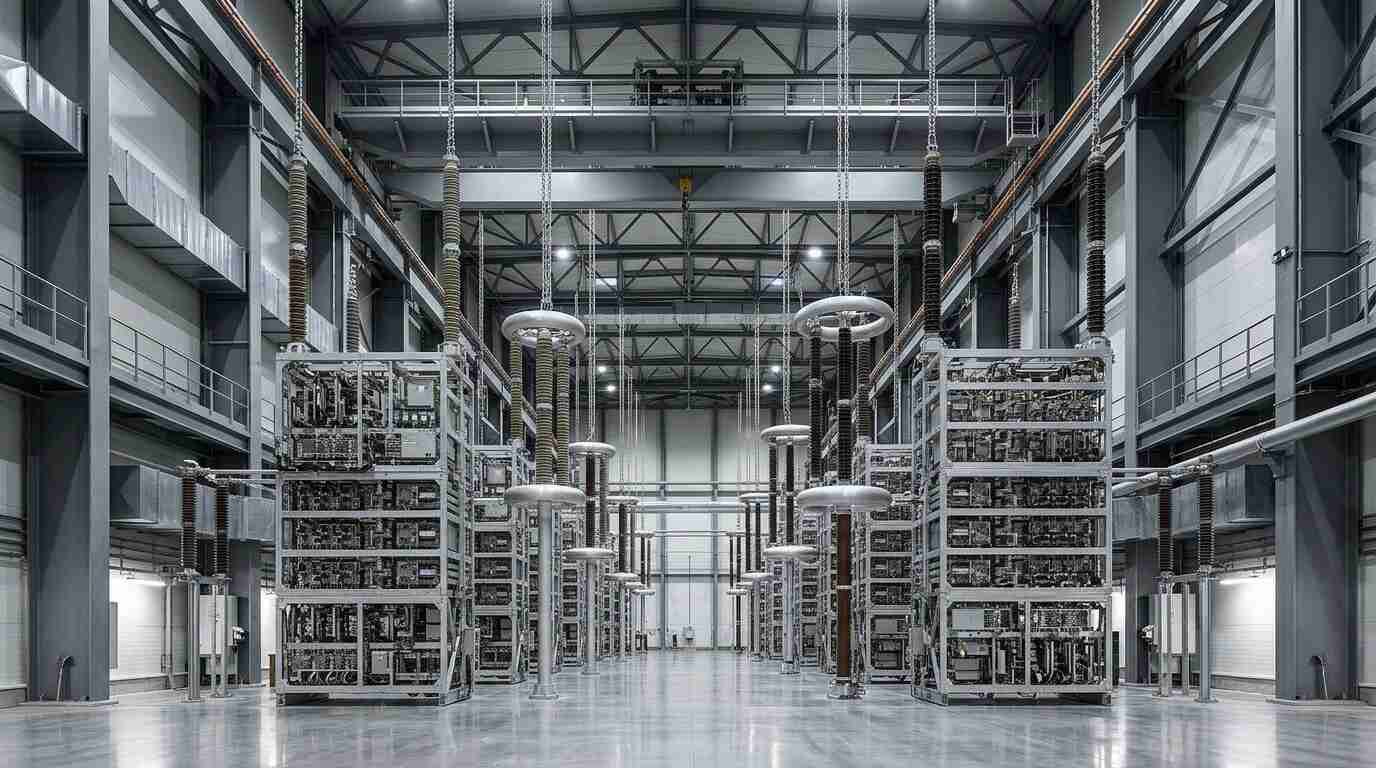
Hitachi Energy says the link will operate at 320 kilovolts, with 90 kilometers underground in Victoria and the remaining 255 kilometers beneath Bass Strait. The company will supply converter stations at each end, using what it calls grid-forming HVDC technology, an Australian first. Its package includes 48 valve stations, each 11 meters high, and eight HVDC transformers, partly made at its Lilydale site in Victoria.
Grid-forming means the converters can set voltage and frequency rather than only following them. Traditional large generators do that through the physical inertia of spinning machines; grid-forming power electronics imitate some of that behavior. Hitachi says the technology provides system services previously supplied by large synchronous generators. The sources do not say whether the converters are line-commutated or voltage-source type, though grid-forming capability is normally associated with voltage-source designs.
Working through the numbers
Start with capacity. Renew Economy says the original plan was two subsea cables with 1,500 megawatts of combined capacity and that it was scaled back in 2023 to a single 750 megawatt cable. Energy-Storage.News describes the link as 1.5 gigawatts in two 750 megawatt stages, and gives Stage 1 completion as late 2030. Those descriptions are not the same, and the second does not say when Stage 2 would be built. The safest reading is that the construction now under way is a 750 megawatt link with a larger version contemplated.
Tasmania currently depends on one interconnector, the 500 megawatt Basslink. Adding 750 megawatts would make 1,250 megawatts of total capacity, which is my arithmetic. At full continuous flow 750 megawatts over a year is 750 times 8,760 hours, about 6.6 terawatt-hours, an upper bound that no real link reaches because flows follow price and weather.
Next, cost. Energy-Storage.News says an updated cost-benefit analysis puts the combined construction costs of Stage 1 and the North West Transmission Developments, the Tasmanian grid works, above AU$5 billion. The balance-of-works contract, held by a joint venture of Gamuda and Samsung C&T, is AU$994 million. The Clean Energy Finance Corporation has committed AU$3.8 billion, its largest single commitment. Dividing AU$5 billion by 750 megawatts gives roughly AU$6.7 million per megawatt, but that figure mixes the link with the grid works and is a floor, since the article says costs are ‘above’ AU$5 billion.
Then the benefit claim. The proponent forecasts wholesale price reductions of AU$15 per megawatt-hour in Tasmania and AU$17 in Victoria. These are the project owner’s numbers, not independent estimates. If you believe them, a household using 5 megawatt-hours a year would see about AU$75 to AU$85 of lower wholesale cost, though retail bills include network and other charges that this calculation ignores.
Who owns and who pays
Ownership is split between the Commonwealth with 49 percent, Victoria with 33.3 percent and Tasmania with 17.7 percent. Marinus Link Pty Ltd is delivering the undersea and underground cable, and the transmission works on land in Tasmania belong to TasNetworks.
A related regulatory step matters for the cost story. In June 2025, the Australian Energy Regulator approved converting Basslink to a regulated transmission service, according to Energy-Storage.News. The effect is to bring the existing cable under the same cost-recovery framework as other network assets. The article does not say how that changes charges for consumers.
Of the businesses engaged so far, 119 suppliers are involved, 59 of them in northern and north-western Tasmania. Cable and converter manufacturing and construction ramp up into 2027.
What ‘Battery of the Nation’ means here
Hydro Tasmania proposed a ‘Battery of the Nation’ plan in 2022, built around adding pumped hydro storage in Tasmania so that the island can store mainland surplus and sell it back when needed. Bowen’s description of the link, as reported, is that it lets Tasmania export pumped hydro energy and import mainland solar and wind when useful.
The numbers attached to the storage plan need care. Energy-Storage.News writes that the plan envisages 1.5 GWh to 3.5 GWh of new pumped hydro. Pumped hydro capacity is more commonly quoted in gigawatts for power and gigawatt-hours for stored energy, and I could not confirm whether the figures are energy or power in the original proposal. The article also does not say whether any of the storage is committed or how it relates to the link’s schedule.
Hitachi Energy offers a different framing: the link could help unlock up to 3 gigawatts of wind in Tasmania and 15 gigawatts of solar and onshore wind in Victoria. Read that as a ceiling on what the connection might enable, not as a build commitment.
Where the sources disagree
There are four conflicts worth keeping in view. The first is capacity: 1.5 gigawatts in two stages, or 750 megawatts after a 2023 scale-back. The second is the date of the ceremony. Hitachi Energy’s account is dated October 2, Renew Economy says ‘the previous Friday’ relative to October 6, which is also October 2, and Energy-Storage.News dates its report October 9.
The third is currency and cost totals. Renew Economy gives CEFC support as ‘up to $3.8 billion’ without a currency and no total project cost, while Energy-Storage.News specifies Australian dollars and a combined construction figure above AU$5 billion. The fourth is the cable. Hitachi’s account says 320 kilovolts, 90 kilometers underground and 255 kilometers under the strait; Energy-Storage.News gives only the 90 kilometer Gippsland section. These fit together, but only if you add them yourself.
What is still unconfirmed
Stage 2 has no stated completion date, and the sources do not give a Stage 1 energization month. Late 2030 is the only target I found, with Stage 1 of the Tasmanian grid works also due by 2030. The cost figure may rise. The Energy-Storage.News article says nothing about construction risk, supply chain constraints or delay scenarios, and it presents the price forecasts uncritically.
The environmental and social objections that Bowen acknowledged are real unknowns for the schedule, because the transmission line approvals in Tasmania and the wind and solar farms that justify the link depend on separate processes. The project can be built on time and still carry less power than hoped if the generation behind it is delayed.
Frequently asked questions
What is Marinus Link?
It is a two-way HVDC electricity interconnector between north-west Tasmania and Victoria’s Latrobe Valley. Its route is 345 kilometers, of which 255 kilometers cross Bass Strait and 90 kilometers run underground in Victoria.
How much power will Marinus Link carry?
Reports differ. Energy-Storage.News describes 1.5 gigawatts built in two 750 megawatt stages; Renew Economy says the plan was scaled back in 2023 to a single 750 megawatt cable. Stage 1 is the 750 megawatt part.
When will Marinus Link be finished?
Stage 1 completion is expected in late 2030, per Energy-Storage.News. The sources I read give no completion date for any second stage.
How much does Marinus Link cost?
The balance-of-works contract is AU$994 million, the Clean Energy Finance Corporation has committed AU$3.8 billion, and an updated cost-benefit analysis puts combined costs for Stage 1 and the Tasmanian grid works above AU$5 billion.
A sod turn is a photo opportunity, and the real milestones are quieter: cable manufacturing slots, converter delivery, the first length of cable laid across the strait. What makes this project worth following is how many of its benefits are conditional. The price forecasts come from the proponent, the storage plan is a proposal, and the generation that fills the link has not been built. Late 2030 is a long time away. By then, whether Marinus Link looks like a sensible hedge or an expensive bet will depend less on the cable than on how fast wind, solar and pumped hydro appear at either end, and on whether the capacity figure that survives is 750 megawatts or something larger.
Sources
- Energy-Storage.News: Tasmania’s ‘Battery of the Nation’ plan moves closer as Marinus Link holds sod turn
- Renew Economy: ‘Every project is controversial in some form’: ceremonial sod turn marks Marinus Link construction ramp-up
- Hitachi Energy: First sod turned on critical HVDC transmission project, a link to Australia’s Battery of the Nation