






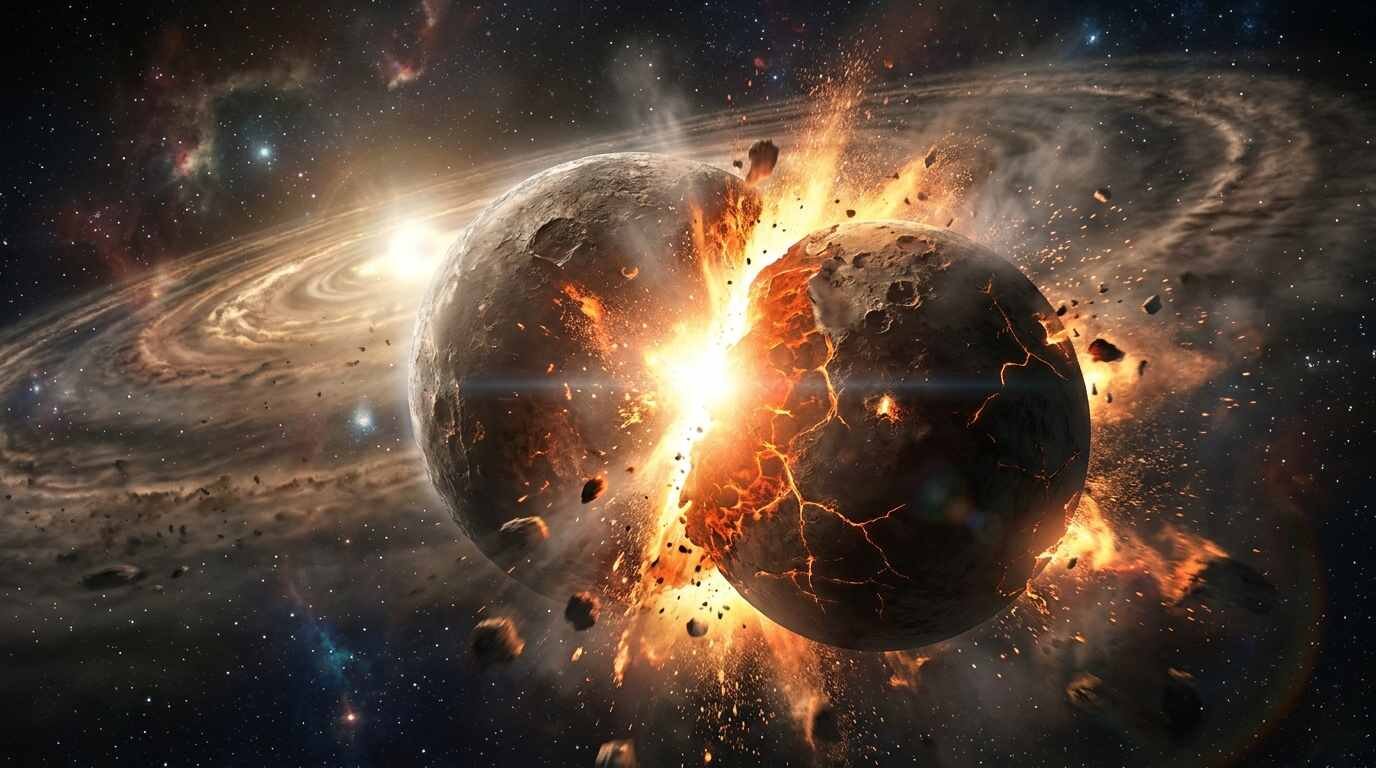
Webb and Spitzer spectra of 21 extreme debris disks point to Moon-sized and Mars-sized collisions around young stars. The mechanism, numbers and limits.
Extreme debris disks are one of the rarer sights around young stars: rings of unusually bright, warm dust sitting where rocky planets would orbit, brightening and fading without warning. A study published on 1 October 2026 in The Astrophysical Journal, led by Kate Su of the Space Science Institute, uses the James Webb Space Telescope and the older Spitzer archive to argue that the dust is wreckage from collisions between bodies the size of the Moon or Mars.
The paper does something that was not possible before: it assembles 21 of these systems and reads their chemistry. Some are rich in silica, a sign of impacts violent enough to vaporise rock. Others are not. This post goes through the evidence, the numbers, and the places where the authors and press accounts are speculating about our own solar system.
A rare phase around young stars
Stars start with a thick disk of gas and dust, the protoplanetary disk, from which planets assemble. As the gas disperses, what remains is a debris disk, a thinner collection of dust made when solid bodies grind against each other. The thing that sets extreme debris disks apart, according to NASA, is how much warm dust they hold close to the star, in the zone that corresponds to where terrestrial planets form around the Sun.
They are uncommon. Roughly 1 percent of young stars show this phase, which NASA describes as fewer than theory predicted. NASA’s retired Spitzer Space Telescope found the first examples. Complete mid-infrared spectra were missing for many of them, which left the physical origin an open question.
What Webb added
The sample is 21 disks, NASA reports, five from Spitzer’s archive and 16 observed with Webb. Of the Webb group, 12 were new and four were follow-up of Spitzer targets. Space.com and Sci.news describe the split slightly differently, so how those groups overlap is not clear to me from the summaries.
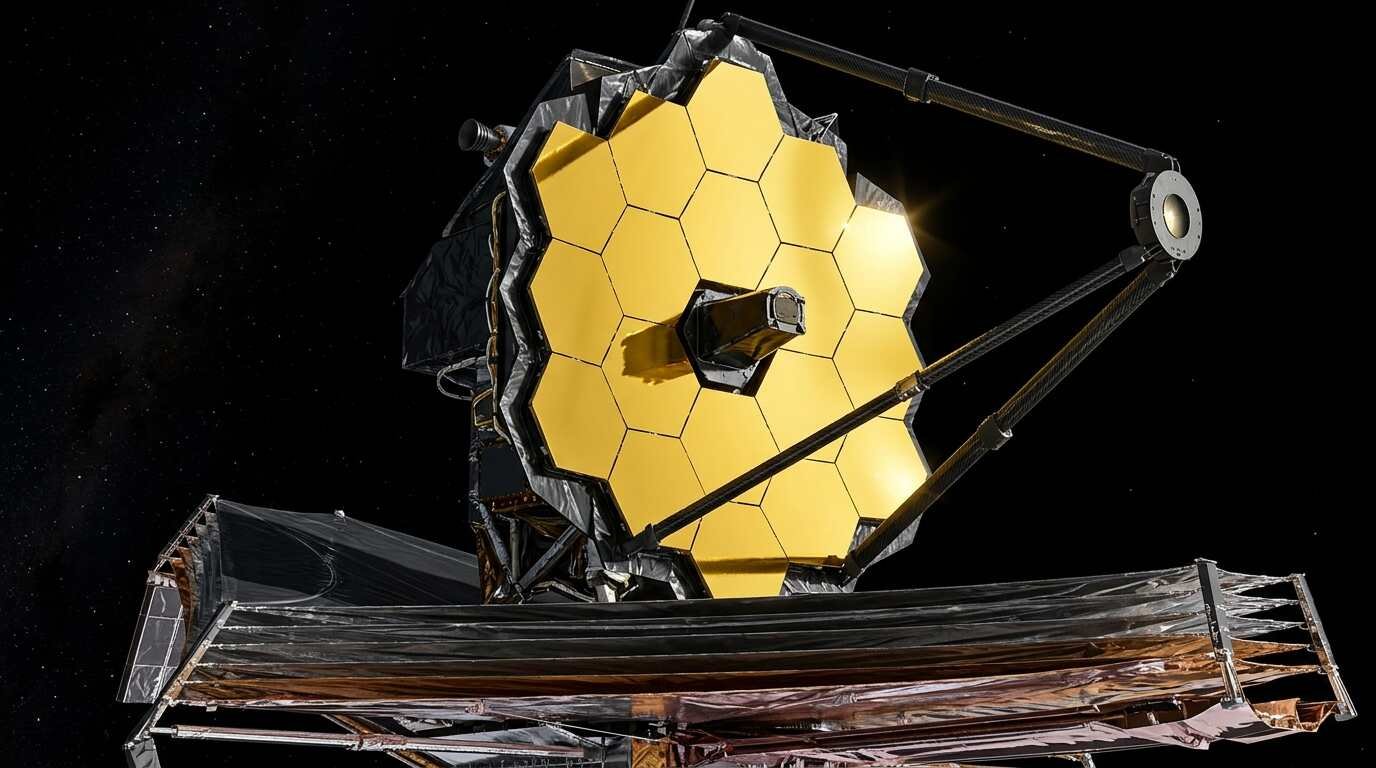
What Webb’s mid-infrared instrument provides is a spectrum: infrared light spread out by wavelength. Different minerals radiate or absorb at characteristic wavelengths, so a spectrum amounts to a fingerprint of what the dust is made of. Sci.news reports that complete mid-infrared spectra were obtained for the first time for 12 of the systems, and that several older systems show very strong features near 10 microns. That is the band where silicate and silica minerals leave their strongest signature.
What the dust looks like
Three traits recur. The grains are small, mostly under a micron, which is smaller than the few-micron grains that dominate protoplanetary disks. The warm dust is abundant. And the brightness varies irregularly, sometimes by large amounts.
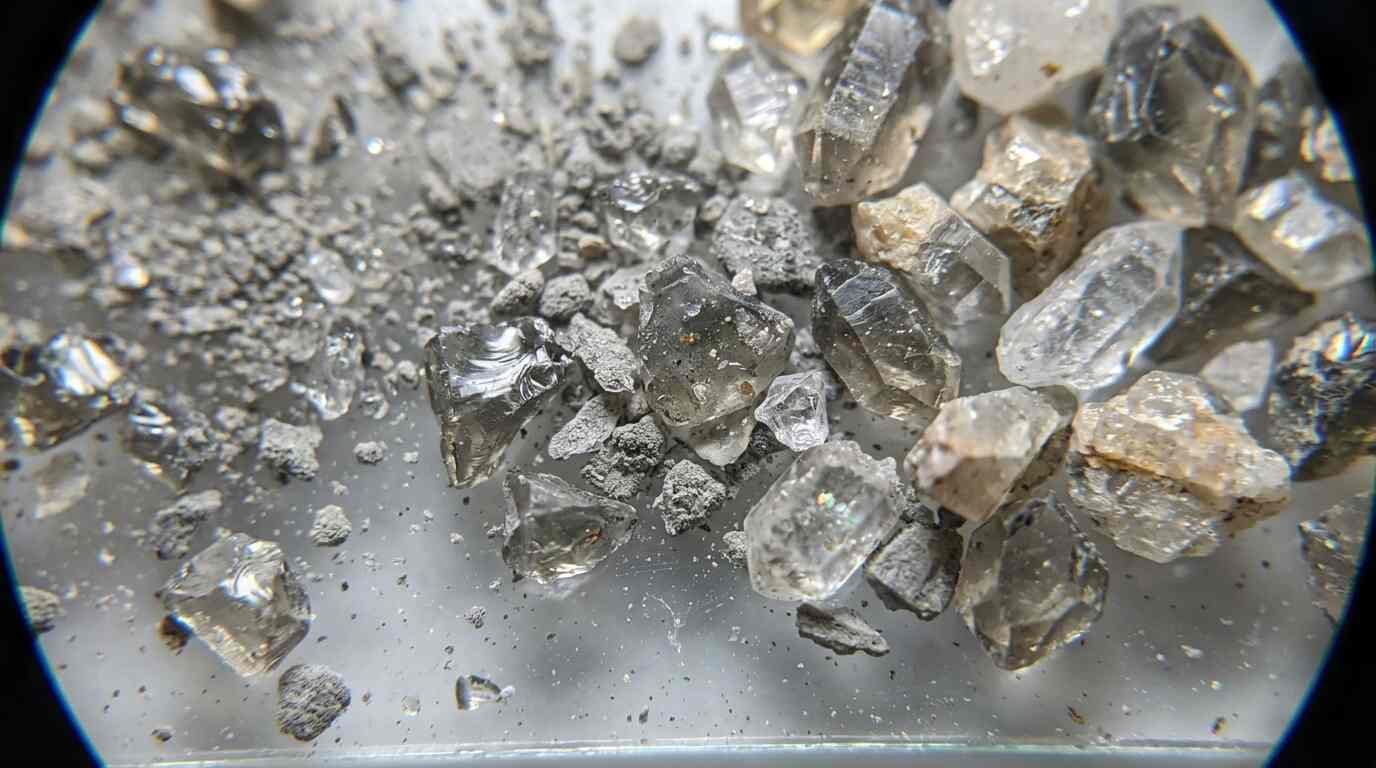
The abstract adds that the grains look heat-processed, with high silica and crystalline silicate content. Crystalline silicates form when material is heated and cooled in ways that let atoms order themselves. Dust that has been vaporised and recondensed can end up like this, which is an argument for violent origins rather than slow grinding.
Two kinds of collision
The sample splits into two compositional groups. About a third are silica-rich, and the NASA release links them to high-energy impacts between Mars-sized bodies that vaporise much of the material. These appear only around stars younger than about 300 million years. The other two thirds are silica-poor and are linked to smaller, less energetic grazing collisions between Moon-sized bodies. They persist across a broad range of ages and often vary more in brightness.
The distinction rests on chemistry plus age. Vaporised rock recondenses with a distinctive silica signature. A glancing blow between smaller bodies sheds fragments without melting as much. The authors conclude that collisions between Moon-sized and Mars-sized bodies are responsible, and say the disks could serve as a marker of systems going through dynamical instability.
Working through the numbers
Start with the fractions. NASA says about one third of the 21 disks are silica-rich, which would be seven. Sci.news counts eight of 21, or 38 percent, and says fewer than 10 percent of protoplanetary disks fall in that category. The two are close but not identical, and I could not see the paper’s table to settle it.
Now the physics of the two collision types. Mars has about 8.7 times the mass of the Moon. Escape velocity, which sets a floor on impact speed between two bodies of that size, is about 5.0 kilometres per second for Mars and 2.4 for the Moon. Kinetic energy scales with mass times velocity squared, so a Mars-sized impact carries roughly 8.7 times the mass at about 4.4 times the energy per kilogram, near 38 times as much energy overall. That ratio is my own order-of-magnitude illustration, assuming impacts near escape speed; the paper does not give it. It does show why one size class can melt and vaporise rock while the other mostly chips it.
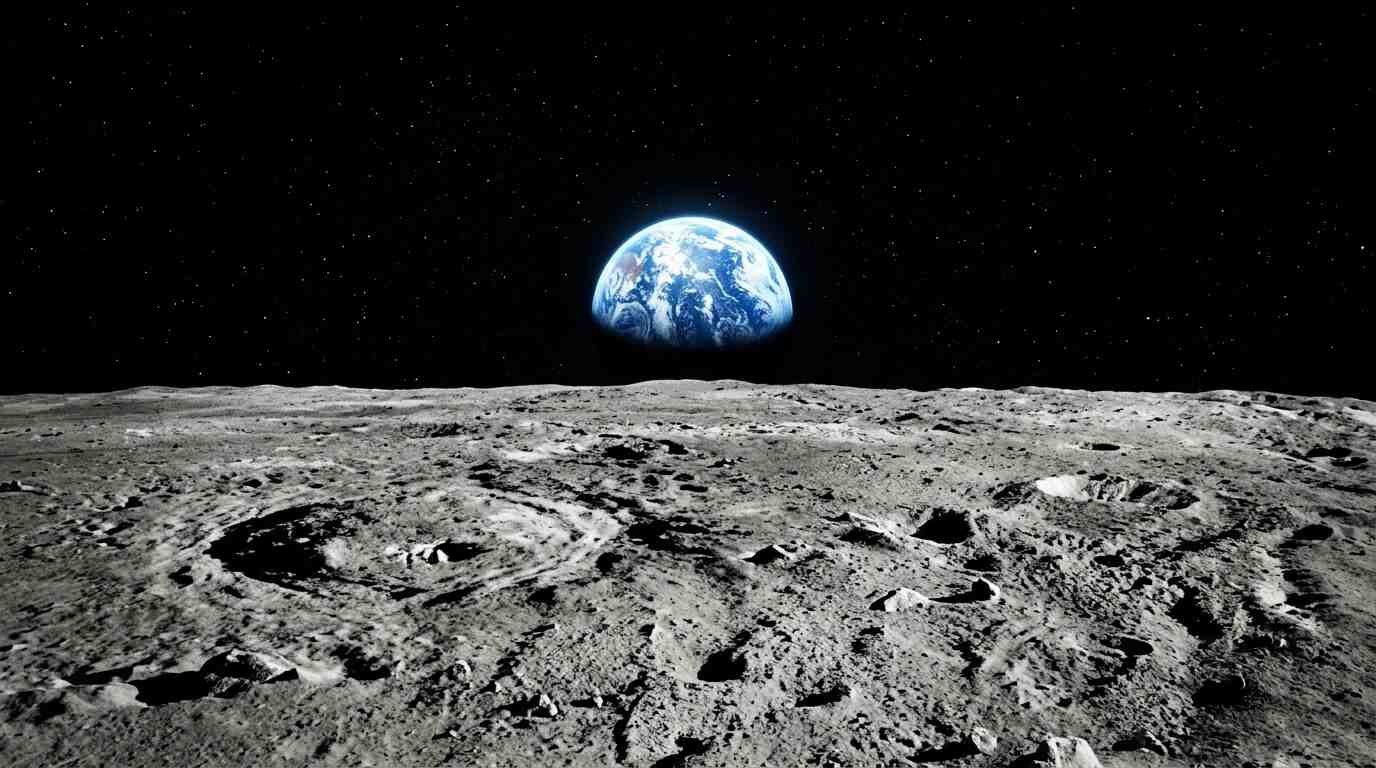
Then the ages. The solar system is about 4.6 billion years old, so the Moon-forming impact at roughly 100 million years after the Sun happened when the system was about 2 percent of its present age. The silica-rich cutoff of about 300 million years is about 6.5 percent of that. The stars showing silica-rich disks are therefore in the same early window in which the Earth and Moon are thought to have formed.
What it implies for our own solar system
NASA connects the silica-rich disk ages with simulations suggesting terrestrial planets form within the first few hundred million years and with the idea that the Moon formed from a giant impact. It also notes that if older silica-poor disks reflect orbital instability, this would broadly fit the Late Heavy Bombardment, in which migrating giant planets may have disturbed smaller bodies.
Press accounts diverge on how far to push this. Space.com says the solar system likely passed through a silica-poor extreme disk phase during that period. NASA’s text is more careful: the Sun may have gone through more than one extreme-disk phase, but whether it had a silica-poor one is not established. I would go with the second reading. Nothing in a sample of 21 distant stars can show what happened around the young Sun.
The argument also cuts the other way. If the silica-rich phase is confined to the first few hundred million years, a survey of older stars should find almost none, and a single clear counterexample would hurt the model more than a dozen more silica-poor systems would help it.
Why the dust has to be young
Small grains do not last. In a young system, starlight and stellar wind push the tiniest particles outward or drag them inward, and collisions grind the rest down. Dust that is mostly submicron and abundant therefore cannot be primordial leftovers; something has to be making it now, in astronomical terms. That is a general result of debris-disk physics rather than something specific to this paper, but it is the reason a sudden, large source such as a collision is the natural explanation.
The brightness swings fit the same picture. NASA reports that the team suggests the variations arise as fresh debris evolves through orbital changes and further impacts. A newly made cloud of fragments starts compact, spreads along its orbit, and gets re-hit. What a telescope sees, and when, depends on the geometry at that moment. The sources do not give variability timescales, so how fast these disks change is something the paper’s data would have to tell.
Limits and open questions
Only three disks in the sample are older than 300 million years, and the team expects none of those to be silica-rich, a prediction that needs more observations. The proposed link between brightness variability and orbital instability is a hypothesis. So is any link between these systems and the Late Heavy Bombardment, an episode whose reality is itself debated.
With few examples, statistical confidence is limited. The sources also do not give dust temperatures or distances from the host stars, so a precise picture of where the collisions occur is missing. For the lead author the main gain is the sample itself: Su said it is the first time enough systems had been gathered to understand the subclass.
Frequently asked questions
What are extreme debris disks?
They are a rare type of dusty disk around young stars that holds unusually large amounts of warm, small-grained dust near the star, often with irregular brightness changes. About 1 percent of young stars show the phase, according to NASA.
What causes them?
The study concludes they come from collisions between bodies about the size of the Moon or Mars. Silica-rich disks fit high-energy Mars-sized impacts that vaporise rock; silica-poor ones fit gentler Moon-sized collisions.
Did Webb see planets colliding?
Not directly. Webb measured infrared spectra of the dust, and the collision picture is inferred from the dust’s composition, grain size and brightness changes.
Does this tell us how the Moon formed?
It offers context only. The silica-rich disk ages match the era when the Moon is thought to have formed, but the Moon’s origin is background in the NASA release, not a result of this study.
Planet formation is usually told as a smooth story of dust becoming pebbles becoming worlds. These disks are the reminder that the process includes demolition. What makes the new work valuable is that it moves a vague category into two chemically distinct types with different ages, which turns a dramatic idea into something that can be falsified with the next spectrum. If the older disks turn out to be silica-poor as predicted, the model survives another test. If one shows up silica-rich, the timeline of violent impacts will need rewriting, and that is a useful way for a field to be wrong.
Sources
- NASA Science: NASA’s Webb Provides Crash Course on Planet-Shattering Collisions
- arXiv abstract: Extreme Debris Disks: Insights into Violent Collisions in Planet Formation and Destruction (Su et al.)
- Sci.news: Strange Dusty Disks around Young Stars May Be Wreckage of Moon- and Mars-Sized Collisions
- Space.com: Worlds collide! James Webb Space Telescope investigates what happens when planets crash together



