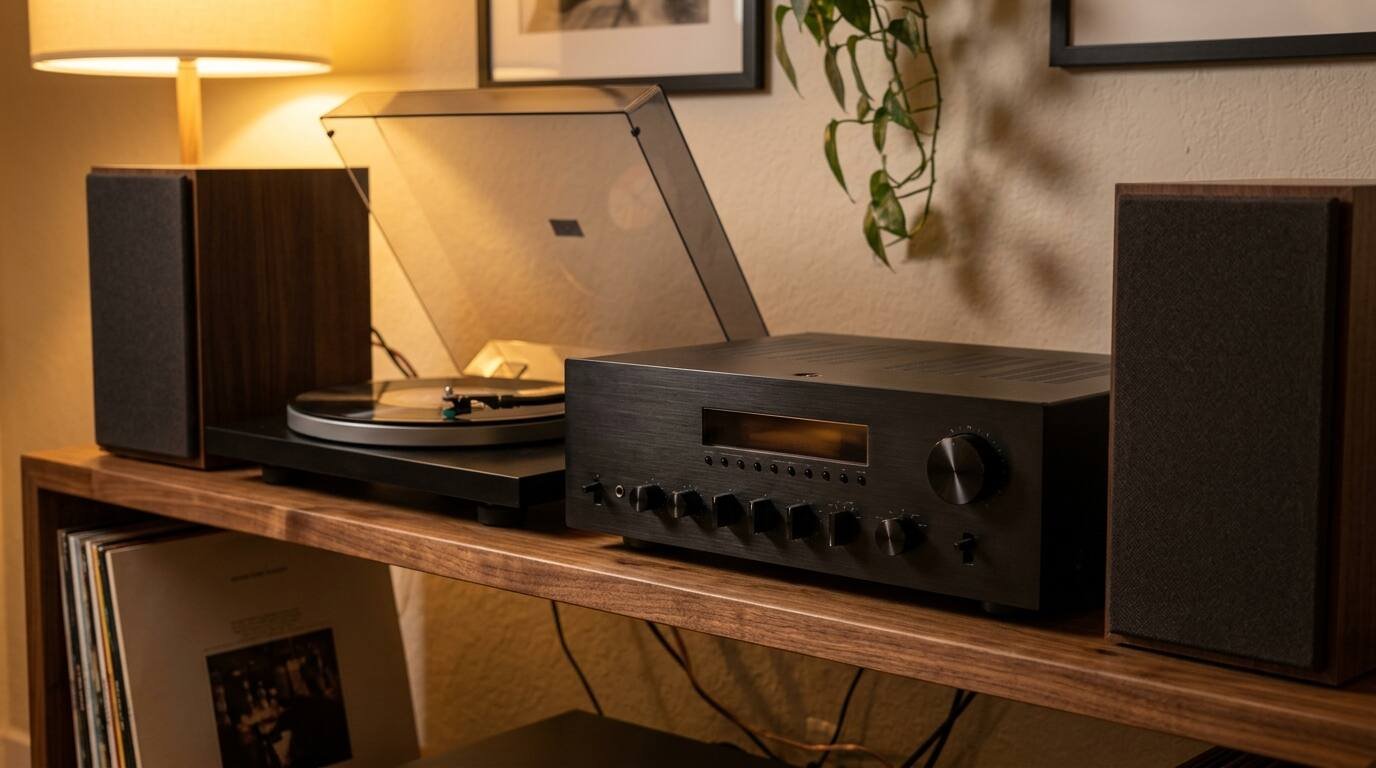
The Yamaha R200A replaces the R-S202 with 100W per channel, a phono input and Bluetooth multipoint. Specs, price, the math of 100 watts, and unknowns.
The Yamaha R200A is a stereo receiver aimed at people building a first real hi-fi system, and the specification sheet is more interesting than the price tag suggests. Yamaha announced it on October 1, 2026 at $299.95, with sales starting in November.
It replaces the R-S202, a model Gear Patrol dates to 2016. The new one adds Bluetooth multipoint, a phono input, a subwoofer output and A/B speaker switching, along with a chassis built to keep vibration away from the circuitry. What it does not list is as telling as what it does, and there are gaps that matter, including any mention of a DAC.
Below are the confirmed specifications, then the arithmetic of what 100 watts per channel means in a room, what the distortion and frequency numbers imply, and what Yamaha has left unsaid.
What Yamaha announced
The press release from Yamaha’s Buena Park, California office is dated October 1, 2026. The suggested price is $299.95 and the receiver ships in November in black and silver finishes. Yamaha says the model is a new generation of its entry-level stereo receiver, and the page calls it an all-new design.
The list of changes Yamaha gives against the R-S202 is long, but the company does not set out a side-by-side table. Gear Patrol, reporting from Yamaha’s release, says the R200A adds the phono input, subwoofer output, A/B speaker selection and Bluetooth multipoint. Yamaha’s own text does not say which of those the old model already had, so some may not be new.
- Rated power: 100 W + 100 W into 8 ohms, 40 Hz to 20 kHz, 0.2% THD
- Dynamic power per channel: 125 W (8 ohm), 150 W (6 ohm), 165 W (4 ohm), 180 W (2 ohm)
- Frequency response: 20 Hz to 20 kHz within 0.5 dB; 10 Hz to 100 kHz within 3 dB
- Bluetooth: version 5.3 with multipoint, connecting two devices at once
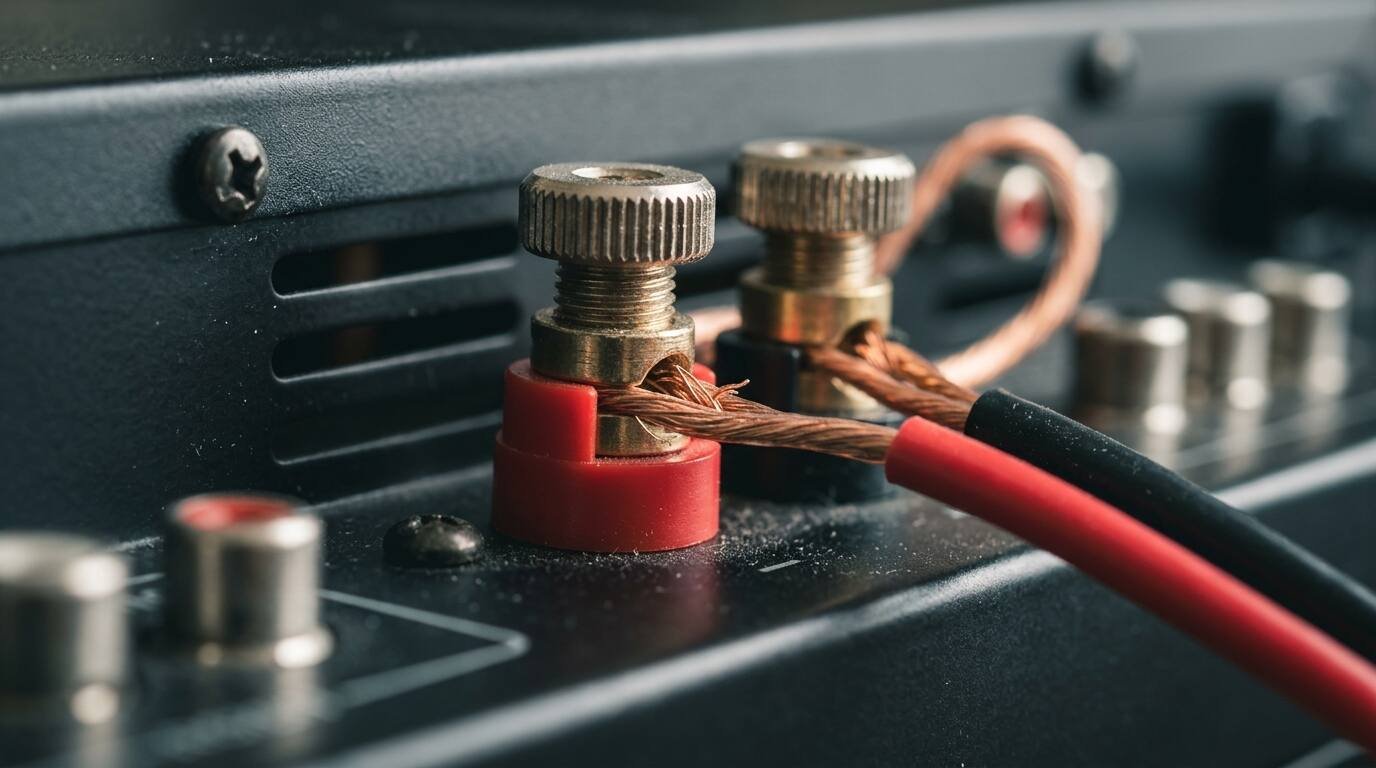
- Inputs and outputs: phono input for moving-magnet turntables, CD input, subwoofer output, headphone jack, binding-post speaker terminals
- Tuner: AM/FM with 40 presets
- Speakers: A/B selection, up to four speakers listed on the product page
- Size: 435 x 137 x 328 mm; standby power 0.3 W or less
- Price and timing: $299.95, November 2026
What 100 watts means in a living room
Power ratings tempt people to treat watts like horsepower. Loudness does not work that way. A tenfold increase in power buys 10 decibels, and a doubling buys 3. A receiver with 100 watts per channel is therefore only 3 dB louder than one with 50, which is a modest difference.
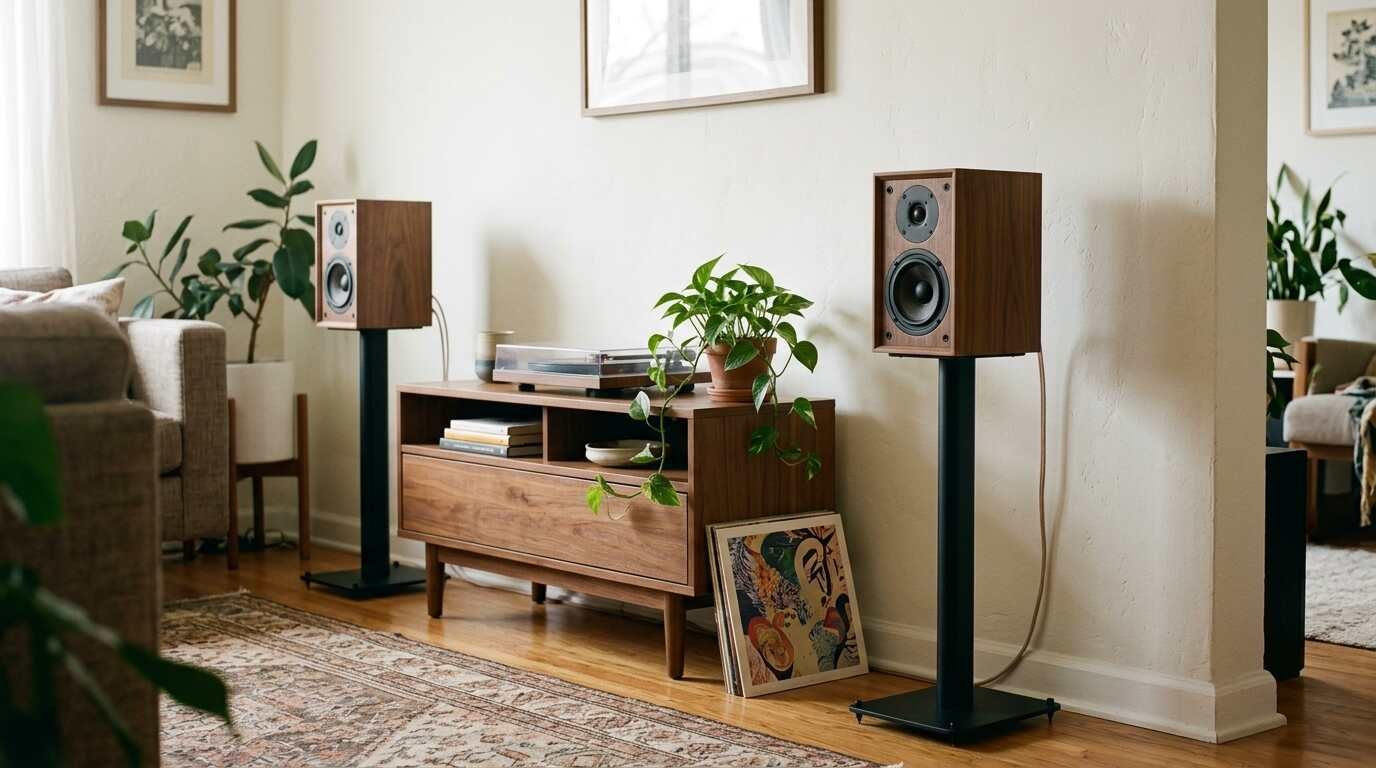
What decides the volume you get is the efficiency of the speakers. A common bookshelf speaker rated at 87 decibels for one watt measured at one meter produces about 107 decibels from 100 watts at that distance, since 100 watts is 20 dB above one watt. Moving to three meters costs roughly 9.5 dB in free air, so about 97 decibels at the listening seat, before room reinforcement and ignoring that music peaks briefly while average levels sit far below. The 87 dB figure is an illustrative value, not a specification of any product named here.
The conclusion is that 100 watts is plenty for ordinary rooms and ordinary speakers, and that the advertised power matters mostly when speakers are inefficient or when you want clean headroom for loud peaks. The dynamic power figures speak to that.
Reading the dynamic power table
Yamaha lists a rated 100 watts into 8 ohms and then four dynamic power figures, which rise as the load impedance falls: 125 W at 8 ohms, 150 at 6, 165 at 4 and 180 at 2. A load of 8 ohms at 100 W means the amplifier is swinging about 28.3 volts RMS and pushing 3.5 amperes. At 165 W into 4 ohms the numbers become 25.7 volts and 6.4 amperes. At 180 W into 2 ohms they are 19 volts and 9.5 amperes.
Notice the shape. If the amplifier were a perfect voltage source, halving the impedance would double the power. It does not. Going from 8 ohms to 4 ohms raises dynamic power from 125 to 165 watts, a factor of 1.32, because the power supply and output devices run into limits. The figures are short-burst ratings, and dynamic power specifications are measured under conditions that sustained music does not repeat.
There is practical information in the 4-ohm number. Many speakers dip toward 4 ohms at some frequency even if their label says 8, and the receiver says it can handle that. Yamaha does not give a continuous rating at 4 ohms, and that is the number a demanding speaker would care about. The specification page also lists no damping factor.
Distortion, response and what they leave out
The rated total harmonic distortion is 0.2 percent or less, from the CD input to the speaker output, between 20 Hz and 20 kHz. In decibel terms that is 54 dB below the signal. It is a ceiling, not a typical value: amplifiers usually distort far less at modest power than at full rated output, so the 0.2 percent figure describes a worst case.
Frequency response is flat within half a decibel from 20 Hz to 20 kHz, and within 3 dB from 10 Hz to 100 kHz. The wider band is a common way of showing that the amplifier does not roll off inside the audible range. Nobody hears 100 kHz, but a circuit that is only 3 dB down there is unlikely to bend the response at 20 kHz.
What the spec page leaves out is class of operation, signal-to-noise ratio, phono sensitivity and weight. Yamaha calls the circuitry hi-fi and lists several mechanical changes: a center beam chassis to suppress vibration-induced interference, enhanced grounding, selected components and a redesigned heat sink. These are plausible engineering steps, but none has been measured by an independent lab yet, and Yamaha gives no figures for the benefit.
The phono input in one paragraph of physics
A turntable cartridge produces a tiny voltage, and the record is cut with a deliberate frequency distortion: bass is reduced and treble boosted during cutting so the groove stays narrow and noise stays low. The RIAA curve defines that, and a phono stage reverses it, boosting low frequencies and cutting high ones by roughly 20 dB at the extremes relative to 1 kHz while amplifying the weak signal overall.
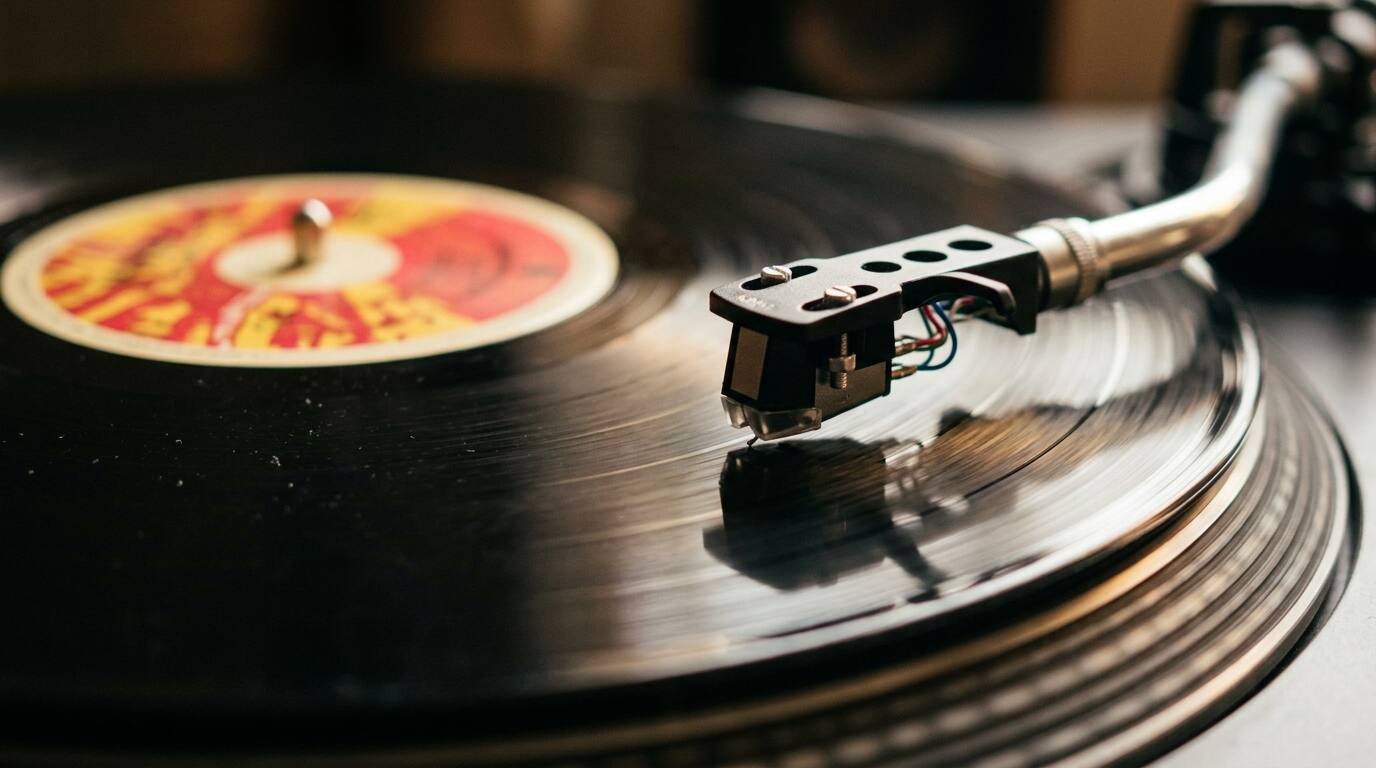
Yamaha’s page names a phono input for moving-magnet turntables. Moving-coil cartridges, which output far less voltage, are not mentioned, so presumably they need an external step-up device. The press release uses the word direct for the phono input and does not define it, and I could not confirm whether it refers to a signal path that skips the tone controls.
Bluetooth multipoint and the rest of the connections
Bluetooth 5.3 with multipoint means two source devices can stay connected, and the receiver can switch between a phone and a computer without re-pairing. Yamaha does not list the supported codecs. Without that, assume the baseline codec and not any high-bitrate extra, and treat Bluetooth as the convenient input rather than the best-sounding one.
Missing from the page: any digital input such as optical or coaxial, any streaming platform, any USB DAC. The product page lists phono, CD, a headphone jack and Bluetooth. That fits the idea of a traditional analog receiver. It does not fit a desk setup with a PC and a USB cable, and a person who wants one will need an external DAC or an adapter.
The standby figure is 0.3 watts or less with auto power standby. If the receiver sat in standby around the clock, that would be about 2.6 kilowatt-hours across a year, a small amount. Yamaha does not give operating power consumption.
What is not yet known
Weight, operating power consumption, phono sensitivity and load, damping factor, and any DAC or digital stage are all missing from the pages I could open. Bluetooth codecs are unspecified. The front panel is redesigned with fewer, larger buttons and a small display on the bottom edge, according to Gear Patrol, but the coverage was an announcement summary with no listening notes.
Another open point is price at retail. Gear Patrol rounds the price to $300 while Yamaha’s own release says $299.95. The practical difference is five cents, but since retailers set prices, final cost may differ.
Finally, the R200A’s competition is not covered in any source I opened, so any claim about value relative to other entry receivers would be opinion.
Frequently asked questions
How much is the Yamaha R200A and when is it available?
Yamaha’s suggested price is $299.95. It was announced October 1, 2026 and sales start in November 2026.
How much power does the Yamaha R200A deliver?
Rated output is 100 W per channel into 8 ohms (40 Hz to 20 kHz, 0.2% THD). Yamaha also lists dynamic power of 125 W at 8 ohms up to 180 W at 2 ohms.
Does the Yamaha R200A have a phono input and Bluetooth?
Yes. It has a phono input for moving-magnet turntables and Bluetooth 5.3 with multipoint, which keeps two devices connected.
What does the Yamaha R200A replace?
Yamaha says it replaces the R-S202.
A $299.95 receiver is rarely news, but this one shows what a manufacturer thinks a beginner now needs: a turntable input, a place for a subwoofer, and a phone that can connect without a cable. The sensible way to judge it is by what it leaves out. If you want a DAC, streaming or digital inputs, look elsewhere. If you want an amplifier that behaves like the ones your parents owned, with a lower standby draw, the specifications say it should.
Sources