The UAE asteroid mission finished its lander probe on Oct 1. How a 10 kg ballistic probe reaches 269 Justitia, the impact math, and what is unconfirmed.
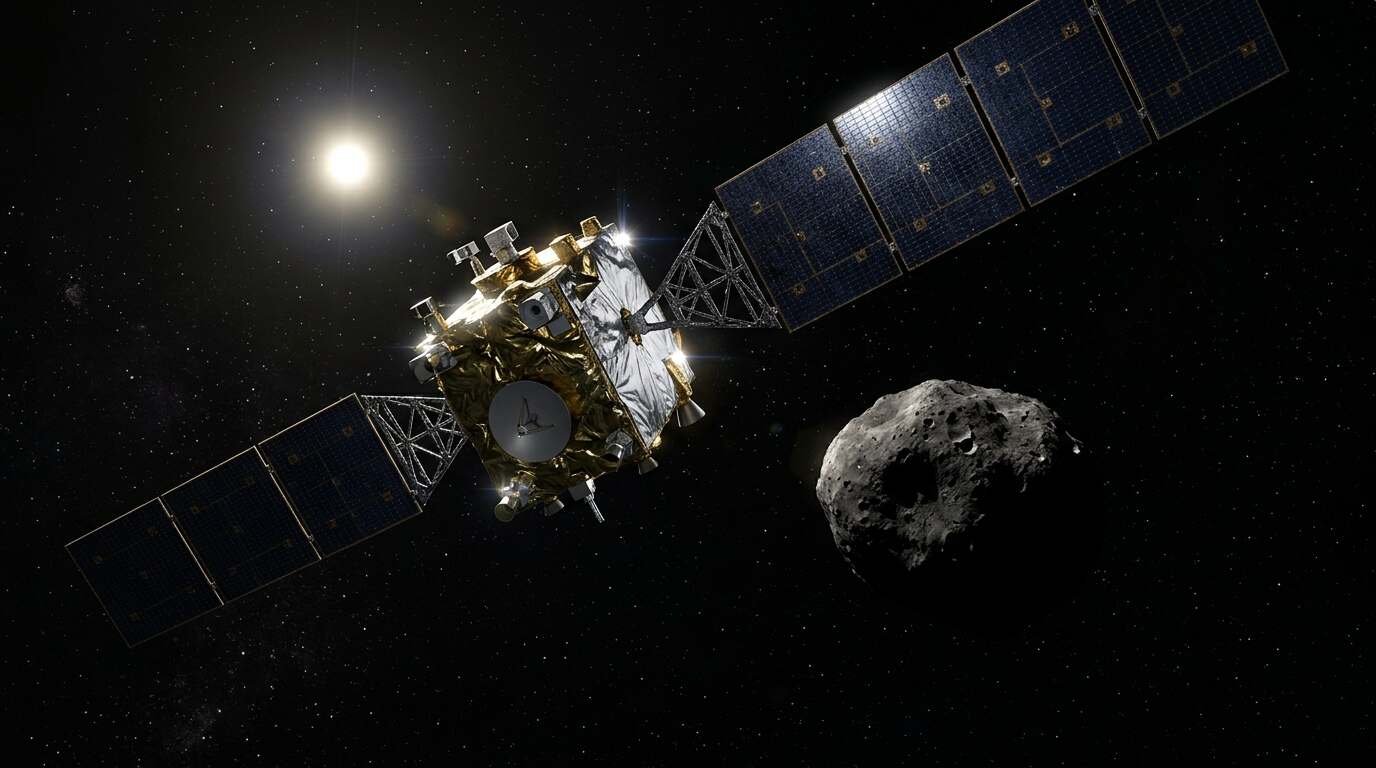
The UAE asteroid mission passed its main hardware milestone on October 1, 2026, when the Technology Innovation Institute in Abu Dhabi announced that the probe for the Emirates Mission to the Asteroid Belt, known as EMA, was complete. The probe is small, has no engine, and is built to hit an asteroid called 269 Justitia in early 2036 and keep working for a short while afterward.
It is a modest spacecraft attached to a much longer plan. The parent vehicle, MBR Explorer, is due to launch from Japan in March 2028, fly past six main-belt asteroids, and spend about seven months orbiting Justitia before releasing the probe. Between now and then sit eight years of cruise and a lot of testing.
The sources I read agree on the outline and disagree on several details, including the arrival year and the spelling of the target’s name. This post sets out what is known, runs the impact numbers, and marks the claims that rest on press statements.
What was announced on October 1
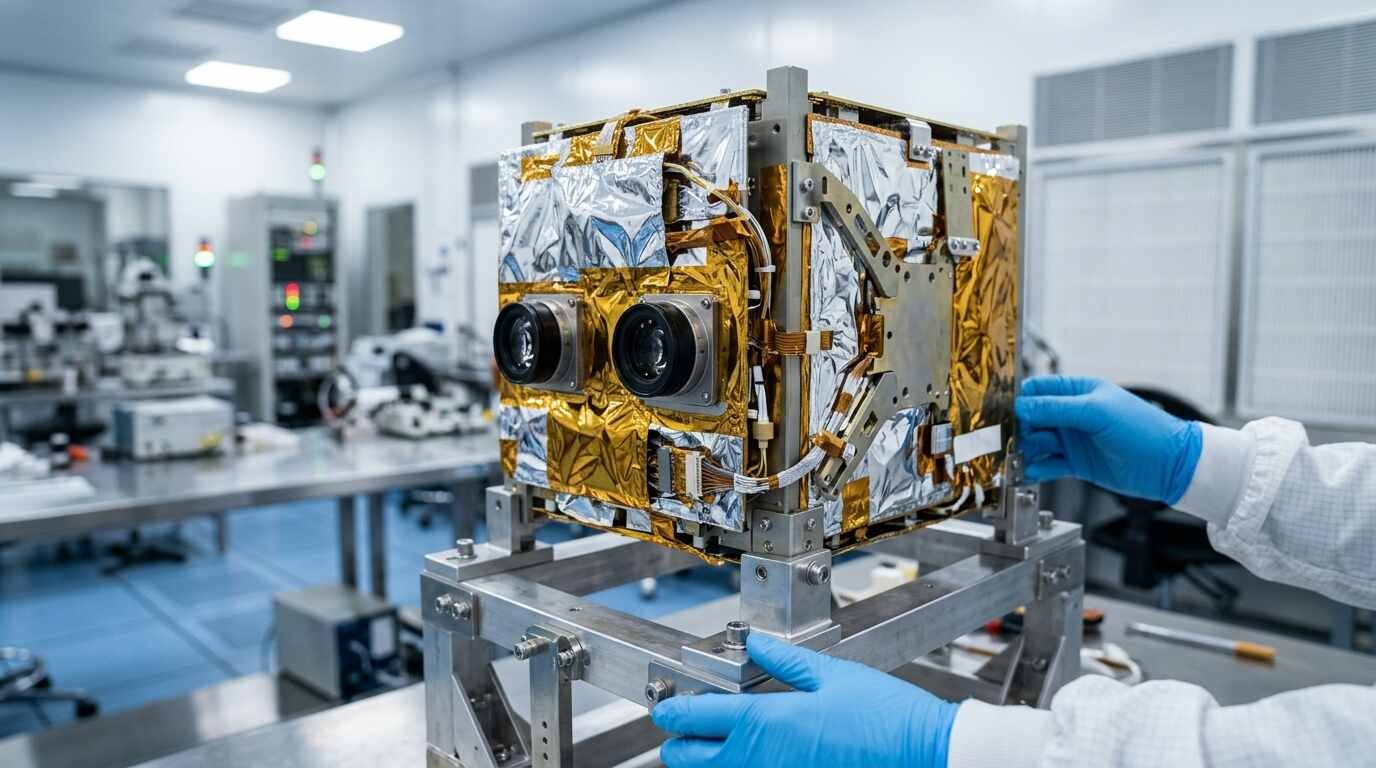
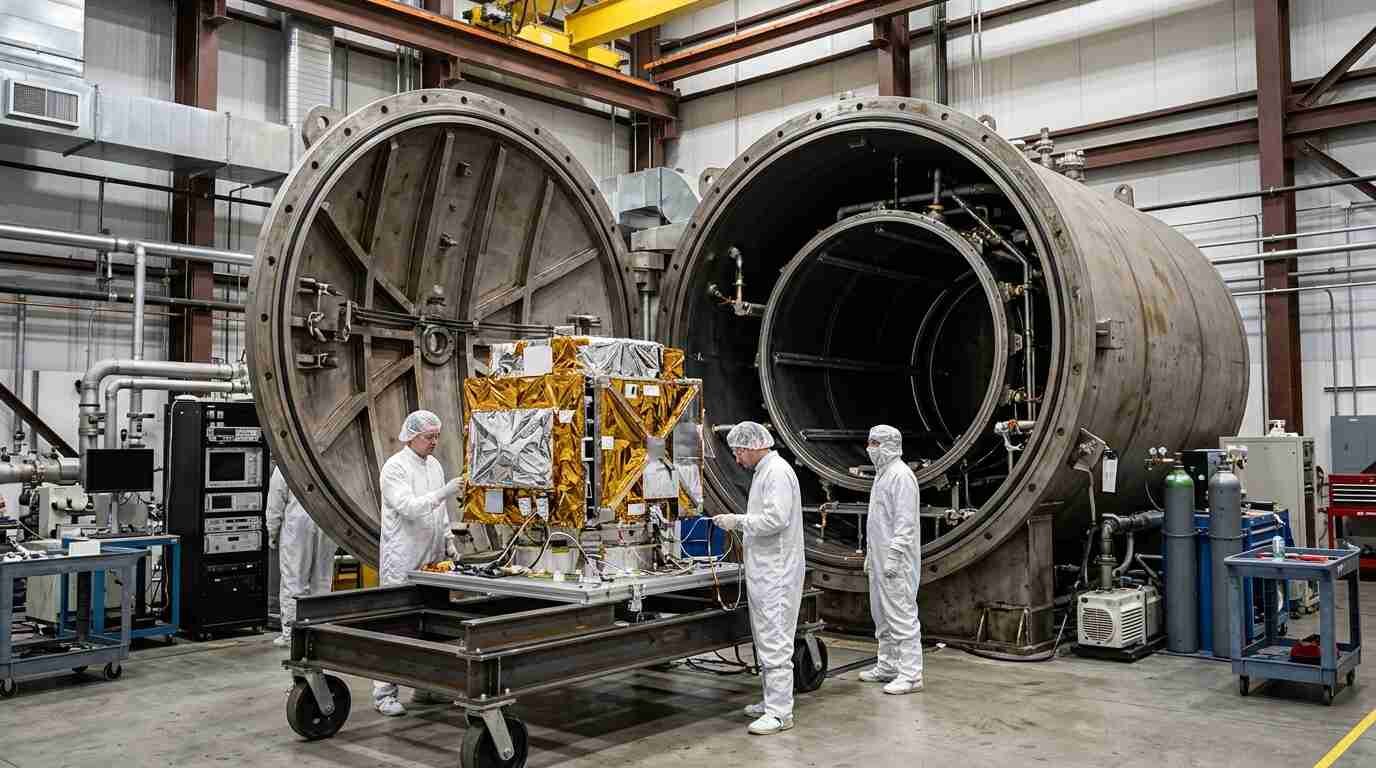
The Technology Innovation Institute, a government-backed research agency in Abu Dhabi, said it had completed the probe, which was designed, built and tested by its Propulsion and Space Research Center with the UAE Space Agency and several university partners. Nature reported that the probe will be shipped to the University of Colorado Boulder for integration with the MBR Explorer spacecraft. According to The National, the flight model has finished vibration testing, thermal cycling in a vacuum chamber is under way at a university in Al Ain, and a flight-readiness review follows before shipment to Colorado later in October.
About 40 people worked on the probe over 18 months, and about 80 percent of the work was done by UAE engineers, The National reports. The probe is the mission’s only deployable payload. Nature gives its mass as roughly 10 kilograms. I did not find a mass figure in the Abu Dhabi Media Office release, so that comes from one source.
The UAE’s first interplanetary mission, the Hope orbiter, reached Mars in 2021 after about six years of development and was a collaboration with partners. The asteroid mission is its second. Nature quotes the institute’s chief executive as saying the probe was built by the UAE alone and that she is confident the next mission will not need the Colorado partnership.
The route to 269 Justitia
Launch is planned for March 2028 within a three-week window, from Japan. The spacecraft then travels about five billion kilometers over roughly eight years, using gravity assists at Venus, Earth and Mars to reach the main asteroid belt, with close encounters with six asteroids along the way. The sources do not name the six.
A gravity assist trades momentum with a planet. The spacecraft approaches, swings around the planet, and leaves with a different speed and direction relative to the Sun, while the planet’s own motion changes by an amount too small to measure. It costs almost no propellant, which is why a mission of this size can reach the belt at all. It also fixes the schedule: planets must be in the right positions, so the institute’s executive director is quoted as saying, ‘We always calculate the schedule from launch, and launch cannot be moved.’
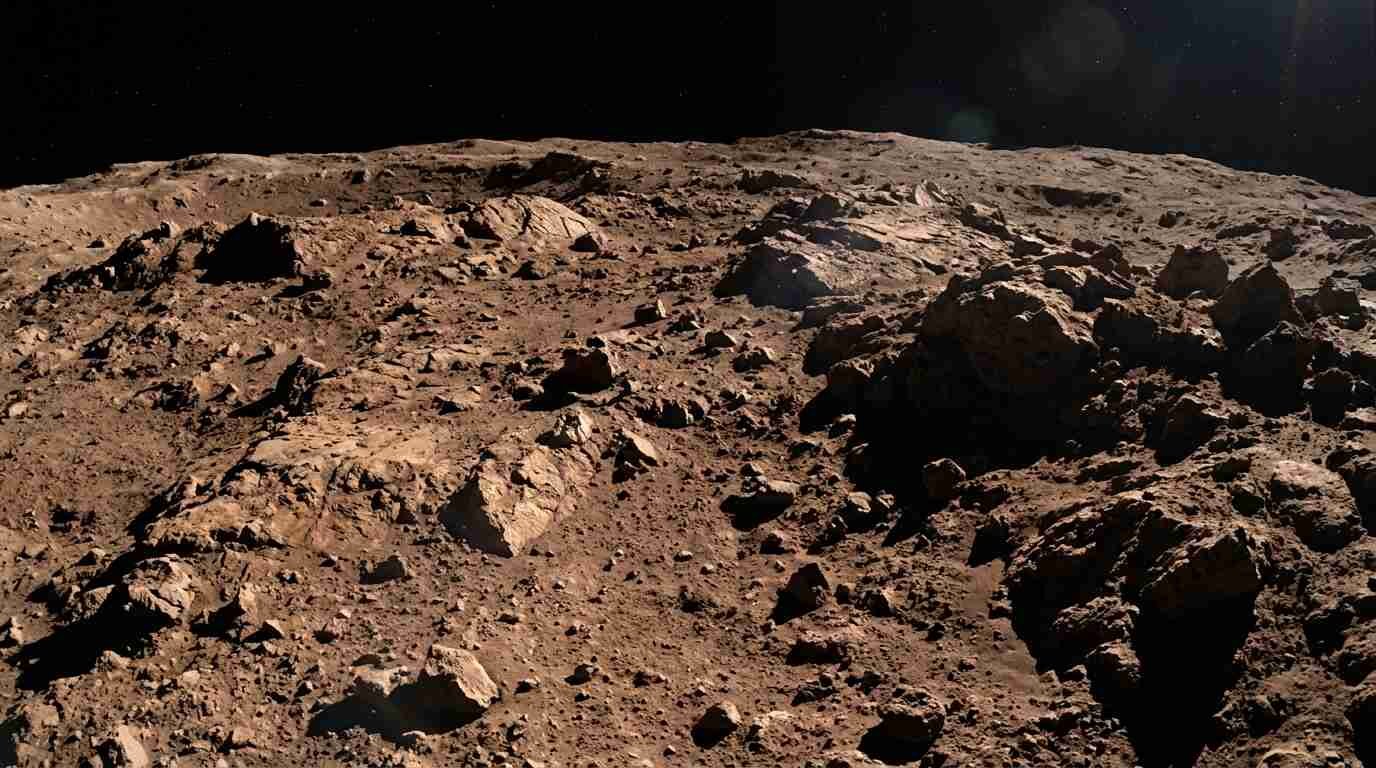
The target is 269 Justitia. The Abu Dhabi release describes it as among the reddest bodies observed in the main belt, with a spectrum closer to Kuiper Belt objects than to neighboring asteroids. A researcher quoted in Nature said that if Justitia migrated inward from the outer Solar System, it could help show how the Solar System formed and where its water came from. Both sources present that as a hypothesis, not an established fact. The release adds that the surface is thought to carry complex organic material produced by irradiated ice.
How a probe with no engine lands
The probe has no propulsion system, The National reports. After release in a low-altitude pass in early 2036, it falls on a ballistic trajectory: its path is set at the moment it separates from the mothership, and nothing corrects it afterward. Descent takes two to three hours.
That puts the burden on the spacecraft. MBR Explorer must fix the release point, velocity and timing from orbit so that the probe arrives where scientists want. A ballistic descent onto a small body is forgiving in one respect, because the gravity is weak and the fall is slow. It is unforgiving in another, because the landing site is wherever the arithmetic puts it.
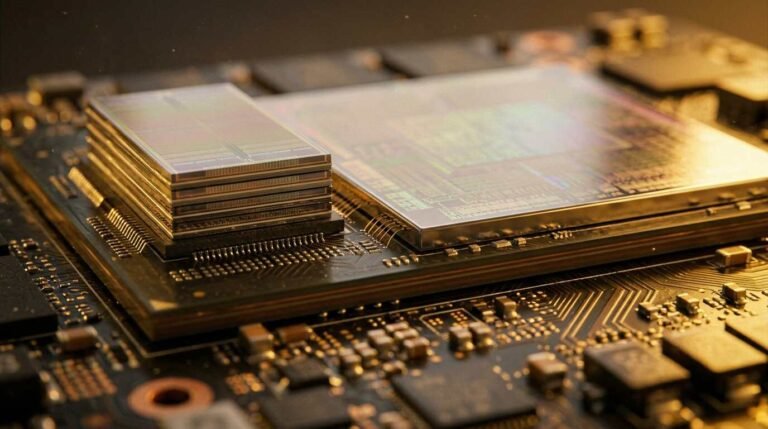
The probe operates fully autonomously and receives no commands from Earth or from the mothership after launch, according to the Abu Dhabi release. Onboard software decides when to image, how many images to take and which ones to keep. A processing unit designed at the institute handles image selection and power management. Two cameras, one wide-field and one narrow-field, provide context and high-resolution data. During the cruise it images continuously and sends data roughly every six months.
Autonomy is not a stylistic choice. A signal to the asteroid belt takes minutes each way, and a descent that lasts a few hours leaves no room for a ground team to react to what the cameras see. The probe must rank its own images and relay the best to the spacecraft in orbit.
The impact numbers
Two figures describe the landing. The National gives an impact speed of 15 to 27 meters per second. It also quotes the institute’s executive director as saying ‘around 60km per hour’, which is about 16.7 meters per second and falls inside the range, though the article’s range tops out at 27 meters per second, about 97 kilometers per hour. The article itself flags that these numbers do not obviously match, and I cannot resolve it.
Kinetic energy is half the mass times velocity squared. At Nature’s figure of roughly 10 kilograms and the full speed range, that is half of 10 times 15 squared, or 1,125 joules, up to half of 10 times 27 squared, or 3,645 joules. For comparison with the quoted 60 kilometers per hour, the energy is about 1,390 joules. Those are my calculations from the quoted mass and speeds, and they assume the 10 kilogram figure describes the probe at impact.
A few thousand joules is small in absolute terms and still enough to damage electronics, which is why the probe is not expected to survive the impact. The National says its battery and communications are designed to keep working for 20 to 50 minutes afterward, and that the impact could dig a small crater. The probe is not meant to be a soft lander. It is a camera that gets one set of close-up images and a few dozen minutes of data relay.
Where the sources disagree
The first conflict is the arrival date. Nature says the probe is expected to reach Justitia in 2035. The Abu Dhabi release and The National say the spacecraft arrives in 2036 and the probe deploys in early 2036, after seven months in orbit. Because launch is in March 2028 and the cruise is about eight years, 2036 is the more consistent figure, but I am relying on the two sources that agree, not on a mission document.
The second is the name. Nature spells the asteroid ‘Justicia’, while the institute’s release and The National use ‘Justitia’. The asteroid catalogued as number 269 is named Justitia; the Nature spelling looks like a slip. I used Justitia throughout.
The third is what ‘solo’ means. Nature’s framing calls it the Arab world’s first solo space probe, and the institute says the probe was built entirely in the UAE. The Abu Dhabi release states the mission is the first with a spacecraft element designed, built, assembled and tested in the country. Nature, however, notes that the MBR Explorer carrier was built with US involvement and that integration happens in Colorado. ‘Solo’ applies to the probe, not the whole mission.
Why landing on an asteroid is still rare
The Abu Dhabi release says that if the landing succeeds, Justitia would be only the seventh asteroid reached on its surface by a probe. Nature separately reports that, according to scientists and engineers involved, the UAE would become the fourth space power to touch an asteroid. Those are two different counts, one of asteroids and one of countries, and the second is attributed to unnamed people on the programme, so I have not checked it.
The difficulty is scale. A small body has negligible gravity, so a spacecraft does not land so much as arrive at very low relative speed and hold on, or in this case strike and report. Navigation has to be precise over hundreds of millions of kilometers, and optical navigation of an unfamiliar object has to work from images the spacecraft itself takes.
What is still unconfirmed
The cost is not given in any source I read. A May 2026 decision by the Supreme Space Council approved a AED 1 billion International Space Cooperation Program supporting the National Space Strategy 2031, according to the Abu Dhabi release, but that is a program, not this mission’s budget. Nobody has published the instruments on the spacecraft beyond cameras and spectrometers, or the mass of MBR Explorer.
The six intermediate asteroids are not named. The probe’s expected function after impact is a design intention, with no test result. And the 2036 landing sits eight years past a launch that has not happened, so every date downstream of March 2028 depends on that window being met. If it is missed, the planetary alignment moves and the whole schedule shifts.
Frequently asked questions
What is the Emirates Mission to the Asteroid Belt?
It is the UAE’s second interplanetary mission, after the Hope Mars orbiter. A spacecraft called MBR Explorer will fly past six main-belt asteroids and then orbit 269 Justitia, where it will release a small probe built by the Technology Innovation Institute.
When does the UAE asteroid mission launch?
The planned launch is March 2028 from Japan, within a three-week window. Arrival at Justitia is reported as 2036 by two sources and 2035 by Nature.
Will the probe survive landing on Justitia?
It is not expected to. It has no propulsion and falls ballistically, striking at a reported 15 to 27 meters per second, but its battery and communications are designed to work for 20 to 50 minutes after impact.
Why is Justitia an interesting target?
It is among the reddest main-belt asteroids, with a spectrum closer to Kuiper Belt objects. If it formed far out and migrated inward, it could carry clues about the early Solar System, though that remains a hypothesis.
A ten-kilogram probe will not change planetary science on its own. What this milestone shows is a national program taking one subsystem from drawing board to finished hardware and then holding it for roughly five years of waiting. The real test comes in two stages: the March 2028 launch, which cannot slip without a long delay, and the early-2036 descent, which will be judged within the first hour. If the images arrive, a reddish object that looks like it came from the outer Solar System gets its first close inspection, and the argument about where its material came from moves from spectra to pictures. If they do not, the six asteroid flybys still stand.
Sources