German integrator Intilion joins Alfen and Merus on CATL's sodium-ion BESS. What the specs claim, the cycle-life math, and what is still unproven.
A grid-scale sodium-ion BESS from CATL picked up another European customer on October 8, 2026, when the German integrator Intilion announced an agreement targeting up to 3 GWh of projects in Germany, Austria and Switzerland. Energy-Storage.News reported the deal on October 9 alongside earlier ones from Alfen of the Netherlands and Merus Power of Finland.
All three integrators are buying a product CATL launched in June under the name Tener Sodium. It swaps lithium for sodium in the cell, claims a very long cycle life, and keeps working in the cold. Almost every number attached to it, though, is a manufacturer claim, and most European developers say the technology is not yet bankable.
This post lays out what has been signed, what the published specifications say, what the cycle-life claim means in practice when you do the arithmetic, and where the sources disagree with each other.
The three European deals
Intilion’s agreement, announced on October 8, targets up to 3 GWh in the DACH region. The word ‘up to’ matters. It is a ceiling for projects the company hopes to build, not a purchase order for 3 GWh of delivered equipment. Intilion has mainly operated in Germany until now.
Alfen signed a 5 GWh deal with CATL in July for European deployments, about a month after the product launch. Energy-Storage.News calls it a signed deal in its October article, whereas its July 28 technical piece describes the Alfen arrangement as a 5 GWh memorandum of understanding. Those are different commitments, and the sources do not reconcile them.
Merus Power already has 500 MWh of CATL storage deployed in Europe and signed for 3 GWh more in June. It is finalising the technical specification between its power conversion system and CATL’s sodium-ion system, after which it will offer the product to the market. Merus director Mikko Marttala told the Energy Storage Summit Germany in Berlin in September, ‘If CATL guarantees it, then it will be bankable.’ On timing he said, ‘I would be surprised if we are not building projects with it next year in Northern Europe.’
What CATL says the system does
CATL has not disclosed the cell chemistry, according to the technical write-up. The article says sodium iron phosphate pyrophosphate is the most common chemistry for storage, but that is the author’s context, not a CATL statement. The headline performance claims are these.
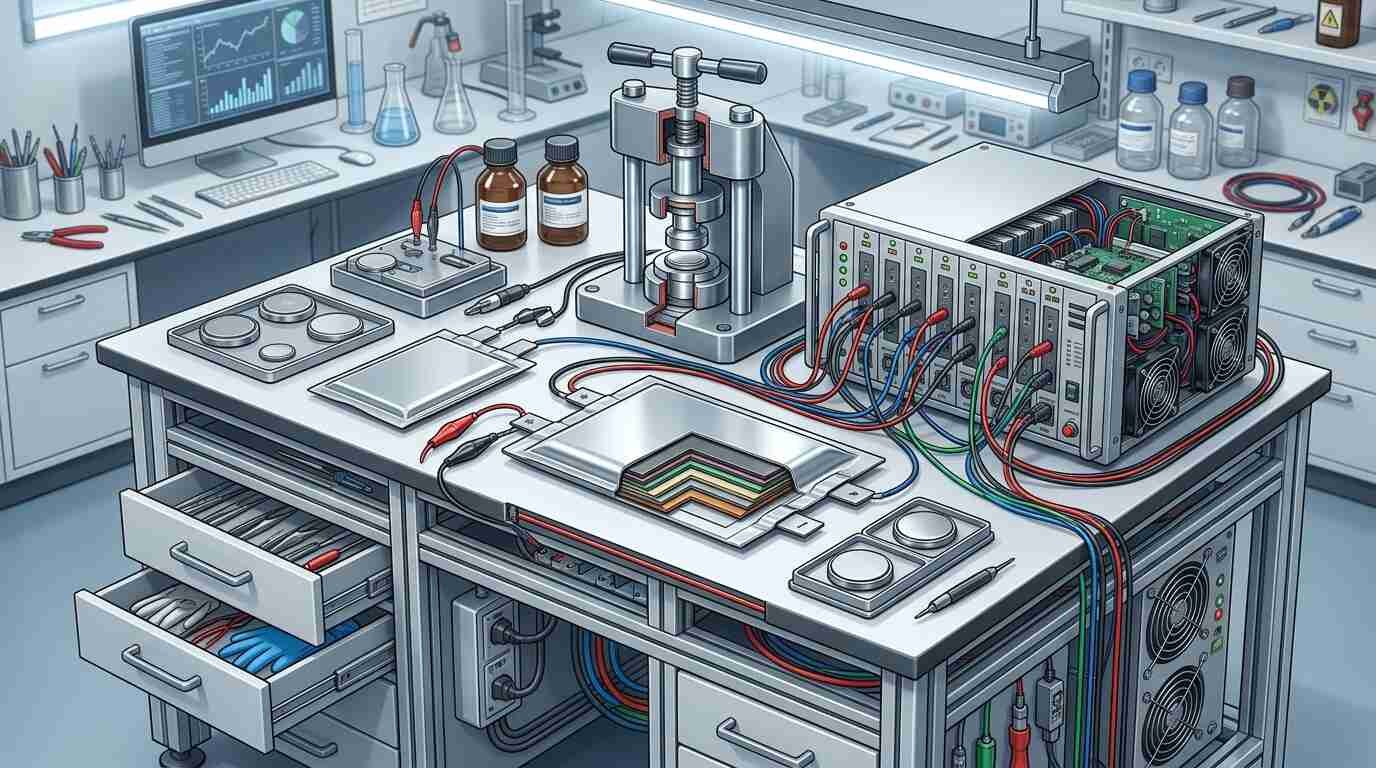
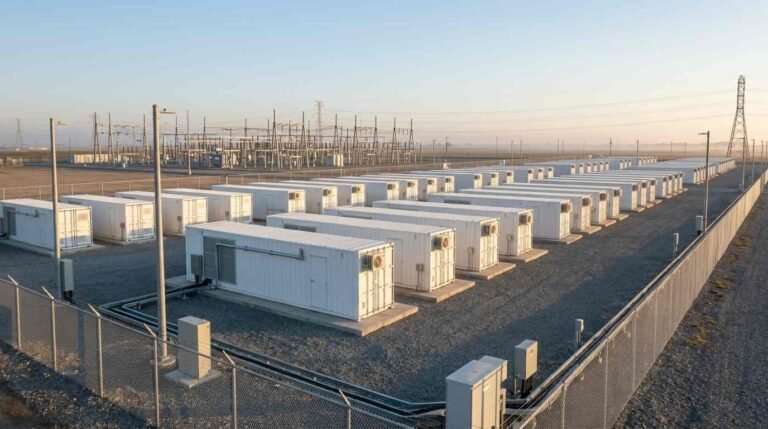
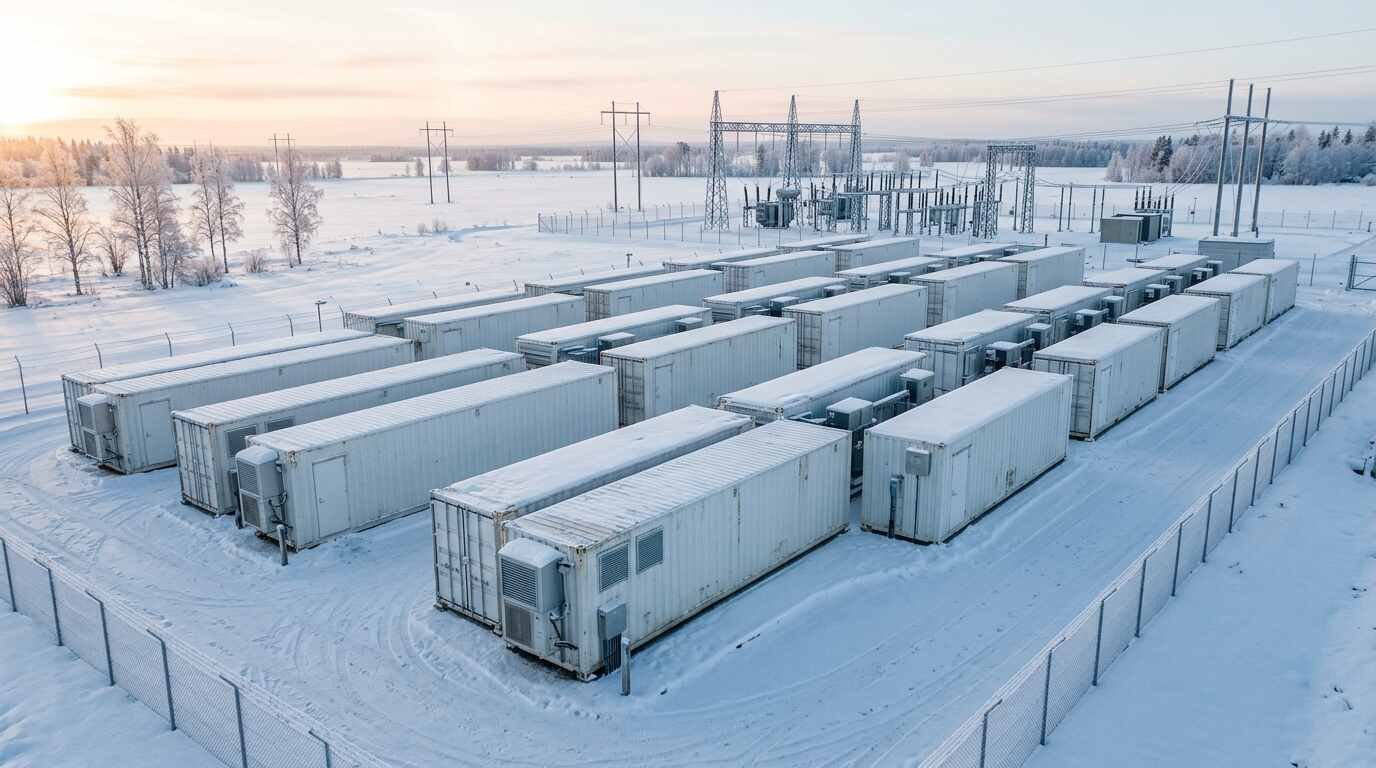
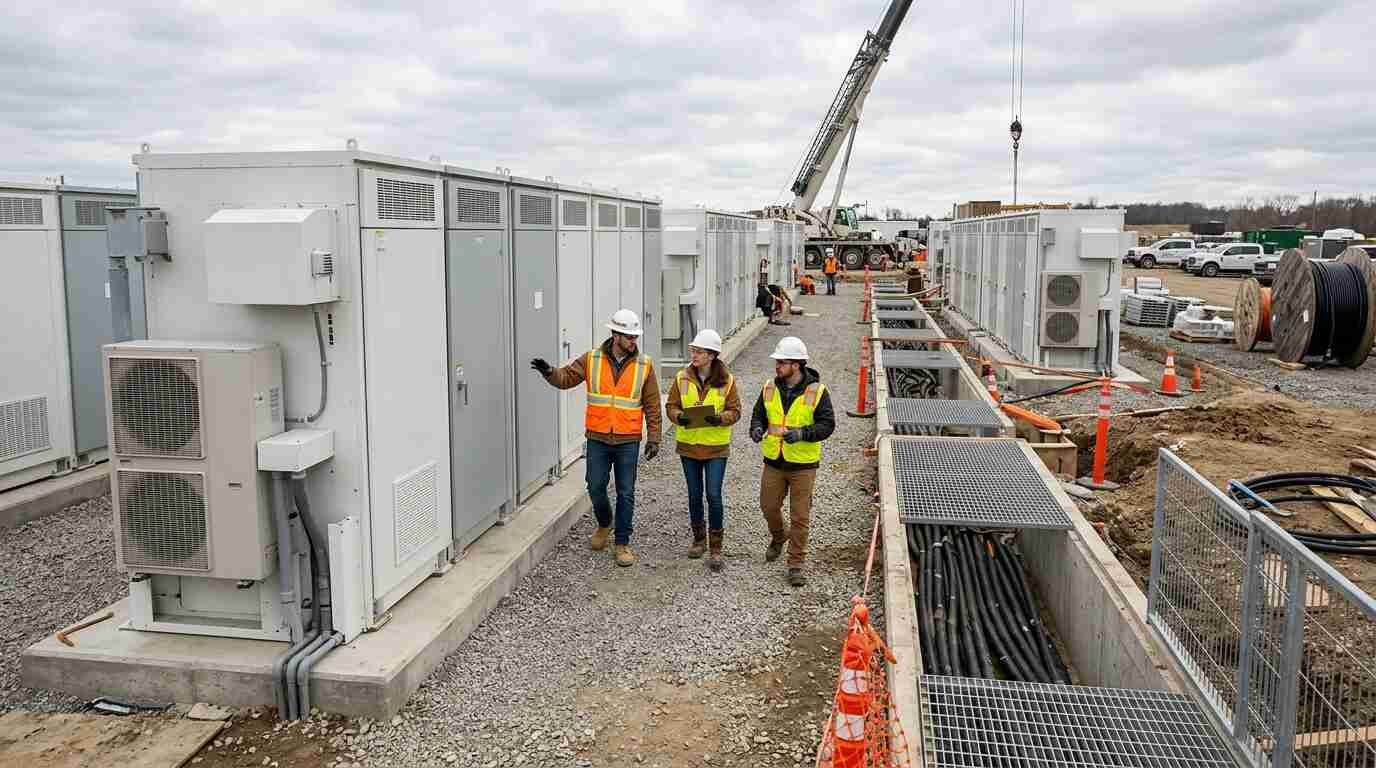
Each configuration is rated at 30 MWh or slightly more, built from eight modules of 3.75 MWh. A 1 GWh site could use 34 of them. Cycle life is about 15,000 cycles at 25 degrees Celsius and over 10,000 at 45 degrees, measured to 70 percent state of health, with a service life of 25 to 30 years and a 30-year warranty. The system retains over 92 percent of capacity at minus 20 degrees without insulation or active cooling.
Efficiency claims are smaller but concrete. A bidirectional voltage regulation system improves round-trip efficiency by about 2 percent, and auxiliary power use falls from 2 percent, which the article calls the industry standard, to 1 percent. Cell voltage spans 1.5 to 4.3 volts against 3 to 4 volts for lithium-ion, and the system holds a 690-volt output with a 2,000-volt upgrade path reserved for later. A noise level of 65 decibels is stated as 10 decibels lower than conventional lithium-ion systems.
How sodium-ion differs from lithium-ion
The general principle is the same. During charging, positive ions move from the cathode through an electrolyte and settle in the anode; during discharge they return, and electrons do the work through the external circuit. In a sodium-ion cell the traveling ion is sodium. This section is background, not something the sources covered.
Sodium is plentiful and cheap compared with lithium. CATL executives, as quoted by one trade outlet, say sodium carbonate costs about 1 percent of lithium carbonate. That is a raw-material price comparison, not a cell or system price, and the cell also needs electrodes, electrolyte, packaging and a battery management system, none of which shrink by 99 percent.
The tradeoff is physical. A sodium ion is heavier and larger than a lithium ion, which usually means lower energy per kilogram. The technical write-up notes that CATL gave no cell energy density in watt-hours per kilogram and says density gains are mainly at the system level. Stationary storage rarely cares about weight, which is why sodium is being tried there first. A unit that weighs tens of tonnes does not need to be light.
Working through the cycle-life claim
Start with the size. Eight modules of 3.75 MWh give 30 MWh per configuration, and 34 configurations come to 1,020 MWh, consistent with the 1 GWh site example. At 5 GWh, Alfen’s deal corresponds to roughly 167 configurations. Both of those are my arithmetic, and they assume 30 MWh each.
Now the lifetime. If a configuration really delivers 15,000 full cycles at 30 MWh, the nominal throughput is 450,000 MWh, or 450 GWh, before accounting for the capacity fade the 70 percent state-of-health limit allows. A 500 MWh, four-hour project, the example CATL uses for a cost-savings estimate, would be a 125 MW plant. At one full cycle per day that plant would use 365 cycles a year, so 15,000 cycles would last about 41 years, longer than the 30-year warranty.
That tells you what the warranty means. Thirty years at 15,000 cycles implies 500 cycles a year, or about 1.4 per day. At 10,000 cycles, which is the figure given for 45 degrees, 30 years implies about 333 cycles a year, a bit under one a day. Whether the warranty actually binds depends on how hard the storage is worked. A system that cycles once a day for arbitrage would not come near the cycle limit in 30 years; a frequency regulation duty could.
None of this has been verified by testing outside CATL. The technical write-up says plainly that all the figures are company claims rather than independent results, and that the ‘millisecond-level self-healing’ feature is really fault isolation: 200 milliseconds to detect and isolate, 150 to restore, with failed cells still needing human replacement.
Where the sources disagree
Three discrepancies stand out. The first is delivery dates. One report says initial shipments in China start in September 2026 with international deliveries from June 2027; another says 1 GWh of shipments in China is planned for 2026 and Europe and global shipments begin in 2027. These are broadly compatible but not identical.
The second is weight. One article says each 3.75 MWh module weighs 42 tonnes, while another says a unit of just under 30 MWh weighs about 42 tons. Eight modules at 42 tonnes each would be 336 tonnes per configuration, so one of these is probably describing the wrong object. I would not use either figure for logistics.
The third is cycle life. Both articles give 15,000 cycles at room temperature and 10,000 or more at 45 degrees, but the second attributes the lower figure to a company spokesperson and implies the headline is a best case. Treat 10,000 as the planning number until a datasheet says otherwise.
Capacity, contracts and the forecast gap
CATL has described a 60 GWh, three-year supply agreement in China with HyperStrong, per the technical write-up. Another report says the 60 GWh deal’s customers and regions are unnamed, so the HyperStrong attribution is not consistent across sources. The same report lists planned production capacity of 40 GWh a year at Fuding and 160 GWh at Jining in Shandong. Those are planned figures.
The market forecasts diverge widely. A former Fluence executive, Marek Kubik, predicted in August that sodium-ion could reach a BESS market share ‘closer to 90%’ by 2035. Benchmark and Fastmarkets analysts predict about 11 percent. A spread of eight to one between informed forecasters is a sign the price and performance data are not yet public. CATL itself positions sodium-ion as an add-on to lithium rather than a replacement.
What is still unconfirmed
The central unknown is bankability. Most developers and owners the publication has spoken to in Europe say the technology is not yet bankable, which in practice means lenders will not finance projects without long-term performance guarantees backed by a creditworthy supplier. Marttala’s quote makes that dependence explicit: the question is whether CATL’s guarantee is credible enough.
Other gaps remain. The articles give no system price per kilowatt-hour, no cell energy density, no full operating temperature range, and no independent test data. CATL’s reserved 2,000-volt architecture is an upgrade path rather than a feature of the units being sold. The claimed 5 percent improvement in state of health comes from a LinkedIn post according to the technical write-up. And the 1 percent sodium carbonate price comparison tells you nothing about what a finished system will cost.
Frequently asked questions
What is a sodium-ion BESS?
It is a battery energy storage system that uses sodium-ion cells instead of lithium-ion cells. Sodium is far more abundant than lithium, but its larger ion generally gives lower energy per kilogram, which matters less for stationary storage.
How many cycles does CATL claim for Tener Sodium?
About 15,000 at 25 degrees Celsius and over 10,000 at 45 degrees, measured to 70 percent state of health, with a 30-year warranty. These are company claims without independent testing.
When will sodium-ion storage be deployed in Europe?
CATL’s reported schedule has international deliveries starting around June 2027. Merus Power’s director said he would be surprised if the company were not building projects with it next year in Northern Europe.
Will sodium-ion replace lithium in grid storage?
Forecasts range from about 11 percent market share by 2035 (Benchmark and Fastmarkets) to closer to 90 percent (a former Fluence executive). CATL itself describes sodium-ion as complementary to lithium.
The point to take from the three European deals is how little of the commitment is binding. Up-to figures, memoranda and finalising a specification are the language of an option, and the option is cheap for integrators because CATL carries the technical risk. The test will come in 2027, when real units ship, and then in the years of field data lenders need before sodium-ion storage can be financed at the same rates as lithium. If a 15,000-cycle claim holds in the field, storage in cold climates changes. If it does not, this will be remembered as a launch with unusually good press. Watch for the first independent datasheet and the first project financing.
Sources