EPRI says BESS failure rates per deployed GWh fell 98% from 2018 to 2025. Here is how the figure works, what drove it, and what the report leaves out.
BESS failure rates, meaning fires, explosions and other safety events at grid-scale battery storage sites per unit of installed capacity, dropped 98 percent between 2018 and 2025, according to a report the US Electric Power Research Institute released on October 5, 2026. The finding was reported on October 8 by Energy-Storage.News.
The claim matters because battery sites are being built next to towns, and local opposition usually starts with a fire. EPRI’s argument is that the industry has gotten far safer even as the installed base exploded. The detail underneath that headline is more interesting than the headline, and some of it is missing from the coverage I could read.
Below: what was measured, how a rate can fall 98 percent while fleets grow, why failures cluster where they do, and the open questions.
What EPRI reported
The report is titled Risk Factors and Failure Statistics of Lithium-Ion BESS and draws on EPRI’s BESS Failure Incident Database, which compiles real-world events. According to Energy-Storage.News, annual BESS failures per deployed gigawatt-hour fell 98 percent globally between 2018 and 2025, while capacity grew rapidly. Global new deployments passed 300 GWh in 2025, and cumulative installed capacity is expected to exceed 7,000 GWh by 2035.
Several other claims sit alongside the headline. The failure rate of battery systems is now described as comparable to that of large oil-filled transformers. Of all recorded utility-scale incidents, 93 percent caused no injuries or fatalities. No incident was reported to have spread beyond the facility perimeter, and no member of the public has suffered an acute injury from a BESS arc flash, fire or explosion.
I could not open the EPRI report itself, only the trade-press write-up of it. That limits how far I can go. The write-up gives no absolute incident counts and no per-GWh rate values, only the percentage change. The 98 percent figure is therefore a ratio between two numbers I cannot see.
How a rate falls 98 percent while the fleet grows
A failure rate divides incidents by capacity. When capacity is the denominator and it grows fast, the rate can fall even if the raw number of incidents rises, and the reverse is also possible. A 98 percent decline means the 2025 rate is one fiftieth of the 2018 rate (0.02 of the original).
A hypothetical makes the arithmetic concrete. The numbers here are mine, chosen for illustration, and are not EPRI’s. Say 2018 had a fleet of size F and a rate R, so incidents equal F times R. If the fleet grew twentyfold and the rate fell to one fiftieth, incidents would be 20 times F times R divided by 50, which is 0.4 times F times R. The fleet is twenty times larger and the yearly incident count is lower than it was in 2018.
That scenario is plausible in direction, not in magnitude. It also shows why the denominator definition matters. Energy-Storage.News says ‘annual failures per deployed GWh’ without saying whether the denominator is capacity added that year or total installed capacity. Cumulative capacity is the more natural measure for a fleet that is already running. The coverage does not say which one EPRI used, so I would treat the exact meaning of the rate as unconfirmed.
The earlier study this builds on
EPRI, the Pacific Northwest National Laboratory and the analytics firm TWAICE published a study in May 2024 that found a 97 percent drop in failure incidents from 2018 to 2023. Energy-Storage.News read the chart from that study as roughly 9.2 failures per GW of deployed storage in 2018 versus about 0.2 in 2023. That is the outlet’s reading of a figure, not a published table.
Check the consistency: 0.2 divided by 9.2 is about 0.022, a decline of about 97.8 percent, which matches the reported 97. The new 98 percent for 2018 to 2025 is therefore a modest further improvement rather than a new step change. Note that the 2024 chart used per-GW units and the 2026 coverage uses per-GWh, so the two series are not directly comparable unless the unit change is only a labeling difference.
The 2024 database held 81 incidents, of which only 26 had enough public information to assign a root cause. That small sample is a caution on every statistic derived from it. Battery fires also destroy evidence, which limits what an investigation can recover.
Why failures cluster where they do
The 2024 analysis found that 72 percent of failures with a known system age occurred during construction, commissioning, or in the first two years of operation. Of the 26 incidents with an assigned cause, 10 were attributed to integration, assembly and construction, about 38 percent. In the same analysis, 65 percent of incidents were linked to operation and integration, and only 11 percent to cell or module failures.
EPRI’s September 2024 perspective document makes the same point in plain terms: most failures stem from system integration rather than the cells. That means wiring, power conversion, thermal management, controls and installation quality. A cell is manufactured in a factory under tight process control. A site is assembled by many contractors under schedule pressure, and its parts are tested together only at commissioning.
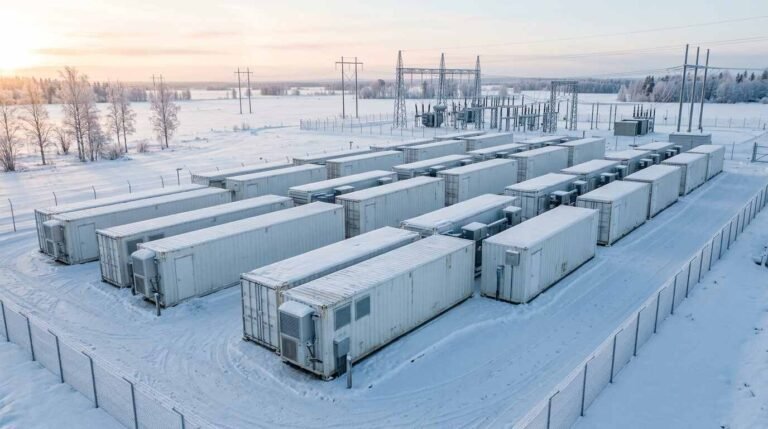
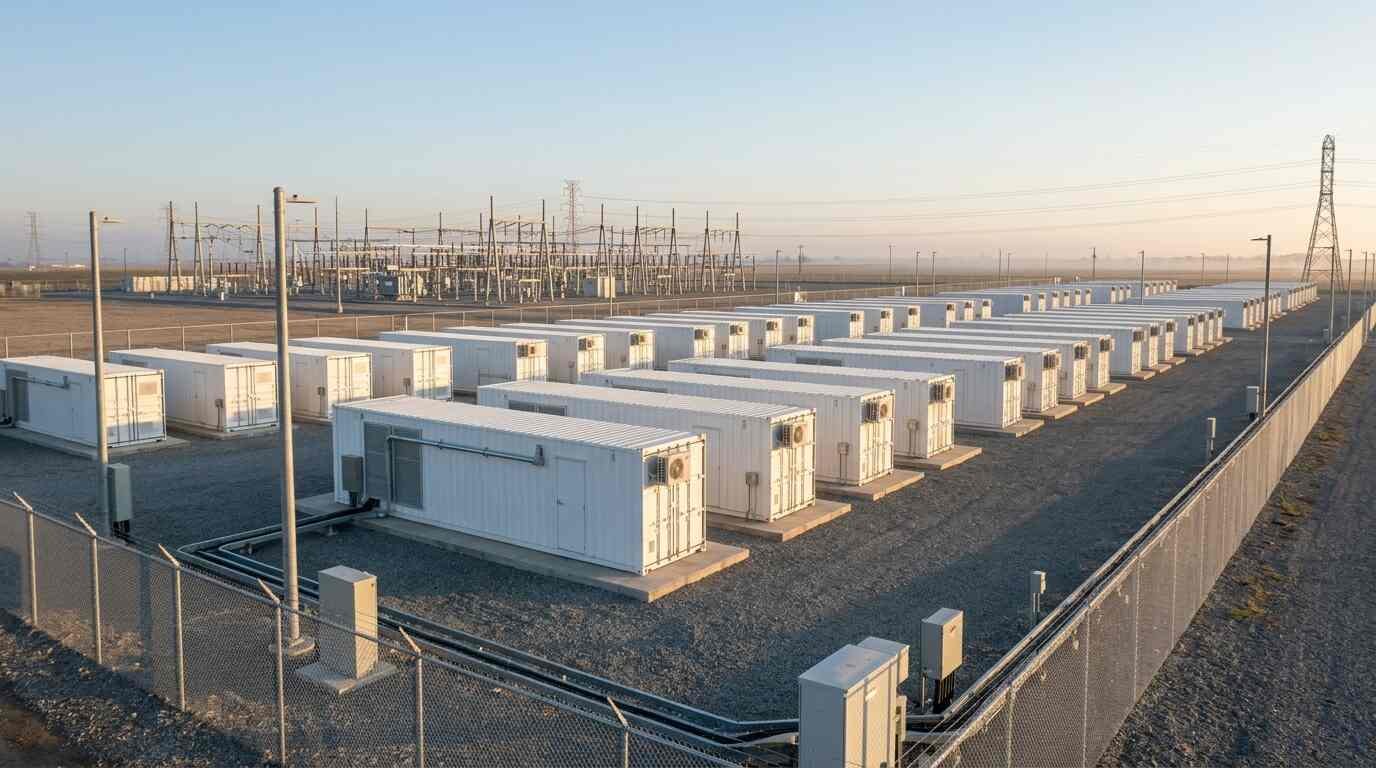
The October 2026 report adds findings about site design. Indoor facilities are overrepresented in incidents and, on average, sustain more damage. EPRI also flags propagation within and between units as a key risk and recommends fire walls or other barriers in large indoor sites. Failure rates fall with newer designs, and EPRI recommends safety reviews and retrofits of early-vintage systems to current codes.
What actually fails inside a battery
The mechanism behind the headline risk is thermal runaway, and this section is general background rather than something the sources spelled out. A lithium-ion cell stores energy in a flammable organic electrolyte. If an internal short, overcharge, mechanical damage or excessive heat pushes a cell past a threshold, exothermic reactions begin and feed themselves. Heat raises temperature, which speeds the reactions further.
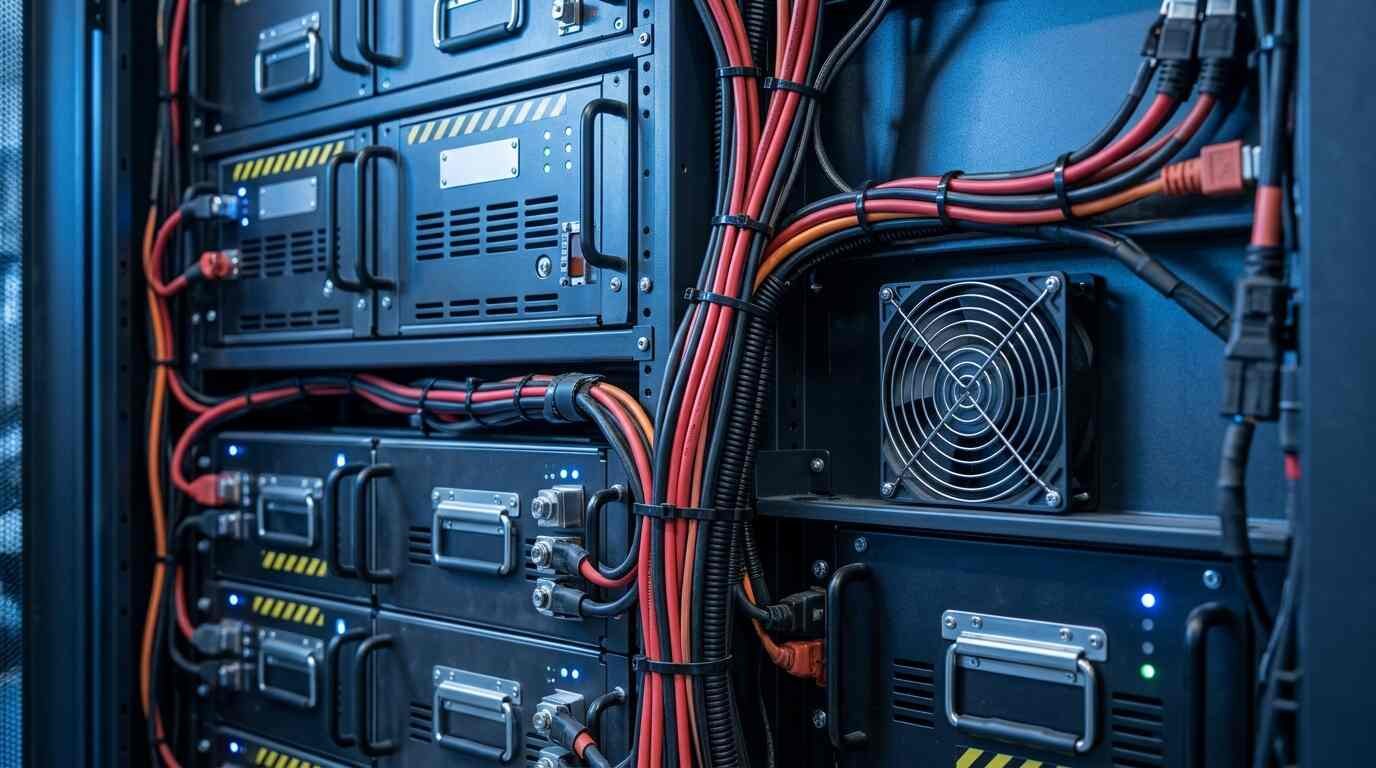
A single cell is small. The damage comes when its heat reaches neighbors and triggers them in turn, which is why propagation is the quantity EPRI emphasizes. Barriers, spacing and venting aim to break that chain. Monitoring aims to catch the abnormal cell early, and the battery management system sits at the center of that effort.
One finding in the new report is easy to misread. EPRI says researchers could not separate the effect of cell chemistry from improvements in design maturity and industry practice, so they did not find chemistry alone to be a risk factor for system-level failures. That does not say all chemistries are equally safe. It says the data cannot tell them apart once everything else improved at the same time.
The incidents that complicate the picture
Even a favorable statistic leaves cases that people remember. A 2019 fire at a facility in Surprise, Arizona injured four firefighters, and the coverage says no US injuries or deaths linked to BESS failures have been reported since. The 2025 fire at Moss Landing, an indoor configuration, illustrates the spread risk. The article notes that Moss Landing was a unique repurposed turbine hall setup, which is a way of saying it is not representative of typical designs.
Consequences do not end when the flames do. The same report coverage notes that NextEra suspended operations at two Long Island facilities over possible water contamination from a fire suppression agent used in a 2023 incident. Injuries are one axis of risk. Environmental effects and community trust are others, and a statistic about injuries does not address them.
EPRI itself stresses that failures remain rare but that understanding risk is needed for further gains. It also says data-driven thresholds are needed for precautionary measures so that communities are not overburdened, and that transparency about failures is essential. That last point carries weight, because a database built from publicly reported events can only be as complete as public reporting.
What is still unconfirmed
The biggest gap is coverage. The article does not describe how complete the incident database is, and EPRI acknowledged in 2024 that owners and operators have reported little to no information on root causes, so the database is incomplete. A rate based on reported incidents can improve because systems got safer, because reporting got worse, or both. The report probably addresses this, but I have not read it.
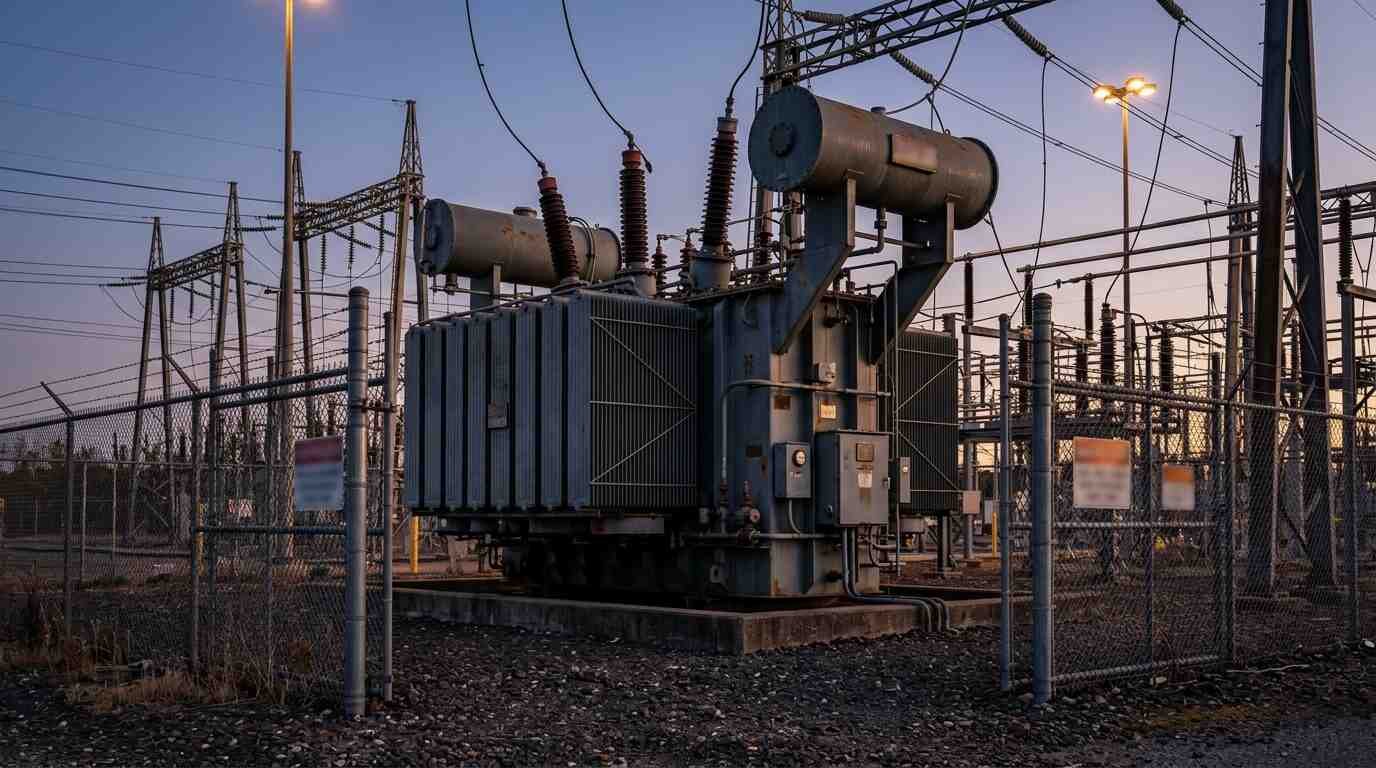
A second gap is that the oil-filled transformer comparison has no numbers in the coverage. Transformers are an old, mature technology with decades of data, so the comparison is flattering if true, but I could not verify the underlying rate. Third, the 99 versus 98 question: a different URL on the same site carries a headline saying 99 percent, and the article it returns says 98. I treated 98 as correct because the body, the headline and the update note all say so.
Finally, the forecast of more than 7,000 GWh by 2035 is a projection, and a rate that is low today still multiplies across a fleet that large. If incident rates plateau while capacity grows twentyfold, the count of events will rise, and communities will notice that more than any percentage.
Frequently asked questions
What does a 98 percent drop in BESS failure rates mean?
It means the rate of failures per unit of deployed capacity in 2025 is about one fiftieth of the 2018 rate, according to EPRI as reported by Energy-Storage.News. It does not mean incidents fell 98 percent in absolute number, because installed capacity grew a great deal.
Do battery storage fires hurt people?
In EPRI’s data, 93 percent of recorded utility-scale incidents caused no injuries or fatalities, and no member of the public has suffered an acute injury from a BESS fire, explosion or arc flash. A 2019 fire in Surprise, Arizona injured four firefighters.
Why do most battery storage failures happen early?
EPRI-linked analysis found 72 percent of failures with a known age occurred during construction, commissioning, or the first two years of operation, mostly tied to integration and installation rather than the cells.
Are indoor battery storage sites riskier?
EPRI says indoor facilities are overrepresented in incidents and sustain more damage on average, and recommends fire walls or other barriers in large indoor sites.
The report’s most useful message may be the least dramatic one: the dangerous part of a battery site is mostly the site, not the cell. If integration quality drives the failures, then the fix is dull. Inspections at commissioning, retrofits of early systems, barriers between units, and honest incident reporting. The 98 percent is a credit to that work, and also a reminder that a rate is a fraction. Communities will judge battery storage by how many sites they have to live next to and how any single failure is handled, so the next improvement to measure is not another percentage but transparency about the events that still happen.
Sources
- Energy-Storage.News: Global BESS failure rates declined 98% between 2018 and 2025
- Energy-Storage.News: Battery storage failure incident rate dropped 97% between 2018 and 2023
- Utility Dive: Cells and modules not responsible for most battery energy storage system failures
- EPRI: Lithium Ion Battery Energy Storage Fire Safety Measures (EPRI Perspective, September 2024)