






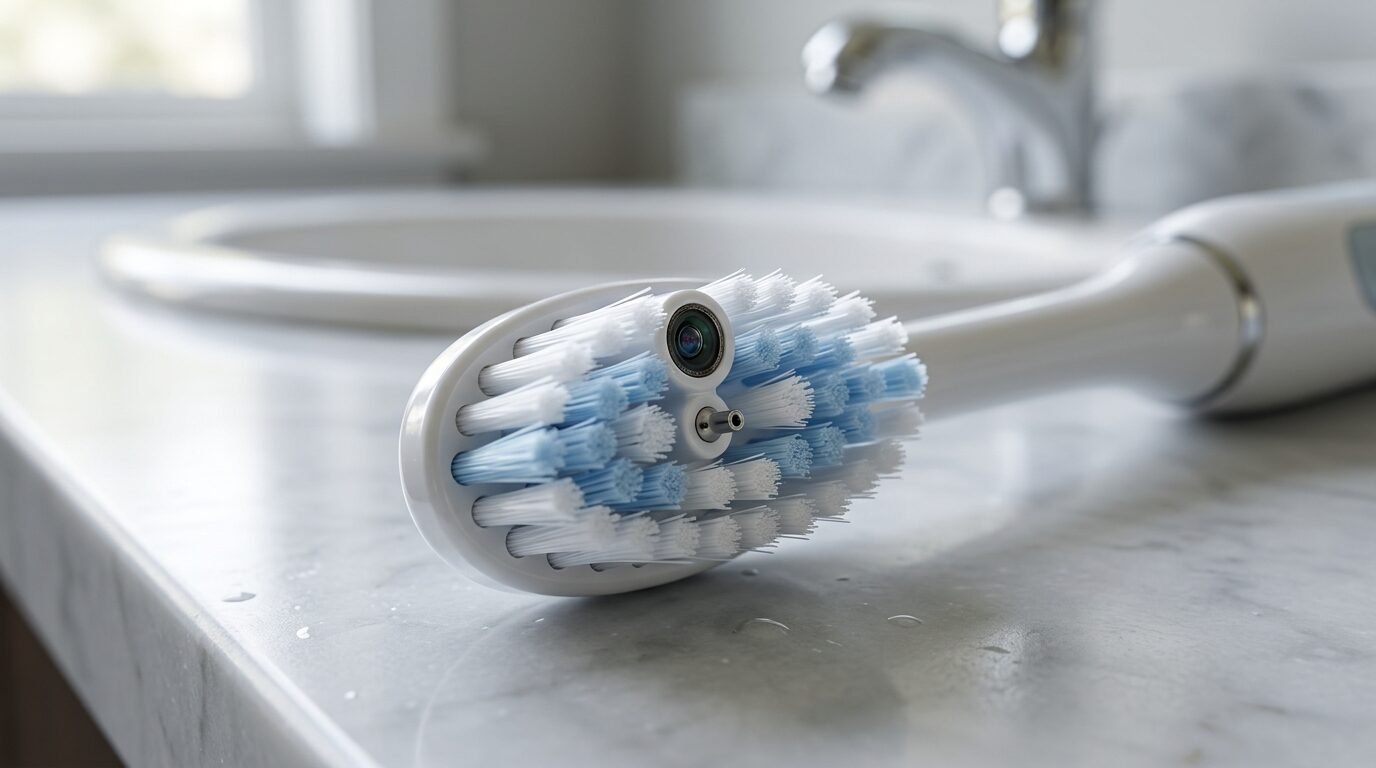
Dyson CameraJet analysis: how the 28 fps camera, anti-gravity water jet and sonic brush work, what three years of ownership costs, and what is unproven.
The Dyson CameraJet is a $499.99 electric toothbrush with a camera about 0.1 megapixels in size under its brush head, a built-in water jet and a dock that charges and refills it. It went on sale September 1 in the U.S. at $499.99, in the UK at £419.99 and in Australia at AU$799, and the first reviews landed the same day.
That is a lot of engineering to put in a bathroom. A brush that watches your teeth, aims a jet at the gaps and streams a live view to an app is either a clever answer to a real dental problem or an expensive way to add moving parts. The published evidence so far can say something about the engineering and very little about the dentistry.
How this was written. Nobody at x9m8 has used the CameraJet. This is an analysis of Dyson’s published specifications, Engadget’s September 1 report, which was based on a brief demo, and TechRadar’s September 1 review, written after about a week of home use. The cost arithmetic is mine and is labeled.
What the price covers
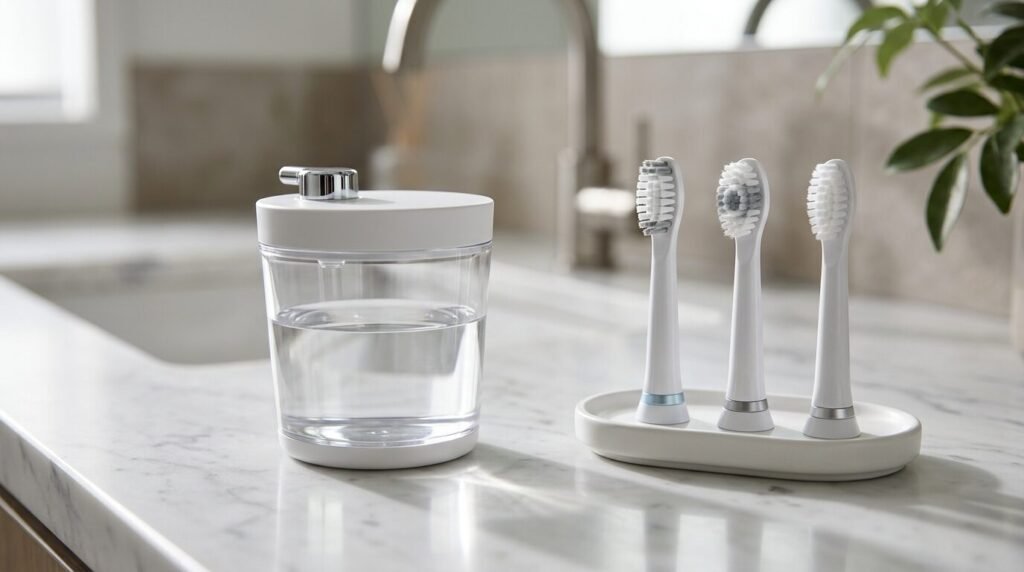
The $499.99 price includes the brush, a charging dock, a travel case, a 75 ml tube of Dyson toothpaste and a 400 ml bottle of Dyson mouthrinse, according to TechRadar. Engadget lists the dock, a charging cable, two regular brush heads and the case. The two outlets describe the box slightly differently, so check the retailer’s contents list before buying.
Dyson sells it in Ceramic Ultra Blue and Ceramic Pink. TechRadar gives the body as 273 mm long and 44 mm in width and depth, and a UK retailer listing gives a weight of 230 g. Engadget notes the price runs about $100 above the Philips Sonicare Prestige 9900 and the Oral-B iO Series 10, which puts those rivals near $400 at launch (my subtraction, and neither list price was checked).
Replacement parts matter for a device like this. Two brush heads cost $29.99 and each should be swapped about every three months, per TechRadar. Dyson’s own toothpaste and rinse cost £8.49 each in the UK, about $11.50.
How the camera targeting works
The camera is a low-resolution macro lens of roughly 100,000 pixels, placed just below the brush head. Dyson calls the system Gap Optical Targeting. It analyzes 28 images each second, looks for gaps between teeth, and fires the jet within about 100 milliseconds, based on software trained on 470,000 dental images, per Engadget’s account of Dyson’s claims.
Two pieces of arithmetic put that in perspective. At 28 frames per second, a new image arrives roughly every 36 milliseconds, so a 100 ms response spans about three frames. And 100,000 pixels is about the size of a 316 by 316 image, which is enough to see a gap against a tooth but not enough to show anything as fine as an early cavity.
That limited resolution is a design choice, not a flaw. A small image is cheap to process quickly, and the speed is what lets the jet fire while the brush is still over the right spot. The question is accuracy. TechRadar’s reviewer found the targeting inconsistent, calling it a little hit and miss at times, particularly around the front teeth, and noted that the jet did not always fire when expected. They said performance improved with practice.
Dyson says the camera does not record or store images, on the device or in the cloud, and is active only during live viewing or the automatic jet modes. Those are the company’s statements, and I found no independent check of them.
The jet and the anti-gravity tank
The water system is the part most likely to surprise a first-time user. A 12.5 ml tank wraps around the brush neck, and Engadget compares that to about two and a half teaspoons of liquid. A diaphragm pump and pressure chamber let it fire at any orientation, which Dyson calls an anti-gravity tank.
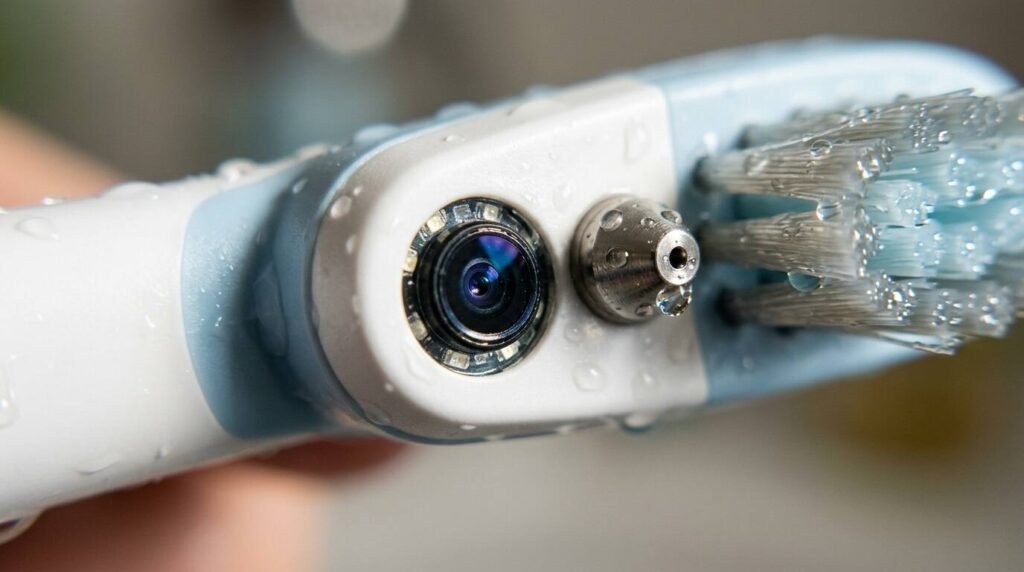
The jet is cone-shaped rather than a thin needle. Dyson says it runs at lower pressure to be gentler on gums and enamel, and that the wider spray covers more area to remove plaque. Both are manufacturer claims.
Brushing and flossing can be run separately or together. TechRadar lists brushing only, flossing only (two minutes each) or a combined three-minute routine, with three intensity levels.
Foam creates a practical problem. Dyson recommends its own non-foaming toothpaste and low-foaming rinse because suds can block the camera, and the tank also accepts clear mouthrinse free of sodium lauryl sulfate. In plain terms, ordinary supermarket toothpaste may not be a good match, so the consumable cost belongs in the budget.
TechRadar also reported that flossing mode can get messy, with spray reaching the mirror if the mouth is not closed properly.
The brush itself
The motor delivers what Dyson calls variable sonic oscillation, rated at about 245 oscillations per second per TechRadar, and designed to keep bristles moving when they press against hard-to-reach spots. A sonic dampener quiets the unit; TechRadar lists noise at about 61.3 dBA on the highest setting. Pressure and technique feedback comes through built-in haptics.
The brush head has a dual-bristle design and an RFID tag. The tag tracks usage and tells the app when it is time for a replacement, which turns a part that most people replace by guesswork into a scheduled purchase. That is convenient for the user and also keeps a recurring revenue line open for the manufacturer. Both statements can be true.
One printing error is worth flagging. One IFA roundup listed the motor figure as 240 oscillations per minute, which would be implausibly slow for a sonic brush. Per second matches TechRadar’s figure and the sonic category, so I use that.
Battery and charging claims that do not agree
Runtime is the weakest area for consistency. TechRadar reports about eight hours of use per charge and about eight hours to recharge on the USB-C dock, and says actual use depends on settings. A UK retailer listing says 14 complete cleans from a single charge and describes the battery as swappable.
The two numbers describe different things and cannot be reconciled from published information. Fourteen cleans at a few minutes each is well under an hour of brushing, which would not match eight hours of runtime. One of the descriptions may use a different definition, such as total on-time against complete routines, and Dyson has not said which. Engadget adds that the dock refills the tank in about three seconds and keeps the brush topped up between uses.
The app and the data question
The MyDyson CameraJet app offers a live view of the inside of the mouth, guided cleaning sessions with prompts, a map of which teeth have been cleaned and personalized oral-care insights. TechRadar’s reviewer used the insights only briefly because the product had just launched. The app needs Wi-Fi, and the UK listing notes functionality may vary by market.
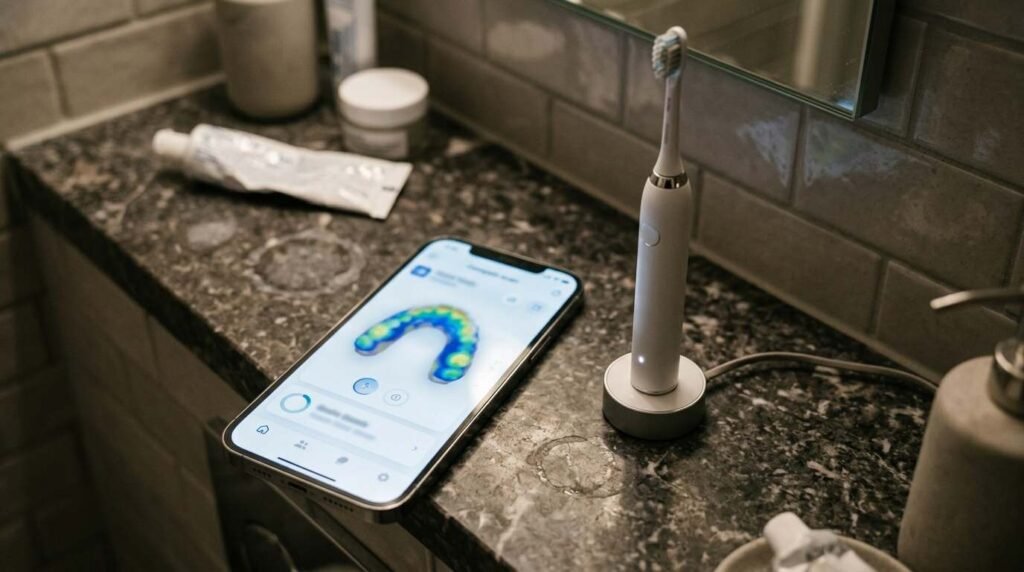
A camera that sits in the mouth and a phone app that displays it will draw privacy questions. Dyson says the image processing is local and nothing is stored or shared, and that is a reasonable design if true. Independent confirmation, such as traffic analysis of the app, would be the first thing worth looking for from security researchers. That is my view of what would settle the question, not a report of anything that has been done.
What the early verdicts say
TechRadar scored the CameraJet 4 out of 5, with 5 for features, 4 for design and performance and 3.5 for value. The reviewer found the brush effective and well made and said teeth and gums felt cleaner after each use. The complaints were a bulky body compared with a typical electric toothbrush, messy flossing and a high upfront price plus ongoing refills.
Engadget’s report is more cautious by design. It describes a short demo and says a full review is pending, that most performance claims come from Dyson, and that it is curious how a dentist would judge the results. The author also points out that Dyson’s hair tools have been durable in their experience, though that history does not prove anything about a toothbrush.
Three-year cost, with my arithmetic
Using Dyson’s published prices, here is what a single user would spend over three years if they replace the brush head every three months, buying two-packs of heads at $29.99. The figures leave out toothpaste and rinse because the replacement rate is not published.
| Item | Cost |
|---|---|
| CameraJet, including dock and case | $499.99 |
| Brush heads, 4 per year, 2 packs a year at $29.99 | $59.98 per year |
| Three years of brush heads | $179.94 |
| Three-year total before toothpaste and rinse | $679.93 |
Add Dyson’s non-foaming toothpaste at roughly $11.50 a tube, and the figure climbs. A competing rival around $400 would need brush heads costing more than the CameraJet’s to close the gap, and I did not find those prices. The comparison is therefore a rough guide, not a verdict.
Who this might suit
Reasonable candidates are people who already spend on a good brush and a flosser, who like data about their own habits and who will actually use the guided mode. Households that share one brush handle will also want to confirm how many people the app and heads support, which published information does not address.
Skeptics have a fair point too. A conventional brush plus floss costs a fraction as much, and nothing I found shows the camera produces better dental outcomes. That claim needs clinical evidence, and the published material is manufacturer claims and short-term reviews.
What could not be verified
- Any independent dental or clinical evidence that camera-guided jetting improves outcomes.
- Real runtime, given the conflict between eight hours of use and 14 complete cleans.
- The privacy claims about image storage, which come from Dyson.
- Long-term durability of the pump, tank and camera seal.
- The cost and compatibility of rival brush heads, which would complete the ownership comparison.
Sources



