







Xiaomi 18 Fold analysis: 5.02 mm body, 200 MP Leica camera, XRING O3 chip and a ¥10,999 price, with launch claims sorted by how well they check out.
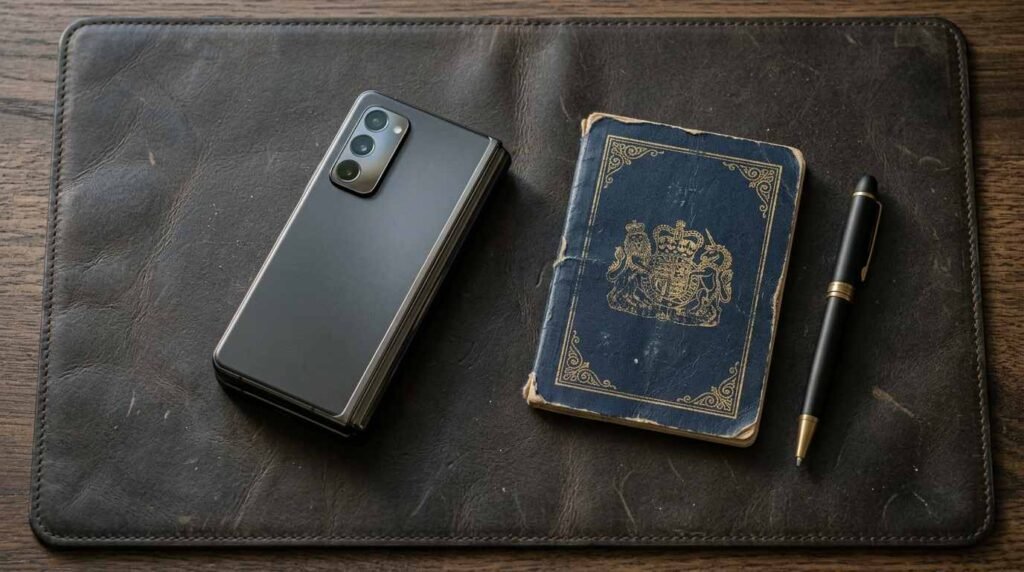
The Xiaomi 18 Fold launched in China on September 7 with a body just 5.02 mm thick when unfolded, a 200 MP Leica-branded main camera and a starting price of ¥10,999, roughly $1,640 at the conversion rate Android Authority used. Xiaomi built the phone around a wide, passport-style inner screen and its own XRING O3 chipset rather than a Qualcomm or MediaTek part.
Launch day is when spec sheets are loudest and independent data is scarcest. So this analysis sorts the information into three piles: what Xiaomi claims, what several outlets report the same way, and what conflicts between sources.
How this was written. Nobody at x9m8 has handled this phone, and I found no independent benchmarks or teardown as of September 7. Everything below comes from launch coverage and an earlier hands-off look at IFA in Berlin, with my own arithmetic labeled as such.
A passport-shaped foldable
Xiaomi chose proportions that differ from the tall, narrow book-style foldables that dominate Western markets. Engadget’s September 3 first look described a shorter, wider body than Samsung’s Galaxy Z Fold 8, though that was a judgment from seeing the phone behind glass, not from measuring it.
The numbers arrived with the launch. ProPakistani lists 117.8 × 83.6 × 10.68 mm folded and 117.8 × 163.8 × 5.02 mm unfolded, with a weight of 219 g. Notebookcheck and Android Authority repeat the 219 g weight, and Notebookcheck repeats the 5.02 mm figure, so those numbers are consistent across outlets, even though they originate with Xiaomi.
The inner display measures 7.58 inches at 2,364 × 1,672 pixels, and the cover display is 5.38 inches at 1,712 × 1,168. My arithmetic puts both near 382 to 385 pixels per inch, which is sharp enough that the difference between the two will not be visible in use. The inner panel’s pixel dimensions work out to a ratio of about 1.41 to 1, close to a sheet of A4 paper. Both screens run from 1 to 120 Hz and are rated at 4,000 nits peak brightness, which is Xiaomi’s claim.
Folded thickness of 10.68 mm splits into roughly 5.3 mm per half (my division, ignoring the hinge gap), so the phone is close to two stacked slabs of its own unfolded thickness. The inner panel uses dual-layer ultra-thin glass, and Xiaomi says it is 178% stronger and 29% more impact resistant than the Mix Fold 4. That comparison is against Xiaomi’s own older model, not a competitor, so it measures progress rather than standing in the market.
The XRING O3 and what is actually known about it
The chipset is the headline. Notebookcheck reports a 10-core CPU with boost clocks up to 4.35 GHz and a 16-core GPU. ProPakistani adds a TSMC 3 nm process and 24 billion transistors, and identifies both as manufacturer-stated figures it did not verify.
Xiaomi says the XRING O3 delivers 52% more performance than the XRING O1 and outperforms Apple’s A19 Pro. Those are vendor claims, and no published benchmark supports them yet. The A19 Pro comparison is also against last year’s Apple silicon, so it says little about the phones people will be buying this autumn.
Engadget’s first look called it a flagship AI processor, which fits Xiaomi’s marketing but tells a buyer nothing measurable. A reasonable reading is that the company wants the chip judged on sustained performance and efficiency, the two areas where first-generation in-house silicon has historically been hardest to get right. That is opinion. The data to test it, such as long GPU stress runs and battery drain under load, will come from reviewers with retail units.
Memory and storage options are 12 GB or 16 GB of RAM and 256 GB to 1 TB of UFS 4.1 storage, per ProPakistani and Notebookcheck. The RAM type is murky. Fone Arena’s IFA report mentions LPDDR6, while ProPakistani’s text and table disagree with each other about which configurations use LPDDR5X and which use LPDDR6.
Cameras and what the sensor math suggests
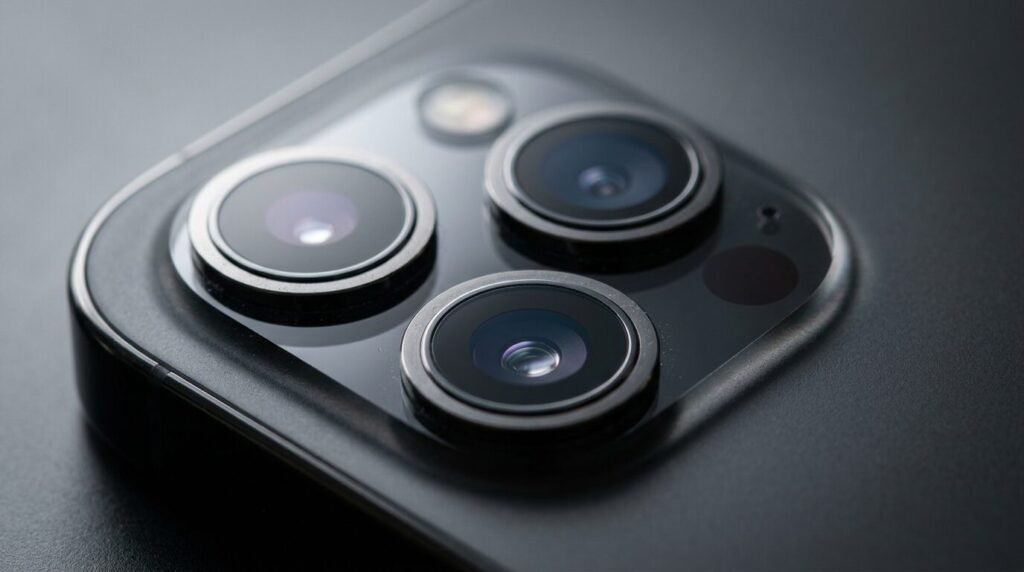
The rear system carries Leica branding. The main sensor is 200 MP with an f/1.7 lens and optical stabilization, and Notebookcheck lists its size as 1/1.56 inch. A 50 MP ultrawide at f/2.4 and a 50 MP periscope telephoto with 3.5x optical zoom complete the trio. For video, Notebookcheck reports 8K at 24 fps and 1080p slow motion at 960 fps from the main camera.
Sensors this dense usually combine neighboring pixels in groups for everyday shots, trading resolution for light. The launch material as summarized does not say what this phone outputs by default, so the 200 MP figure is best treated as a ceiling rather than a typical result.
A 3.5x telephoto is a mild reach. Google’s Pixel 11 Pro, for comparison, carries a 5x telephoto, according to Android Authority’s review, and the sources I read make no claim about digital zoom quality. Whether the telephoto earns its periscope housing depends on sample photos that do not exist yet.
Selfie hardware is another conflict. ProPakistani lists a 16 MP camera on the cover screen and another on the inner screen in the top-right corner. Fone Arena’s pre-launch look, written from a locked display case, mentioned an under-display camera on the right when the phone is open. I could not reconcile the two.
Battery and charging
Xiaomi specifies a 6,000 mAh battery, 67 W wired charging (with a 50 W PPS mode) and 50 W wireless charging. All three are vendor claims. A 6,000 mAh cell in a 219 g folding body is a large capacity for the category, though no figure for runtime has been published.
Charging speeds say little without a time-to-full test. Wattage is the input ceiling, and actual speed depends on how the phone manages heat in the thick half of the hinge. That test belongs to reviewers, and the first of them will not have units until the phone ships.
Connectivity is current: Wi-Fi 7, Bluetooth 6.0, 5G and a USB 3.2 Type-C port, per ProPakistani. ProPakistani’s spec rundown lists no microSD slot, which is unsurprising for a phone this thin.
Durability claims and the IP rating puzzle
Water and dust protection is where sources diverge most. Android Authority reports IP58 and IP59 ratings and describes them as sitting below IP68 but above the IP48 rating on Samsung’s folding phones. Notebookcheck says IP59. ProPakistani’s spec rundown gives no water-resistance rating at all. Without Xiaomi’s own specification page in hand, I cannot tell which is right, so the reader should treat any single figure as unconfirmed.

The cover glass and back use Dragon Crystal Glass 3.0, and the inner display uses the dual-layer ultra-thin glass described earlier. Real durability of the crease and hinge is a long-term question that no launch-day spec sheet can answer.
Price, competition and availability
The base model, 12 GB with 256 GB, starts at ¥10,999. Notebookcheck lists a 16 GB and 1 TB configuration at ¥14,999, roughly $2,240. Android Authority instead mentions a limited ceramic version at ¥15,999 (about $2,384) restricted to 1,500 units, and the two reports have not been reconciled.
ProPakistani’s dollar conversions conflict inside the same article: $1,937 in the text and $1,638 in the table. The yuan figure is the safer anchor, and two other outlets give the same ¥10,999 starting price.
For context, Android Authority cites rivals at ¥9,999 for the OPPO Find N6 and ¥8,999 for the HONOR Magic V6. By my subtraction, the 18 Fold starts ¥1,000 above the first and ¥2,000 above the second, so Xiaomi is pricing at the top of the Chinese foldable market.
Availability beyond China is unconfirmed. Android Authority says there is no word on a global release, and Notebookcheck cites rumors that none is planned.
The claims ledger
| Claim | Reported by | Status |
|---|---|---|
| 5.02 mm thick unfolded | Notebookcheck, ProPakistani | Consistent, vendor spec |
| 219 g weight | Notebookcheck, ProPakistani, Android Authority | Consistent, vendor spec |
| 6,000 mAh battery | Notebookcheck, Android Authority | Consistent, vendor spec |
| IP59 water resistance | Notebookcheck; Android Authority lists IP58 and IP59 | Conflicting across sources |
| Starting price ¥10,999 | Notebookcheck, Android Authority | Consistent; USD conversions vary |
| XRING O3 beats Apple A19 Pro | Xiaomi, via Notebookcheck | Unverified vendor claim |
| HyperOS 4 pre-installed | ProPakistani | Single source |
| Global launch | None confirmed | Unknown |
Who should care
Shoppers outside China cannot buy this phone through official channels today, so the most useful reading is as a signal. Xiaomi is making a case that foldables can be as thin as a slab phone when unfolded and as wide as a small tablet, and that a company can build a competitive chip without leaning on the usual suppliers.
Readers who follow the category should wait for four tests: sustained GPU performance under heat, battery runtime in mixed use, visible crease and hinge wear over weeks, and camera samples that show what the 200 MP sensor does by default. Until those exist, the 18 Fold is a promising spec sheet with unusually large gaps in its evidence.
What could not be verified
- The water-resistance rating, given the three-way disagreement above.
- Every performance claim for the XRING O3, including the 52% gain and the A19 Pro comparison.
- Default output resolution of the 200 MP camera, and the selfie camera arrangement.
- RAM type by configuration, and the price of the 16 GB and 1 TB model versus the ceramic edition.
- Operating system details: ProPakistani names HyperOS 4, while the other sources I read do not mention software.
- Any international release or pricing.
Sources
- Notebookcheck: Xiaomi 18 Fold launches with 200 MP Leica triple camera and XRING O3
- Android Authority: Xiaomi 18 Fold launch report
- ProPakistani: Xiaomi launches first wide-screen foldable
- Engadget: Xiaomi’s passport-style foldable first look
- Fone Arena: Xiaomi 18 Fold first look at IFA 2026
- Android Authority: Pixel 11 Pro review (telephoto comparison)



