






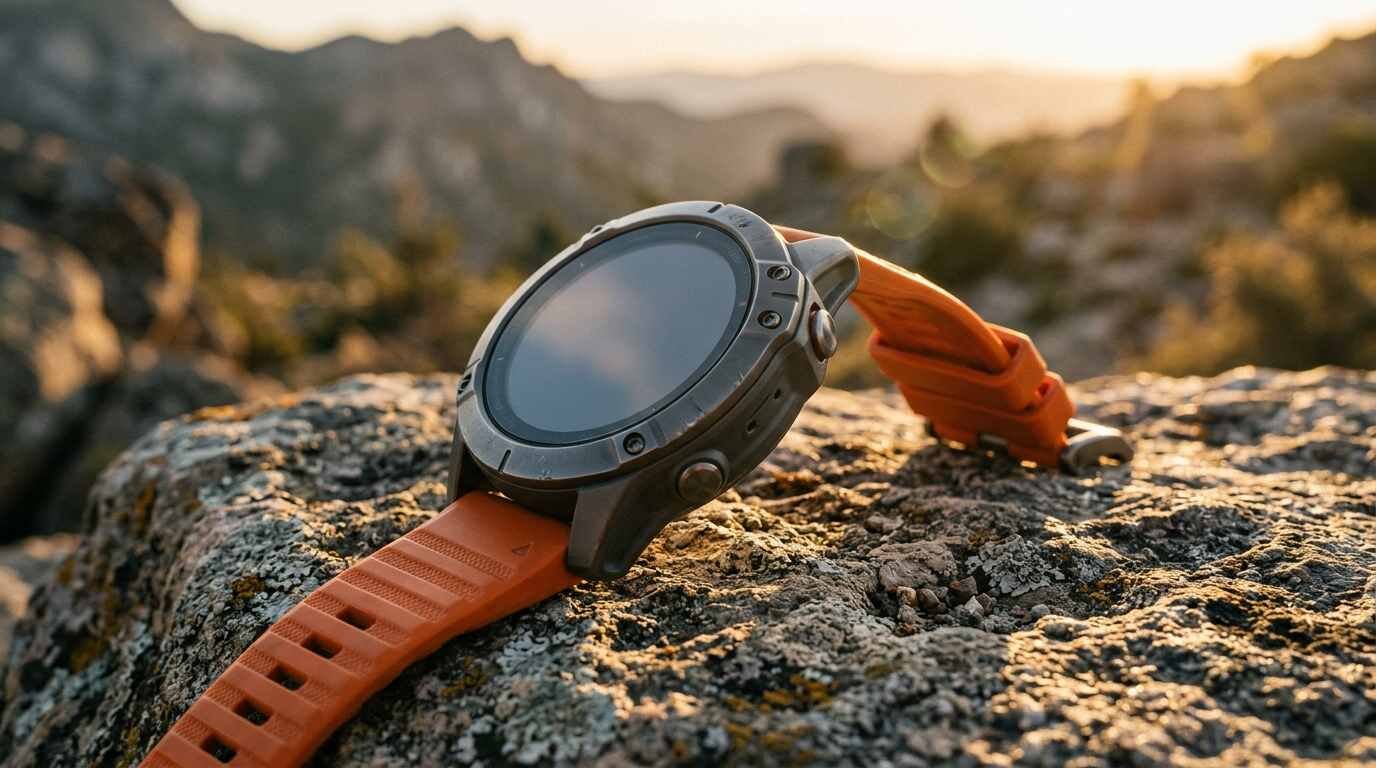
Apple Watch Ultra 4 analysis: S11 chip, 50-hour battery, new heart sensors and a $799 price, plus what Apple's launch specs leave unanswered.
The Apple Watch Ultra 4 holds the $799 starting price of the model it replaces and spends the rest of its budget on things you cannot see from across a table. Apple introduced it at its September 9 event, opened pre-orders the same day, and set in-store availability for Friday, September 18, according to Apple’s announcement.
Updates like this are easy to wave off. A faster chip, reworked heart sensors and a longer workout rating make for a dull product photo and a dense spec table. The table is where the engineering lives, though, and it is where this analysis spends its time.
How this was written. Nobody at x9m8 has worn this watch. The analysis rests on Apple’s announcement and one secondary roundup, both published September 9, plus arithmetic of my own that I label as mine. Anything Apple has not disclosed gets its own section near the end.
Launch specs at a glance
Apple packs most of the hard numbers into a handful of lines. They are collected here first so the later sections can point back to them.
| Item | What Apple announced |
|---|---|
| Starting price (U.S.) | $799 |
| Chip | S11 |
| Battery, everyday use | Up to 50 hours |
| Battery, Low Power Mode | Up to 84 hours |
| Extended Workout mode | Up to 25 hours with full GPS and heart rate, which Apple counts as 25% more than the previous model |
| Max Extended Workout mode | Up to 45 hours for outdoor runs, walks and hikes |
| Fast charging | 15 minutes adds up to 18 hours of battery life |
| Finishes | Natural titanium and black titanium |
| Satellite features | Emergency SOS, Find My and Messages via satellite, free for two years with activation |
| watchOS 27 | Monday, September 14 |
| In stores | Friday, September 18 |
A new sensor stack under the S11
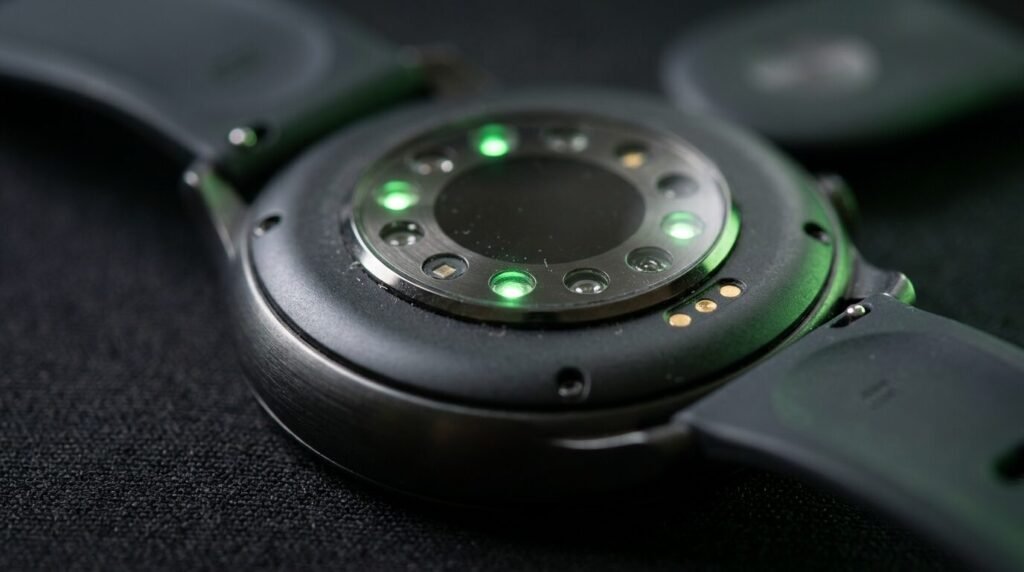
Apple’s description starts with silicon. The S11 chip runs what the company calls the Health Sensing System, and the hardware feeding it is new: optical and electrical heart sensors, with larger green LEDs on the optical side that Apple says draw less power than before.
Heart rate is now sampled every five seconds across the whole day. Heart rate variability, the small beat-to-beat timing differences that shift with stress, sleep and training load, is measured up to 24 times more often than on earlier models, and Apple splits it into an overall reading and a recovery reading.
Why sampling rate matters is a matter of statistics rather than marketing. Optical heart sensing works by shining green light into the skin and watching how much returns as blood volume pulses, and motion or a loose strap adds noise to that signal. More readings per hour give an algorithm more chances to find clean stretches and throw out bad ones. The usual result is a steadier trend line rather than a more accurate single reading. That explanation is my reading of how the technique works, not something Apple claims, and the real payoff depends on software no outside lab has examined yet.
Apple also calls the Ultra 4’s on-device GPS the most accurate in a sports watch. The comparison behind that sentence is Apple’s own. Tracks recorded against surveyed courses by independent testers will settle the question; until they exist, it describes the company’s test setup and nothing more.
A redesigned pedometer built on new machine-learning algorithms, plus a Steps complication, finishes the sensing changes.
Battery ratings, translated
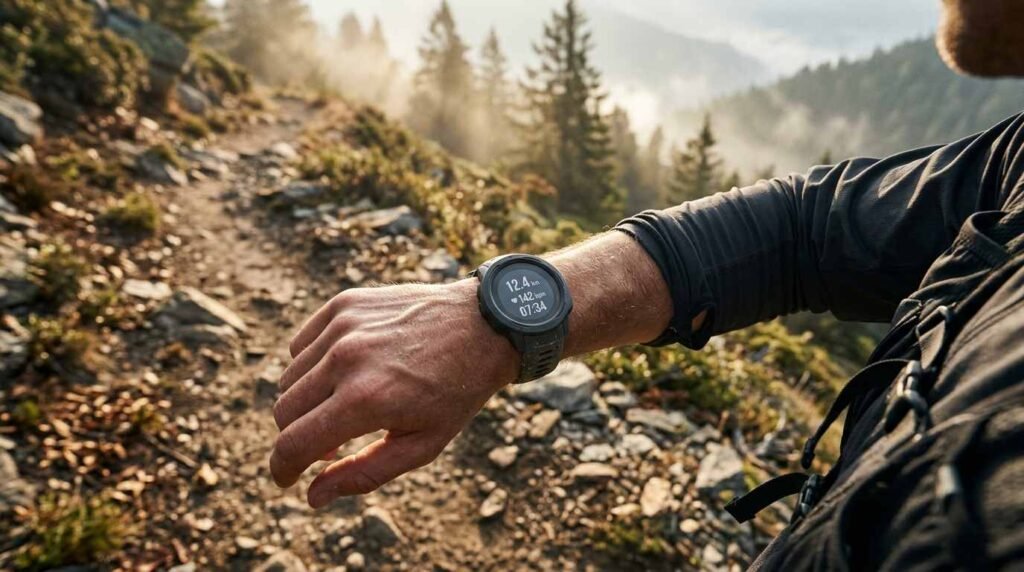
Apple gives four runtime figures, and each one answers a different question. Everyday use is rated at up to 50 hours. Low Power Mode stretches that to 84. Extended Workout mode, which keeps full GPS and heart rate running, is rated at up to 25 hours, a 25% improvement over the previous model by Apple’s count. A Max Extended Workout mode reaches up to 45 hours of outdoor runs, walks and hikes.
A little arithmetic sharpens the picture. If 25 hours is 25% more than last generation, the old figure was 20 hours (25 divided by 1.25), which is my own back-calculation. The fast-charge claim of 18 hours from 15 minutes works out to 72 minutes of runtime for every minute on the charger. And that 18 hours equals 36% of the 50-hour everyday rating, so a quarter-hour top-up before a long day is a realistic plan on paper.
One caution applies to the 45-hour mode. The coverage I read does not say what the watch gives up to reach it. In this product category, longer ratings commonly come from sampling GPS position or heart rate less often, so anyone planning a very long effort should wait for that detail before trusting the number.
Every figure carries the words “up to,” and every figure comes from Apple’s lab conditions. Cold weather, cellular use and screen settings will move them.
Readiness, vitals and the health layer
Software does much of the work in this release. A new Readiness score condenses the day into a single number from 0 to 10, paired with one of four plain-language suggestions: Recover, Pace Yourself, Ready or Go For It. It updates through the day. Overnight vitals now include recovery HRV measured against a personal baseline, and a daytime vitals view joins them.
Further out, an update to the Health app on iPhone arrives later this year, U.S. English first. It adds Insights and Longevity tabs, a Health Age estimate that requires an Apple Watch, movement evaluations, and lab testing covering more than 50 biomarkers for $119 at about 2,000 Quest Diagnostics locations in the U.S. Cycle Tracking gains support for perimenopause and menopause, and Workout Buddy adds Spanish and can run without a nearby iPhone.
A composite score is a design decision dressed as a measurement. That is opinion, not data, but the reasoning is simple: a 0 to 10 scale does not show which inputs moved it or how heavily each one counts, and Apple has not published the formula. Whether Readiness helps a training plan depends on how consistently it tracks how an athlete feels, and that takes weeks of use to judge.
Audio Intelligence and Siri AI
Requirements deserve attention before the features do. Audio Intelligence needs an Apple Watch Series 12 or Ultra 4. Live Rewind and Siri Recap also need an Apple Intelligence-enabled iPhone 16 or later, launch in English first, and are not available in the EU at the start.
The feature list itself is practical. Sound Recognition flags sirens, alarms, doorbells and a crying baby. Live Rewind shows the previous 15 seconds of a conversation as text, and Siri Recap summarizes conversations; both are labeled beta for late 2026. Shazam song identification appears on the Smart Stack.
Siri AI arrives as an English-language beta, with French, Japanese, Korean, Portuguese and Spanish due in October. The operating system underneath, watchOS 27, lands September 14, four days before the watch ships. It adds a dynamic app grid, a one-handed tap gesture and Smart Stack suggestions, and it supports Series 9 or later, SE 3 and Ultra 2 or later, paired with an iPhone 11 or later running iOS 27.
Features that listen continuously raise an obvious question about where audio is processed and what is kept. The launch material I read does not answer it, so I will not guess.
Build, bands and the Hermès edition
The case is 3D-printed titanium made from 100% recycled titanium, and the battery uses 100% recycled cobalt. Apple puts the watch at 45% recycled material by mass, excluding packaging and in-box accessories. Finishes are natural titanium and black titanium.
Bands cover the three outdoor styles Apple has leaned on for the Ultra line. The Trail Loop comes in dark umber, sand and burgundy. The Alpine Loop is offered in desert, dark olive and burgundy. The Ocean Band, a translucent silicone, comes in gray, kelp and black.
The Apple Watch Hermès Ultra 4 uses the natural titanium case with a new Grand H titanium band, which has a built-in extension mechanism sized to fit over a wetsuit. Its Fathom and Wonder watch face offers four ocean-depth options. The sources I read give no price for the Hermès edition.
Price, lease terms and the Series 12 gap
The Ultra 4 starts at $799, which matches the Ultra 3’s starting price according to a Mac Observer roundup. The Series 12 starts at $399, so the Ultra premium is $400, or double the entry price.
Apple’s Upgrade lease through Klarna in the U.S. runs $24.99 a month for 24 months, or $44.99 a month for 12 months, in Apple’s example at the $799 price. Multiplying out gives $599.76 and $539.88. Neither is the cost of owning the watch, because the sources I read do not describe the end-of-lease terms, so the monthly figure is best read as a payment plan with strings attached rather than a discount.
Apple’s pre-order list names Australia, Canada, France, Germany, India, Japan, the UAE, the UK and the U.S., plus more than 50 other countries and regions. New subscribers may get three months of Apple Fitness+ and Apple Music with purchase.
Who the numbers favor
Long-distance athletes get the clearest benefit. A 25-hour workout rating and a fast top-up change what a weekend of training looks like, assuming the rating holds up outside Apple’s lab. Hikers who live in the 45-hour mode should wait for the missing detail described above.
People who mostly want daily health tracking face a harder call. Apple lists Audio Intelligence on both the Series 12 and the Ultra 4, and the Series 12 costs half as much. Whether the Series 12 shares the new heart-sensor hardware was not established in the material I read, so that comparison stays open until Apple’s full specifications are compared line by line.
Owners of the Ultra 3 have fewer reasons to move. The satellite features carry over with free activation for Ultra 3 or later, and the main changes are sensor sampling, a longer workout rating and software that depends on timing and region. That is a judgment call, and it could change once independent tests of the new sensors arrive.
Questions buyers are asking
Does it work without an iPhone? Apple’s watchOS 27 requirements list an iPhone 11 or later running iOS 27, so an iPhone is part of the setup.
Is satellite messaging free? Emergency SOS, Find My and Messages via satellite are free for two years with activation of an Apple Watch Ultra 3 or later.
When can the software be installed? watchOS 27 arrives September 14 as a free update for supported models, four days before the Ultra 4 reaches stores.
Is there a cellular model with different pricing? The sources I read give only the $799 starting price and no tier breakdown.
What could not be verified
Several details are missing from what I could read, and a few cannot be checked by anyone yet.
- Case size, display size and brightness, weight, water resistance and depth rating. Apple’s specifications page did not load for me, and the announcement coverage does not list them.
- Independent accuracy of the new heart rate, HRV and GPS measurements. Launch-day claims come from Apple’s own comparisons.
- What the 45-hour Max Extended Workout mode trades away to reach its rating.
- Pricing for cellular tiers, the Hermès edition and individual bands.
- Where Audio Intelligence processes sound, and what is stored.
Sources



