Texas data center permits stopped moving on Monday, September 21, when Gov. Greg Abbott told the state’s environmental regulator to pause every permit tied to a data center project until the grid operator finishes an audit. For a state that ranks second in the country for data center capacity, behind only Virginia, the order lands […]
Texas data center permits stopped moving on Monday, September 21, when Gov. Greg Abbott told the state’s environmental regulator to pause every permit tied to a data center project until the grid operator finishes an audit. For a state that ranks second in the country for data center capacity, behind only Virginia, the order lands in the middle of a building boom with no obvious precedent.
The size of what is waiting explains the urgency. ERCOT, the Electric Reliability Council of Texas, is tracking more than 1,800 projects in its interconnection queue, totaling over 474 gigawatts. That is more than five times the grid’s record peak demand, and Abbott says about 90 percent of the new power requests come from data centers.
This explainer lays out what was ordered and when, what the audit asks developers to disclose, why a figure like 474 gigawatts deserves careful reading, and which dates to watch. Numbers come from the Texas Tribune’s reporting as republished by Route Fifty, from Fox 7 Austin, and from Data Center Dynamics. A few rest on a single outlet, and we mark those.
What Was Ordered, in Sequence
The freeze arrived in stages rather than all at once.
| Date | Action | Agency |
|---|---|---|
| Aug. 3 | Abbott announces a moratorium on approving data centers until regulators audit proposed facilities seeking grid connection | PUCT, ERCOT |
| Early August | ERCOT pauses its batch zero review and postpones the related transmission planning study | ERCOT |
| Sept. 21 | Abbott’s letter directs TCEQ to pause all data center permits until the audit is done; TCEQ must update him by Oct. 19 | TCEQ |
| By December | ERCOT says it intends to complete the audit | ERCOT |
Under the September letter, TCEQ may approve only audited data centers that follow the governor’s directives once the audits are finished. Other agencies sit in the chain as well: the Public Utility Commission of Texas reviews grid interconnection, and the Texas Water Development Board reviews water use. Abbott’s stated logic is that those agencies need the information before making informed decisions, so no state agency should advance data center approvals in the meantime. His summary of the priority was short: “Texans must come first.”
The Numbers Behind the Queue
- Queue size: more than 1,800 projects and over 474 gigawatts in ERCOT’s interconnection queue, per the Texas Tribune.
- Share from data centers: about 90 percent of new power requests, according to Abbott.
- Footprint on the ground: the Tribune counts at least 335 operating and at least 248 planned data centers in Texas.
- Audit exposure: Data Center Dynamics reports the audit touches almost 49.8 gigawatts of projects seeking grid connection.
- Delay risk: the same outlet cites Bloomberg NEF as saying about 20 percent of the U.S. data center pipeline is at risk of delay, with a financial impact that could reach $8 billion by the first quarter of 2027 if the pause drags on.
The last two figures come from one outlet relaying a third party’s analysis. We could not see the underlying report.
Why 474 Gigawatts Is Not a Forecast
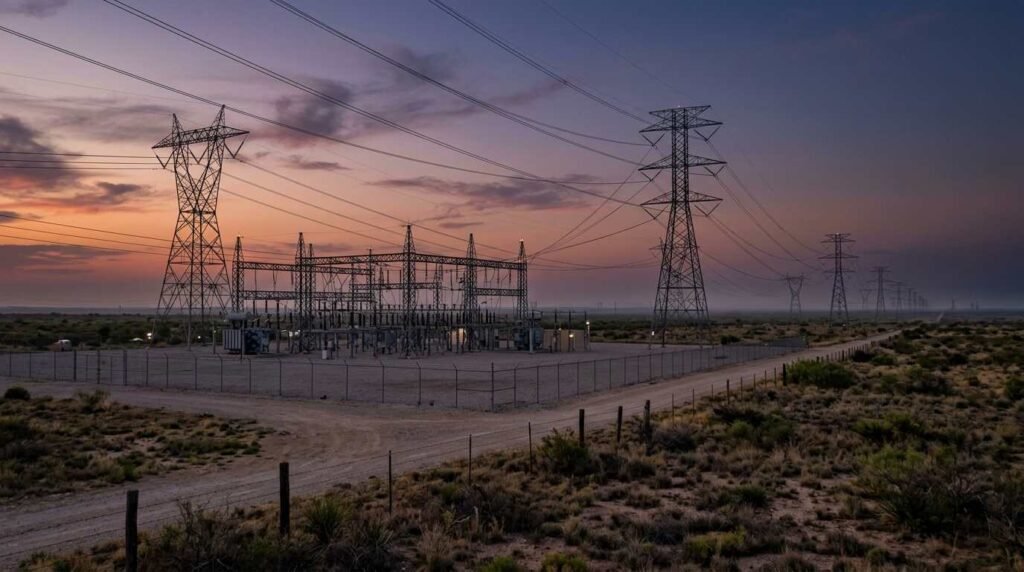
An interconnection queue is a list of requests, not a construction schedule. Filing costs little compared with building, developers can file for several sites to keep options open, and a request can sit in the queue long after the financing behind it has changed. Reading 474 gigawatts as demand overstates what will be built. Dismissing it as noise understates the planning problem, because every request still has to be studied for its effect on the transmission system.
Large loads add a second wrinkle. A single AI campus can ask for hundreds of megawatts, and its draw can swing as training jobs start and stop, which is awkward for a grid that must balance supply and demand moment to moment. The audit’s questions about ownership and power supply read as an attempt to separate firm projects from placeholders, though neither the order nor the reporting says so outright.
What Developers Must Disclose
Pending developers are asked to answer a specific list:
- Whether they will generate their own electricity or rely on the Texas grid, and their projected power consumption.
- Water use and cooling technology.
- Neighborhood impacts such as noise, lighting and traffic.
- Emergency coordination.
- Tax incentives and subsidies.
- Ownership structure, including controlling interests in each project.
How Power and Cooling Choices Change the Answer
Those disclosure items map onto three engineering levers. The first is where electricity comes from. On-site generation lowers the draw on the shared grid but shifts the burden to fuel supply and air permits. The second is flexibility: a facility that can curtail its load during grid stress presents a very different risk than one that cannot. The third is cooling, where evaporative systems shed heat by consuming water, while closed-loop liquid systems recirculate it and typically trade that saving for more electricity.
Because the audit asks about all three, the answers will work as a de facto scorecard. TCEQ’s involvement matters here too, since it is the agency that handles environmental authorizations. The reporting available does not say how permits already issued are treated.
Reactions
The Data Center Coalition said it hopes the review can separate responsible developers from irresponsible ones and urged regulators to move quickly. Agriculture Commissioner Sid Miller called the directive vague and no substitute for legislation. State Rep. Gina Hinojosa, a Democrat running against Abbott, said it does not go far enough, and Environment Texas called for a special session to write safeguards. PUC Chair Thomas Gleeson had already told Abbott in July that the Legislature should give the agencies more authority.
What to Watch Next
- October 19: the date by which TCEQ must update the governor on its permitting decisions.
- December: ERCOT’s stated target for completing the audit.
- Batch zero: the Tribune says it is unclear whether projects already in that review are covered. ERCOT has paused the review, so watch for a restart.
- Year-end report: the PUC must submit a report on its data center water and power survey to the governor and the Legislative Budget Board. Of 377 companies notified, 28 had responded as of the August reporting.
How Large Loads Get Studied
When a developer asks to connect a very large facility, the grid operator has to work out what the new load does to the system: whether lines can carry it, whether local equipment overloads, and what upgrades are required before energization. That study is the step the Texas freeze interrupts. It is also why queue size alone is a poor guide to timing. Each request consumes engineering time, and requests that are speculative consume it all the same.

ERCOT matters more than a typical grid operator in this respect. It manages most of Texas’s electricity and is largely isolated from the eastern and western U.S. grids, which limits how much power the state can import when it runs short. That is general background, not a point from the reports we reviewed, but it explains why Texas officials treat a pile of gigawatt-scale requests as a reliability question and not only an economic one.
What Developers Might Do Now
None of the following comes from the order itself. It is our reading of what the disclosure list implies for anyone with a project in the queue:
- Assemble the answers early. Self-supply plans, projected consumption, cooling design and water sourcing are all on the list, so a project that has them documented is in a better position than one that does not.
- Be ready to show ownership clearly. Controlling interests are part of the audit, and ambiguity there will draw questions.
- Track the October 19 update. TCEQ’s report to the governor is the first public checkpoint after the freeze.
- Plan for a longer timeline than the queue suggests. ERCOT’s December target applies to the audit, not to energization, and projects will still need studies and permits afterward.
The Bottom Line
As of September 27, the verifiable facts are narrow and clear. Data center permits have been paused at TCEQ since September 21, ERCOT is auditing projects in its interconnection queue with a stated December target, and the next public checkpoint is the October 19 update to the governor. The queue behind all this is large, with more than 474 gigawatts requested, but a queue is a statement of intent and not a forecast of what will be built.
Several answers are still missing: how permits already issued are treated, whether the batch zero review resumes soon, and what the audit will count as an acceptable answer on power and water. The outcome could shape how other states handle similar surges of large-load requests, though that is a possibility and not a prediction. For now, the useful stance is to track the dates, read the disclosure list closely, and treat the single-source impact estimates with caution.
Sources and Verification Notes
We could not retrieve documents from ERCOT, the PUC or TCEQ directly. The 49.8 gigawatt, 20 percent and $8 billion figures are single-source. The background on queues, large loads and cooling is general explanation, not drawn from the reports.