







Sorkin's new film opens today. We check its four biggest claims about Facebook against internal documents, Science and Nature studies, and the Surgeon General's advisory.
The Social Reckoning opens in U.S. theaters today, October 9, 2026, and the case it dramatizes is hard to miss. Facebook knew its products could hurt people, and the company kept growing anyway. A film can make that argument in under two hours. Science takes longer.
So here is a better question for opening weekend. Once the casting and the rapid-fire dialogue are set aside, which of the film’s central claims do published documents and studies support, which do they complicate, and which are still open? Four claims follow, each checked against material anyone can read.
What the Film Is, in Brief
Aaron Sorkin wrote and directed it as a companion to his 2010 script for The Social Network. According to Common Sense Media’s review, Mikey Madison plays Frances Haugen, Jeremy Allen White plays Wall Street Journal reporter Jeff Horwitz, and Jeremy Strong plays Mark Zuckerberg. It runs 112 minutes and carries an R rating for language. Its source material is the Journal’s “Facebook Files” reporting, as No Film School notes in its trailer coverage.
Dramatization enters in places. That same review points out that some supporting characters are composites, among them a radicalized friend of Frances and an investor-mentor played by Bill Burr. Think of the film as a story built on a documented foundation, not a transcript.
Sony Pictures Entertainment’s official teaser trailer.
The Scorecard at a Glance
The verdicts below are my own editorial read of the evidence, not findings from any of the studies. Every source is linked so you can judge for yourself.
| Claim | Verdict | Strongest evidence | Biggest limit |
|---|---|---|---|
| Facebook’s researchers found Instagram could harm teens | Supported, with limits | Internal studies reported by the Wall Street Journal | Self-reported, internal, not a causal test |
| The algorithm pushes people toward extremes | Unsettled | Four 2020 election studies in Science and Nature | Three-month window; authors can’t explain null results |
| Social media is driving a teen mental health crisis | Contested | Surgeon General’s 2023 advisory | Experts disagree on causation |
| Companies hold data the public can’t check | Supported | Advisory, researchers, and whistleblower all point to it | Not every dataset is equally closed |
Claim 1: Facebook’s Own Researchers Found Instagram Could Harm Teens
CNBC’s summary of the Journal’s September 2021 reporting lays out what the internal studies reported over a three-year span:
- 32% of teen girls said Instagram made them feel worse when they already felt bad about their bodies.
- 14% of U.S. teen boys said it made them feel worse about themselves.
- Among teens who reported suicidal thoughts, 13% of British users and 6% of American users traced the desire to Instagram.
The researchers did not mince words. They wrote that aspects of the app “exacerbate each other to create a perfect storm,” according to the same report. Executives reviewed the findings, which were cited in a presentation to Zuckerberg the year before. Instagram’s head of public policy, Karina Newton, responded that the company was exploring ways to steer users toward different topics.
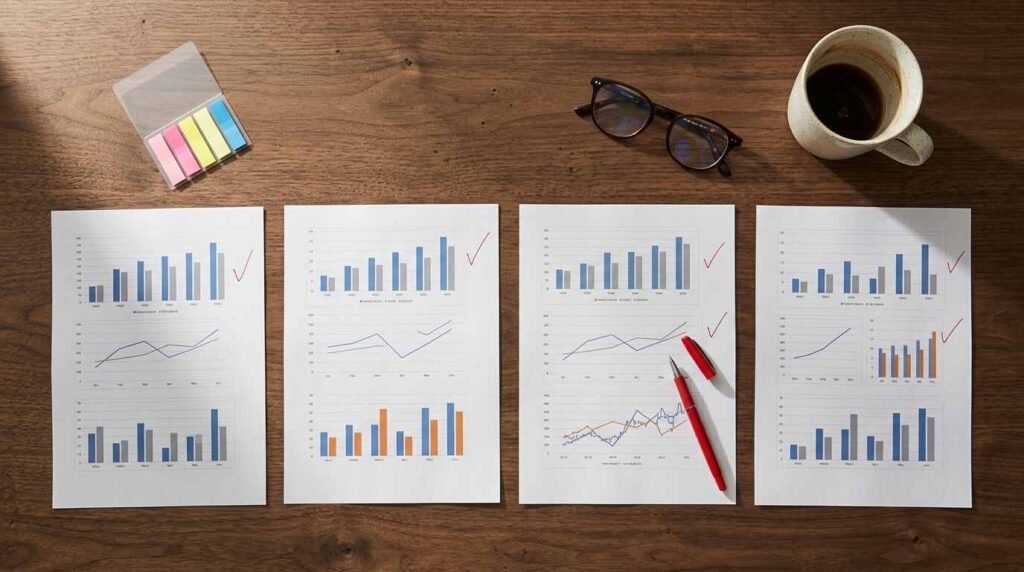
Read those numbers carefully. They are shares of teens who reported a negative effect, and the summary doesn’t say how the remaining teens responded. These were internal, self-reported surveys, built to guide product decisions rather than to prove cause and effect.
Verdict: supported, with limits. The documents exist and say roughly what the film says they say. What they establish is that the company saw a warning signal. They do not establish population-wide harm.
Claim 2: The Algorithm Pushes People Toward Extremes
This is the claim the best experiments have tested head-on. On July 27, 2023, four papers from a collaboration between academics and Meta appeared, three in Science and one in Nature, all built around the 2020 U.S. election.
Researchers changed what some consenting users saw, then measured what moved.
Swapping the algorithm for a chronological feed. Time spent and engagement fell sharply. Political content rose 15.2% on Facebook and 4.8% on Instagram, and untrustworthy content rose 68.8% on Facebook and 22.1% on Instagram, both from low starting points. Uncivil content dropped 43% on Facebook. Polarization and political knowledge didn’t change significantly over the three months.
Removing reshared posts. Political news fell by more than half and untrustworthy content by 30.6%. Polarization stayed put. News knowledge declined, because reshares also carried plenty of reliable material.
Reducing like-minded content. The median user got 50.4% of their feed from like-minded sources and 14.7% from cross-cutting ones. Turning that down moved neither polarization, ideological extremity, nor belief in false claims.
A fourth, observational paper found real ideological segregation in political news, and more of it in content from Pages and Groups than from individual users.
None of that clears the platform. The interventions lasted about three months, ran during an election, and involved only consenting participants. The authors themselves say they don’t know why attitudes held steady, and they float possibilities: the short window, the many years these platforms had already existed, and people’s other sources of information. They also note that Meta could reject study designs on legal, privacy, or feasibility grounds, even though it couldn’t censor the results.
Verdict: unsettled. The film’s version is stronger than what the best experiments could show. But those experiments weren’t built to settle the question either.
Claim 3: Social Media Is Driving a Youth Mental Health Crisis
On May 23, 2023, Surgeon General Vivek Murthy issued an advisory on the subject. As 6abc’s report on the advisory describes it, teens average about 3.5 hours a day on social media, and those spending more than three hours daily may face double the risk of poor mental health outcomes. The advisory also noted benefits, particularly for minority youth finding community online, and it said more research is needed on which content does the most harm.

Scientists disagree about how far to push the causal story. Psychologist Candice Odgers, in a Nature essay, has argued that Jonathan Haidt’s The Anxious Generation mistakes correlation for causation, that depression may lead teens to use social media more than the reverse, and that economic and social stressors deserve attention. Haidt’s reply, laid out in an After Babel post, points to experimental and natural-experiment studies. By his own tally, 16 of 22 experiments found significant effects, and eight of nine natural experiments found harm. That tally is his count, and Odgers’s camp reads the same literature differently.
Verdict: contested. The film leans toward one side of a live scientific argument. Reasonable researchers are still having it.
Claim 4: Companies Hold the Data, and the Public Can’t Check
This one draws support from three directions. The Surgeon General’s advisory named technology companies’ lack of transparency as a barrier to understanding social media’s effects. The Meta election studies made platform-wide data available only in aggregate, for privacy reasons. And the documents at the center of the film reached the public through a whistleblower rather than through any routine disclosure. Haugen herself told “60 Minutes” in 2021, “I believe in truth and reconciliation,” per Senator Klobuchar’s pre-hearing write-up. The hearing that followed in October 2021 was titled “Protecting Kids Online.”
Verdict: supported. Of the four claims, this one has the least scientific controversy attached.
What a Film Can’t Show You
Cinema compresses. Composite characters stand in for several real people, timelines tighten, and conversations get sharper than conversations usually are. That’s craft, not deception.

One choice deserves a closer look. The film ends with footage of the January 6, 2021 Capitol attack, per Common Sense Media. Editing can place two events side by side, but it can’t prove one caused the other, and none of the studies discussed above tested that link.
How to Read the Next Headline About Social Media and Harm
Questions worth asking whenever a new claim lands:
- Who ran the study? Internal company research and peer-reviewed work answer different questions.
- What was measured? Self-reported feelings and observed behavior are not the same thing.
- Was anything changed? An experiment that alters what people see tells you more about cause than a survey of what they already do.
- How long did it run? Three months can miss effects that build over years, or exaggerate ones that fade.
- Who benefits from the framing? Studios, platforms, and authors all have a stake in how findings get summarized.
Frequently Asked Questions
Is The Social Reckoning a true story?
It is inspired by real events and draws on the Wall Street Journal’s Facebook Files reporting, but some characters are fictional composites, according to Common Sense Media. NBC Palm Springs also describes it as inspired by real-world events.
Did the Meta election studies prove Facebook is harmless?
No. They tested specific changes over about three months, found little effect on polarization, and the authors say they cannot fully explain why.
How much time do teens spend on social media?
The 2023 Surgeon General’s advisory cites an average of roughly 3.5 hours per day, with many teens spending far more.
Who is Frances Haugen?
A former Facebook employee whose disclosures fed the Wall Street Journal’s reporting and an October 2021 congressional hearing. In the film, Mikey Madison plays her.
If any of this touches something personal, the 988 Suicide & Crisis Lifeline is available in the U.S. by calling or texting 988.
Sources
- Common Sense Media: The Social Reckoning review
- No Film School: trailer coverage
- NBC Palm Springs: film report, Oct. 7, 2026
- CNBC: Facebook documents and Instagram teen research
- NYU CSMaP: first four 2020 election study papers
- 6abc: Surgeon General advisory
- After Babel: Haidt’s response to Odgers
- Sen. Klobuchar’s office: Haugen pre-hearing write-up



