




Organoids are tiny lab-grown tissues that mimic parts of real organs. Here is how they are made, what they can do, and where they fall short.
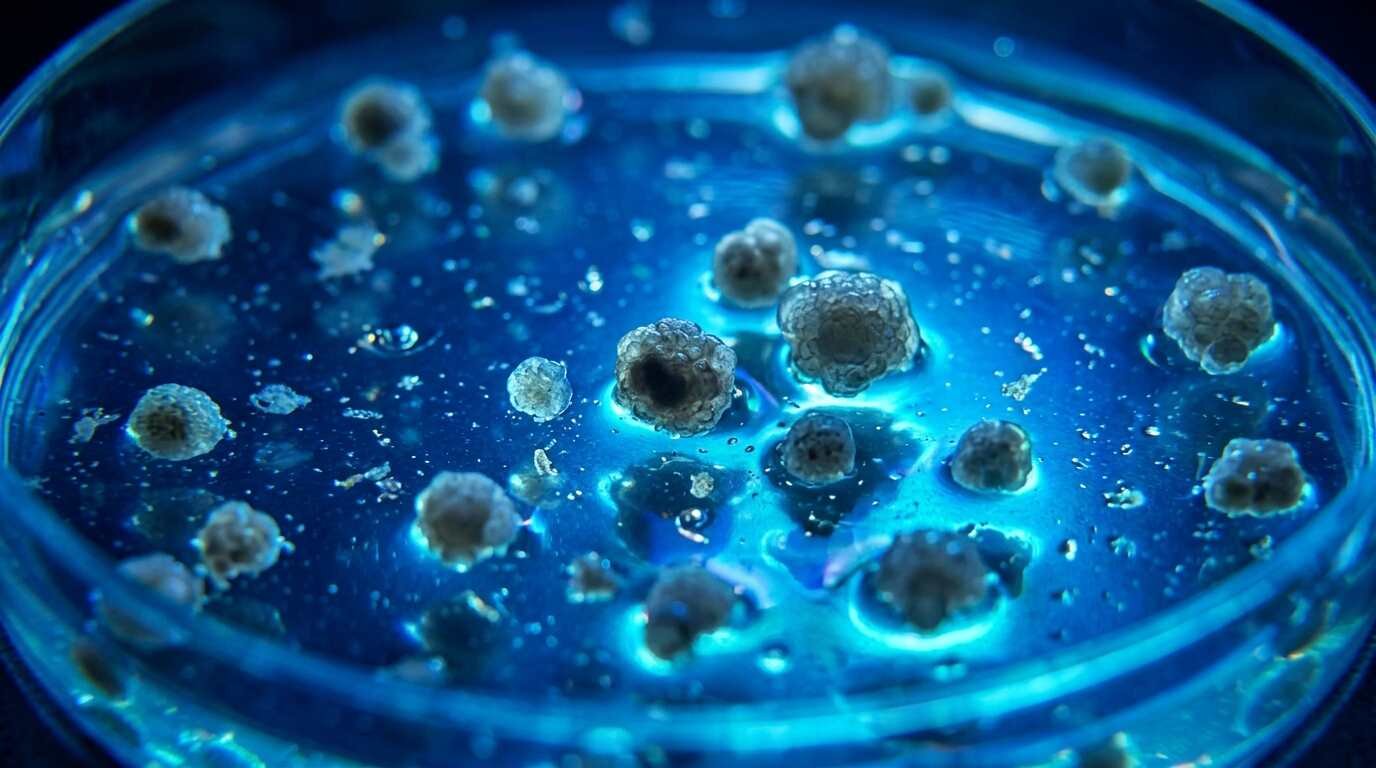
Organoids are tiny, simplified, three-dimensional clumps of cells grown in a dish that organize themselves into something resembling part of an organ, such as an intestinal lining, a kidney tubule or a speck of developing brain. They are often called mini organs, a label that overpromises. An organoid is typically a few millimeters across at most, has no blood supply, and does not do the job of a real organ. What it does offer is a living model of human tissue that can be watched, poked and tested in ways a person cannot be, and that is why laboratories around the world now grow them.
What exactly is an organoid?
A common working definition comes from Madeline Lancaster and Juergen Knoblich. An organoid must contain several cell types found in the organ it imitates, show some organ-like function such as contraction, electrical activity, secretion or filtration, and have its cells arranged in a pattern like the real thing.
The starting material is either stem cells or tissue taken from a person or animal. Embryonic stem cells and induced pluripotent stem cells, which are adult cells reprogrammed to an early state, can become almost any tissue. Adult stem cells taken from an organ are more limited but tend to form that organ’s tissue reliably.
Researchers sometimes distinguish organoids from related systems. Spheroids are simple balls of cells with little organization. Organ-on-a-chip devices are engineered microfluidic channels lined with cells. Organoids differ because the cells assemble themselves, guided by chemical signals, much as they would in an embryo.
How do you grow one?
The recipe depends on the organ, but several ingredients recur.
Cells are suspended in a three-dimensional support, commonly a gel such as Matrigel, a protein mixture secreted by a mouse tumor cell line. Its supporting role mimics the scaffolding that surrounds cells in a body. Pluripotent stem cells often first clump into spheres called embryoid bodies, and then are exposed to a sequence of signaling molecules that push them toward a chosen tissue type. Adult stem cells can be dropped into the gel directly with a tailored nutrient mix.
Some labs use spinning bioreactors to keep nutrients moving. Others use CRISPR to introduce or repair a particular mutation, so that a patient’s cells can be compared with otherwise identical cells that lack the fault.
Growth takes weeks to months. Success is not guaranteed, since batches differ, and no two organoids are exactly alike.
How did the field begin?
Roots go back to 1907, when Henry Van Peters Wilson showed that sponge cells broken apart could reassemble into a whole organism. Mid-century cell biologists studied how cells sort themselves by stickiness. The tools matured with stem cell research: human embryonic stem cells were first isolated in 1998, and Shinya Yamanaka’s team produced induced pluripotent stem cells in 2007.
In 2008, Yoshiki Sasai’s group in Japan coaxed stem cells into balls of neural tissue that arranged themselves into layers. In 2009, Hans Clevers’s lab showed that a single intestinal stem cell carrying a marker called LGR5 could build a structure with the crypts and villi of a real gut, which the sources treat as the first true organoids. Lancaster’s 2013 protocol produced cerebral organoids. Between them, these steps set the template.
Which organs have been made so far?
The list is long and keeps growing. Intestinal organoids, sometimes called enteroids or colonoids, were the first and remain the most widely used. Stomach, liver, pancreas, lung, kidney, heart, retina, thyroid and thymus versions have followed, along with less obvious ones such as tooth, taste bud, prostate and uterine lining models.
Brain tissue comes in several flavors, including cerebral and cerebellar organoids. Cardiac organoids reported in 2018 were hollow and could beat and respond to stimulation. Cancer organoids, grown from tumor samples from patients with breast, colorectal, pancreatic and brain cancers, let researchers test drugs on a model of a particular person’s tumor.
A separate family models early embryos. Gastruloids and blastoids are stem cell structures that copy certain stages of early development, and they sit in a contested area because the rules governing embryo research were written before such models existed. Each type has its own recipe and its own list of weaknesses, so a result from one cannot be assumed for another.
What are organoids used for?
Four uses dominate.
- Studying disease: Brain organoids made from patients with microcephaly, a condition marked by a small head, were smaller than normal and showed abnormal neuron production. Kidney organoids edited with CRISPR have reproduced features of polycystic kidney disease.
- Testing drugs: Organoids can be grown in multi-well plates so that many compounds are screened at once, including libraries of candidates for pancreatic cancer and for toxicity in liver or colon tissue.
- Personal medicine: In cystic fibrosis, intestinal organoids grown from a rectal biopsy swell in response to a working protein channel, and the response has been used to predict which patients will benefit from certain drugs, even those with very rare mutations.
- Infection and development: Organoids model how viruses infect tissue and how organs take shape in the embryo.
One reported clinical step deserves a careful note. A 2022 report describes the first transplant of an organoid into a human, in a patient with ulcerative colitis, using that patient’s own cells. It is a single early case, not a standard treatment.
Why did the FDA mention organoids in 2025?
On 10 April 2025, the US Food and Drug Administration announced a plan to reduce, refine or possibly replace animal testing requirements for monoclonal antibody drugs and others. The agency named new approach methodologies, including computer models, and cell-based systems such as organoids and organ-on-a-chip devices, as alternatives.
The accompanying roadmap encourages submitting non-animal data with applications to test new drugs, proposes a pilot program in which some antibody developers use a largely non-animal strategy, and calls for a public workshop. The agency argues that these systems can reveal toxic effects that animal studies miss. That is the FDA’s own position, and independent validation is still under way.
It is not a ban on animal testing. The wording is “reduce, refine or potentially replace,” and no timetable for a phase-out was set in the announcement reviewed here. Whether organoids will perform as hoped in regulatory use will be settled by comparing their predictions with human outcomes, which takes time.
What can’t organoids do?
The limits are significant. Most lack blood vessels, so nutrients reach the center poorly. This restricts size, and cells in the core of a large organoid can die. Researchers are trying microfluidic channels, growth factors that encourage vessels to sprout, and co-culture with endothelial cells.
They also lack the neighbors that a real organ has. There is no immune system, no hormones from distant glands, and no interaction with other organs unless engineered in. Models of the blood-brain barrier cannot yet reproduce the flow and shear forces of circulating blood.
Variation is another headache. Even carefully run protocols can yield organoids that differ in shape and cell makeup, which complicates drug screening that needs consistent results.
The gel itself is a concern for some researchers. Matrigel comes from a mouse tumor cell line, so its exact composition can differ from one lot to the next, and it is not a material that could be put into a person. Synthetic gels and defined matrices are being tested as replacements, although the sources reviewed here do not say how far along they are.
And organoids tend to resemble fetal tissue more than adult tissue. That matches diseases that start in development, and it matches poorly for diseases of aging.
Is it ethical to grow mini brains?
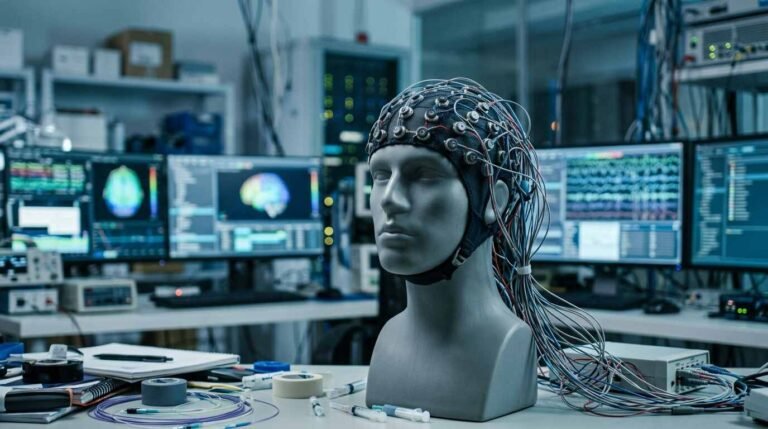
Brain organoids raise the sharpest questions. Cerebral organoids can produce spontaneous electrical activity, and the sources describe a concern, expressed by some neuroscientists, that they might experience simple sensations. Nobody has shown that they feel or think anything, and most researchers regard current ones as far too small and unorganized for consciousness. The concern is about the future as the models get larger and more complex.
In 2023, a reported hybrid system connected brain organoids to conventional electronics and completed tasks such as voice recognition. Interest in so-called organoid intelligence has grown with it. The proposals from ethicists generally ask for oversight, clear reporting standards, and thought about where lines should fall before the technology outruns the rules.
Where is the field going?
Recent reports show how fast it moves, and they should be read as results from individual labs. In 2025, researchers at Sheba Medical Center and Tel Aviv University reported human kidney organoids grown from tissue stem cells that developed for 34 weeks with no contamination or breakdown. In March 2026, a team reported testicular organoids that supported sperm formation for 90 days in the dish.
Reviews in 2025 in Nature Medicine and elsewhere take stock of clinical uses, and the general direction is toward linking organoids with chips, immune cells and vessels. Whether that will yield reliable replacements for animal studies, or merely better models, remains to be seen.
Common questions
Are organoids real organs?
No. They resemble parts of organs and carry out some functions, but they are small, lack blood vessels and cannot replace an organ in a body.
Can organoids be transplanted?
A single case of an organoid transplant into a human with ulcerative colitis was reported in 2022. Work on repairing tissue with organoid-derived cells is exploratory.
Do organoids replace animal testing?
Not yet. The FDA announced plans in 2025 to reduce or potentially replace animal testing in some contexts, but animal studies remain part of drug development.
Can a brain organoid think?
There is no evidence that they do. They can produce electrical activity, and scientists debate how to handle the ethics as they grow more complex.
How long does it take to grow one?
It depends on the tissue and the method, and weeks to months is a typical range in published work.
What to remember
Organoids are self-organizing, three-dimensional cultures made from stem cells or tissue, and they imitate some features of real organs. They are valuable for studying disease, testing drugs and tailoring treatments, as the cystic fibrosis work shows. They lack blood vessels, vary from batch to batch and resemble fetal tissue more than adult tissue. Regulators are paying attention, but animal studies have not been replaced, and the ethics of brain organoids is an open conversation.
Sources