






A 1,000-year lake record in Nature links the end of Indigenous cultural burning to denser eucalypt forest and hotter fires in southeastern Australia.
A metre of mud from the bottom of a small lake in southeastern Australia has become the centre of an argument about why the country burns the way it does. The study, published in Nature on 7 October 2026, argues that the end of Indigenous cultural burning by the Gunaikurnai people changed the forest in ways that made later fires hotter, and that this happened well before human-driven warming became significant.
The result is hedged by its authors and deserves a careful reading. It comes from one site. Its central claim, a chain from land management to fuel to fire intensity, rests on proxies rather than on anyone watching a forest burn. But the method is solid and the numbers are specific, so it is worth walking through how pollen and charcoal in a sediment core can be turned into a fire history.
The site and the sample
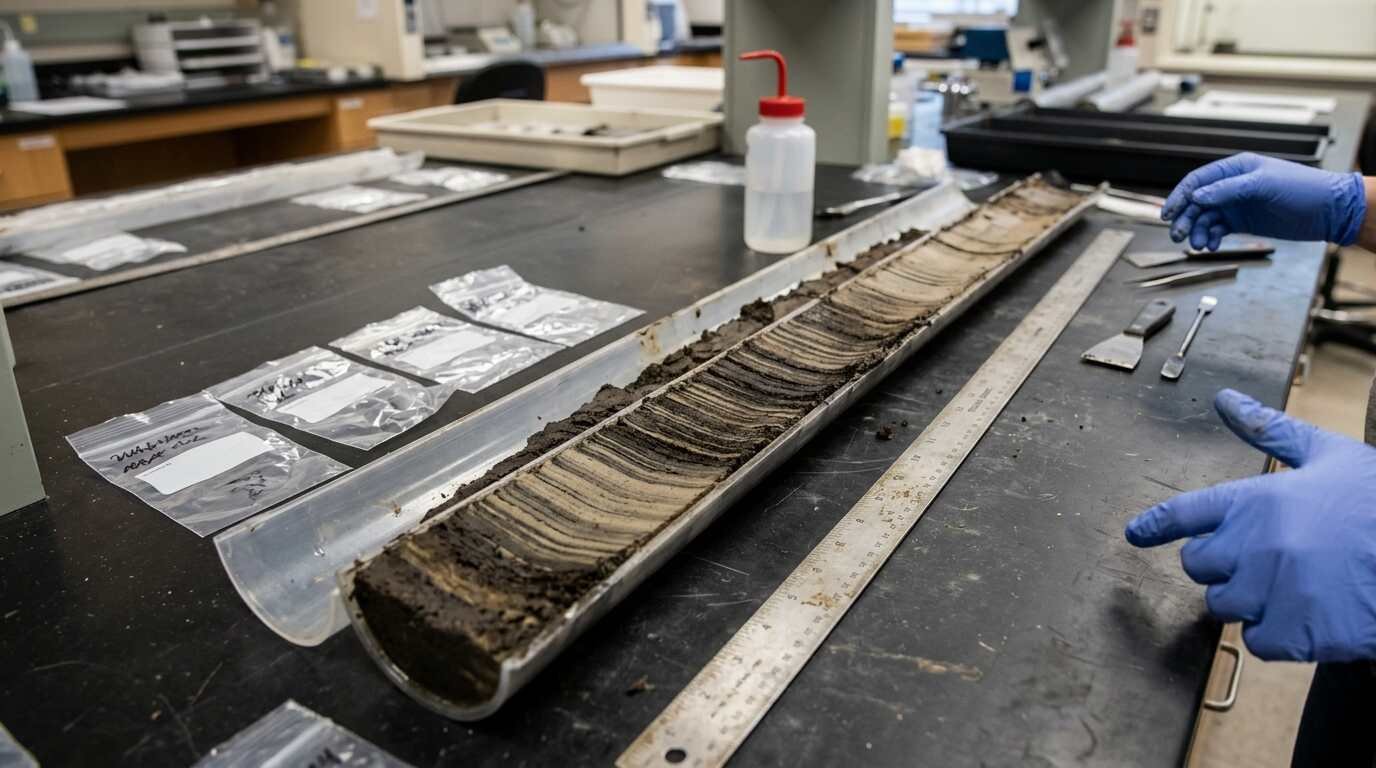
The record comes from Purghagoolah, also called Lake Elusive, in Croajingolong National Park at the southeastern tip of the continent, on Gunaikurnai Country. Researchers took a one-metre sediment core from the deepest part of the lake. Sediment accumulates there in thin layers, year after year, and each layer holds a sample of whatever was blowing in or washing in at the time.
The paper is led by Michael-Shawn Fletcher, a Wiradjuri palaeoecologist at the University of Melbourne, with co-authors from several institutions and the Gunaikurnai Land and Waters Aboriginal Corporation. The Nature abstract describes a temperate eucalypt forest and a record of about 1,000 years.
I could read the abstract and press material, not the full paper, which is behind a paywall. Details of the dating and statistics below are therefore limited to what those sources state.
How mud becomes a fire history
Pollen is the vegetation record. Trees and grasses release pollen that settles on the lake and is preserved in the layers. Count the grains by type and you get a time series of what grew nearby. Raw pollen counts overstate species that produce a lot of pollen, so the Nature paper uses a modelling approach called REVEALS to convert counts into estimated plant cover. The conversion depends on assumptions about how far pollen travels and how much each species produces, and that is one place error can enter.
Charcoal is the fire record. Larger particles come from fires near the lake, finer ones from farther away, so the particle size distribution gives a rough idea of how close the burning was. The more unusual part is temperature. According to Nature’s news report, the team identified molecules that plants produce when burned at different temperatures in the lab, then searched the sediment for the same molecules. The paper’s data listings mention infrared-based charcoal temperature measurements, which is consistent with that approach. Heating changes the chemistry of charred plant material in predictable ways, so a sample can be read as a thermometer of sorts.
One technical caution comes from the paper’s own reference list: a common charcoal preparation step can destroy charcoal formed below about 400 °C. Whether that applies here I cannot tell from the pages I could access.
What the record shows
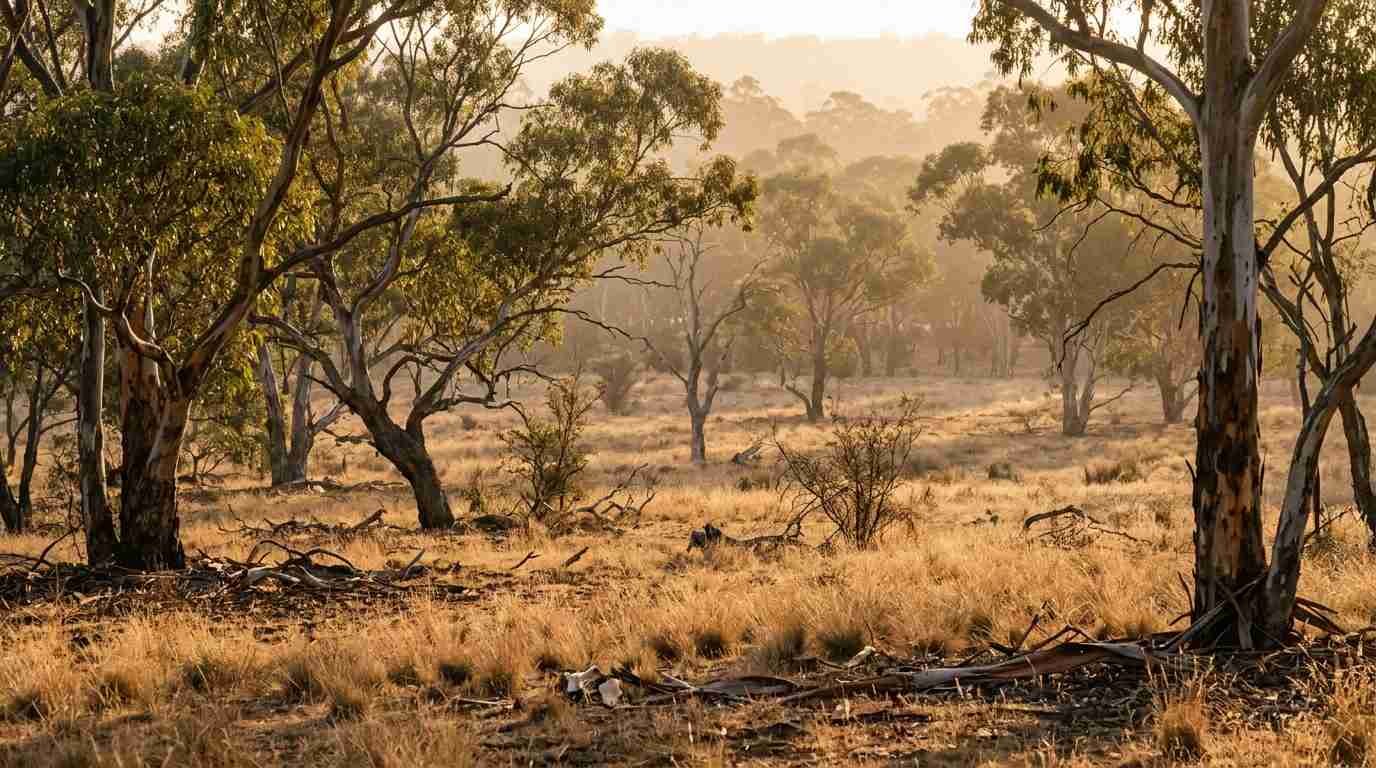
For more than 800 years the sediment shows open woodland: grasses, scattered trees, few shrubs. That picture matches earlier pollen work from the region, including a 2022 study by Mariani and colleagues that reported more open, grassy forests before colonisation.
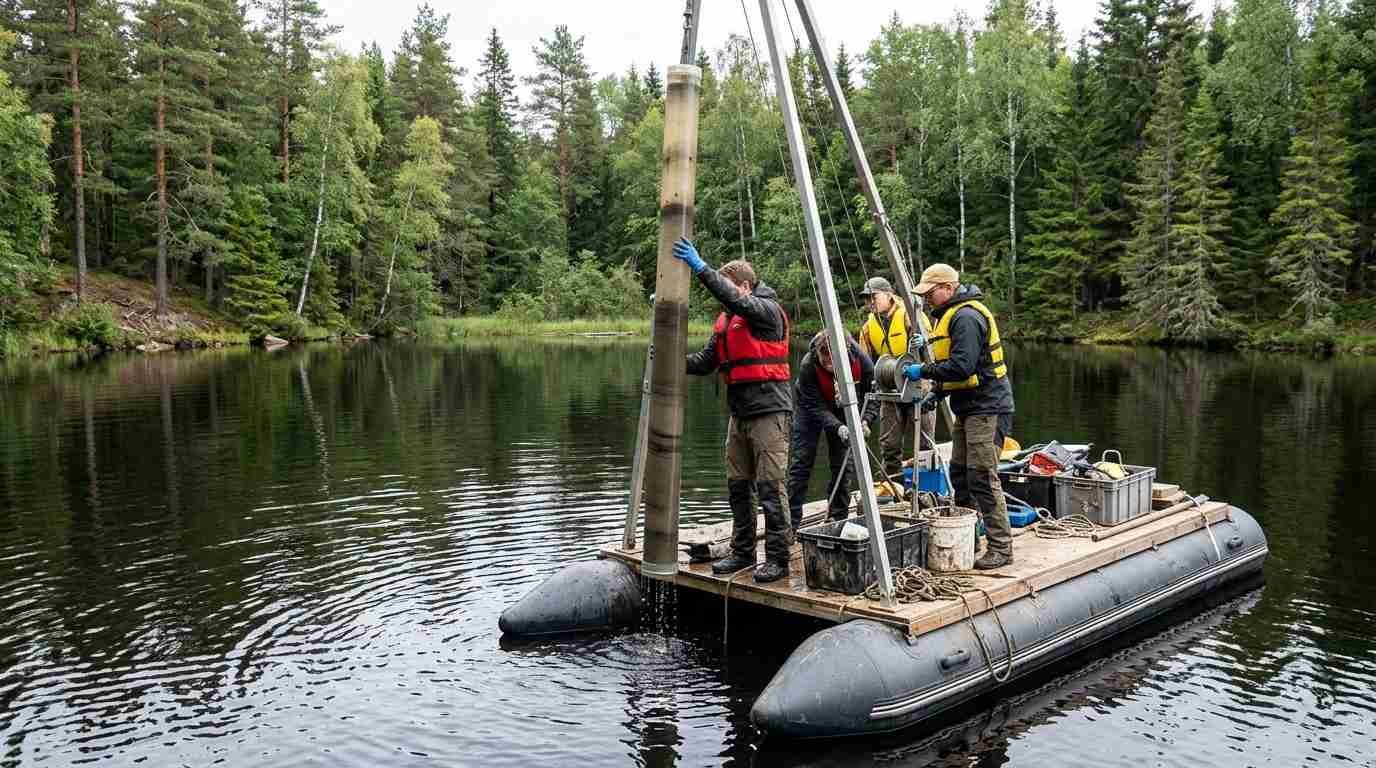
Then it changes. After British colonisation, which the authors date from 1788 for the continent, eucalypt cover rose roughly fourfold, from around 9 percent to 34 percent according to a University of Nottingham release. Woody shrubs spread. The share of high-temperature charcoal rose, which the authors read as hotter fires. Soil erosion also increased, although neither source I read gives a magnitude for erosion or temperature.
The timing is not described identically everywhere. Nature’s news piece says eucalypt cover roughly doubled around 1840; the paper summary and the Nottingham release give a fourfold rise without that detail. These may describe different stages of one increase, but I could not confirm that, so treat the intermediate figure as unverified.
The proposed feedback loop
The authors call their mechanism a catastrophic wildfire loop. The logic runs like this. Eucalypts resprout rapidly after fire and outcompete slower plants, so an intense fire can leave a denser, more eucalypt-heavy stand than the one it burned. More trees and shrubs means more fuel and a thicker canopy, which supports hotter fires, which favour the same resprouting trees again. Press material quotes the team: more trees meant more fuel, and more fuel created the conditions for hotter and more intense fires.
Cultural burning would interrupt that loop. Regular, small, low-intensity burns clear understorey fuel and, in Fletcher’s account to Nature, also promoted vegetation useful to animals. Stop them, and fuel builds until something ignites it under bad conditions.
Working through the timeline
Put the numbers side by side. Open woodland held for more than 800 years of a 1,000-year record, which leaves under 200 years for everything after. Colonisation on the continent began in 1788, 238 years before this paper, and the authors place the vegetation shift in the nineteenth century. The press material dates significant human-driven climate change to about the 1950s.
That gap is the core of the argument. Eucalypt cover moving from roughly 9 percent to 34 percent is a change of 25 percentage points, a factor of about 3.8, so ‘fourfold’ is a fair rounding. If that increase and the move to hotter fires occurred before around 1950, then warming cannot explain how the forest got that way. It can only explain how it burns now.
The logic is sound but not airtight. Timing alone does not isolate cause. Grazing, logging, changed ignition patterns and introduced species also arrived with colonisation, and the sources I read do not separate them. The authors’ wording, ‘suggesting’ a feedback loop, reflects that.
Context: Black Summer and the ‘natural’ baseline
The 2019-20 Black Summer fires frame the study. The sources give different totals: Nature’s news report says they burnt more than 8 million hectares of forest, while the Nottingham release says more than 24 million hectares burned overall. Those are probably different scopes, forest versus all vegetation, but the sources do not say so.
A second argument sits in the press material. Some national datasets treat post-colonial forests as the natural reference state. If the pre-colonial landscape was a managed, open woodland, then that reference is shifted, and risk models calibrated to it may misjudge how flammable the modern forest is.
Why a small fire and a big fire are different things
It helps to separate fire frequency from fire intensity, because the two move independently. A forest can burn often and gently, or rarely and ferociously. Frequent low-intensity fire consumes leaf litter and small shrubs near the ground without killing the canopy. A long gap between fires lets that material pile up, and when it finally burns, the flames can reach the treetops.
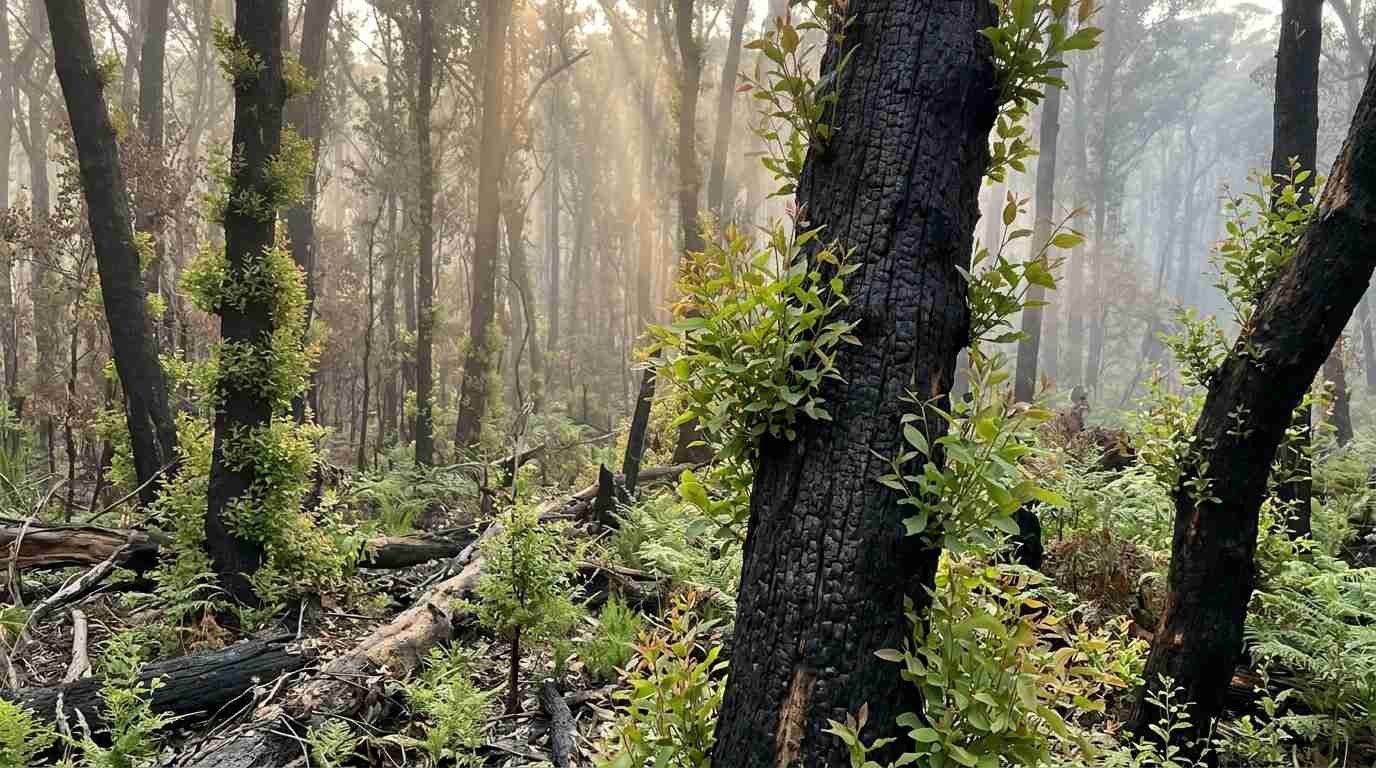
The sediment evidence fits the second pattern, as far as one can tell from the summaries. The charcoal shifts toward higher-temperature signatures after the burning regime changed, and the vegetation shifts toward a denser stand. The sources do not report a fire-frequency count, so whether fires became rarer, more common, or just hotter in this catchment is something to check in the full paper.
What the study cannot say
The limits are plain. This is one core from one lake. Southeastern Australia includes many forest types and many Indigenous nations with different burning practices, and a single catchment cannot speak for all of them. The proxies are indirect, the vegetation estimates depend on a model, and the causal chain from burning practice to fuel to fire temperature is an interpretation of correlated changes.
Nor does the paper say climate change is minor. Fletcher told Nature that the finding gives ‘another variable’ beyond climate change, and Mariani said climate is only part of the story. The practical implication the authors draw, that restoring Indigenous fire management could lower risk as the climate warms, is a proposal for testing, not a measured result.
Frequently asked questions
What is Indigenous cultural burning?
It is the deliberate, regular use of low-intensity fire by Indigenous peoples to manage land. In this study it refers to burning by the Gunaikurnai in southeastern Australia, which the authors say kept the landscape as open woodland for over 800 years.
How can a lake reveal past fires?
Pollen and charcoal fall into lake sediment in dated layers. Pollen counts show which plants grew nearby, and charcoal particles show fire activity. Chemical signatures in the charcoal can indicate how hot the fire burned.
Does this mean climate change is not driving Australian bushfires?
No. The authors and press material say climate is part of the story. The study argues that land-use changes primed forests to burn hotter before modern warming, and that warming now amplifies the effect.
Can the results be applied across Australia?
Not safely. The main evidence comes from a single lake in one region, and the authors’ interpretation rests on proxies. Other sites would be needed to test the pattern.
The useful thing about this study is less its headline than its method, which gives a way to test claims about land management that are otherwise argued from anecdote. If more cores from other regions show the same sequence of open woodland, ended burning, denser eucalypts and hotter charcoal, the case would be strong. If they do not, the Gunaikurnai record will still stand as an accurate account of one forest. Either result is more informative than a debate over whether climate or management is to blame, since the evidence so far says the question is how they combine.
Sources



