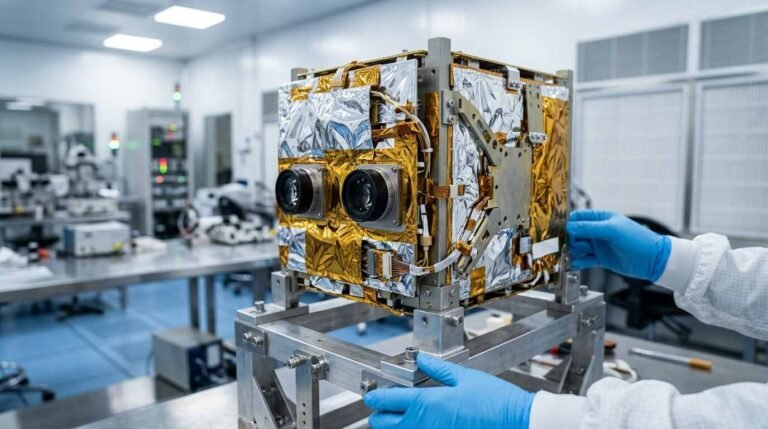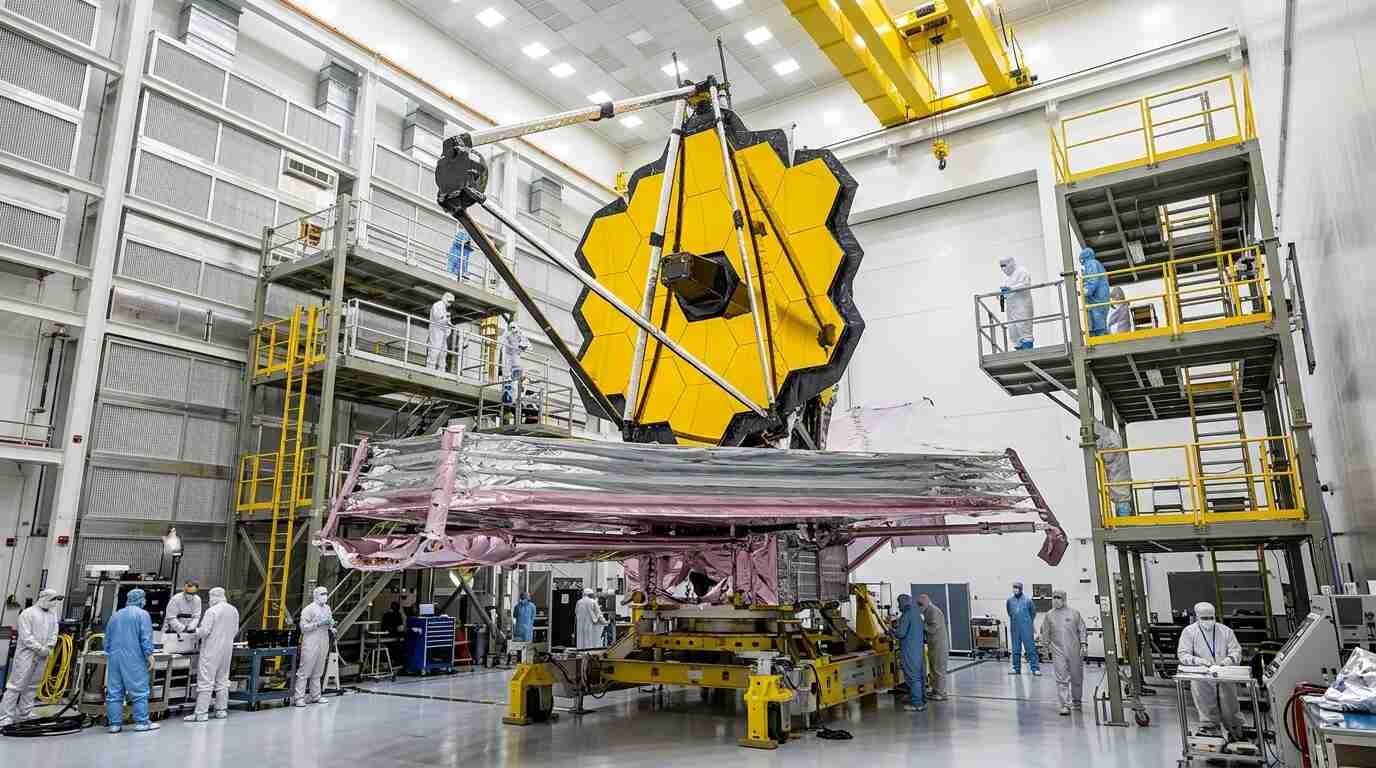
The Roman Space Telescope saw its first starlight in mid-September, and the stars looked like donuts. That sounds like a malfunction. It is closer to a status report: NASA’s newest flagship observatory is awake, its 300-megapixel infrared camera is running, and nobody has focused it yet. Roman lifted off on August 30 aboard a SpaceX […]
The Roman Space Telescope saw its first starlight in mid-September, and the stars looked like donuts. That sounds like a malfunction. It is closer to a status report: NASA’s newest flagship observatory is awake, its 300-megapixel infrared camera is running, and nobody has focused it yet.
Roman lifted off on August 30 aboard a SpaceX Falcon Heavy from Launch Complex 39A at Kennedy Space Center, at 7:26 a.m. EDT, and separated from the upper stage 31 minutes later. It is heading for the Sun-Earth L2 point, about a million miles from Earth and the same neighborhood as the James Webb Space Telescope. Orbital insertion is expected roughly 100 days after launch.
This post covers the commissioning timeline so far, why the first images are blurry by design, what the two instruments do, and what to watch before the official first images arrive. The newest NASA-sourced updates we could verify date from mid-September. We found nothing later, so read “so far” as of that point.
From Launch to First Light
| Date | Milestone |
|---|---|
| Aug. 30 | Falcon Heavy launch; separation 31 minutes after liftoff; solar array and lower instrument sunshade confirmed deployed about 1 hour 23 minutes in |
| Aug. 31 | First of two planned trajectory burns, lasting 3.5 minutes |
| Sept. 1 | Coronagraph Instrument begins powering on |
| By Sept. 4 | Solar panels, high-gain antenna and deployable aperture cover reported deployed |
| Mid-September | Wide Field Instrument activated; first starlight recorded (NASA post dated Sept. 15, reported Sept. 17) |
| About early December | Orbital insertion at L2, roughly 100 days after launch |
| Early 2027 | Official first images; January 2027 has been cited |
Both side boosters landed as planned, and no spacecraft anomalies were reported in the coverage we reviewed. After arrival, station-keeping burns are expected roughly every 28 days.
Why the Stars Look Like Donuts
Gizmodo’s report on the first test images describes blurry green, yellow and blue stars against a blue backdrop, each looking more like a halo than a point. The cause is mundane. The camera is still cooling in its housing and has not been focused or calibrated, and its detector array is still stowed in its launch configuration, far from best focus.
Out-of-focus stars spread into rings, the same way a badly focused camera turns a streetlight into a disk. So the blur says something encouraging: the detectors, electronics and data chain work, and what remains is optical adjustment. NASA will monitor Roman’s condition for 30 days, then soon activate the instrument’s fine-guidance system so it can lock onto targets. Fine-tuning of alignment and focus is scheduled for about two months into commissioning.
What the Wide Field Instrument Does
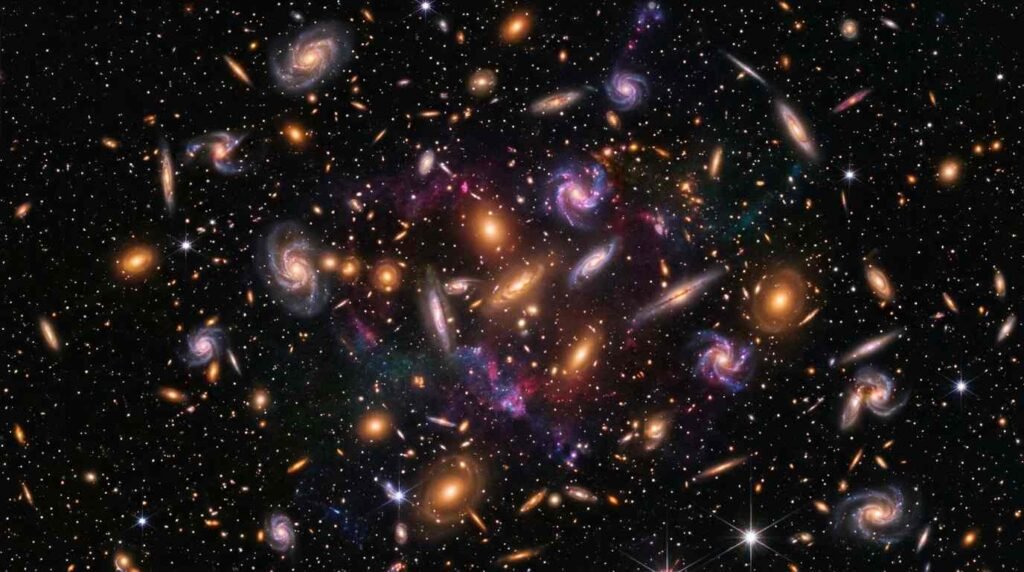
The Wide Field Instrument is a 300-megapixel infrared camera. NASA says it matches Hubble’s sharpness while covering a field of view at least 100 times larger, and that each image spans a patch of sky about 1.5 times the apparent width of the full Moon. A mission summary also says it can survey the sky up to 1,000 times faster than Hubble, which is a NASA-side claim we could not test.
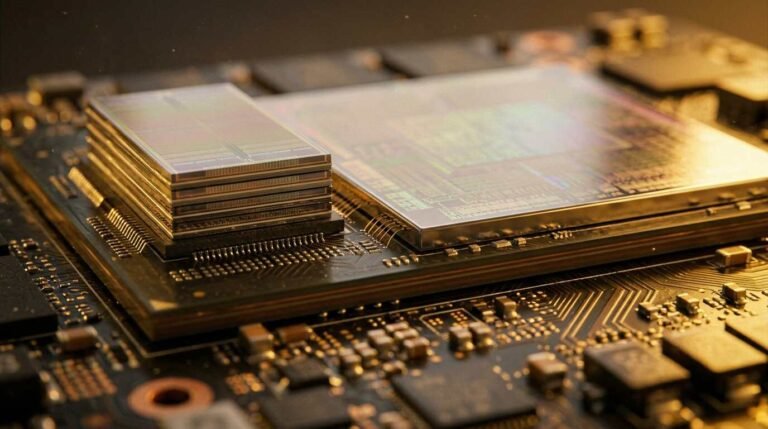
Under the hood, the focal plane is tiled with 18 infrared detector chips, a detail from general knowledge of the mission rather than from the coverage above. Those chips add up to the headline pixel count.
The data volume matches the ambition. Roman is expected to produce about 1.4 terabytes of raw science data per day and roughly 20 petabytes of processed data over its primary mission. NASA plans to release the data publicly as soon as it is processed, through the Roman Research Nexus.
Why width matters is simple. Hubble and Webb dig deep into small patches. Roman is built to make maps, and to revisit the same large fields so that things which change, such as exploding stars, stand out. Breadth is the instrument’s trade, and depth comes second.
The Coronagraph: A Technology Demonstration
The second instrument is a coronagraph. It uses a mask and deformable mirrors to suppress the glare of a bright star so that faint light reflected by nearby planets can be seen. The targets are Jupiter-like planets and disks of material around stars.
NASA frames it as a demonstration, intended to validate wavefront control in space for the future Habitable Worlds Observatory. Power-on began on September 1, and several weeks of calibration tests come before any science operations.
What Roman Is For
The wide-area surveys aim at three questions: what dark matter is, why cosmic expansion is accelerating, and how common planets are. NASA projects that the mission could survey roughly 100,000 exoplanets and advance dark energy research. Those are forecasts, not results.
The primary mission lasts five years, with a designed five-year extended mission. Fuel is the main limit on lifetime, and the spacecraft is designed to be refuelable.
How Fast This Is Moving
Roman launched months ahead of its commitment date. One report cites nine months, while a May NASA advisory said eight. Commissioning is expected to take about three months, and first images are expected roughly five months after launch.
For scale, the James Webb Space Telescope launched on December 25, 2021 and released its first full-color images on July 12, 2022, a gap of about six and a half months. That comparison comes from general background, not from the sources below, and the two observatories differ in complexity.
What to Watch
- Mid-October: the end of the 30-day monitoring period, if counted from the mid-September first-light report.
- Fine guidance: activation of the system that lets Roman lock onto targets.
- Focus and alignment: whether the stars tighten from donuts to points.
- Early December: insertion into orbit around L2.
- January 2027: the cited window for the first official images. NASA has not given a firmer date in anything we found.
How Roman Compares With Hubble and Webb
| Roman | Hubble | Webb | |
|---|---|---|---|
| Orbit | Halo orbit around the Sun-Earth L2 point | Orbits Earth | Sun-Earth L2 |
| Field of view | At least 100 times Hubble’s, per NASA | Narrow | Narrow |
| Design emphasis | Wide-area infrared surveys | Sharp images of small fields | Deep infrared views of small fields |
The Roman row comes from NASA’s mission page. The Hubble and Webb entries are general background, offered for contrast and not drawn from the sources below.
Why L2 and a Halo Orbit
L2 sits about a million miles from Earth on the side away from the Sun, so Earth, Moon and Sun all lie in roughly the same direction from the spacecraft. That lets a single sunshade block heat and light while the telescope stays cold, and it keeps the view of deep space clear. NASA says Roman will follow a large halo orbit around L2, a path that uses little fuel, which matters because fuel is the main limit on the mission’s lifetime and the spacecraft is designed to be refuelable.
The same geometry explains the roughly 28-day cadence of station-keeping burns, since an orbit around an unstable point needs periodic correction. The reporting describes this cadence only briefly, so treat the explanation as general reasoning.
What Could Still Slow Things Down
Nothing in the coverage we reviewed reported a spacecraft anomaly. The remaining risks are the ordinary ones for commissioning: cool-down behavior in the camera, the focus and alignment adjustments scheduled for roughly two months in, and the orbital insertion burn near the 100-day mark. NASA has also not published an exact date for official first images, so even a clean commissioning could shift the January window. We note these as things to watch, not as signs of trouble.
The Bottom Line
Roman is alive, its main camera is collecting light, and the donut-shaped stars are a sign of an unfinished focus procedure, not a fault. The path from here is mostly scheduled work: a month of monitoring, activation of fine guidance, alignment and focus over roughly two months, orbit insertion near the 100-day mark, and official first images in early 2027.
Readers should keep two caveats in mind. The most recent updates we could verify date from mid-September, and some schedule details, including the exact first-light date and the first-image window, vary between outlets. Watch NASA’s own announcements for confirmation as each milestone passes.
Sources and Verification Notes
- Gizmodo, Sept. 17
- Space.com live updates, last updated Sept. 4
- XenoSpectrum, Aug. 31
- NASA, 9 things to know about Roman
Dates for first light are inconsistent: Gizmodo’s text says Thursday while NASA’s post is dated September 15, so we say mid-September. One outlet claimed the mission was extended from 10 to 22 years, which conflicts with NASA’s five-year primary mission, so we omit it. The 18-detector count and the James Webb dates are general background, and we found no NASA updates newer than mid-September.