The TikTok fan transition is an outfit-change format in which a large fan blade sweeps across an overhead shot and the person underneath is suddenly wearing something different. Marketing agency New Engen listed it among eight formats in its October 2026 trend report, published September 30 and updated October 5, 2026. The format looks like […]
The TikTok fan transition is an outfit-change format in which a large fan blade sweeps across an overhead shot and the person underneath is suddenly wearing something different. Marketing agency New Engen listed it among eight formats in its October 2026 trend report, published September 30 and updated October 5, 2026. The format looks like magic. It is a very ordinary editing technique with a clean setup, and that setup explains why it spreads.
How the format works
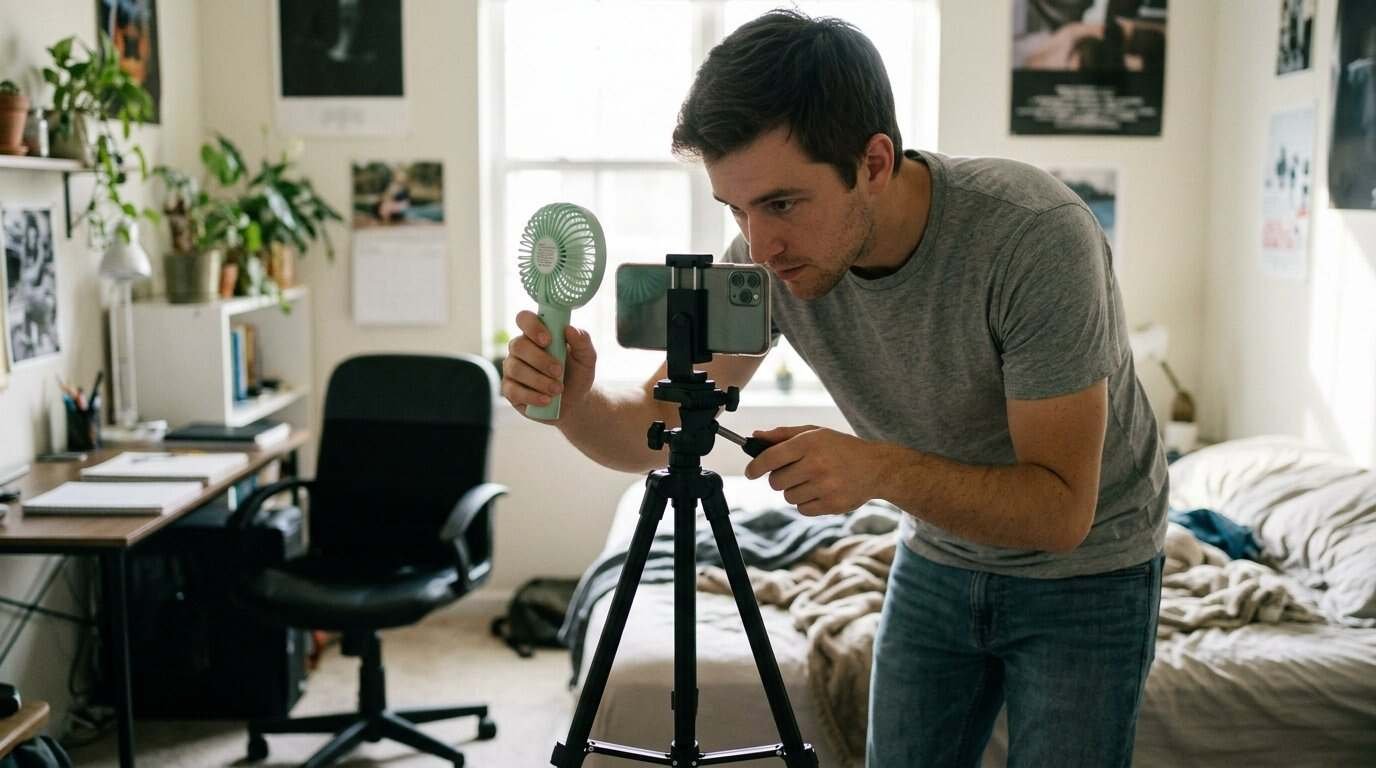
New Engen describes the recipe plainly. You film each look from directly overhead with the phone fixed in one spot, using the same pose every time. Then you place a fan-blade wipe in CapCut over each join so the blade sweeps across the frame and hides the change. The report suggests three to four outfits and a total of 15 to 20 seconds, and its example shows four looks in 19 seconds.
Every part of that recipe serves one goal: make the viewer’s eye believe two separate takes are one continuous shot. An edit between two clips is only visible when something else in the frame jumps. If the camera, the background and the pose all stay put, the only thing that changes is the clothing, and the wipe covers the single frame where that change happens. Editors call this hiding a cut behind a moving object. The fan blade is just a large, fast, graphic object that passes in front of the lens.
Why it spreads
Three properties make this format easy to copy. The gear is a phone and a way to hold it above you. The editing step is a built-in effect rather than a skill. And the payoff repeats: each wipe delivers a small reveal, so a 19-second clip contains several satisfying moments instead of one.
The same report pushes brands to act quickly, advising posts within 24 to 48 hours of spotting a trend. Another New Engen page on trending sounds says anthem-style audio saturates within about two weeks, and it also advises posting within 48 hours. That page shows no publication date and mentions events from earlier in the year, so use it as the agency’s general view, not as a measured figure for this particular format.
| Element | Setting described by New Engen | Job it does |
|---|---|---|
| Camera | Fixed overhead, same spot each take | Keeps the background identical between looks |
| Pose | Same pose in every look | Makes the cut land on matching frames |
| Outfits | 3 to 4 looks | Gives the viewer a payoff each cycle |
| Length | 15 to 20 seconds total | Short enough to watch to the end |
| Cover | Fan-blade wipe added in CapCut | Hides the moment of the cut |
What to learn from it
If you make short video for a product, the fan transition is a template for any before-and-after. Swap outfits for a repaired phone screen, a tidied desk, an app’s old and new interface, or a recipe stage. The structure is the same: lock the frame, repeat the pose or position, change one thing, and cover the switch with a graphic wipe.
Three habits make it work better. Mark the floor or the phone position before you start so the framing never drifts between takes. Keep lighting constant, because a color shift in the background reveals the cut even when the blade covers the clothing. And keep to the short runtime. The report’s 15 to 20 seconds is a guideline, but a format built on repeated reveals gets stale quickly if it runs long.
For brands, the report’s caution about the trend cycle applies. Formats come with a window, and the effort to produce this one is low enough that waiting a week usually costs more than the shoot. I could not find independent view counts for the fan transition, so I cannot say how large it is, only that a trend agency flagged it as current in early October 2026.
Sources